Special Report: The end of Apple's iPod era part II
 Andy M. Zaky, Bullish Cross, Special to AppleInsider
So I thought that in the interest of fairness and balanced reporting that I would present the other side of the debate, and let my readers decide which of these viewpoints makes the most sense.
In my previous article, I demonstrate how the facts according to Apple, suggests that the iPod is no longer that large of a revenue driver when compared to Apple’s other sources of revenue. I exhibit how the iPod as a percentage of Apple’s overall revenue has been on a consistent and steep decline since Q1 2006. This is due in part to the iPod’s maturing growth rate, and in large part, to the iPhone and Mac computer line taking the helm as Apple’s main source of revenue.
Apple’s fiscal year starts in October and ends in September. When it reports its quarterly earnings, Apple generally publishes a revenue breakdown for each of its six primary operations (iPhones, iPods, Macs, iTunes + music accessories, Software and Peripherals). It defines the general category of “iPod†to include sales from the iPod Touch, iPod Nano, iPod classic and iPod shuffle without reference to the iPhone.
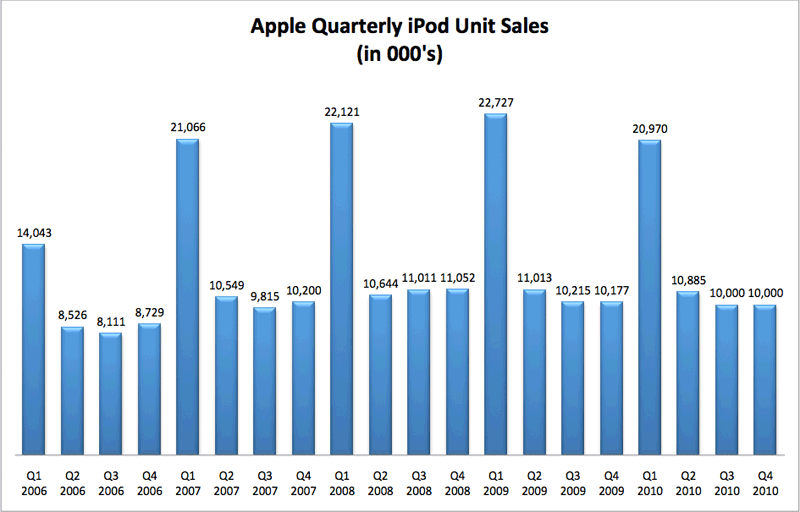
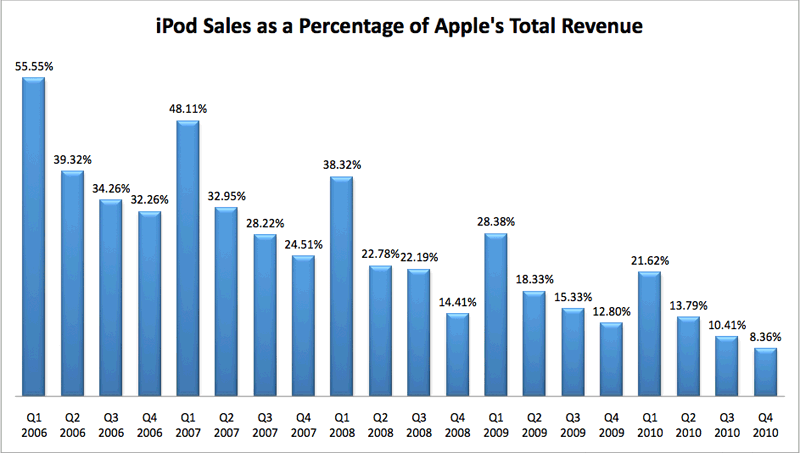
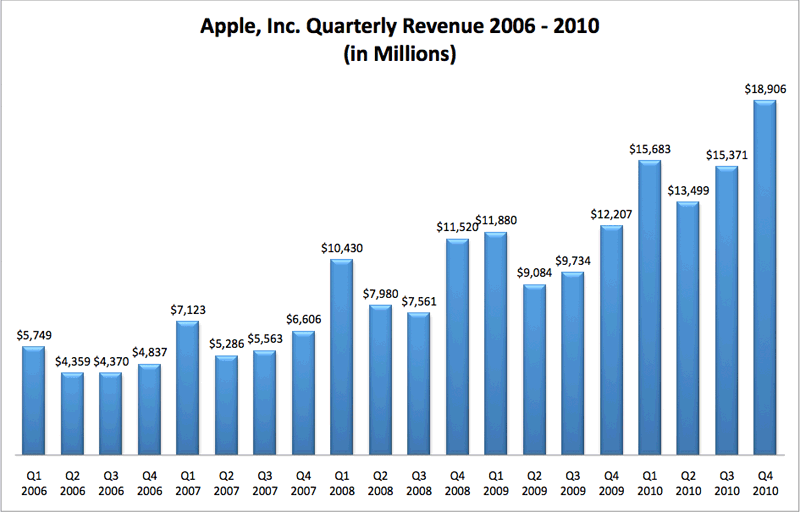
So those four devices are what make up the revenue in Apple’s iPod category. While Apple doesn’t breakdown unit sales and revenue for each line of its iPods, Steve Jobs will from time to time let us know how many iPod touches it has sold during media events. Based on Apple’s definition of the term iPod revenue, the four charts below clearly and undeniably illustrate how the iPod as a percentage of Apple’s direct and recorded revenue has been on a steep and consistent decline since 2006.
If this isn’t already self-evident, here is exactly how the charts should be read. The first chart shows iPod revenue from 2006 to 2010. The second chart is of iPod unit sales. The third chart details iPod revenue as a PERCENTAGE of Apple’s overall revenue. This chart is important because it unmistakably illustrates how the iPod’s impact to Apple’s recorded revenue has been on a decline since 2006.
The fourth chart is of Apple’s recorded revenue from 2006 to 2010. This chart is important because it shows how Apple’s overall revenue has continued to demonstrate explosive growth despite the fact that iPod revenue (shown in chart #1) has posted either slightly positive or slightly negative growth over the past few years. Please note that Q3 and Q4 are merely estimates and that actual results may differ.
Misinterpreting the Analysis
My argument shouldn’t be construed, though I’m positive it will be, to suggest that I believe that Apple should somehow discontinue selling the iPod or that the iPod is doing poorly as a device. In fact, the iPod Touch is arguably one of Apple’s most important products as that device is a gateway drug to Apple’s other products, so to speak. It introduces those who don’t already own an iPhone to the iPhone OS, making it the most proficient use of advertisement in the entire tech industry. That OS powers two of Apple’s most important product lines – the iPhone and iPad. And evidence suggests that this iPhone OS will power an all encompassing media hub being used in a flat screen TV that Apple is potentially developing.
Moreover, the iPod halo is still very much in full effect as each device gives consumers a broad introduction to the Apple ecosystem. So while the iPod isn’t as big of a player as is the iPhone or Macintosh when it comes to total revenue contribution, it still plays a key role in Apple’s overall business strategy. This much should be obvious as there still remains quite a large number of intangible benefits Apple derives from the iPod - a driver for revenue growth is just no longer one of those benefits.
One Alternative Viewpoint: iPhones are iPods, STUPID!
In January of 2007, Steve Jobs wowed his audience at Macworld, investors and the entire financial world with his introduction of the iPhone. During his keynote address, he called the iPhone “The best iPod Apple has ever made.†He began his introduction by saying, “Well today, we’re introducing THREE revolutionary new products. The first one is a widescreen iPod with touch controls, the second is a revolutionary new mobile phone and the third is a breakthrough internet communications device.†He continued, as the crowed held its breath, “An iPod, a phone, an internet mobile communicator. An iPod, a phone, an internet communicator…these are NOT three separate devices!†And to add a cheery on top, he went on to say: “we are calling it iPhone!â€
This was huge news as the entire Apple world was convinced that due to legal constrains, Apple would be unable to name this new potential breakthrough device the “iPhone.†So it came as a great surprise to the entire financial community when he came out, gave the classic Steve Jobs’ finger to the term impossible (the reason everyone loves him), and called it the iPhone – I’m sure he told his lawyers to make it happen.
After reading the comments to my article published at Appleinsider, I discovered that quite a large number of people hold the view that the iPhone is an iPod. That even Steve Jobs made it perfectly clear that it’s an iPod (in fact the best iPod Apple has ever made), and that trying to characterize the iPod classic, iPod Touch, iPod Nano and iPod Shuffle as being Apple’s only iPods would patently misrepresent the facts. The “iPhone is an iPod, stupid†forms the basis of many of the arguments against the conclusion that the iPod (as defined in Apple’s financial statements) contributes an increasingly smaller portion of Apple’s overall revenue.
Many would go on to argue that the only appropriate way to view and analyze iPod sales is by adding iPhone unit sales and revenue to iPod unit sales and revenue. Doing this, several have argued, will produce a true picture of the “real†iPod unit sales and revenue growth over the past 5 years; that the charts and tables outlining iPod sales above are inherently flawed because they unfairly breakdown iPod sales and revenue, as defined by Apple, without taking iPhone sales into account. The two charts below outline iPhone + iPod unit sales and iPhone + iPod revenue from 2006 to 2010. These charts form the basis of the iPhone is an iPod viewpoint. So without further ado, will the real iPod Category please stand up?
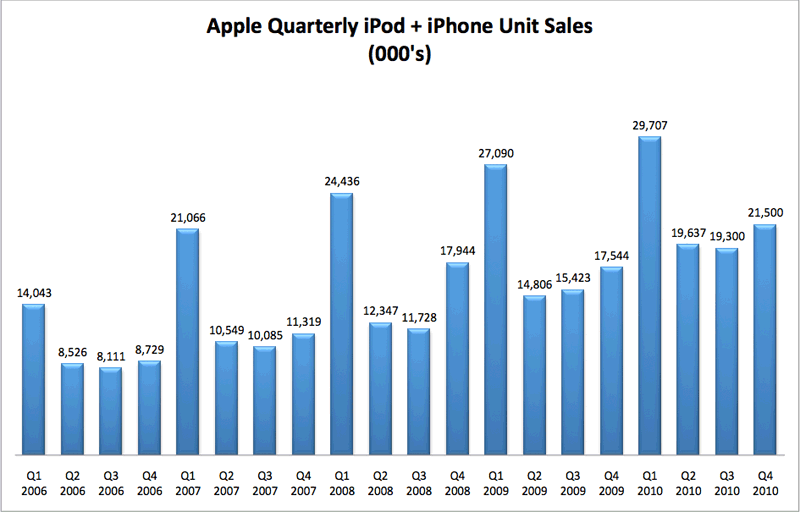
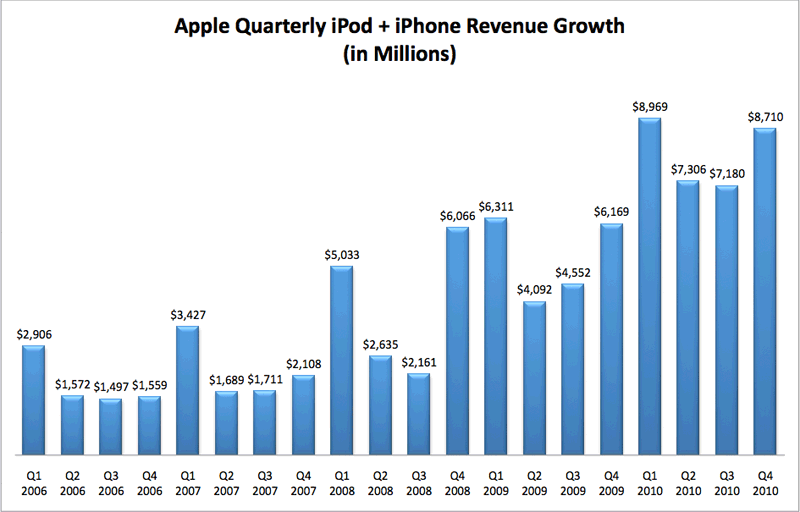
Thus, one will argue, that according to the two charts above, the “real†iPod unit sales, unlike iPod sales as defined by Apple and the rest of the financial world, shows that iPod unit sales are growing quite consistently. Sure, adding the two together dilutes the growth rate of iPhone standing alone; but who cares as long as we’ve shown that iPod sales are still growing right? “Real iPod†revenue growth is far more dramatic, owing in large part to the $630 - $660 ASP that the iPhone normally enjoys versus the $150 to $170 ASP the iPod usually records. So while overall unit sales don’t look super impressive, revenue growth looks very strong. And we can’t get a true picture of how important the “real iPod†is to Apple’s revenue without looking at “real iPod†as a percentage of Apple’s revenue. The chart below outlines iPhone + iPod revenue i.e. “real iPod†revenue as a percentage of Apple’s overall revenue:
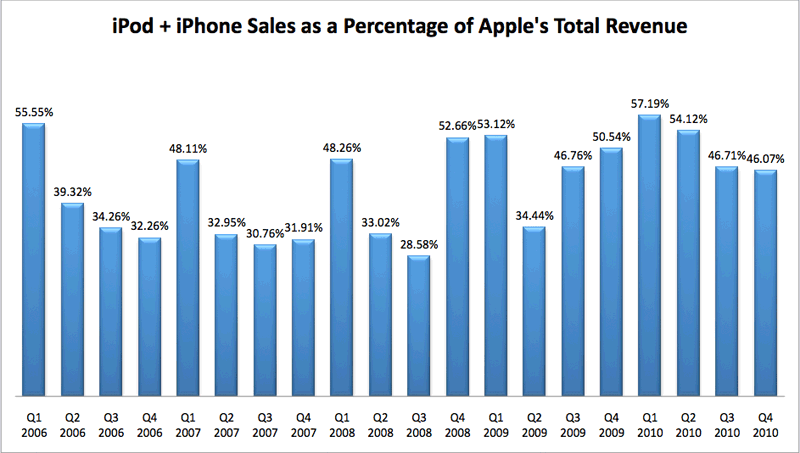
Notice how by Q4 2008, it appears that Apple gets about 50% of its business from the “Real iPod†making the company appear overly dependent on one of its primary operations for growth. While my argument shows that Apple is multi-dimensional and not overly dependent on the iPod, those in support of the 'iPhone is an iPod' theory, makes it such that Apple is very dependent on this new category. Yet, the charts above do show how if the iPhone was characterized as an iPod, that iPod growth is alive and well. Of course it also demonstrates how important the iPod would become to the company’s financial well being.
Now here is why I think this is not only a very misguided, but dangerous viewpoint of the company from a financial perspective. First, the very last impression that any company wants to give investors, financial analysts and the financial media is that a company can only do a handful of things well, and that the company is too overly dependent on any one of its product lines.
In fact, Apple has worked very hard to demonstrate how well they are able to innovate by showing that they are not just a one or two dimensional company, but that they can make 4 separate and very successful products driving their overall revenue growth. By collapsing iPod and iPhone sales, it suggests that Apple is merely a two dimensional company. That the only thing they can do in terms of innovation is just make fancier iPods and sell Macintosh computers.
Apple has wisely chosen not to go this route. Instead, they break down their main revenue drivers into 4 distinct categories - iPods, iPhones, Macintosh Computers and now iPads. Over the past few years, iPod unit sales and revenue started to weaken. In the face of this weakness, Apple demonstrated their ability to innovate by introducing the iPhone and now the iPad. I’ve seen some arguments where some hold the view that iPads are merely iPods as well. This held belief is extremely counterproductive from a financial perspective.
Once again, no one is expecting that Apple or any company should be able to introduce a product that will grow from now into perpetuity. What money managers and analysts do expect is that Apple should able to make new fresh products that can take the helm of driving growth as some other product reaches maturity. In this case, Macintosh sales took over as Apple’s main revenue driver in 2007 followed by the iPhone in late 2008. The iPad will also drive future growth as the product sets to posts more revenue than the iPod in its inaugural quarter.
Fund managers are far more concerned with how well iPhone, iPad and Macintosh sales fare than they care about the archaic iPod. For the past few years, iPod sales have been slightly up to slightly down. Yet, no one seems to make a stink about it, because no institutional investor or analyst really gives a hoot about iPod sales anymore. Instead, the central focus of Apple’s financial picture is on the explosive growth the iPhone posted in Q1 and Q2 of this year.
What these two articles demonstrate is how Apple can innovate in the face of slower growth from its former main revenue driver, the iPod. These articles get ahead of future debates about whether Apple can continue to grow given the law of large numbers. 'Is Apple getting too big for its own good?' This tends to be the general question posed among money managers and analysts these days. Not whether the iPod can continue to drive future growth. An argument that the 'iPhone is an iPod' is definitely not the best way to view the company or its future growth prospects.
Instead, view the iPod for what it is. It’s a device that helped Apple escape the brink of bankruptcy. It’s a device that helped drive Apple’s growth for much of the past decade. It’s a device that produces quite a substantial halo effect for nearly everything Apple and introduces droves to the Apple ecosystem. The iPod Touch is very crucial in terms of introducing those who don’t own an iPhone to the iPhone OS. The iPhone OS has made its way in 3 separate devices, and evidence indicates that it will find itself in new and future products. The iPod is still very much important to Apple in these particular ways. But in terms of direct revenue, by the end of 2011, the iPod will barely make a dent in Apple’s overall revenue.
Another Alternative Viewpoint: Like Intel Chips, iPods are in All Apple Devices
There’s another relatively strong argument put forth by a message board poster named Chano at Appleinsider. Chano contends that my article “misses the point†because iPods are embedded in several of Apple’s devices, and that this value should be counted in the analysis. Chano offers the following:
“Apple is selling more iPods today than all other products combined. Most of them are buried in the value proposition of the devices they are embedded in. I buy an iPhone because I want an iPod too. Without the iPod built in, how well would sales go? They still contribute to revenue. Embedded value is ADDED value. Intel’s chips are all embedded in something. They’re still counted in the sales value of the products they’re embedded in. It’s possible to break out a notional sales value for the embedded iPods as part of the selling price of the host device. It may be notional value but the embedded iPod is real. It should be counted.â€
This is not a bad argument, and presents a stronger viewpoint than the 'iPhone is an iPod' analysis. In fact, one can extract the added value of the iPod from each iPhone sale by simply subtracting iPod ASP from iPhone ASP, and add that value to iPod revenue. Basically, one could shift a portion of iPhone revenue and add it to overall iPod revenue. This would dramatically increase overall iPod revenue thereby indicating that iPod sales are in fact significantly stronger than my article suggests.
Yet, obviously one could counter-argue that it isn’t entirely obvious just how much added value the iPod actually contributes. That unlike Intel chips which are actually sold to a device manufacturer, actually used by every consumer of the device and make up a portion of the cost of goods sold, the iPod is simply embedded as an unquantifiable software feature that may or may not be used by the consumer of the iPhone.
In this sense, unlike Intel chips which are necessarily used by the consumer by virtue of using the device, the value proposition of the iPod depends largely on the varying needs of the consumer. My parents, for example, while they own iPhones, don’t use the iPod application. For them, the value is zero. For another person, that value might be $450 – higher than the iPod ASP. So in this sense, the quantifiable value in terms of a precise dollar amount is very arbitrary making the analysis upon which the value proposition is based, equally arbitrary. Thus, this viewpoint really has no value from a financial statement analysis perspective, but should be added as a sub-analytical argument suggesting that there’s an intangible benefit of the iPod to each of Apple’s portal devices (iPhones and iPads).
Secondly, while one could try to arbitrarily break out the added revenue value from those devices, it also would be very difficult to quantify this value in terms of unit sales. It would be a gross overestimation of iPod unit sales to suggest that each iPhone or iPad sold is an iPod sale as well. Because it isn’t entirely clear how many iPods would sell if Apple only introduced the iPod Touch. In other words, there are definitely a large number of people who buy the iPhone for features other than the iPod capability. Some may like the iPhone for the applications. Some might simply like the interface. Still, others might buy the iPhone for enterprise. Thus, it isn’t clear exactly how much value is added from a unit sales perspective.
So while this viewpoint is really more of a complimentary analysis that should be added to the overall iPod analysis, the fact still remains that total iPod revenue, as defined and recorded by Apple, continues to make up an increasingly smaller portion of Apple’s overall revenue.
Andy Zaky is a graduate from the UCLA School of Law, an AppleInsider contributor and the founder and author of Bullish Cross — an online publication that provides in-depth analysis of Apple's financial health.






 William Gallagher
 Malcolm Owen
 Amber Neely

 Marko Zivkovic
 Andrew Orr