 Mikey Campbell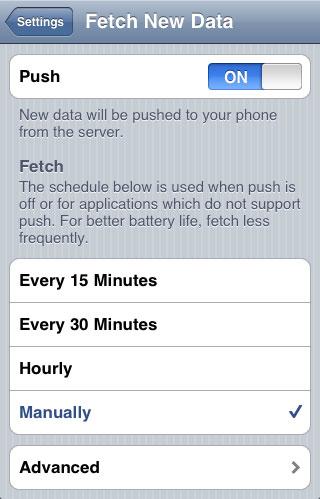
In an early Friday court session, Judge Andreas Voss handed down the decision that gives Motorola Mobility the ability to shut down iCloud's push email service in Germany if the company chooses to enforce the ruling, reports FOSS Patents' Florian Mueller.
The injunction affects not only iCloud, but its predecessor MobileMe as well as any device that can accept data from Apple's push services.
Motorola first leveled the suit against Apple in April 2011, and because it is the result of a full court proceeding, the judgment is permanent. In contrast, most recent reports regarding Apple's myriad patent disputes have involved preliminary injunctions, which follow "fast-track proceedings" and are sometimes temporary.
According to Mueller, the suit brought against Apple Sales International, Apple's Ireland-based European sales organization, is not Europe-wide and only applies to the German market. He explains that the Irish sales arm is the contractual partner of Apple's German online store, and since sales are made in Germany they are governed by that country's laws.
As a result of the decision, Apple can likely keep iCloud running with push email intact, however the company must disable the service if and when Motorola seeks to enforce the injunction.
During the court hearing, Judge Voss discussed a workaround that involves a device's email client to periodically query Apple's servers for new mail. The solution is less of a workaround than it is a step backward as this is how many email clients worked prior to the rise of push services.
Push email was made popular by the now ailing Blackberry brand and allows users to receive new mail almost instantly. The system works by "pushing" new data to appropriate devices as soon as it is received at the server, and is a vast improvement from manually checking and pulling mail or setting an email client to do the same.
Screenshot of iOS push and fetch email settings. | Source: Apple
Mueller notes that Apple will almost certainly appeal the ruling Karlsruhe Higher Regional Court as the decision is "preliminarily enforceable," which means that Motorola can enforce the injunction if it posts a 100 million euro bond. However, if an appeals court overturns the original ruling, Motorola will need to pay Apple damages that would be determined in a subsequent hearing.
With Google's planned takeover of Motorola Mobility, it is likely that the company will indeed force Apple to disable push email, in which case German iCloud users will soon have to reconfigure their email clients and devices or move to another service.




-m.jpg)





 Bon Adamson
 Marko Zivkovic
 Amber Neely
 Malcolm Owen


 Christine McKee



-m.jpg)



32 Comments
Motorola is the one company that seems to be having some actual success against Apple (i.e. in getting injunctions against them, rather than simply defeating Apple's lawsuits). I have also heard on Engadget that Apple has begun pulling older iPhones and 3G iPads from the German market in response to the December ruling. I wonder if they will quickly settle with Motorola before Google takes over completely.
That said, the German courts are also investigating Samsung's use of patents, so it's entirely possible Apple would want this to continue so that Motorola's use is also investigated.
Anyway, for what it's worth, Foss claims that Apple did NOT assert a FRAND defense in the iCloud case, but did in the the case that led to the iPhone 3GS and 4 being pulled. Thus it seems that Apple's only permanent solution is to find a way around Motorola's push patents or license the technology. Given how important iCloud is to Apple's strategy, I suspect they will eventually reach a settlement and licensing agreement.
Oh Well.. You win some, you lose some
Motorola won't be able to post a $100 billion Euro bond to enforce the injunction - that's more cash than even Apple Inc. have.
I don't understand the line which says "because it is the result of a full court proceeding, the judgment is permanent. In contrast, most recent reports regarding Apple's myriad patent disputes have involved preliminary injunctions, which follow "fast-track proceedings" and are usually appealed" all of which would suggest this judgement is final and cannot be appealed - however it is then mentioned that Apple may appeal this judgement. Confusing !!
So much for the notion that Motorola's patents are all FRAND and that Google over reacted.
I thought SJ said that Apple uses Microsoft's Push Technology for the iOS. He said that during the keynote when Push was introduced.
Motorola won't be able to post a $100 billion Euro bond to enforce the injunction - that's more cash than even Apple Inc. have.
You don't need that much cash to get a bond. Typically only about 3-10% of the total amount if you have sufficient assets.
Still, it's a ridiculous amount.
I don't understand the line which says "because it is the result of a full court proceeding, the judgment is permanent. In contrast, most recent reports regarding Apple's myriad patent disputes have involved preliminary injunctions, which follow "fast-track proceedings" and are usually appealed" all of which would suggest this judgement is final and cannot be appealed - however it is then mentioned that Apple may appeal this judgement. Confusing !!
Think of it as two different court systems. Both can be appealed, but one is faster than the other:
Fast-track: Streamlined proceedings to get a fast answer, but which needs to go to a full court later.
Full court proceeding. Decides the matter for once and for all (unless it's appealed).
Either decision can be appealed. One might go to the fast-track proceedings if you think you have a slam-dunk case. Or if there's strong market value to a fast decision, even if you might have more hearings down the road.