Tenth time still isn't the charm. One day after Tim Cook announced that he was handing the reigns to John Ternus, an analyst that has beaten this drum before is again saying today that a sale of Disney to Apple can and must happen. That sale is even less likely to happen now, than it was the last nine times we've updated this story.
The rumor that Apple will buy Disney is as old as the iPod and it's lasted through a couple of Disney CEOs now. You'd think that analysts would have figured out that it isn't going to happen.
Or at least they should have begun to see that clickbait headlines about why Apple must buy Disney have to be losing their pull as the years go by and Apple keeps on doing nothing of the sort.
We wrote most of this piece way back in November 2022, when Bob Iger returned as CEO, three years after he had previously stepped down. And it's true that during those three years, Iger did say that there had been a point where a merger between Disney and Apple could have "gotten there."
Only, you have to forget that Iger also said that this was when Steve Jobs was alive. Very specifically, he also revealed that the two men had never once spoken about a deal.
That's apparently not an important detail. At least, not if you're a financial analyst or social media manager who knows the value of a spicy headline, and keeps trying it year after year.
But then, this is solely what the claim of Apple buying Disney comes down to. It is the statistics and the financial analysis, not of the two companies, but of how much attention you can get by saying it will happen.
Even though it won't.
The Iger Sanction
Bob Iger was this very impressive CEO of Disney, a heavyweight success in a difficult job. The first time he left, he was a huge loss.
Since his return, though, he proved to be a spectacularly out of touch businessman.
First he chose to say, while at a billionaire's retreat, that the Writers' Guild of America was disappointingly unrealistic in its demands for a 0.2% pay rise during the 2023 strike. He did then try to atone for that by saying Disney loves creatives — but at that time, the company also removed major series from Disney+ solely in order to save on paying royalties to those creatives.
Iger has left, again. Josh D'Amaro is the company's new CEO. Whether he'll actually get to run the firm is another question, though.
According to a CNBC report about Iger's first departure from the company, he never let his successor do the job.
Iger's first replacement, Bob Chapek, did make some very unpopular moves. They're were ones that Iger just continued, such as ultimately the idea that Disney can divest itself of some parts of the company.
It's often rumored that Disney will sell off the ABC network, and even more often that it will sell ESPN, though as of February 3, 2026 it still has a majority share of ESPN, and owns ABC.
Iger may have let Chapek's changes continue because he was actually focused on one specific goal. You'll never guess what it was supposed to be.
According to that CNBC 15,000-word rundown of Iger's interference after leaving Disney, "more than a dozen past and present Disney executives said privately they believe Iger's desired end game is to stay as CEO for as long as possible and then sell the company to Apple."
These executives could well have been right about what Iger said behind closed doors. He didn't do it, and there were never any public suggestions that he would.
Disney insiders
"He's [Iger] going to sell the company," a source described as a Disney insider who used to work for Iger, told Yahoo Entertainment all the way back in November 2022. "This is the pinnacle deal for the ultimate dealmaker."
Maybe this really was a Disney insider. Maybe it was someone passing by in a Star Wars Stormtrooper outfit, maybe Disney has been sold and nobody mentioned it to the SEC. Anything seems possible, except that Apple will buy Disney.
Either way, the only certainty with a new Disney CEO is that this is yet another chance for analysts to hang their hat on Apple buying Disney any day now.
According to entertainment and internet analyst Laura Martin of Needham & Company, it's was about Apple Vision Pro. Weirdly.
"You can't actually force the Walt Disney Company, unless you own it, to make content specifically for the Vision Pro headset or for Apple," she told CNBC the last time we updated this piece. "If the creative content guys at Star Wars or at Pixar or at Marvel don't want to do it, they don't have to do it."
"Because Disney is all about making content that maximizes revenue streams to all of its content," she continued. "If Apple owned [Disney], it could say, 'Look, we want exclusive content for the 100,000 units of $3,500,' and and it could actually drive penetration of that $3,500, you know, headset by having exclusive Disney content because they're the best storytellers on Earth."
It's not as if anything Martin said there is strictly wrong. And certainly Apple still needs a boost for the Apple Vision Pro.
But by the same logic, movie theaters should buy Disney so that they could get exclusive films instead of seeing everything going straight to Disney+. Or equally, Disney should buy the Vision Pro from Apple because then it could ensure it gets its content onto the device.
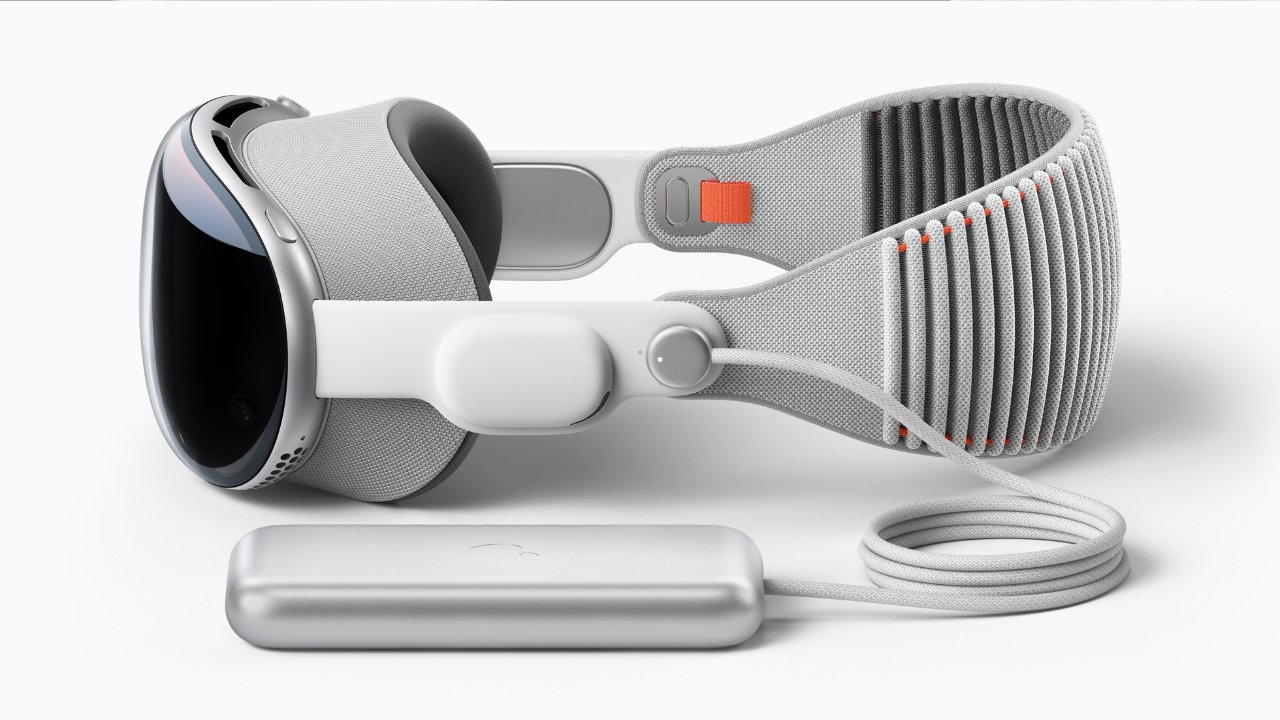
Apparently Apple should now buy Disney to make the Vision Pro a success
Disney seems to be doing just fine with getting on to the Vision Pro, such as its "Alien: Earth" immersive environment. And for what it's worth, we've heard rumors that Disney filmed the last thing Jim Henson worked on personally, the MuppetVision 3D attraction, for Apple Vision Pro just before they bulldozed the building.
Iger was positive about Apple Vision Pro, though.
"We're so proud to yet again be partnering the greatest storytelling company in the world with the most innovative technology company in the world to bring you real-life magic," said Iger at WWDC back in 2023, "and I'm excited to announce that Disney+ will be available on day one."
This was not the first time that analyst Laura Martin had said Apple absolutely must buy Disney. Usually, though, she and so many others are saying that it's streaming and Apple TV that mean Apple absolutely must buy Disney today.
Run the numbers
At one point an analyst did actually do some math. In 2017, analyst Amit Daryanani said there was a "confluence of events" that meant Apple should buy Disney.
That was "should," not "will," but Daryanani made it sound like Tim Cook would be an idiot to not do it. And — remember this was 2017 — Daryanani's calculations said Apple would have to take on significant debt to do it.
At that point, the Walt Disney Co's market capitalization was $175.4 billion. Apple then had cash reserves of around $200 billion, according to Investors.com, which also believes the company should be giving that to investors, "the rightful owners," instead of acquiring firms.
As news of Josh D'Amaro becoming CEO breaks in 2026, things have changed. Apple now has only $45.3B in what are reported under "Cash and cash equivalents" and $21.5B in "Marketable securities."
Disney's fortunes have changed too — but in the opposite direction. Despite some downward movement around the news of Iger leaving, Disney's market capitalization is $184.36 billion. That's down about 7% after some bad news about streaming, and on the news of D'Amaro's promotion.
So on paper, Apple does not have the money to buy Disney. Especially since it would not cost Apple $184.36 billion to buy the company — it would cost more.
You don't get to buy a company for exactly what it appears to be worth now, as that would give no reason for the firm to let you buy it. Apple would have to pay something in the order of $200 billion. An all-cash deal without significant debt isn't possible now.
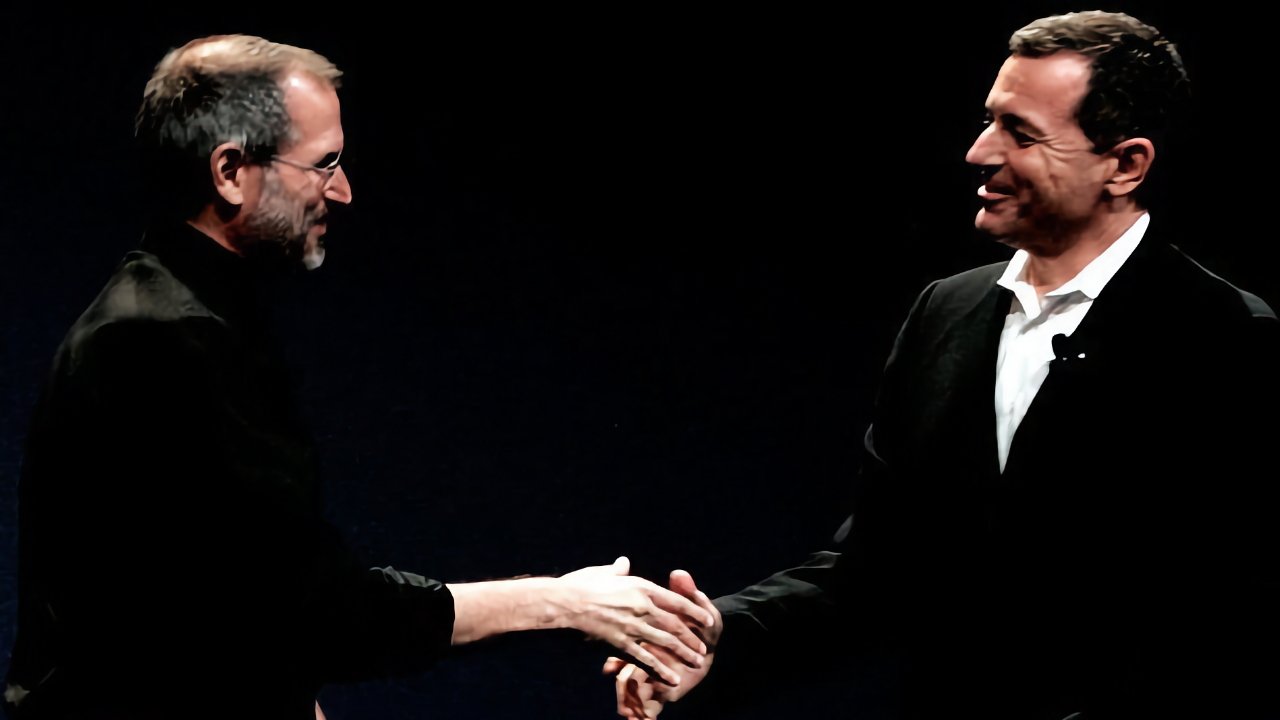
Steve Jobs and Bob Iger in 2007
It's not just the price tag that matters
There's also the slightly significant fact that Disney has no real reason to want to sell out. Companies can be pressured into a sale by shareholders, but overall, Disney is doing well when looked at as a whole.
Fans were excited about Chapek being gone, about Iger returning. Josh D'Amaro was mostly a parks and experience guy, and thoughts about him taking over depending on how they feel about the parks and media dichotomy within the company.
Chapek's departure was about the board wanting to make more money, and the company wanting a COVID fall-guy than anything else. That's long-past.
Iger came back for all sorts of reasons, but he didn't do it to change Chapek's plans and we don't know whether D'Amaro will either. We also don't really know if the new CEO wants to sell to Apple, but given evertying that we've spelled out above, it seems incredibly unlikely.
We can now be certain that Iger didn't come back to make a deal with Apple.
Yes, Disney has had a few under-performing years, and some expensive, high-profile missteps. There's COVID, of course, which shut down the parks for a while, and cut the capacity for even longer. The Star Wars hotel in Florida was shut down after 18 months, but also generated a $235 million tax offset for depreciation of assets and impairment.
That was perhaps a surprise. What was more predictable, though, was that the Disney+ streaming service would prove to be both a huge success and somewhat of a problem.
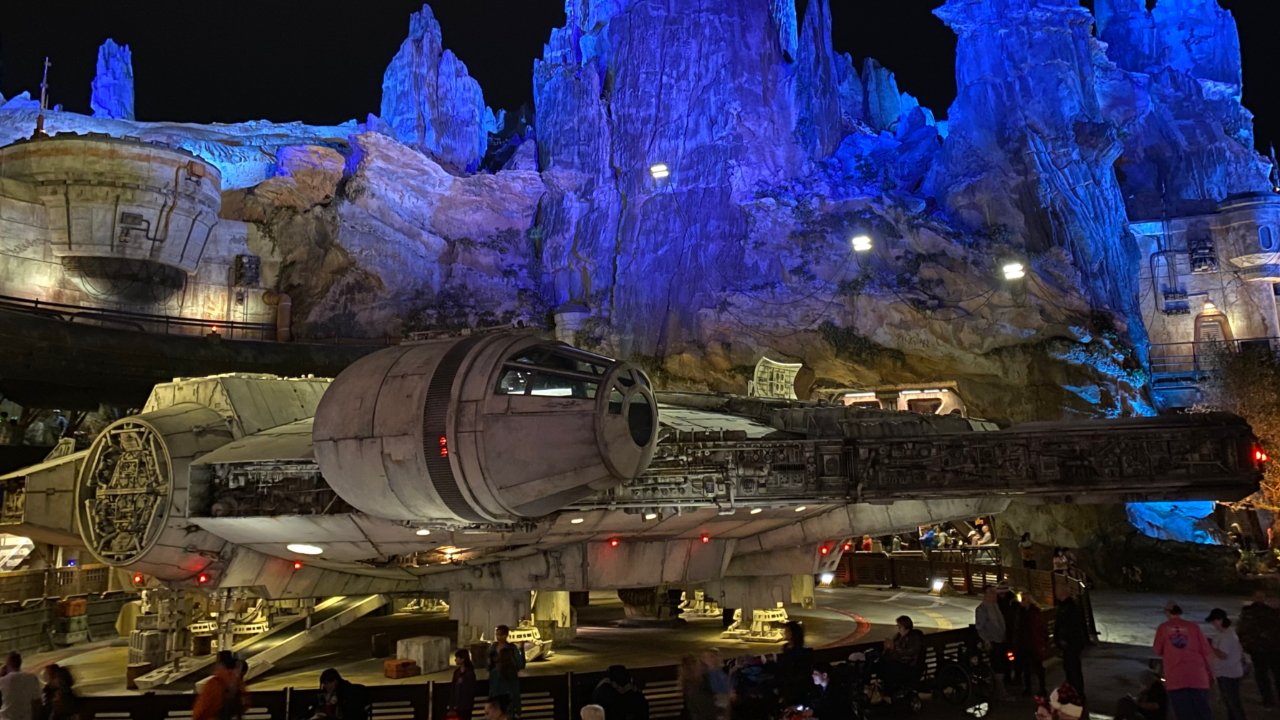
Disney has come a long way since "Steamboat Willie," and now includes all of "Star Wars."
Two sides to Disney+
The Disney+ streaming service launched in November 2019 and aimed to get between 60 million and 90 million subscribers by 2024.
Instead, it easily beat that by November 2020, after just one year instead of five. (It's intended to be watched on TVs, iPhones and iPads, but you can also watch on a Mac.)
The problem is that the service required a great deal of investment in technology as much as anything else. Then while it has an enviably gigantic library of material, what drives new subscribers the most is brand-new programming.
And there is little that is more expensive than television programming with, for instance, "The Mandalorian" alone costing around $15 million per episode to produce.
There are then other costs such as marketing, and other income such as from toys and the parks themselves, that are not counted at all in the streamer's accounts, but rather in the accounting of the company as a whole.
Disney knew it would lose money with streaming at first, and its financial earnings calls have continually forecast it. But it didn't expect to lose $630 million in one quarter in 2022, nor $1.5 billion a year later.
This is complex, of course, more so than the numbers suggest at a first glance. The losses are tied to overseas sporting withdrawal, and impairment charges related to taking content off the service.
Even so, Disney+ is this massive success that is costing its owner much more than expected. It has now raised costs on Disney+ streaming several times.
Maybe, if you look at it just the wrong way, Disney could conceivably, possibly be the slightest bit vulnerable. Any firm buying it would be taking on the same problems and the same costs.
At present, those problems still include the aftermath of the strikes by the Writers' Guild of America and of the actors' union, SAG-AFTRA. With Iger's tone-deaf attitude during the strike, and Disney's cancelling of projects weeks after they launch, there are writers and actors who will of bring their projects to Disney only after exhausting other studios first.
Apple TV has been a beneficiary of that.
Doing what firms do best
Nonetheless, Needham analyst Laura Martin has also argued that Disney is great at making shows, while Apple is great at getting to audiences. Therefore, she insisted in May 2023, and again on April 21, 2026 that Apple acquiring Disney is necessary to make Apple TV competitive.
"So I think Apple is really doing a very mediocre job of streaming," she said on CNBC in 2023. "They just said they were gonna do a billion dollars in film finance [but] this is sort of laughable, because these companies they're competing with in content businesses are spending thirty billion dollars a year."

"Even Netflix, which is a single line business and streaming is spending $20 billion in round numbers," she continued. "So the notion that Apple is going to spend $2 billion on streaming and $1 billion on films, I think they're starting to get serious because what they're realizing is that services and hardware, which they've done today, actually do create consumer lock-in, but so does content."
"And the only content that you don't have to license every time you want to use it is if you own the IP, you own the intellectual property underneath it," said Martin. "And guess what the Walt Disney Company has? One hundred years of some of the best intellectual property, characters, and film franchises on Earth."
Martin is right about content, but it's not that this has suddenly become a new thing. Apple TV has been running since 2019, but it was in the works for years before that. And in 2026, it is creeping up on Netflix.
At one point it was rumored that Apple was in talks to buy MGM to get its library of content. If that were true, it didn't happen.
Apple not bought MGM, nor Imagine Entertainment at one point also reportedly in the frame, nor Paramount. All of those studios were cheaper, and didn't have the baggage of theme parks for a media buy.
That doesn't mean it won't, and there are rumors that it was in talks to buy Warner Bros' library before Netflix beat it.
But Apple didn't buy Warner Bros, and seven years after launch, Apple TV is clearly not seeing acquiring an incredibly vast library to be a priority.
And then there is also this. Amazon has been acquiring. It bought MGM in a deal costing $8.45 billion, back in 2021.
Only Amazon knows whether it has added enough subscribers to pay for that, but outside of the business, it's likely that few viewers noticed the difference.
Laura Martin is right that content helps lock in viewers, and she was right at the time Apple could have afforded to buy Disney. But that does not make this the slam dunk she implied.
For one thing, as deep as Apple gets into streaming, it is still doing it to sell iPhones, it is not banking the business on getting the biggest audience for "Schmigadoon!" that it can.
Plus you can have the money to buy a firm the size and stature of Disney, but that doesn't mean it's easy.
It's not just up to Disney and Apple
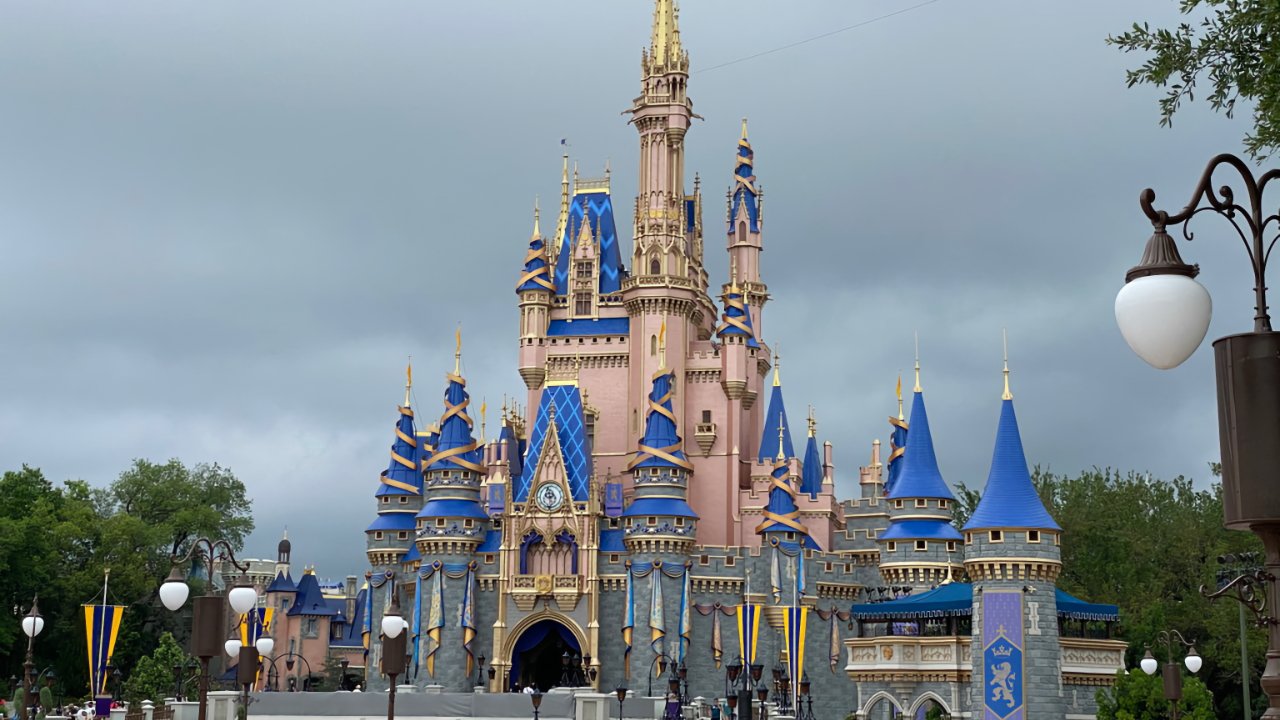
Say Tim Cook burns to see more episodes of "Mandalorian," and Josh D'Amaro is keen to see an Apple logo on Cinderella's Castle in the Magic Kingdom. The two firms are still so huge that any kind of deal would have to go to US regulators.
By August 2023, even analysts who were so certain about Apple buying Disney were going oh, wait a second. Except they then bafflingly came to the conclusion there that an apparent solution is to cut down Disney, to make it smaller enough not to trigger regulatory issues.
The Hollywood Reporter said that many analysts held this position. If Disney shed some of its many companies, they believed, it would make it easy for Apple to buy it.
It is true that Iger has referred to ABC and ESPN as Disney firms that "may not be core" to the company's business. Disney could sell off those channels, if it could find a buyer that would agree to terms which reportedly require Disney still controlling the brands.
Disney could conceivably divest itself of any parts of the company, right down to its Disney Land and Disney World resorts if it wanted to. Josh D'Amaro used to run those theme parks and he's now got a new job as CEO.
Apple might want parts of ESPN, and it has made moves in live sports. It might also want parts of ABC, but that's less certain. Apple does not historically buy struggling parts of businesses, nor is it that interested in being second-fiddle to another company controlling the property.
There comes a point for Disney where this becomes practically asset-stripping. What's left may be a smaller Disney, but it's also one that has lost some of its attraction.
Plus it's unlikely that Disney could winnow away itself enough that the government would wave through a sale. In 2022, a US judge refused to allow much smaller publishing houses Penguin Books and its rival Simon & Schuster to merge, in what Reuters said was merely a $2.2 billion deal.
In that case, the argument was that merging those two firms would cut competition, and also lower advances for their authors. Disney might want to lower what it pays creatives, but even before it dissed them on the picket line and removed their shows from existence, that's what got it into costly hot water with actor Scarlett Johansson.
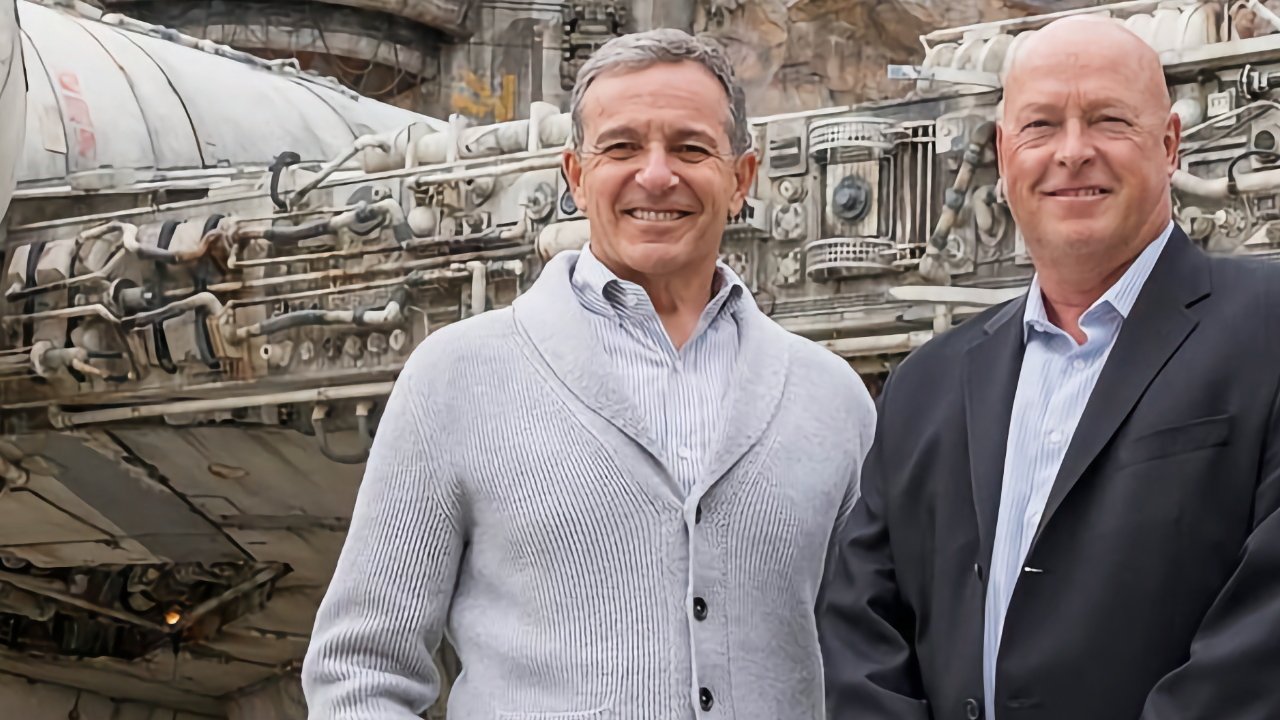
Bob Iger and his (short-lived) replacement as Disney CEO, Bob Chapek
Apple doesn't buy firms on a whim
We've all spent more on something than we should, just because we wanted it. But we're not Apple, which has no reason to want Disney, ESPN, or ABC other than how that would balloon out its Apple TV+ library.
Apple's had the chance to buy libraries of content before, and even reportedly held some preliminary discussions with MGM. But it passed on that deal, and hasn't introduced any others.
Steve Jobs bought Pixar from Lucasfilm because the price was right. Disney bought Pixar because its animation studios were no longer creating the hits that it needed. And then Disney bought Lucasfilm because George Lucas was ready and the price looked good.
So huge companies will buy other huge companies, but only when the price is less than the value they will get from it, and they believe that the regulators won't get in the way. Disney is not ready to be part of a larger synergy machine than its own, nor does Apple appear to have any inclination to get into the theme park business, even in part.
Disney is still not in a weak enough position to make it a bargain for Apple, nor does it have anything Apple especially needs. Not even if Apple's finances change again and make buying Disney technically possible.
And, in case you were keeping track, since its first publication, this piece has been revised nine times to reflect the most recent talking heads pontificating about the possibility because it would be good for investors, or Iger and now D'Amaro themselves.
But still not good for Apple.
As an aside, we wrote this piece in 2022. Here I sit in this same chair four years later, updating it. Again.
We had no idea that there's be enough stupid prognostications and predictions that we'd publish it 10 times in six years. Congrats to mostly stock analysts, I guess, for being evergreenly wrong about this, year after year.