
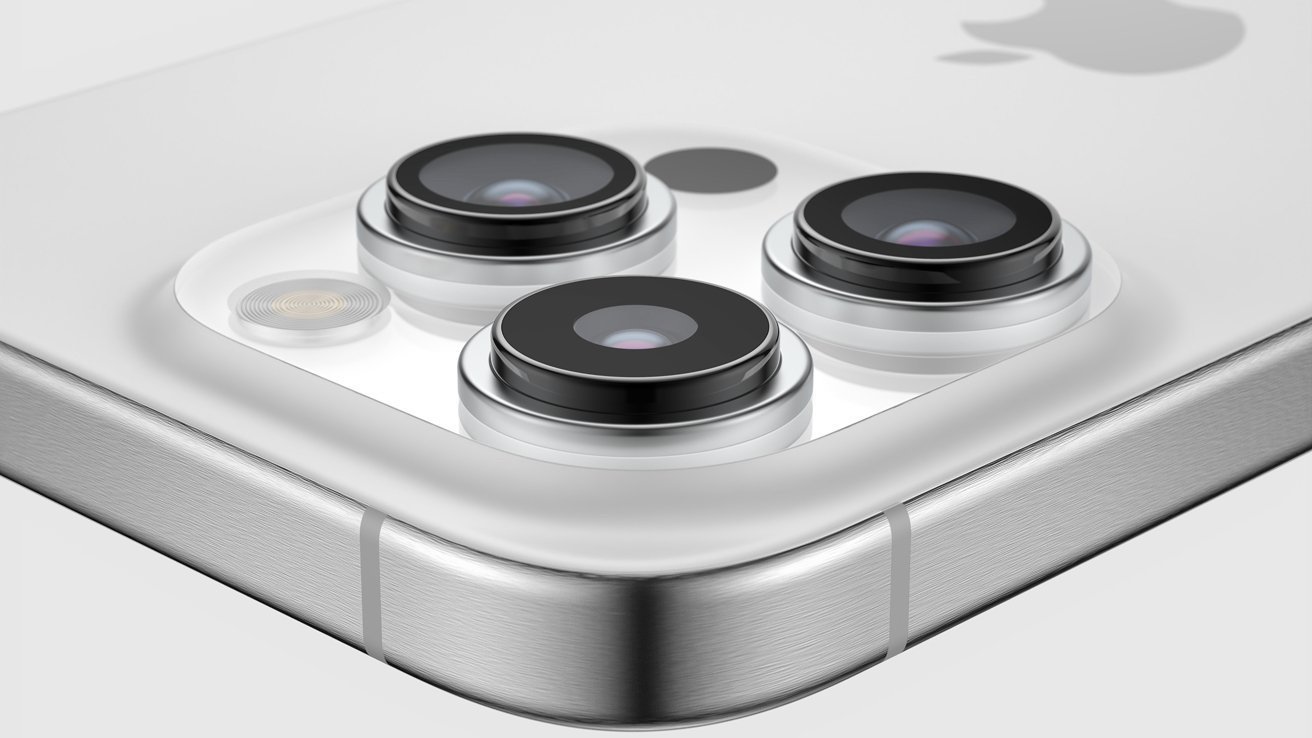
New research shows that Apple doesn't just want to protect iPhones from water damage, it wants them to take perfect photos while in that water.
There have long been third-party accessories that make it possible to film underwater with an iPhone. But as Apple itself notes in a newly-granted patent, such devices came with a specific problem.
"When capturing images underwater, typically the camera system must be protected from the water," says Apple in the "Plurality Of Optical Centers In A Unified Free Form, Hemispherical Optic" patent. In certain cases, "a barrier specific to the lens may be provided, for example in the case of a dome port."
But putting these in front of the lens is a balancing act. They can "address distortion caused by being submerged in water," but a dome port could also add such distortion.
Plus "traditional dome ports can be quite large and cumbersome." What Apple wants is a much thinner, much slimmer system that could perhaps be fitted to an iPhone case.
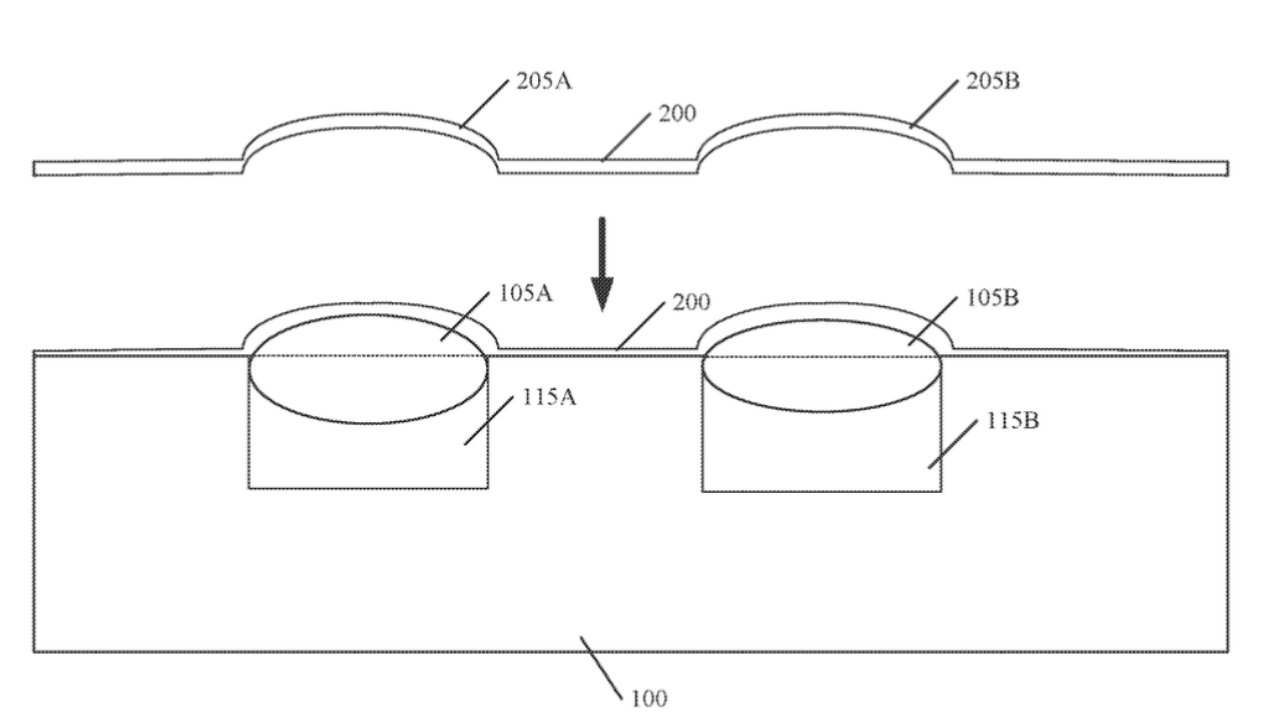
Detail from the patent showing a slim extra layer being laid over lenses for protection - image credit: Apple
Apple's proposal is that the iPhone use multiple cameras, as it does already out of the water, but not have domes for each one. Instead, it could be a protective single layer that "also acts as a lens as part of each lens stack for the various camera modules."
If the camera lenses and modules "are arranged along a flat surface," says Apple, "then the singular optic may be substantially flat." It wouldn't be completely flat because there'd still be some domes, but then there could also be a curved version.
That's because Apple also proposes that if the cameras are arranged over a curved surface, this singular optic could be made to follow the curve. "The curvature of each of the domes matches the curvature of an underlying lens," says the patent.
The key part of the proposal is that this singular optic, this sole barrier, would truly be made as one element. So there wouldn't be entirely separate dome ports for each camera, and there would be less chance for water ingress.
Being made from one piece of material, it would not have the usual "seams, glue, or other joining materials."
That would also mean that there wouldn't have to be space left for that joining together of components. There wouldn't be the risk of glue or seams contributing to distortion.
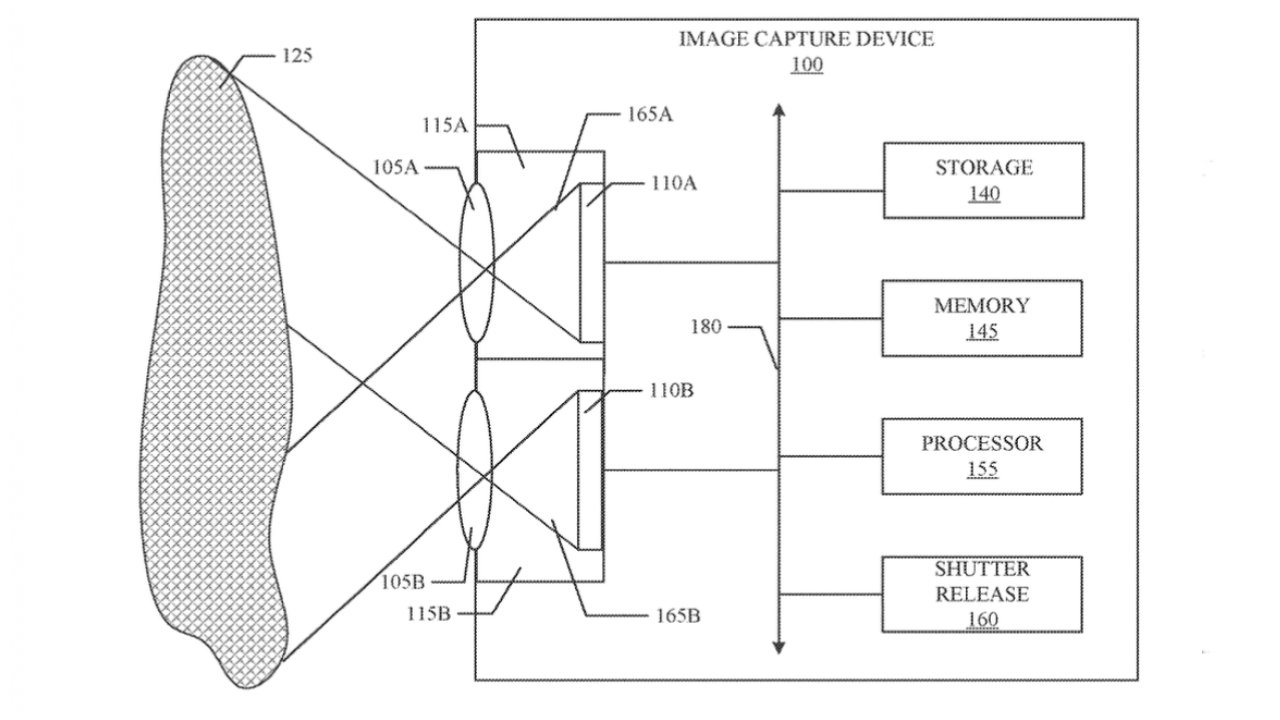
Apple proposes that multiple lenses could be used together, and protected by one overall water barrier - image credit: Apple
Apple isn't the first to find a way to protect iPhone lenses underwater. But based on the six pages of diagrams, and four of detailed text, it looks like it's found a particularly small format for the protection.
It might still be too bulky for Apple to just make every iPhone have this extra protection. But it would so easily fit in a separate iPhone case.
The patent is credited to two inventors, Ryan M. Sheridan, and Benjamin D. Buckner. The latter has previously worked for Apple on a patent concerning the "fisheye" distortion caused by certain lenses.