Future and much less conspicuous versions of the Apple Vision Pro may act as smart sunglasses, with automatic dimming depending on your surroundings and who you're with.
We've already got iPhone screens that adjust their brightness to suit the lighting in the room, and there have long been polarizing sunglasses that dim when you go outside. Apple wants to use both ideas in a future pair of Apple Vision Pro that more resemble the old idea of Apple Glass spectacles.
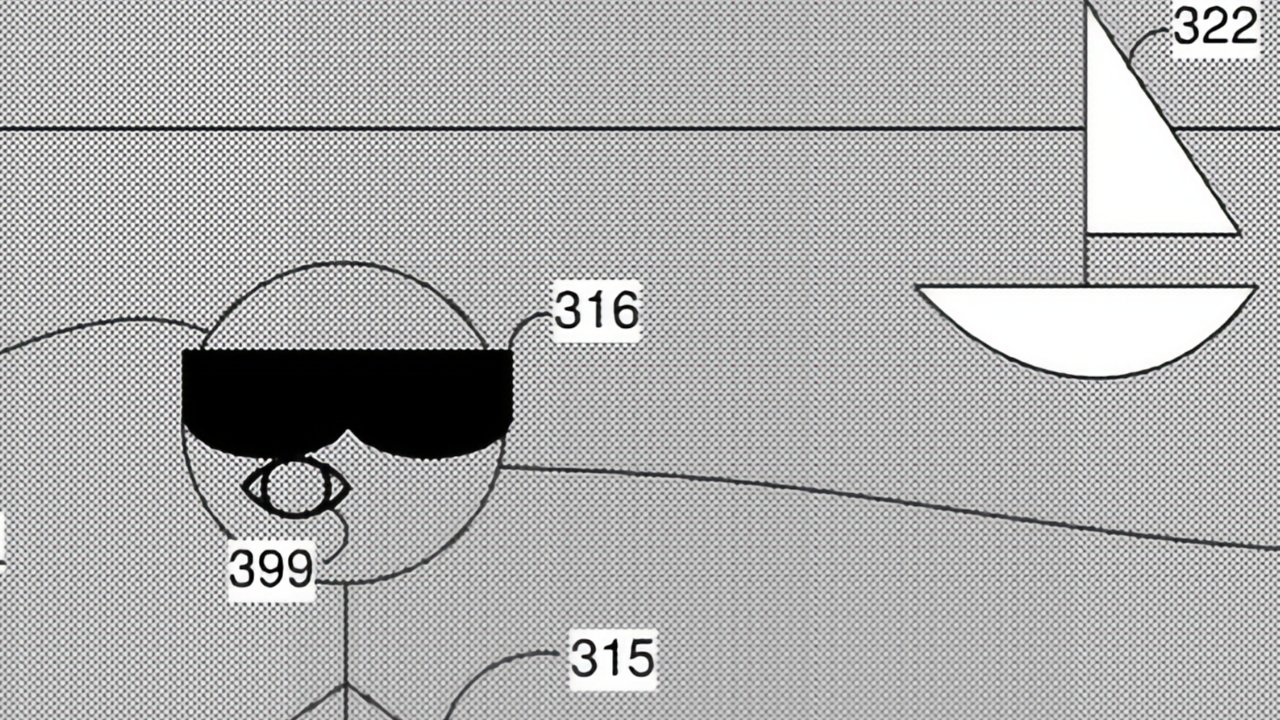
That's because while this could apply to the current style of Apple Vision Pro, Apple sees this as being leisure wear. Instead of working at a desk, Apple describes these smart sunglasses as being worn in the "physical environment of a beach."
All of this is in a newly-revealed patent application called "Triggered Dimming And Undimming Of A Head-Mountable Device." In it, Apple does describe situations such as receiving notifications or walking directions through the glasses, but its chief concern is with this automatic dimming.
"Some HMDs [Head-Mounted Displays] can operate as 'smart sunglasses' by controlling the operation of a dimming layer of an optical passthrough display," it says. "For example, when a user is indoors (in low-light conditions), a dimming level of the dimming layer is set to a low value allowing more light to pass through, but when the user is outdoors (in bright-light conditions), the dimming level is set to a high value allowing less light to pass through."
Part of this sounds familiar from how the current Apple Vision Pro uses a passthrough display. But in the current case, the aim is to present a virtual version of the wearer's eyes on the exterior screen, to make it look as if they are making eye contact with you.
In this case, not only would they really be able to see you directly, but Apple wants to make it more socially acceptable than the current system. Consequently, this patent application is about more than polarizing the glasses when it's bright outside.
"However, controlling the dimming level based only on the current ambient light level may lead to undesirable results in certain social situations," says Apple. |For example, it may be considered rude to shade one's eyes while engaged in conversation."
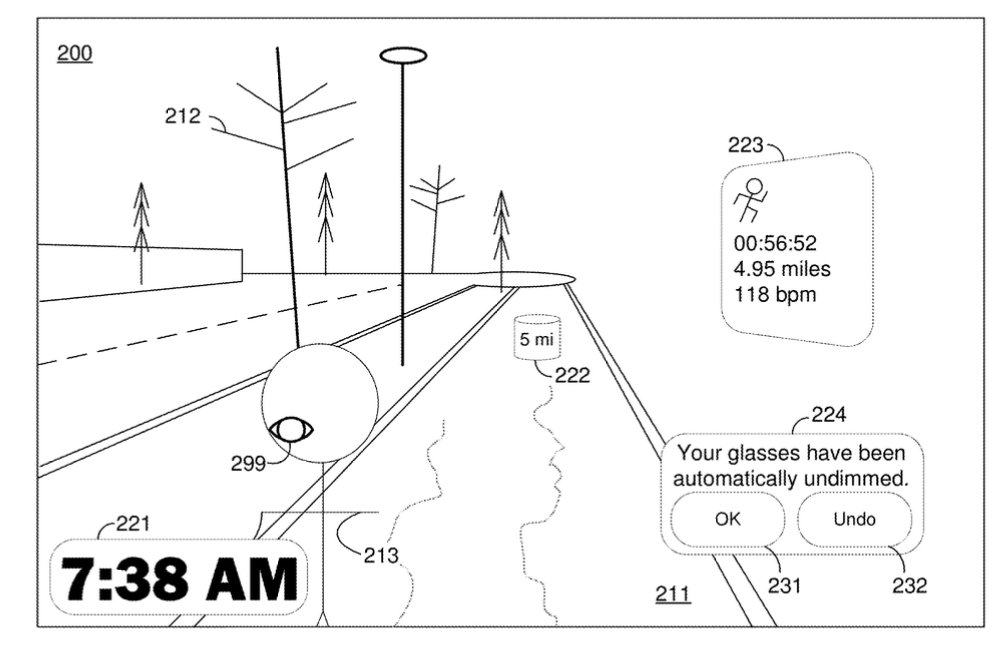
View through the glasses, including a dimming notification — image credit: Apple
Apple also notes that "removing sunglasses is relatively simple," but if you have to get out your iPhone to adjust the dimming of your headset, that's a bit "input-intensive."
"Accordingly... the dimming level is automatically adjusted according to various factors, such as whether the user is engaged in conversation with a conversation partner," continues Apple, "whether the user is indoors or outdoors, the location of light sources with respect to the user, and user preferences."
Over around 12,000 words, and 13 pages of illustrations, Apple drills down into its usual concerns of the sequence of steps, the processes that such technology would have to go through. It doesn't go into a lot of detail over use cases, beyond mentioning the beach.
This patent application is credited to four inventors, including Anshu K. Chimalamarri, whose previous work includes location-based privacy for Apple Vision Pro.