The transfer of US TikTok's ownership to politically connected billionaires is more-or-less complete. But, the timing of its first major outage — and who is getting hit by it — is drawing attention.
Just days after completing a deal that shifts control of its U.S. business, TikTok ran into widespread technical problems. Users report failed uploads, broken feeds, stalled moderation, and an algorithm that suddenly feels generic rather than personalized.
The timing fuels suspicion, especially as some political content struggles to publish. No evidence shows the issues are intentional, but the outage renews arguments over censorship, deplatforming, and who controls what Americans see.
Problems began early Sunday morning, January 25, according to outage tracking and reporting from tech outlets. Many U.S. users say they can't upload videos, with posts stuck "under review" indefinitely.
In some cases, videos uploaded from outside the United States appear normally, while the same accounts show no new content when viewed domestically.
Other issues include login failures, comments that won't load, a For You Page that appears unpersonalized, and errors across features such as CapCut. TikTok's new U.S. entity says the failures are tied to a power outage at a U.S. data center and says it's working with a partner to restore service.
Why politics enters the outage conversation
The outages happened right after TikTok's U.S. business was handed to a small group of ultra-wealthy investors with direct access to the Trump White House. It includes Oracle chair Larry Ellison, a prominent Republican donor and longtime ally of President Donald Trump.
As TikTok struggles to publish videos tied to protests and federal law enforcement activity over the weekend, creators are interpreting the failures through a political lens. When content stalls "under review," feeds lose personalization, and moderation appears frozen, some users see suppression rather than a technical breakdown.
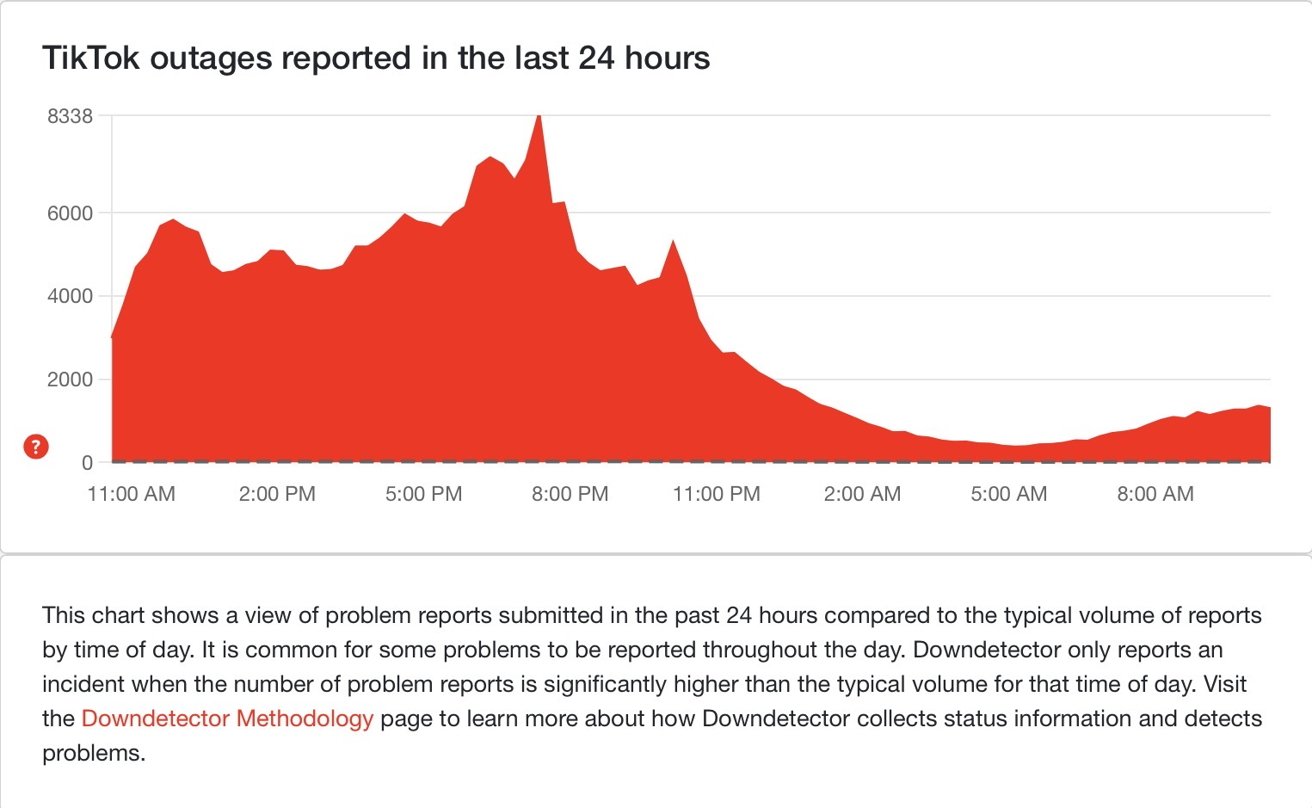
TikTok outages as reported by DownDetector
At the moment, no evidence shows that political content is being deliberately blocked. The problems appear systemic, affecting uploads, feeds, comments, and creator tools across categories.
The ownership shift makes those perceptions harder to dismiss. It's not a transfer to neutral or unfamiliar investors.
US TikTok is now owned by billionaires who are closely aligned with the Trump administration. These people previously pushed to ban TikTok outright because they weren't being favored, with the federal government still viewing the platform as a national security risk.
The U.S. transfer is framed as a solution to years of regulatory pressure. Federal law requires TikTok to divest from foreign adversary control or face removal from U.S. app stores.
The new joint venture places private American investors in charge of public U.S. operations, allowing TikTok to remain accessible. Supporters pitch it as a compromise, protecting national security without banning a platform used by roughly 200 million Americans.
But ownership isn't the only concern. Power, influence, and political proximity became part of the conversation, and a poorly timed technical failure pushes those questions to the foreground.
Why deplatforming remains a real possibility
The divest-or-ban law doesn't disappear after the transaction closed. Regulators still retain authority to enforce it if they conclude the new structure fails to meet legal requirements.
Deplatforming remains possible in the literal sense. App stores can still be ordered to remove TikTok if the deal is deemed insufficient.
Lawmakers, including the House Select Committee on China, are publicly demanding answers about ByteDance's ongoing role and algorithm control.
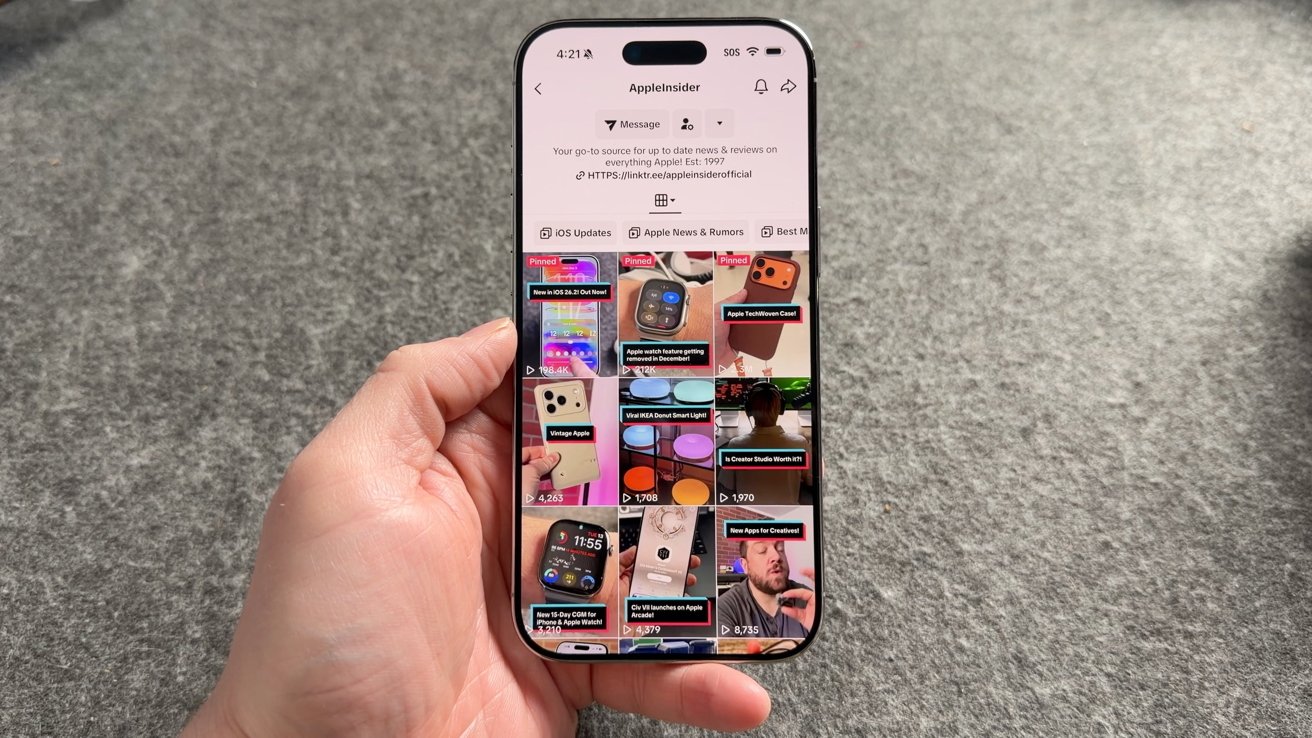
TikTok app on iPhone amid U.S. ownership transfer and platform outages
Complicating matters further, the new U.S. joint venture updated TikTok's privacy policy shortly after the deal closed. The revised terms allow the company to collect precise location data from American users, depending on device settings, expanding beyond the approximate location data previously collected.
According to BBC reporting, the updated policy also broadens data collection tied to user interactions with TikTok's AI tools, including prompts and usage patterns. While users can opt out by disabling location services, the change arrives at the worst possible moment for public trust.
For critics who already worry about surveillance and influence, the optics are terrible. Protesters in the U.S. may find that there are better options than TikTok to record instances of government abuse.
Control, transparency, and lingering doubts
ByteDance retains a minority stake just under 20% and continues licensing key technology, according to reporting on the finalized structure of the joint venture. The joint venture says U.S. partners oversee data security and retraining of the recommendation algorithm, with infrastructure hosted in U.S.-based cloud systems.
Much of the current debate collapses two separate issues into one. Deplatforming refers to regulatory action that removes TikTok from app stores entirely.
Censorship refers to claims that speech is suppressed inside the platform. Those claims remain largely unproven and are harder to evaluate.
For users, TikTok remains online, but its future looks less stable than the deal suggests. For creators and advertisers, uncertainty is a problem because visibility, reach, and revenue depend on systems now under heightened scrutiny.
The transfer solves one problem and exposes several others. Between unresolved regulatory pressure, expanded data collection, opaque moderation systems, and a rocky technical rollout, the platform remains a flashpoint for deplatforming and censorship debates.
Until ownership, control, and enforcement are clearer, TikTok continues to sit in political limbo, regardless of who technically owns it.