
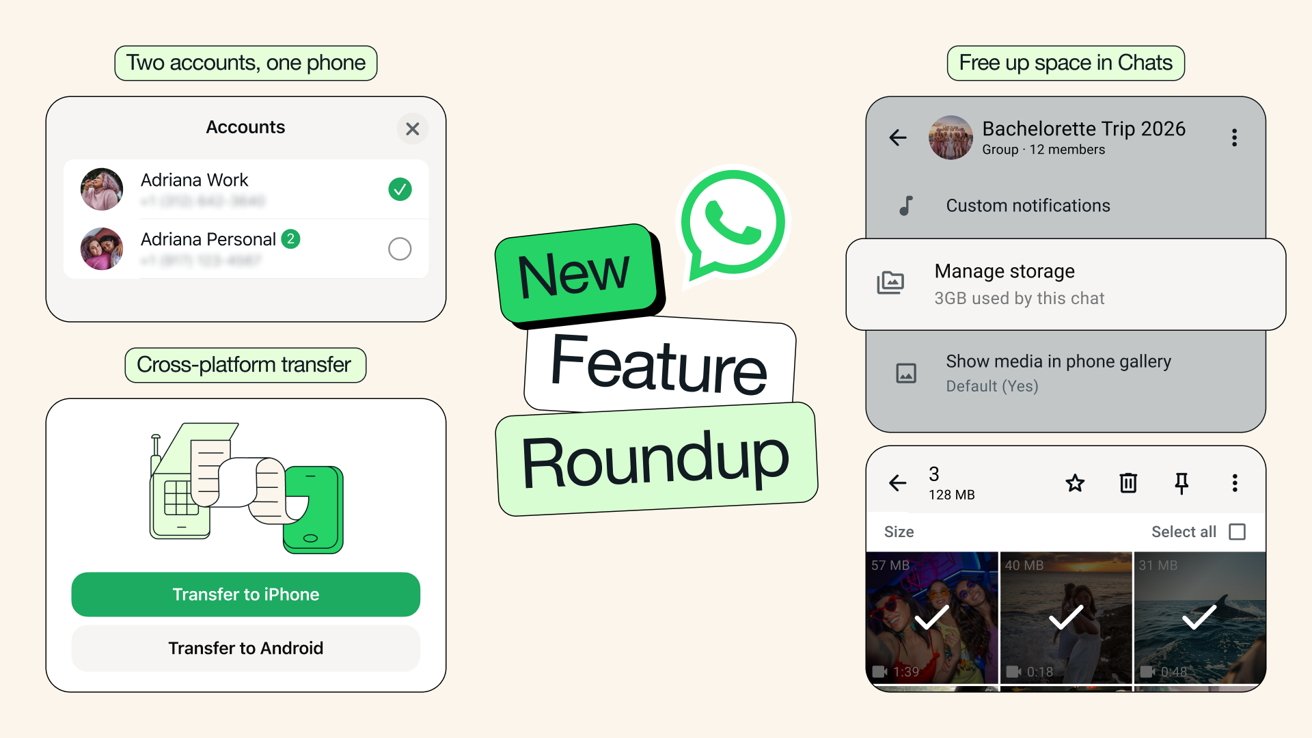
WhatsApp is tightening up its iPhone experience with smarter storage controls, easier cross-platform chat transfers, and built-in AI tools that handle edits and replies inside conversations.
WhatsApp will begin rolling out new features on March 26. They include two accounts on a single iPhone, improved storage controls, and easier cross-platform chat transfers.
The update also adds AI-powered tools for editing photos and drafting messages on iOS. Running separate work and personal accounts has often required a second device.
Two WhatsApp accounts arrive on iPhone
With the update, iPhone users can run two WhatsApp accounts at the same time, removing the need for a second device. The app shows a profile picture in the tab bar so users can confirm which account is active before sending a message.
Android has supported multiple accounts for years. The new iOS app is catching up as separating work and personal communication becomes standard.
Next, WhatsApp is refining storage management by letting users delete large files within individual chats instead of clearing entire conversations. A new option lets you remove media while keeping message history intact, which helps free up space on iPhones without losing conversation context.
Cross-platform chat transfer expands beyond ecosystems
The updated chat transfer tool now supports moving conversations between iOS and Android. WhatsApp says the transfer can be completed in a few taps and brings messages, photos, and videos over without extra setup.
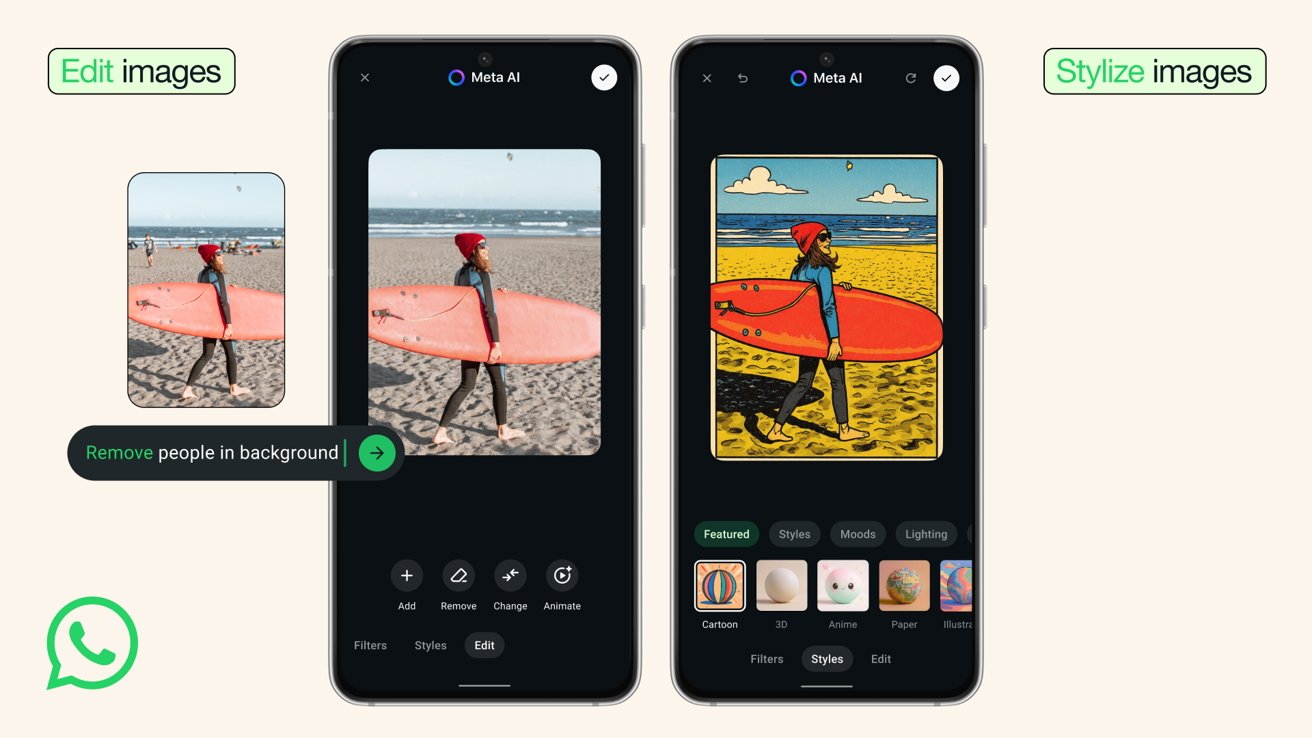
Stylizing images with AI
Switching between platforms has often meant losing chat history or relying on limited tools. Expanding transfer support reduces that friction and makes it easier to move between iPhone and Android.
WhatsApp is adding AI features for editing photos before sending and suggesting replies based on conversation context. Users can remove distractions, change backgrounds, apply styles, and generate draft responses that stay private.
The company is improving sticker usage by suggesting them as you type emojis, making it easier to swap a basic reaction for something more expressive. Visual responses often replace text, especially among younger users.