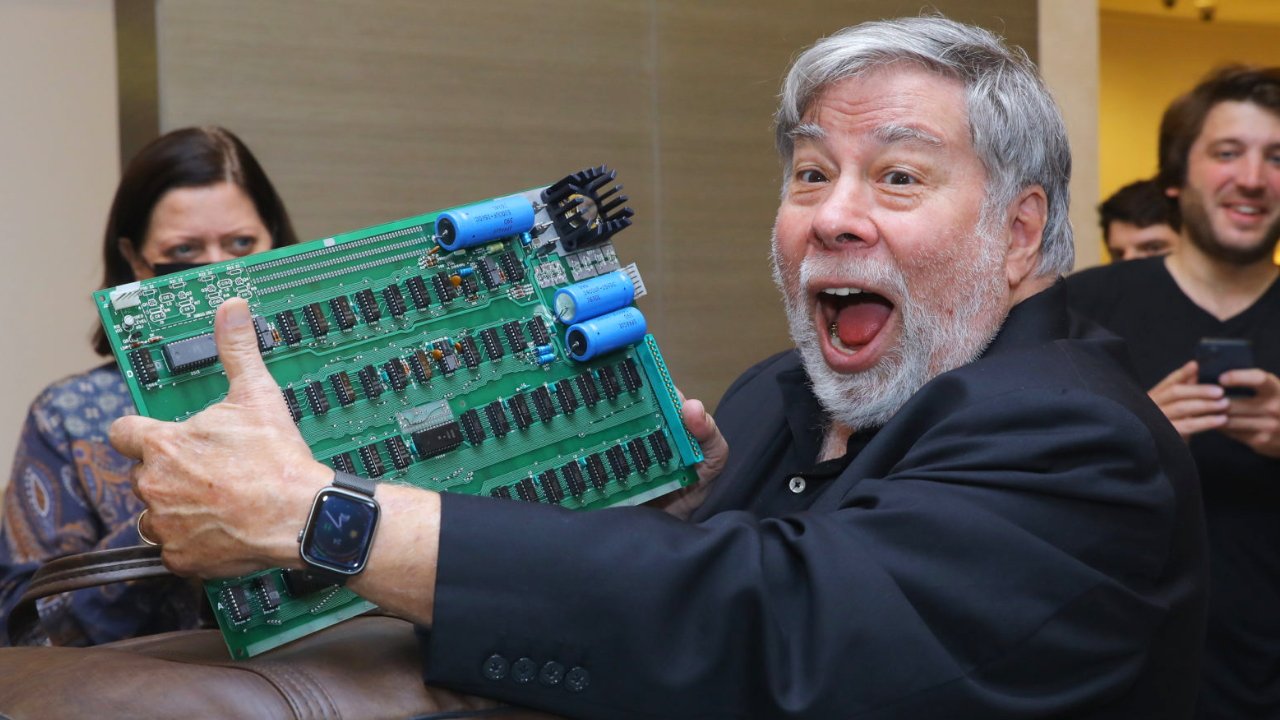
Apple's 50th anniversary is also the anniversary of the Apple-1. The Apple-1 isn't the only world-changing product that came out in 1976, with many other world-changing inventions sharing the stage.
In 1976, Steve Wozniak, Steve Jobs, and Ronald Wayne shipped Apple's first product — the Apple-1. Fifty years later, absent all three founders for various reasons, the company stands as one of the world's largest technology companies by revenue. Not only is Apple vastly profitable, it has made incredible globe-spanning strides in computing, smartphones, wearables, and more.
While the Apple-1 is undeniably one of the most important devices in the home computing revolution, it was hardly the only heavy-hitter that came out that year. As it turns out, incredible strides were being made across many industries, ranging from spaceflight to medtech, consumer electronics to cryptography, with many of the inventions laying groundwork for products and systems we see today.
Nasa's Shuttle Enterprise
The space shuttle Enterprise was originally set to be named Constitution, but "Star Trek" fans launched a massive write-in that convinced President Ford to change the name. Fittingly enough, most of the original "Star Trek" cast attended the rollout ceremony at Rockwell's plant in California.
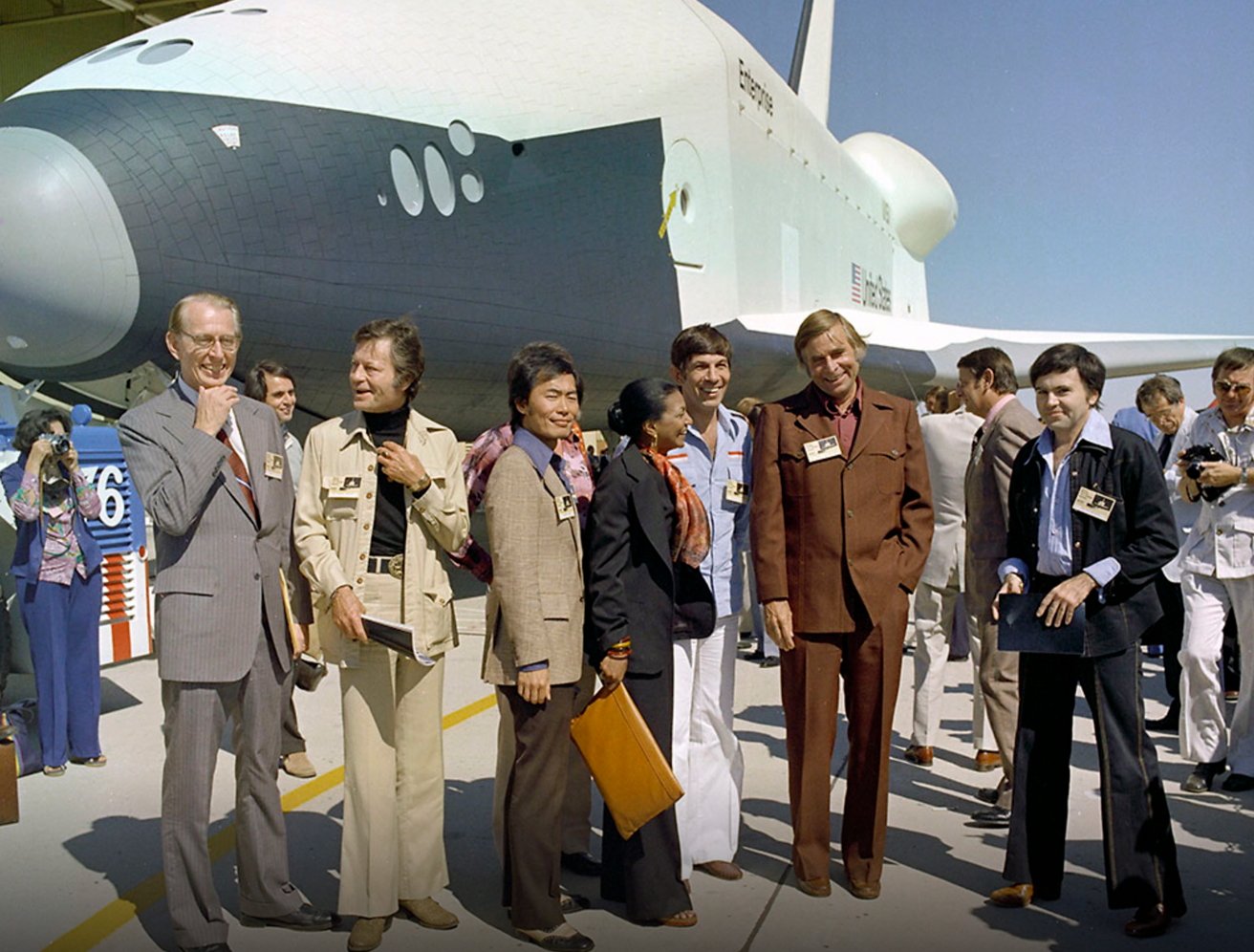
NASA's "Enterprise" rollout
Rockwell International spent a decade engineering the Enterprise under NASA's direction. Development was expensive, costing $10 billion — which amounts to nearly $60 billion today.
The craft itself was a prototype, and lacked thermal protection or engines, and was completely incapable of spaceflight. Instead, it was designed to test whether or not its design could actually be launched and landed like an aircraft.
It's still around. In 1985, it was donated to the Smithsonian Air and Space Museum and was on display at the Udvar-Hazy museum in Dulles, Virginia.
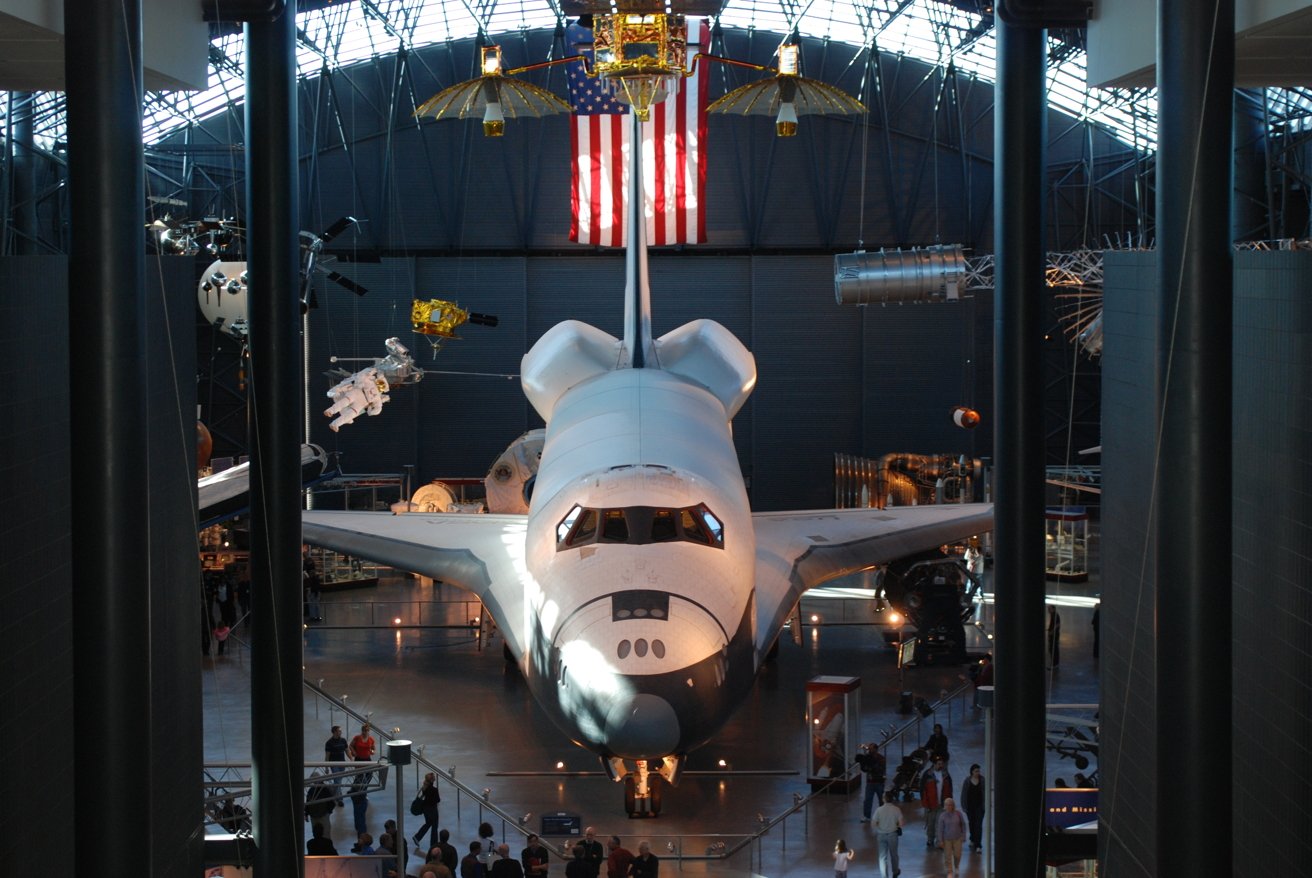
Space Shuttle Enterprise, at Udvar-Hazy Air and Space Museum in 2009 - Image credit Mike Wuerthele
In 2003, heat shielding material from the frame was used to evaluate foam impacts, following the Columbia disaster. In 2012, Enterprise was moved to the Intrepid Sea, Air, and Space museum in New York City.
VHS
In September of 1976, Japanese electronics company JVC introduced the VHS. On top of introducing it, it also introduced it as an open standard.
The first commercial unit, the Victor HR-3300, benefited from a longer tape that moved through the machine more slowly than the competitor, Beta. As such, it could record more video per tape. Contrary to conventional wisdom, the variable qualities available to owners allowing up to six hours per tape didn't change the platen speed, but rather, the device recorded video tracks closer together, resulting in noisier playback.
Between the open standard and its ability to hold two hours or more of footage on a single cassette, this was enough to edge out Betamax in the video format wars of the 1980s and 1990s. After previous efforts with Laser Discs and other custom formats, VHS copy protection introduced in 1984 is ultimately what initially drove the movie rental business.
While VHS would ultimately be dethroned by DVDs, which made their debut in 1996, VHS had a solid, nearly 30-year run before largely being discontinued in 2006.
Public-key cryptography
Before 1976, encrypted messages could only be decoded via secret keys exchanged by couriers. However, when Whitfield Diffie, Martin Hellman, and Ralph Merkle developed public key cryptography, they announced that they were standing on the brink of a revolution in cryptography.
As it turns out, they were right.
Public-key cryptography (PKC), or asymmetric cryptography, secures digital communication using a mathematically linked pair of keys. The technology uses a public key for encryption that's openly shared, coupled with a private key for decryption.
It allows secure data exchange, digital signatures, and key sharing without prior secret key sharing. Because of all that, PKC would become the foundation of the internet economy, and is the entire reason we have secure cloud storage, email, and online payment processing.
And, you're using it right now.
Jarvik-7 artificial heart
Developed by Robert Jarvik, the Jarvik-7 artificial heart wasn't a success, so much as it was a solid proof of concept. The first implantations hardly went well, with receivers suffering strokes, infections, and internal bleeds.
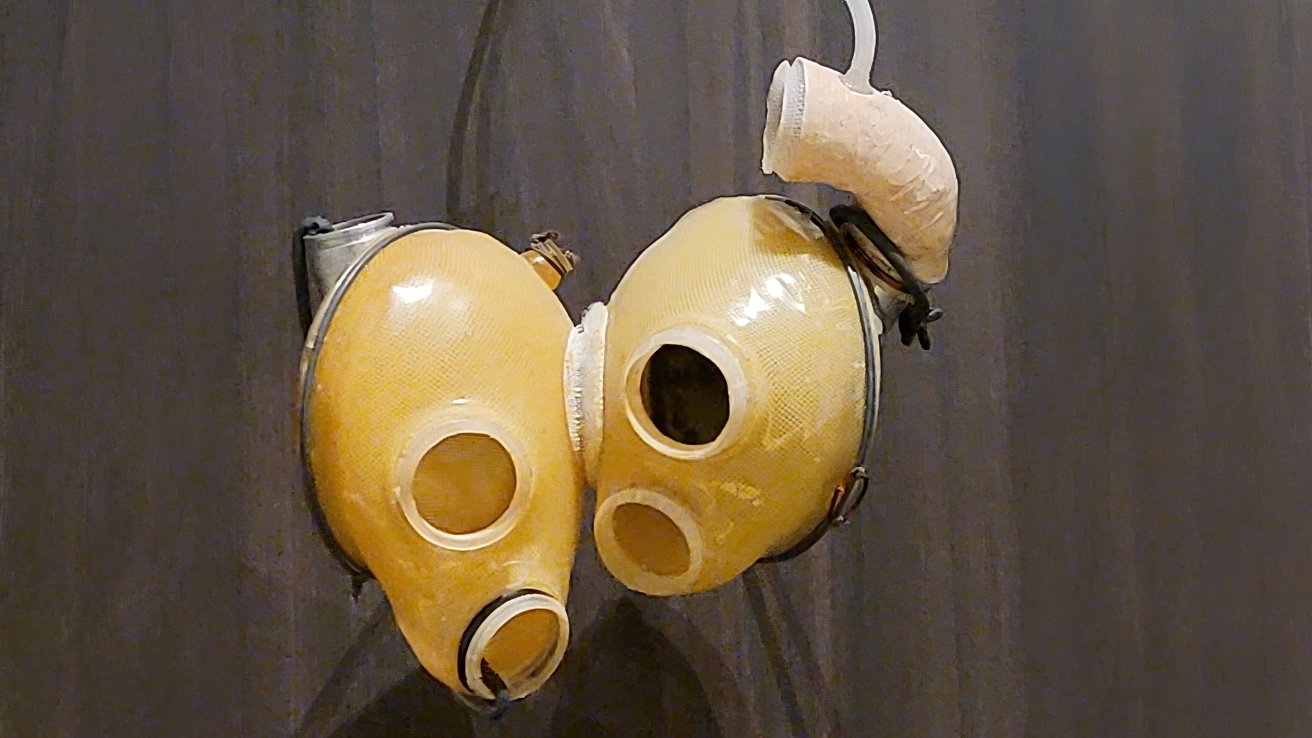
Jarvik 7 heart prototype | Image Credit: Votpuske at Wikimedia Commons
Yet, because of the Jarvik-7, medical engineers have proven that bridge transplants — temporary transplants that are used while receivers are awaiting human organ transplants — are viable.
MRI machine
While not technically invented until 1977, Raymond Damadian, a professor at the Downstate Medical Center, discovered in 1971 that tumors and normal tissue can be distinguished in vivo via nuclear magnetic resonance (NMR).
An MRI machine uses strong magnetic fields and radio waves to align hydrogen protons in the body, which then emit signals as they realign. These signals are detected by coils and, at launch, were shot onto photographic film to create images of soft tissues, organs, and bones without using ionizing radiation, as an X-Ray does.
In 1976, Damadian, along with fellow doctors Larry Minkoff and Michael Goldsmith, obtained an image of a tumor in the thorax of a mouse in 1976 via NMR. One year later, they would begin performing scans of human bodies.
The first human-capable MRI machine was built in 1977, and was enormous. The first commercial MRI scanner sold three years later.
MRIs have evolved over the years and now produce 3D images of internal organs. They are often one of the first methods of disease detection and diagnosis, and are crucial for treatment monitoring.
Ink jet printing
Technically, inkjet printing had a much earlier start, in 1948. However, it wouldn't be until 1976 that IBM would incorporate it into a commercial printer, the IBM 6640.
Like many other inventions of its time, it was more of a proof of concept than a finished idea. Because continuous inkjet printers lose ink to evaporation, the technology wouldn't become widely adopted until the 1980s when HP introduced the HP ThinkJet, a thermal inkjet printer priced at just under $500.
Inkjet technology is still the dominant home printing format. Its low entry cost and ability to produce high-quality photo prints make it an attractive option for the average user.
Commercial laser printers shipped with the Xerox 9700 just a year later.
Big Gulp
Until 1976, the largest fountain drink an American could get their hands on was McDonald's 20-ounce large. 7-Eleven decided to change that.
The Big Gulp made a debut at 32 ounces in 1976, at the behest of Coca-Cola, which wanted to bolster lagging soda sales. A case of 500 cups arrived at a store in Orange County.
After selling out within a week, 7-Eleven agreed to take the new size nationwide.
Of course, 32 ounces is nothing compared to 7-Eleven's current offerings. The chain now offers 44-ounce, 64-ounce, and even 128-ounce cups at select locations.
The Fairchild Channel F
If you're a fan of modern gaming, 1976 is a surprisingly important year. Jerry Lawson, one of the first black engineers in Silicon Valley, came up with an novel idea that would change the home video game industry forever.
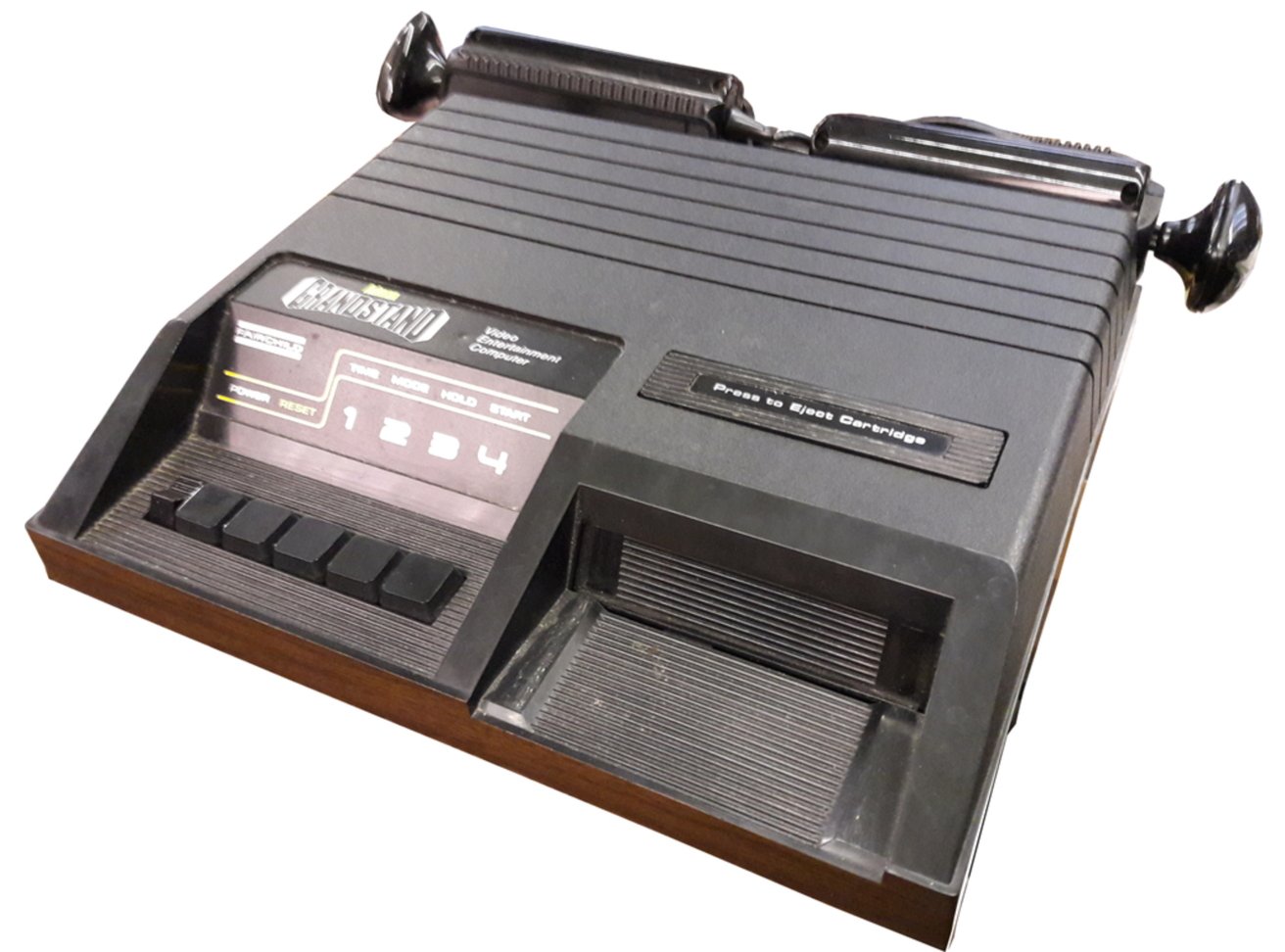
The Fairchild Channel F
Designed by Lawson and released in 1976 by Fairchild Camera and Instrument, the Fairchild Channel F was the first home video game console that utilized ROM cartridges. Before that, home consoles had built-in games, such as Pong.
At the time of its release, the Channel F cost $170, which is nearly $1000 today. Ultimately, the Channel F would only survive seven years, losing the console wars to the Atari 2600.
Lithium-ion batteries
Rechargeable batteries have become the norm when it comes to consumer electronics, and that's largely due to the lithium-ion (Li-ion) battery. Praised for its stability, reliability, and safety, Li-ion batteries have certainly come a long way from their start.
In 1976, M. Stanley Whittingham, a British chemist, created the very first lithium-ion battery while working for Exxon. Using titanium disulfide as the cathode and metallic lithium as the anode, Wittingham more than doubled the output of the top rechargeable batteries at the time.
Unfortunately, the batteries were far from safe and were incredibly flammable. However, with continual refinement, Li-ion batteries have become far safer and are used to power everything from your iPhone and MacBook to electric vehicles and medical devices like hearing aids and pacemakers.