Apple is shooting itself in the foot with how often it lets flagrant scam apps into the App Store. It's doing so at precisely the time is needs to do better for iPhone user safety.
In just the last week, Freecash was removed for how it sold user data. Apple only killed it after it was asked about the issue.
At about the same time, a fake cryptocurrency app took users for around $9.5 million before it was taken down. Or to look at it another way, Apple earned between $1.425 million and $2.85 million from that scam, depending on whether the developer is charged 15% or 30%.
We've been at this a long time. The co-authors of this piece have been writing about tech publicly on the internet since before the App Store launched.
We also know that this isn't new. But it is escalating, and getting far, far worse and more prevalent.
We like Apple, we buy their things and we know they have billions. Of course we don't want to think that the company "for the rest of us" is participating in illegal scams for cash.
You also know Apple doesn't need to do this. According to Statista, in 2024 Apple was earning $3,074 per second during that year.
And that number has gone up since.
Yet there has to be a reason why these scams continue at the escalating rate that they do. It is true that in Q1 2026, the number of apps submitted to the App Store rose 84% from a year before, hitting 235,800.
That is of course a huge number, and it appears to be just new apps when the App Store Review team also handles updates to existing ones. While we're being fair, we should say that Apple will always point out that it rejects a gigantic number of apps.
For one example, even back in 2020, Apple said that it had refused to allow 150,000 apps onto the App Store. At the same time, it claimed to have removed over 60 million user reviews that appeared to be spam.

Regulators in Europe and around the world are investigating the App Store
But it's since around 2020 that developers have objected to Apple's fees so much that regulators have been stepping in. That App Store cut appears completely reasonable, even a bargain, for getting your app into the hands of a billion users compared to putting things on a shelf, but Apple is now having to defend it around the world.
Apple says it's the cost of business. Not just intellectual property payments, not just hosting costs, but also the fees for curation.
Apple is fighting against having to open up the iPhone to allow rival App Stores, and it's mostly been failing. The company's argument is that it is that tight control over the App Store that is paid for by these fees that protects users.
If any firm could install apps, maintains Apple, then users could not trust that what they were buying was safe. They should not trust anyone else.
It's a good argument because despite the self-serving nature of it, Apple has more skin in the game than any other company. If an iPhone user is stung by some fraudulent app, it is Apple that gets blamed.
That will be the case even when there are other app stores, and it is certain that there will be more scam apps once Apple's control is totally broken.
Except, this is like Apple's argument against unions in its Apple Stores, where it says its special relationship with the staff is being undermined. Apple's special relationship with its staff has long since been destroyed and it is a fantasy to pretend it is still as it was, as the Apple Stores were intended to be.
Similarly, Apple cannot take a high ground and say only it can protect users, when it is not actually protecting them as well as it could and should.
And they can't say that they don't have the money to do so. With escalating App Store submissions comes escalating revenue. It doesn't appear that the company is growing its curation team at all, with that additional revenue to compensate given how many of these scam apps pop up week after week.
Or especially when it appears to be choosing not to protect them. There can never be a world in which every app is totally safe, not when there's potentially so much money for developers who can game the system.
But there is a solution, there is something Apple is choosing to not do, and we know this because it has done it before.
True App Store review is not impossible
Back in 2020, Epic Games chose to start a fight with Apple over the App Store. It did it by releasing a server-side update to Fortnite that let users circumvent Apple's in-app purchases, and so choose which enormous corporation they gave their money to.
Less than eight hours later after that Epic server-side update, Apple pulled Fortnite from the App Store.
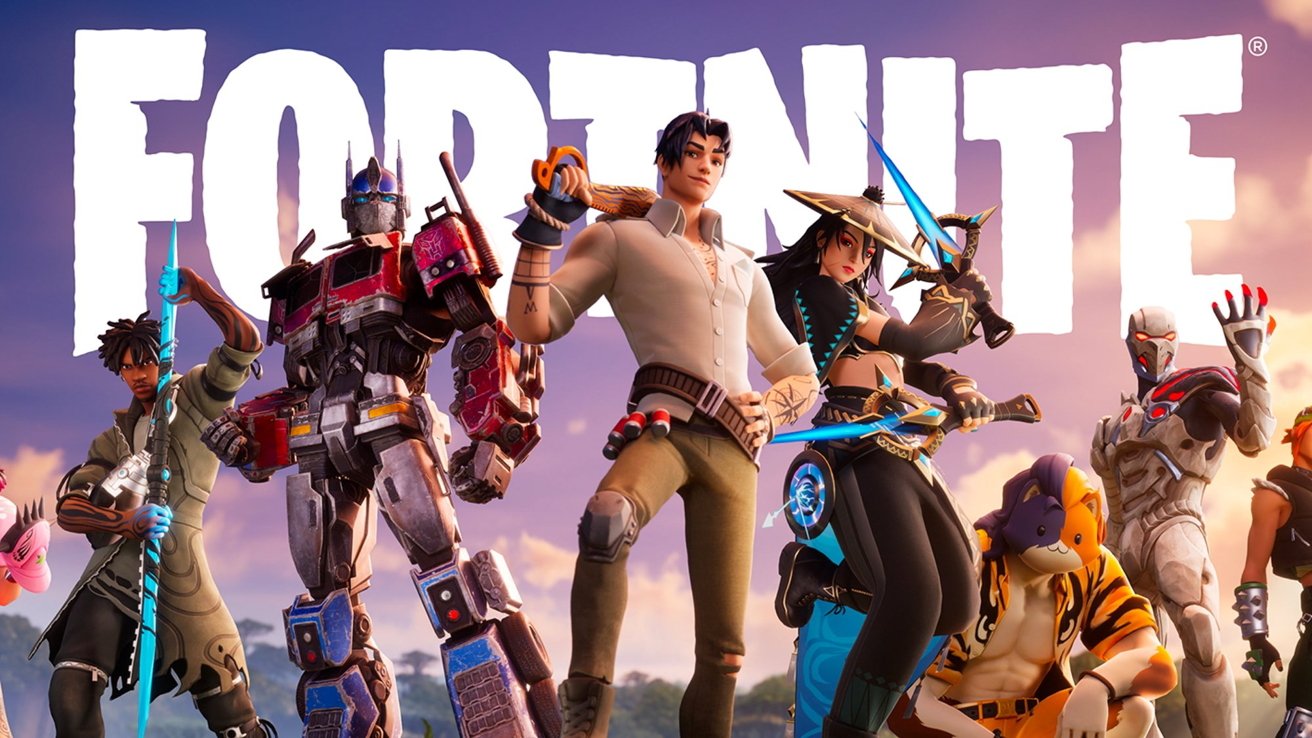
Epic Games chose to break App Store rules in 2020 - image credit: Epic Games
You can also well imagine that they would never have noticed it if Epic Games hadn't made a song and dance about the change. Maybe if Epic hadn't done this expressly to get thrown out and begin whatever righteous money-grab battle it wanted, it could have continued for some time.
But that song and dance is the key. Apple was alerted by the noise, and there are other signs that are just as obvious.
Such as when an app comes out of nowhere and climbs to the top of the charts. Such as when an app is banned from the Store but suddenly a completely unrelated app gets rebranded with the same name.
Seriously, that one is indefensible. This is how Freecash got around being rejected. Even though users should have thought the name was dodgy, Apple should have looked at its list of rejected apps.
Or even done a mostly automated diff check on code for the two at some point.
Names seem to be a startling problem for Apple. The recent cryptocurrency scam is just the latest of countless examples of a fraudulent app having the same name as a genuine one.
That's the kind of thing that ought to be practically automated. Whatever massive database the App Store review team uses, when they enter a name like "Ledger Live," it should show them that there already is one.
And maybe, just maybe, even be able to flag "LedgerLyve" as similar enough to justify a second look. We're certain that if someone submitted an app named "App1e," with 1 instead of the letter l, you'd know to check for fraud.
Do better on updates
Apple will never reveal how its review team operates, but it does look as if there's even less scrutiny on updates to existing apps than there is to new ones. This is another way that Freecash got through, because presumably the review team believed it was just an update to whatever app it was actually replacing.
Over and over again, there are cases of bait and switch apps which appear to be one thing when first submitted, then change after launch. Instead of the app loading images and text from one source, it's just switched to another.
Or the legitimate text and images stored online for the app to retrieve are replaced by what the fraudster always intended.
It would unquestionably add to Apple's workload if it checked on an app a few hours or a few days after allowing such an update. But this is a known method that scammers use to get by the App Store review team.
So here's a known problem, here's a solution. It's apparently not being used and these apps are continuing to prey on users.
Aftermath and Apple communications
After we reported less than four days ago about the fraudulent apps, Apple got back to us. They repeated the same talking points that they always do when an app gets pulled after it steals money from users, or some other nefarious deed.
And, as always, it's information surrounding the issues that we are not allowed to quote, and not allowed to say who said it to us.
We have always adhered to those terms, even when others have not, or others were allowed to quote and gave a named Apple PR source. We did do an email search on the verbatim quotes we got in the last few days, looking for repetition over the last 10 years at AppleInsider on what they said to us.
Essentially the same email was sent to us 29 times over the last decade. The emails used verbatim quotes 17 times over that timespan.
We found those same quotes on the internet, verbatim and uncredited, from other publications hundreds of times. So much for "off the record."
After that email giving us nothing of substance again, our Managing Editor Mike Wuerthele very specially asked them for more detail on what they were doing to stop this proliferation, on the record.
Silence so far. Not even off the record, summarize only details.
We need a safe App Store
It can't be that Apple needs the money, because Apple is a juggernaut. There are ways to spot the more blatant scams, and they don't seem to be in place.
Let's be clear on our stance about the App Store. As an iPhone is a computing appliance, intended for the mass market, an actually curated App Store needs to exist.
There are other arguments about third-party app stores to be made, like allowing advanced users a toggle to download them, or opening up more side loading possibilities through Xcode or the like.
Your mother and father most likely don't want open app stores, nor any possibility of opening one. You probably don't want that for your kids.
Maybe Apple is just another big corporation that is solely fixated on its immediate bottom line. It's definitely a corporation that is going to see its App Store exclusivity taken away from it across the globe as legal arguments fail if it keeps on allowing these apps through.
Fraudsters, paired by inaction, is destroying Apple's "curation and safety" legal arguments for continued existence of the App Store. Losing those arguments isn't good for everybody.