Boox has refreshed another model in its lineup, the Boox Go 10.3, adding one new optional feature while, somewhat disappointingly, removing something users really liked.
Boox is back at it again with the lineup refresh. This time, we're taking a look at the second-gen iteration of the Boox Go 10.3, Boox's iPad Air-sized e-ink tablet.
Boox Go 10.3 Gen II review: Design
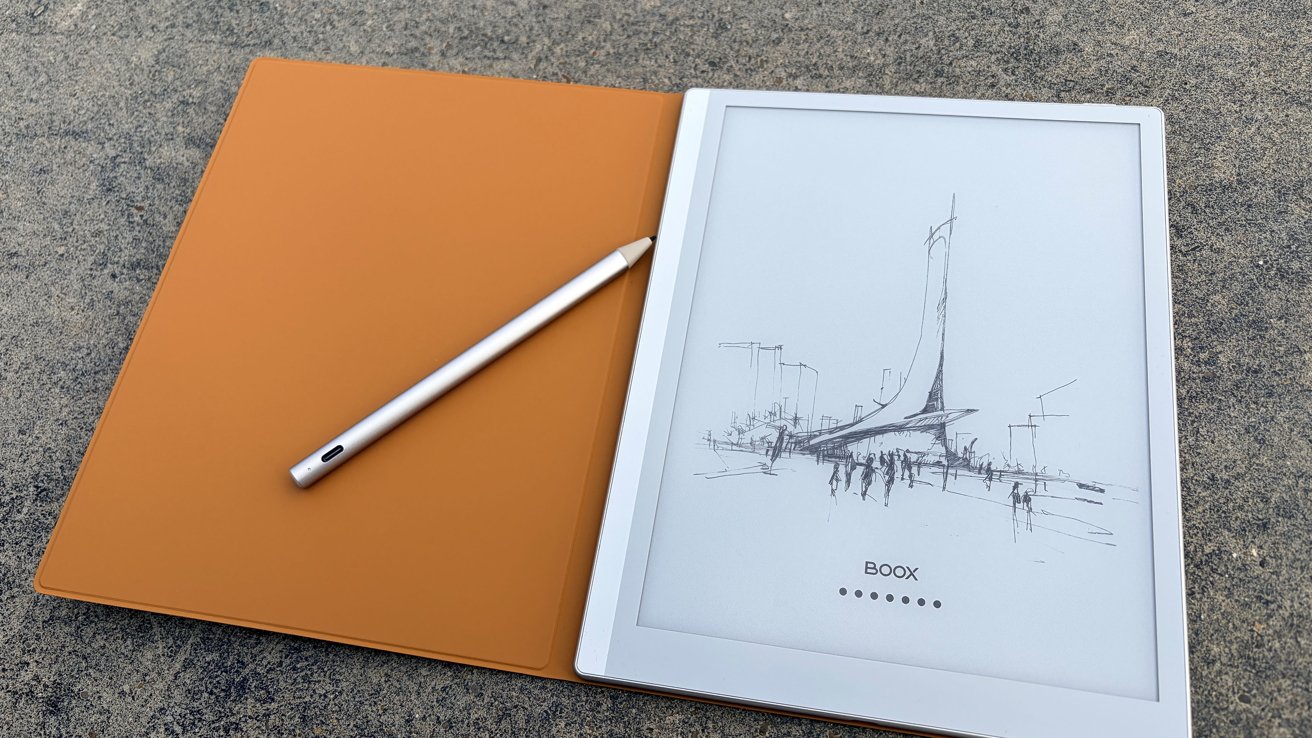
The Boox Go 10.3 is, as the name suggests, a tablet that is 10.3 inches on the diagonal. That gives it just a little bit less screen real estate than the 11-inch iPad Air.
Boox has really nailed down the design of many of its e-readers, and the Go is no exception. It's thin, but doesn't feel fragile, so you'll be more likely to toss it in your bag.
Like many of Boox's offerings, it also features a dedicated thumb-rest area on one side. I appreciate this, specifically because one of my main gripes with reading on the iPad is that it doesn't really give you a good place to grip.
In addition to the tablet itself, you also receive a folio-style case. The quality is fine, though if you're used to Apple's folio cases, this actually is a bit of a disappointment.

Boox Go 10.3 Gen II review: The folio, which is included with your purchase, is somewhat of a miss
It's a faux suede material, which historically I haven't loved for devices that get handled a lot. However, I do understand that this is a personal preference; I just worry that it would be much too difficult to clean.
Again, it's not bad, but the magnets are notably weaker, so it doesn't feel as secure. Additionally, I don't love that the bit that keeps it closed is detachable — I've had it get knocked off in my bag before.
But, as far as the tablet goes, I really like the design. I think Boox understands that people prize portability and comfort in these e-reader-style tablets.
Boox Go 10.3 Gen II review: Under the hood
As is the case with most of Boox's offerings, this update was a very minor spec jump over the last generation. I suppose the argument is that if it's not broke, don't fix it.
This model features a black-and-white only display. I assume, at some point down the line, Boox will make a color model, just like it did with the Go 7.
That being said, the jump to Android 15 over the previous Android 13 is appreciated. Android 15 isn't exactly new, but it is two years newer.
It still features the 300ppi (2480x1860) resolution, the HD ePaper screen, and the octacore processor. Like earlier generations, it also includes 4GB of RAM and 64GB of memory.

Boox Go 10.3 Gen II review: the display is stunning and easy on the eyes
I don't love that the Go only has 64GB of memory with no microSD slot. If this is going to primarily be for reading and note-taking, it should be fine.
However, if you start loading productivity apps onto it, or you want to use it for audiobooks, that space can feel a bit limiting. You can plug a USB-C hub into it, though it feels weird to do so if you're holding the tablet at the same time.
The 3700 mAh battery is decent, especially if you aren't using (or don't have access to) a front light. Even with using the front light for nightly reading, I still made it days before needing to recharge it.
And, if I'm being honest, I'm more likely to start charging it out of habit well before it needs it. If you're the type of person who charges your iPhone or iPad daily, you know what I mean.
There are built-in microphones and speakers. You can listen and record on it, but whether or not you'll want to is a separate matter. More on that in a little bit.
And lastly, it includes an Inksense stylus. I'll delve into that a bit more, but the short of it is that it's a stylus with 4,096 levels of pressure.
If you're familiar with Boox's other products that use it, you'll know what you're getting.
Boox Go 10.3 Gen II review: What it does and what it doesn't do
Like with every Boox offering, I like to remind people that this is not an iPad. It is somewhere between a Kindle and an iPad.
So let's start with what it does well. I love the reading experience on a Boox tablet, and the Go is no different.
Flipping through a book or a long document is quick and easy. You don't feel particularly limited by the 4GB of RAM for this use.
And, as an eReader, it offers support for plenty of document formats. This includes PDF, CAJ, DJVU, CBR, CBZ, EPUB, EPUB3, AZW3, MOBI, TXT, DOC, DOCX, FB2, CHM, RTF, HTML, ZIP, PRC, PPT, and PPTX.
As an Android device, it also has access to the Google Play Store. While you're certainly not going to be putting games on it, it handles Evernote and the Google suite of apps, like Docs and Sheets, just fine.
It's a pretty zippy little tablet, even with an older operating system. This is one of the things that Boox has consistently done well.
I will say it is crucial to keep Boox tablets updated to the current firmware. I once erroneously assumed I had received a bad unit, only for me to find out that a bug had been patched in an update I decided to ignore.
The Boox Go also supports WAV and MP3 files. I should point out that at no point are you going to want to listen to anything via the speakers — they're not great.
But it does support Bluetooth, which means you can pair your favorite wireless earbuds to it. Honestly, it's a pretty good way to listen to audiobooks, as you're unlikely to get interrupted by the myriad interruptions that come with an iPad or iPhone.
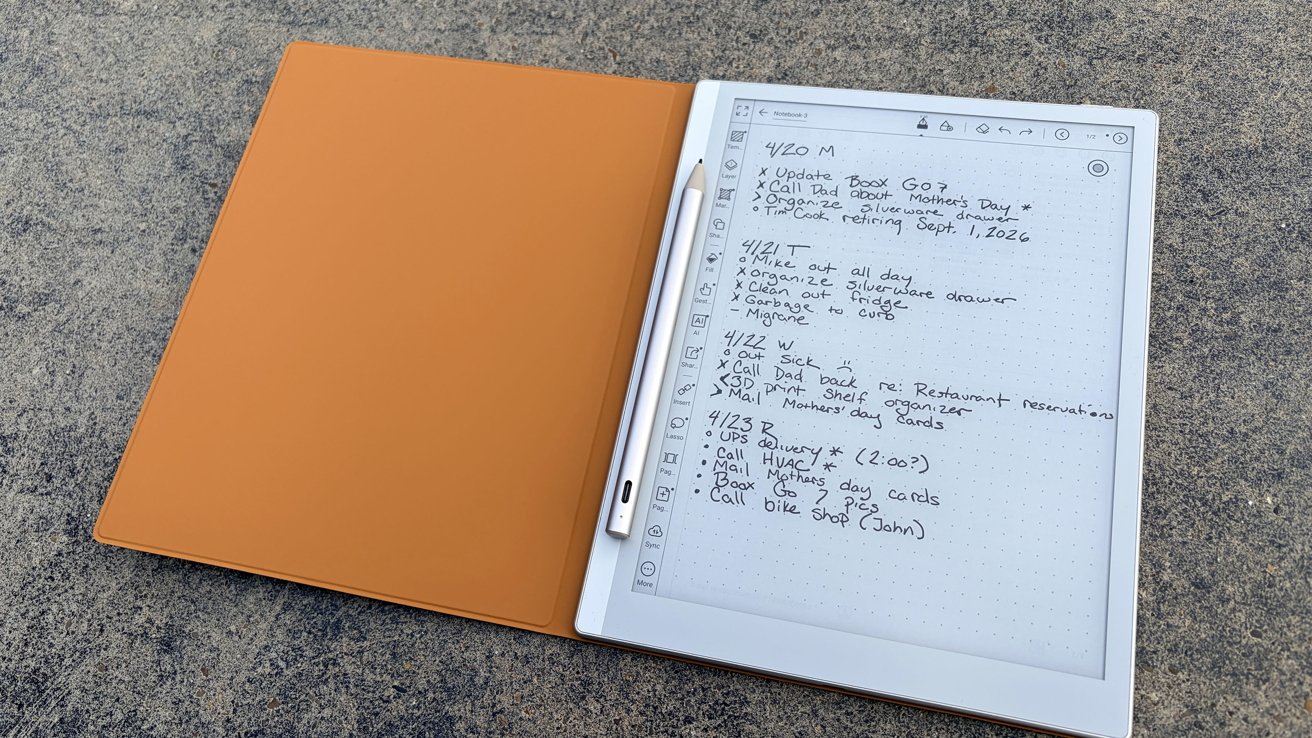
Boox Go 10.3 Gen II review: Even without the EMR stylus, it's still pretty good
And the 10.3-inch design is pretty close to a standard sheet of paper, making it a perfect desk top companion. Plus, it's a great way to mark up documents.
Now let's talk about where it falls short.
If you're used to the blazing fast speeds of even a decidedly old iPad, you're going to want to temper your expectations here. While the processor seems good for basic tasks, the display is a limiting factor if you're navigating a lot of menus.
I found that this was most apparent when using third-party apps.
Again, this isn't a device that is designed to replace your iPad. This is a device designed to replace your Kindle.
Or, at any rate, you should think of it as supplementary to your current tech setup.
The one place where I was most disappointed was in the stylus.
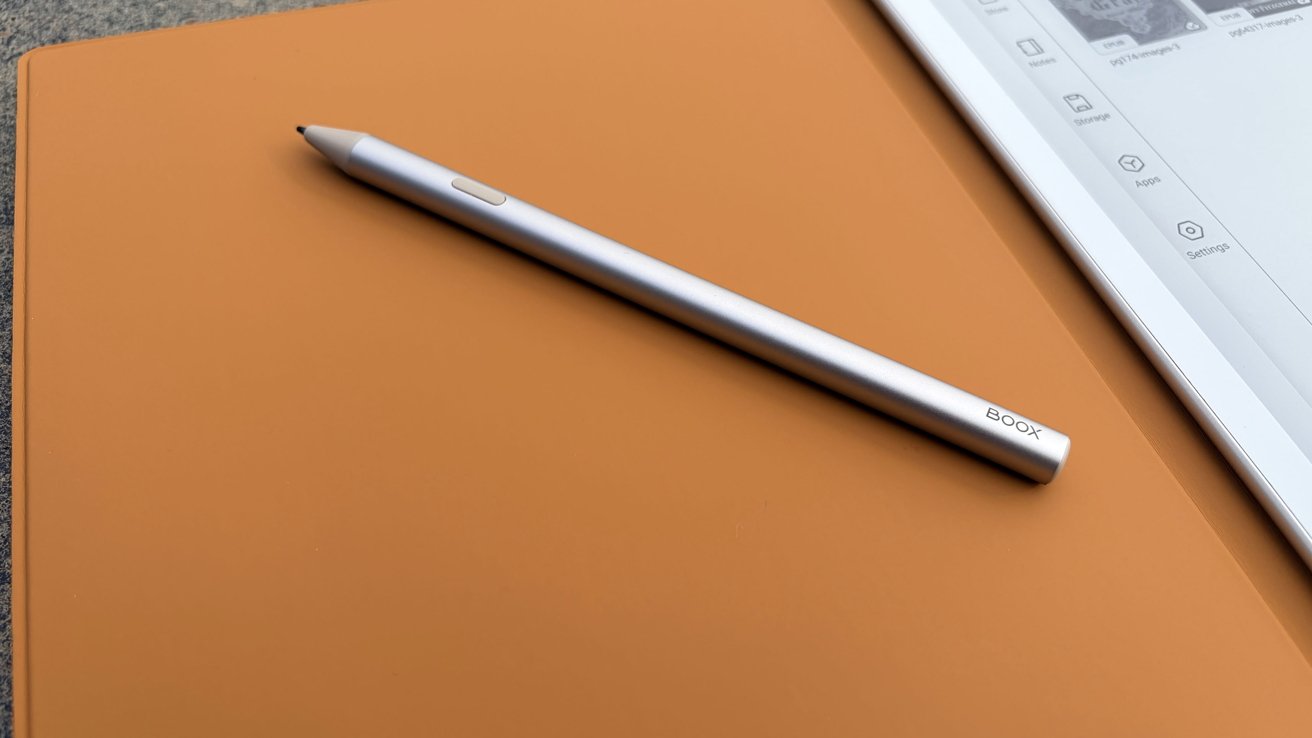
Boox Go 10.3 Gen II review: the EMR stylus has been swapped out for a capacitive model
To be clear, the stylus isn't bad. But it is a downgrade from the one that was provided with the first-generation Boox Go lineup.
The first generation got a Wacom EMR stylus, which uses electromagnetic resonance to communicate pressure and position. The result is a quick, buttery-smooth writing experience.
This generation gets the Inksense stylus. It's a capacitive touch stylus, meaning that it effectively works the same as your fingers.
Yes, it still has 4,096 levels of pressure. The response time is decent, and it's comfortable in the hand.
But if you've used an EMR stylus, especially one with a Boox device, it does feel like a step backwards.
Boox Go 10.3 Gen II review: Lumi vs Standard
Technically, there are two versions of the Go 10.3: the Lumi edition or the standard.
The Lumi version comes with a pretty standard front light, which I've always loved. It's got a wide range of color temperatures, and I tend to keep mine shifted firmly to the warmer end of the spectrum.
If you're a person who works indoors or likes to read at night, this quickly becomes indispensable. And, until now, the front light has been universally available on all Boox models.
As is the case with previous Go generations, Boox didn't include a front light on the standard model. I think the company decided on a very specific audience.
Boox says that this option is great for people who will use the Boox outdoors or in bright environments. I agree, the device works fantastically in bright environments and in midday sun.
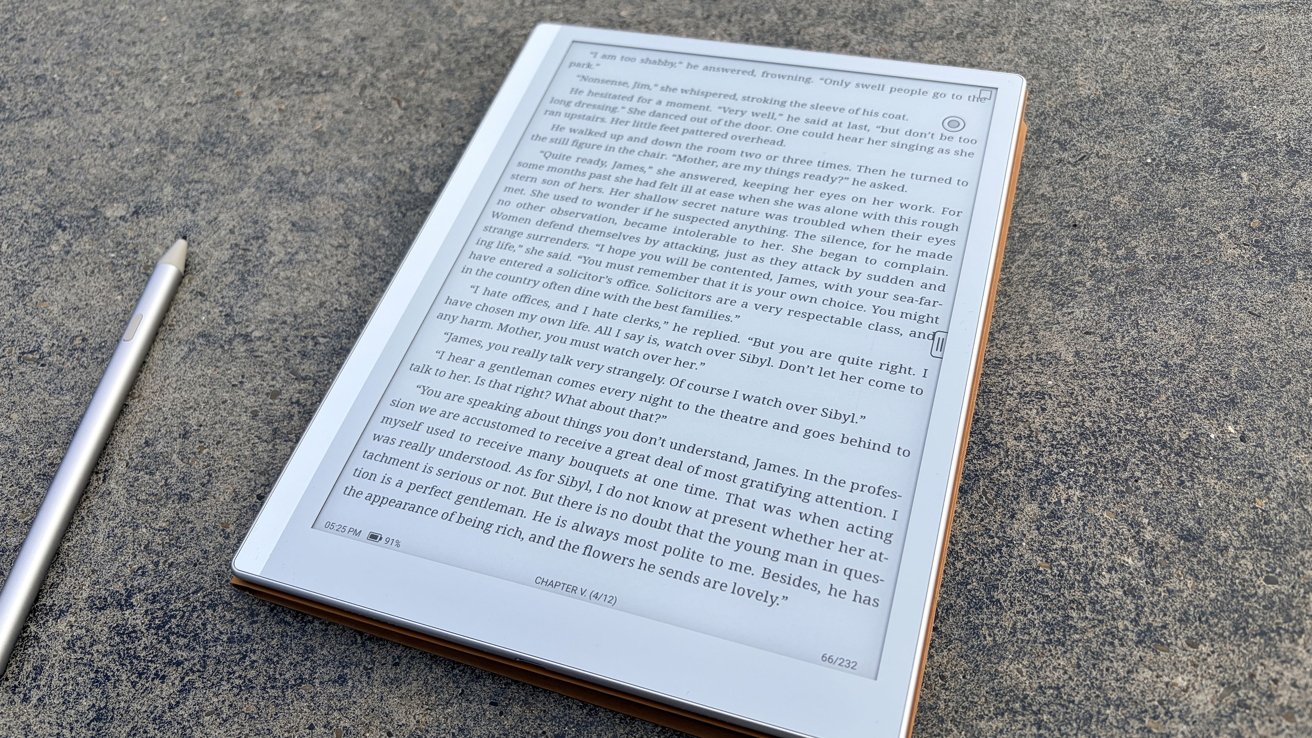
Boox Go 10.3 Gen II review: reading in bright daylight is great on both models
You know, in the same way that a book does.
But I can't imagine buying an e-ink tablet that doesn't have a front light. But again, I interface my eink devices primarily from the comfort of my bed, where I read until I pass out.
I will say, the standard edition does cost less, so there's still probably a market for it. However, if I were personally in the market for an e-reader, I'd pay the additional $50 to get the front light.
Boox Go 10.3 Gen II review: Overall
As I said before, Boox makes good devices. I try out a lot of e-readers as a side effect of my job, and Boox has been the reigning king.
Boox has a very large, very loyal following, and I count myself among the ranks. While this specific Boox device isn't my favorite, I think it's an excellent choice if you want something that is a good balance of book and notepad.
My personal favorite Boox devices tend to be the much smaller ones aimed at trading writing experiences for ultimate portability. I talk about it a lot, but I think the Boox Palma is such a neat little e-reader.
However, that does sort of relegate those devices to the realm of a one-trick pony. You're not taking notes on the Palma, and even the Boox Mini is too small to comfortably write for more than a few minutes at a time.
That is not the problem with the Boox Go 10.3. This device trades a little comfort for a lot of utility as a note-taking device.
And for most people, I feel like that would make it one of, if not the best choice for an e-reader.
Pros of Boox Go 10.3 Gen II:
- 10.3-inch size splits the difference between book and notepad
- Android 15 will get updates for at least three years
- Thin, lightweight, but not fragile
- Excellent battery life
- Optional front light
Cons of Boox Go 10.3 Gen II
- 64GB could be limiting if you're storing audiobooks or third-party apps
- Speakers, microphone are lacking
- Capacitive touch stylus instead of EMR stylus
Rating: 3.5 out of 5
Where to buy
The version I tested, the Boox Go 10.3 Gen 2 Lumi, can be bought from Boox's website for $449 and includes the tablet, the stylus, and a folio-style case. If you don't think you'll need the front light, you can pick one up for for $399.
The Boox Go 10.3 Gen II is also available from Amazon. The Lumi version is $449.99, while the light-free version is $419.99.