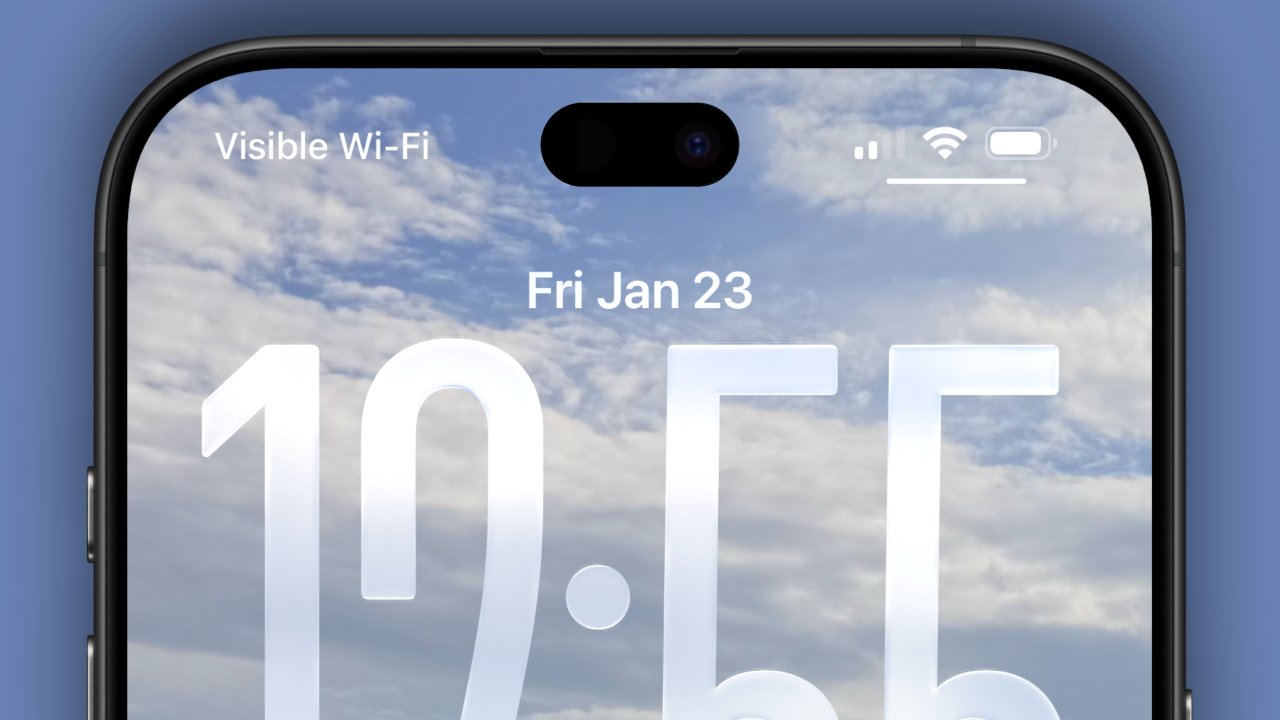
China's BOE has taken another hit with Apple reportedly choosing not to use it for the OLED displays on the forthcoming iPhone 18 Pro.
For years now, BOE has been making large-scale investment in display manufacturing in order to gain iPhone orders from Apple. It even managed to supply some screens for the iPhone 17 Pro, but according to The Elec, Apple is going with Samsung Display and LG Display for at least most of its next OLED models.
Citing unspecified sources within the supply chain, the report claims that Apple will make its final choice of suppliers before the end of May 2026. BOE is said to lag behind both of its main rivals in terms of production quality and manufacturing yield.
However, the decision is also affected by the increased cost of many components used in the iPhone. While those have repeatedly been reported to be components such as processors and memory, there appears to be a knock-on effect on screens.
Apple has said that one way it has avoided price rises so far is through carry-in inventory. That's buying inventory earlier than usual, in order to beat later price rises, and now that appears to include screen components.
"One reason for Samsung Display's increased first-half production appears to be stronger Apple order volumes," said an industry official, "rather than BOE-related supply issues."
BOE did gain iPhone 17 orders, as well as iPhone 17 Pro ones, but its problems saw Apple switching to Samsung Display. The industry official says that at most, "BOE may secure an additional 3 million to 4 million units for the iPhone 17" in 2026.
Overall, that could mean BOE supplying up to 35 million displays, chiefly for older iPhone models. In comparison, Samsung Display is predicted to produce 146 million OLED panels for Apple, and LG Display will ship around 82 million.
BOE's future
BOE has a poor track record, including back in 2022 when it lost millions of iPhone 14 screen orders. The display firm had elected to make unsanctioned design changes, presumably to save time or money, and as a result, was dropped by Apple.
It has subsequently gained orders for iPhone screens, but still its technology is said to be poorer than Samsung Display's and LG Display's. Specifically, BOE reportedly lags behind in the production of LTPO+ (lower-temperature polycrystalline oxide-plus) panels.
That's a problem since Apple is said to be moving all of its iPhone models over to using LTPO+. It's expected that this will bring better power efficiency over the previous LTPO, meaning an increased battery life.
Given its lack of sufficient capability for the newer screens, and its repeated issues with quality, it would appear that Apple should just abandon BOE.
Perhaps it will, but it's also reported that Apple has been able to use BOE's lower prices as leverage to get better deals with Samsung Display and LG Display.