Apple has put the spotlight on one of its more overlooked iPhone camera tricks, showing how Action mode can make everyday recording possible for people living with Parkinson's disease.
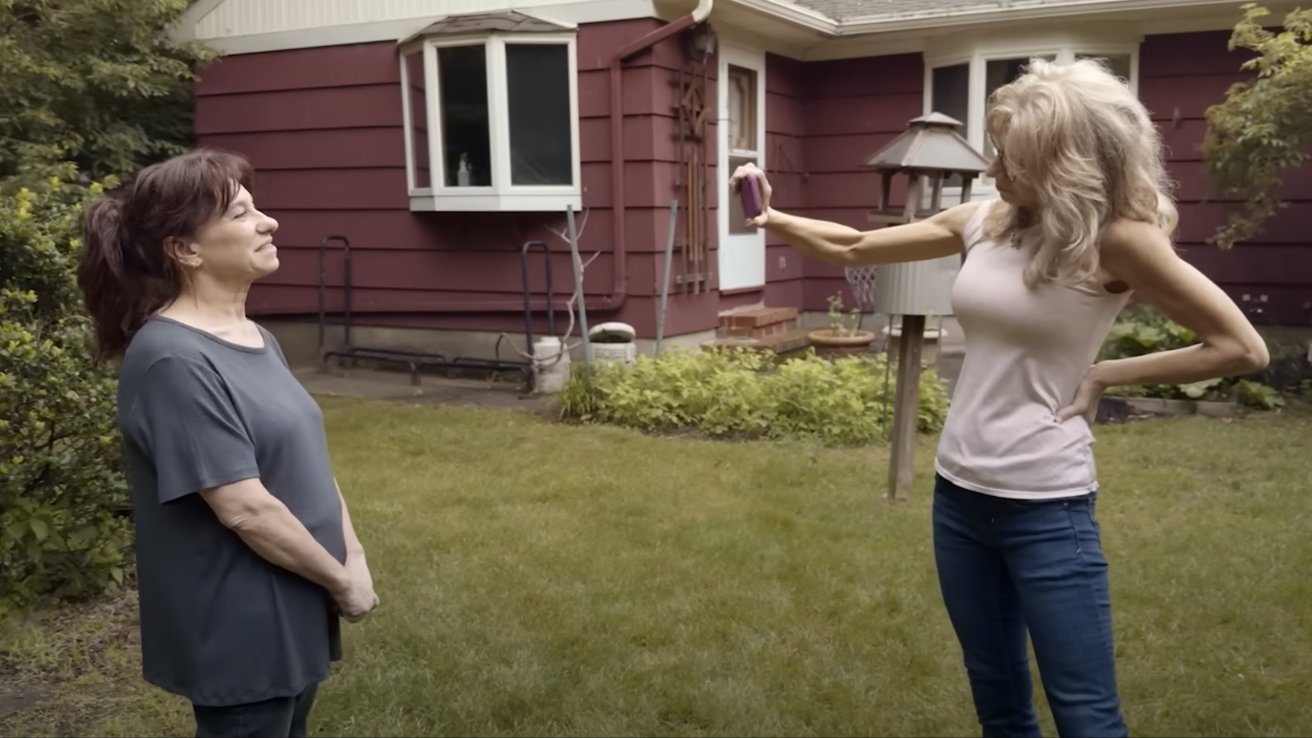
On August 20, Apple released "No Frame Missed," a video showcasing people with Parkinson's using a feature to film without hand tremors. The clip is part of Apple's campaign to highlight accessibility as a core design principle in its hardware and software.
Action mode was introduced with the iPhone 14 lineup in September 2022. It's designed to capture smooth video during activities like running, biking, or playing in a park.
Built for athletes, adopted by patients
The feature uses advanced digital stabilization and wider crop framing to maintain steady motion despite camera shake. What Apple didn't emphasize at launch — and may not have thought of at the time — was how this technology could be transformative for people with mobility conditions.
For someone with Parkinson's, even holding a phone still can feel like trying to balance on a moving subway car. A regular video recording would wobble and stutter, making cherished moments hard to watch back.

Action mode cuts through that problem by smoothing out tremors in real time. The company's new short film shows three users, Brett, Bette, and Ellen, using the feature to capture ordinary but meaningful slices of life.
The stabilization relies on Apple's custom silicon and image signal processing pipeline. When Action mode is enabled, the iPhone analyzes motion across frames, compares it with internal gyro data, and crops into the image to counteract sudden shakes.
It's computationally expensive, which is why the feature only appears on newer devices, from the iPhone 14 to the iPhone 16 lineup. One notable exclusion is the iPhone 16e, Apple's budget model, which lacks the hardware support needed for the feature.
Why it matters beyond marketing
Parkinson's disease affects more than 10 million people worldwide, according to the Parkinson's Foundation, and tremors are one of its most common symptoms. The ability to record life events without distortion gives patients a measure of control in a condition that often robs them of it.
Apple has long treated accessibility as both a moral and strategic investment. Features like Voice Control, which lets users operate the phone entirely through speech, and AssistiveTouch, which provides gesture-based control for those with limited mobility, have been standard for years.
Action mode started life as a flashy feature for athletes and parents filming soccer games. It has now become something more consequential — a tool that helps people with Parkinson's disease see their lives reflected back without distortion.
You can find Action mode in the iPhone's built-in Camera app. Open the app, switch to Video, and look for the little running figure icon at the top of the screen.
Tapping that icon toggles Action mode on or off, letting you record stabilized video instantly. It's available on iPhone 14 and later models, though not on the iPhone 16e.