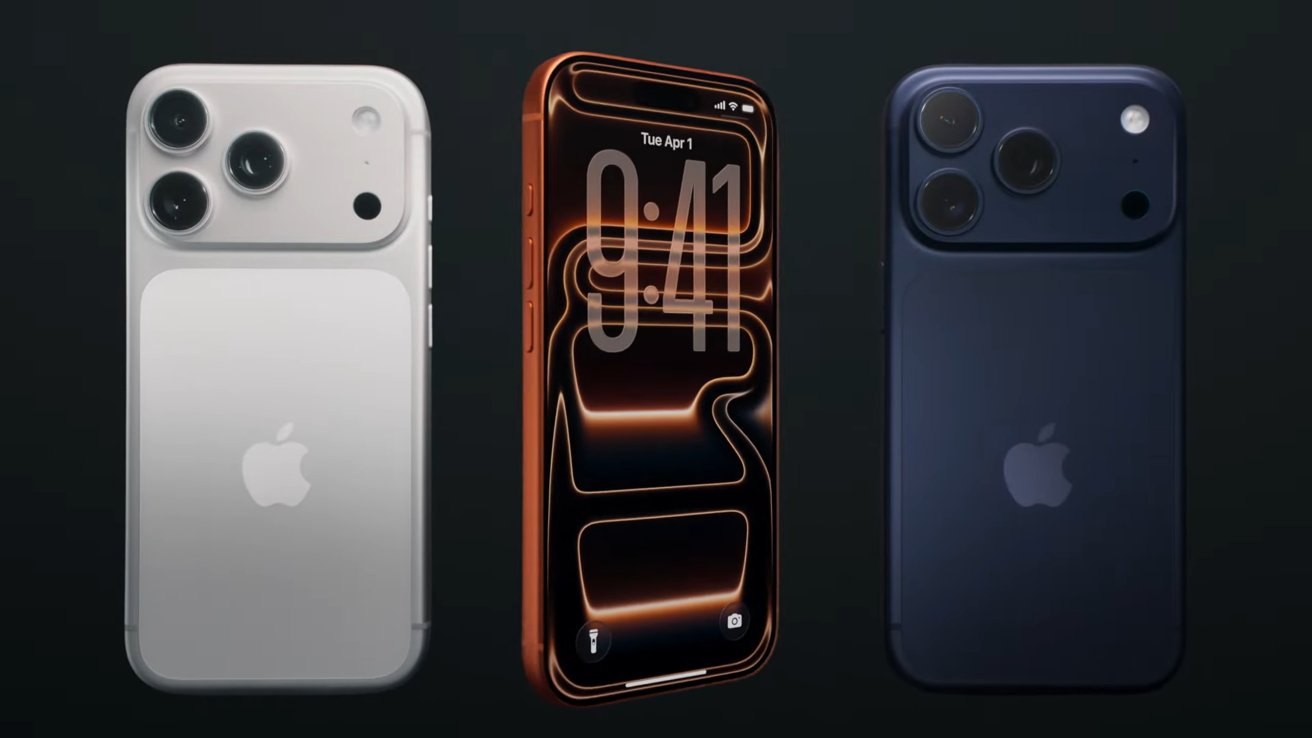
Pulse width modulation has been giving some users problems since the iPhone X. Fortunately, Apple is gearing up to tackle screen strobing issues with a new accessibility option.
A new accessibility setting, "Display Pulse Smoothing," has been spotted in the iOS 26 release candidate for the upcoming iPhone 17 lineup. The toggle disables Pulse Width Modulation (PWM), offering a smoother way to dim OLED screens at low brightness.
As noted by MacRumors, the feature will appear in accessibility settings and can be turned on or off. It is Apple's first built-in option for reducing OLED flicker.
If the toggle is activated, it disables pulse width modulation to provide a different way to dim the OLED display. In theory, and dependent on a number of factors, this can smooth display output at lower brightness levels.
Apple does say that disabling PWM may affect low brightness display performance, though.
Reportedly, the feature will be available on iPhone 17, iPhone 17 Pro, and iPhone 17 Pro Max. It seems likely that the feature will also be available on the iPhone Air.
Why Pulse Width Modulation matters
This isn't the first time we've delved into Pulse Width Modulation. We've covered it in regards to the Apple Vision Pro.
There is a lot to Pulse Width Modulation in electronics as a whole, but as it pertains to iPhones starting with the iPhone X, Pulse Width Modulation is what Apple uses to regulate the brightness of individual color cells in the eye displays.
An incandescent bulb that can dim throws off fewer photons when at a lower wattage, roughly proportional to the magnitude of the cut in power. If you provide half the power to an incandescent bulb, ignoring light temperature changes as they are beyond the scope of this discussion, it will be about half as bright.
It does not turn off quickly and strobe — it just emits fewer photons because of the lower power.
In an OLED display such as that used in the iPhone, brightness control and color mixing is accomplished by turning individual color cells on and off very quickly. If full power, constantly, is being applied to a color cell, then that cell is "on time" or at a 100% duty cycle, and is fully bright.
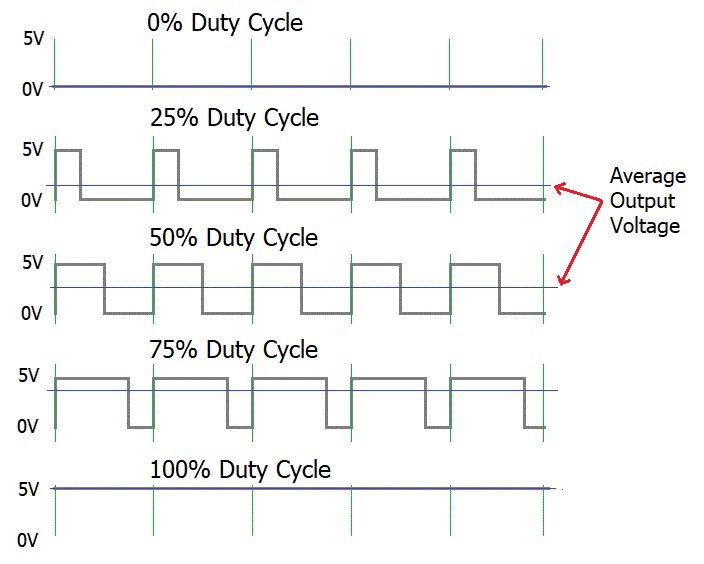
Pulse width modulation and duty cycle example - credit circuitdigest.com
While there is an overall screen refresh frequency factor to consider as it pertains to health, in short, given a fixed frequency, to reduce the brightness, the color cell is extremely rapidly turned on and off. A 50% duty cycle has the cell on or off half of the time, and is about half the brightness.
Doing this effectively strobes the user at a different frequency than the display as a whole is doing.
Pulse Width Modulation has been used in OLED iPhones since the iPhone X, and it is vital to the operation of the screen. It has always been a concern at some level, to some people.
So, now it seems like Apple is giving iPhone owners — or at least iPhone 17 owners — a way to disable the setting.