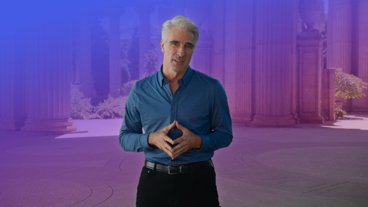
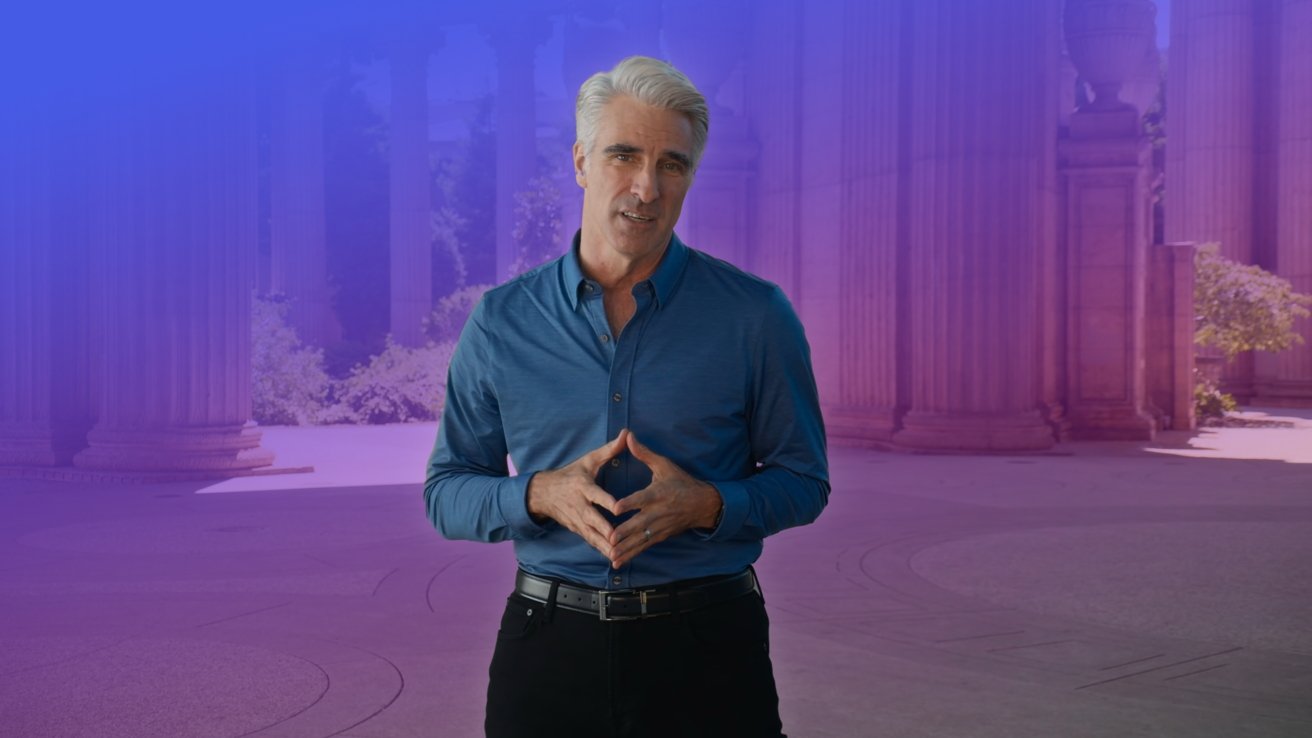
As the Senior Vice President of Software Engineering, Craig Federighi is the main guy who can alter the future of iOS, macOS, and AI for Apple. This is what you need to know about the guy with the fantastic hair.
While Tim Cook is the best-known face of Apple, Craig Federighi comes in a very close second. A long-time presenter for the company during events, especially at WWDC, he is synonymous with the company's software launches and operating system updates.
That's handy, since he is Apple's Senior Vice President of Software Engineering. In that prominent role, he manages and guides the development of operating systems, apps, interface changes, and future technologies.
Despite having such a major role in the company, and being one of the top candidates for the role of the next CEO after Tim Cook, he's also considered one of the more fun members of leadership. His playful presentation style and a willingness to use humor has led to him becoming a walking, talking meme.
Here's the story of Craig Federighi, the software chief who is also referred to as "Hair Force One."
Before, after, and before Apple again
Born in San Leandro, California, Federighi was introduced to computing by his mother, urging him to try out some Apple IIs at school. It led to him saving up for a TRS-80 Color Computer and a life in tech.
He attended the University of California, Berkeley, receiving a bachelor of science in electrical engineering and computer science in 1991. This was quickly followed by a master of science in computer science in 1993.
While at Berkeley, he wrote a technical report on a "Distributed Hierarchical Storage Manager for a Video-on-Demand system" for the ECCS Department in 1994.
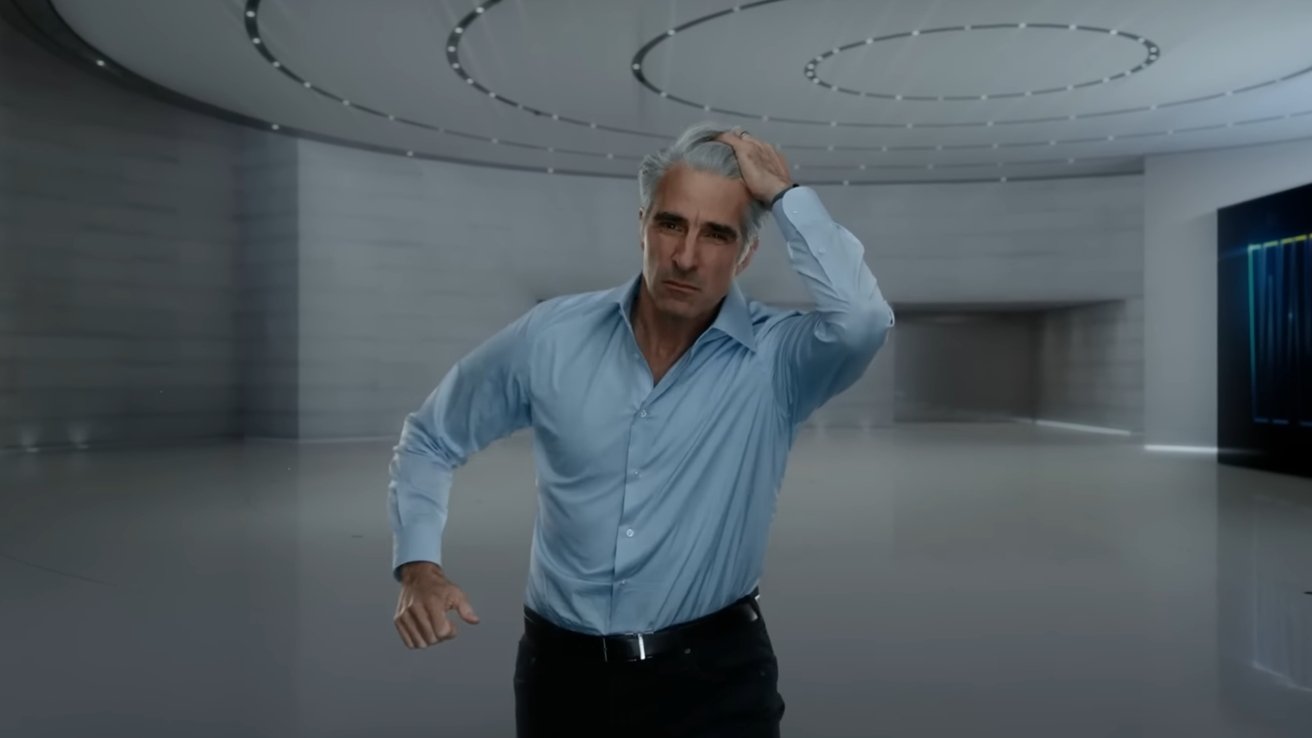
Craig Federighi's slo-mo run during WWDC 2022. Image Credit: Apple
He also unexpectedly encountered Apple co-founder Steve Jobs, who had left Apple at the time. Jobs had visited Berkeley, showing off the NeXTcube and recreating the Mac product launch to the attending students.
The performance was influential, as Federighi then decided that he would rather work for NeXT and not Apple. Indeed, he did join NeXT and worked on the Enterprise Objects Framework, allowing applications to connect to databases.
NeXT was then acquired in 1996 by Apple, and Enterprise Objects Framework was absorbed into Apple WebObjects framework.
A few years later, Federighi cut his time short at Apple, departing his role as director of engineering. Instead, he jumped ship in 1999 to Ariba, a Palo Alto-based tech services company.
In his ten-year tenure at Ariba, he moved from being vice president of Internet Services to the role of executive vice president. He eventually became chief technology officer and then ended his time at Ariba as its the "user interface technology evangelist".
A few years after Federighi's departure from Ariba in 2009, the company was acquired by SAP SE, which is still in operation.
Back in Apple
Federighi's second stint at Apple started in 2009, joining the company to lead its macOS engineering teams. This took place just after the development of macOS Snow Leopard.
Oddly enough, WWDC 2009 was the first instance of Federighi being involved in a presentation. He took to the stage to demonstrate Snow Leopard's new features.
This was followed by a demonstration of macOS 10.7 Lion, which in turn led to further on-stage presentation appearances.
By March 2011, he was promoted as the vice president of Mac Software Engineering at the company, taking over from Bertrand Serlet. He became senior vice president of Software Engineering one year later, as part of a wider executive shakeup by CEO Tim Cook.
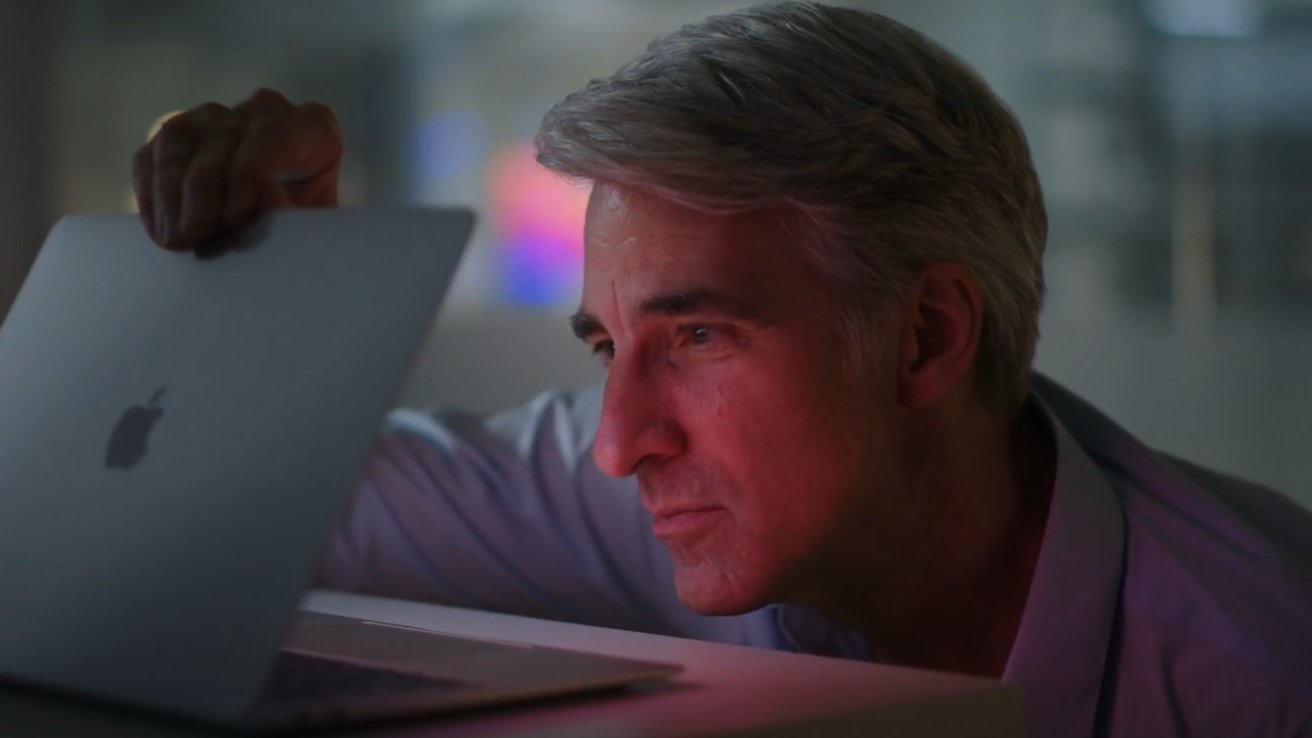
Craig Federighi waking a MacBook up. Image Credit: Apple
After the exit of Scott Forstall in 2012, Federighi was given a wider remit than just Mac software. He was made the leader for the development of both iOS and OS X.
While other executives would expect to see a progression in their job title, this hasn't been the case for Federighi. Fourteen years later, he is still listed on Apple's Leadership site as SVO of Software Engineering, reporting directly to Tim Cook.
The static job title doesn't mean there wasn't any change in the role. In 2017, a leadership change led to Federighi becoming the overseer of Siri.
After a poorly received introduction of Apple Intelligence as the company's first salvo in the AI war, Federighi gained another responsibility. In December 2025, Federighi was put in control of the AI teams, including the AI models team.
High visibility, high hair
Ever since his WWDC 2009 stage appearance, Federighi has become a major presence in Apple's software-related presentations.
This included appearing during WWDC 2013 to show iOS 7 and OS X Mavericks, doing the same in WWDC 2014 for iOS 8 and OS X Yosemite.
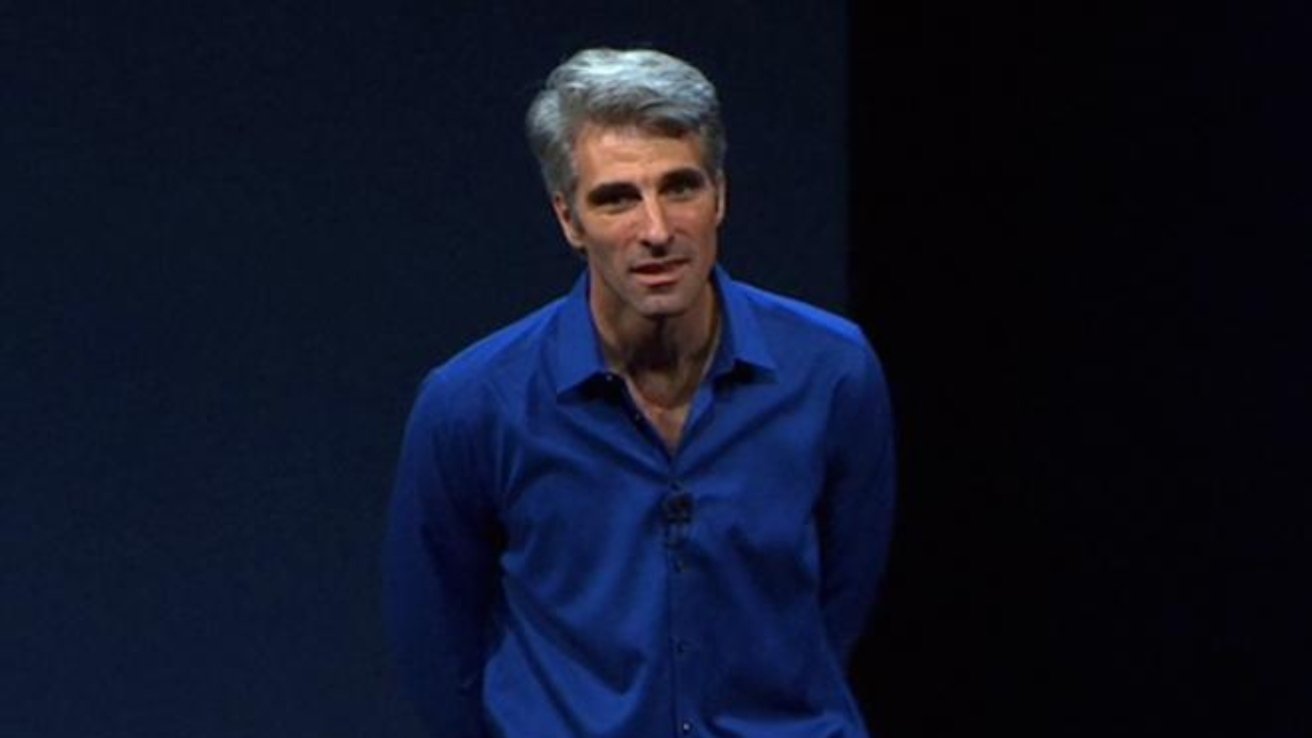
An early WWDC appearance for Craig Federighi - Image Credit: Apple
The WWDC 2015 presentation was a major one for Federighi, as he hosted the vast majority of the two-hour keynote. This involved launching iOS 9 and OS X 10.11 El Capitan, as well as the introduction of Swift.
Later that same year, he demonstrated the 3D Touch feature of the iPhone 6S.
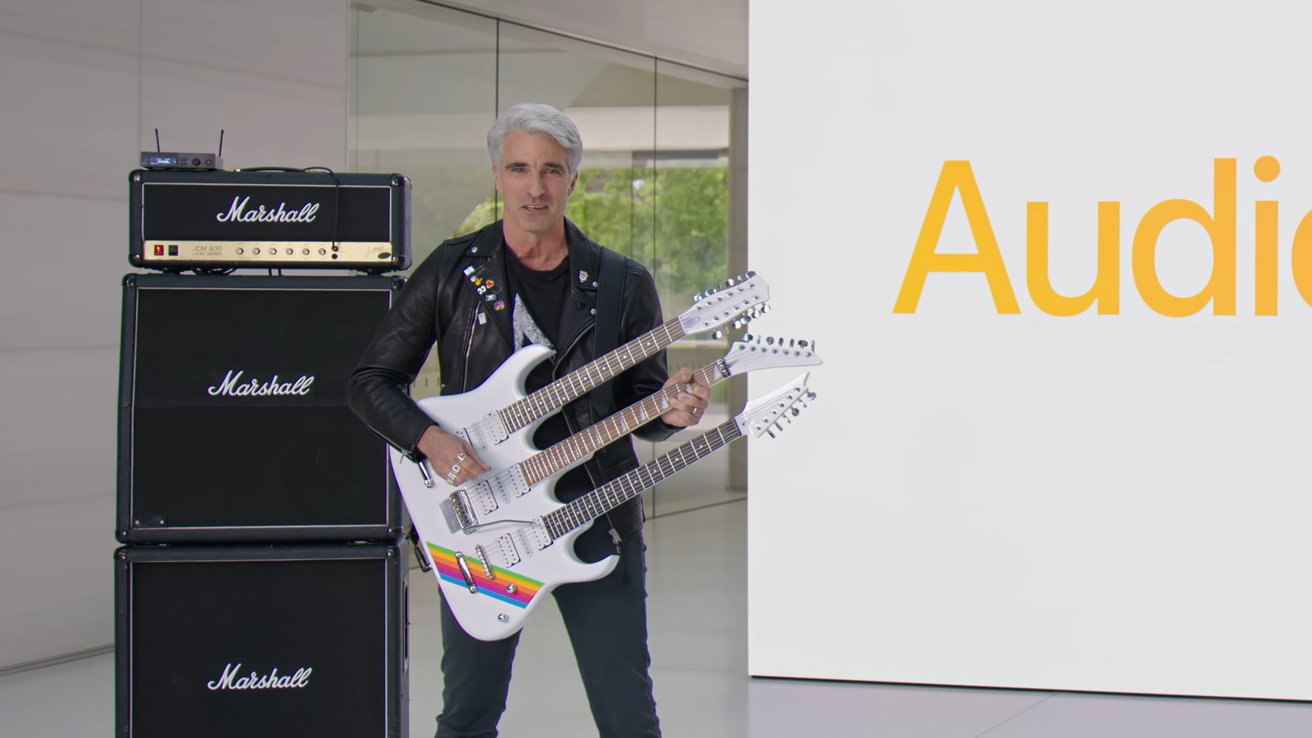
Craig Federighi with a unique guitar. - Image Credit: Apple
He was also the executive who introduced the name convention change for macOS 10.12 Sierra at WWDC 2016, as well as iOS 10 and lock screen widgets.
In the 2017 Apple Special Event, he was set to demonstrate the new Face ID feature in the iPhone X, but it failed during the live presentation. It was later determined to be a mistake caused by other Apple employees triggering it previously.
His string of WWDC appearances continued apace with 2018's iOS 12 and macOS 10.14 Mojave. He has handled the operating system introductions at WWDC ever since.
While a staple at WWDC, he has appeared during other Apple events too, including a silent cameo during the September 2020 event. The November 2020 event clip of him waking a MacBook from sleep quickly became a meme.
Being meme-worthy isn't usually the forte of executives at a company, with the use of comedy frequently failing in most cases and becoming cringeworthy. However, in the case of Federighi, most of his presentations have included a lot of funny and meme-adjacent moments.

Federighi found that being funny worked for his style of presentation, and leaned into it heavily. Somehow, it worked even more.
A famous long-time example of his humor is his reference to the "Crack Product Marketing Team" going on wild adventures to come up with the next macOS version name.
However, sometimes the comedy goes to almost absurd lengths, and with high production values, too.
For example, the WWDW 2022 presentation had Federighi descend on a CGI elevator like a spy, throwing a basketball over Apple Park, and accidentally walking in on an Apple Fitness+ workout.
Later in the presentation, a speedy-running section had a slow-motion section, with Federighi pulling off a "Blue Steel" stare to camera and running his fingers through his hair to the tune "Thoughts About You." While a heavy-handed reference to being referred to by fans as "Hair Force One," it's one that worked and instantly became a meme.

This continued into WWDC 2023 with the playing of a triple-necked guitar, followed by skydiving and parkour in 2024. WWDC 2025 had him driving a Formula One car on the roof of Apple Park's main building while talking to a non-plussed Tim Cook.
The humor and his great hair make Federighi seem like the cool uncle of the Apple leadership team. While others are also moving to appear more fun to customers, it seems that Federighi will be the center of WWDC attention for some time to come.
Fed on Privacy and Security
As the man in control of software at Apple, Federighi has a deep-seated interest in both ensuring user privacy is maintained and for Apple's platforms remaining secure. It's a stance that he has maintained throughout his tenure.
An early example of this was an opinion by Federighi published in March 2016, explaining why Apple wasn't willing to weaken encryption despite a public demand from the FBI. He reasoned that Apple was trying to be one step ahead of criminal attackers, and found the FBI and other security agencies to be "pressing us to turn back the clock to a less-secure time and less-secure technologies."
Two years later, a 2018 statement from Federighi responded against even more calls to weaken end-to-end encryption by adding a backdoor. Weakening security "makes no sense" when consumers rely on Apple's products to keep their personal information safe, he insisted.
Federighi's stance hadn't changed by 2020 either, calling Apple's dedication to privacy akin to treating it as if it were a fundamental human right during WWDC of that year.
The introduction of App Tracking Transparency also had Federighi's backing, saying it was part of Apple's core values, and that it wouldn't damage advertisers as much as they claimed it would. He later expressed that ATT should give users a "meaningful choice" about their privacy.
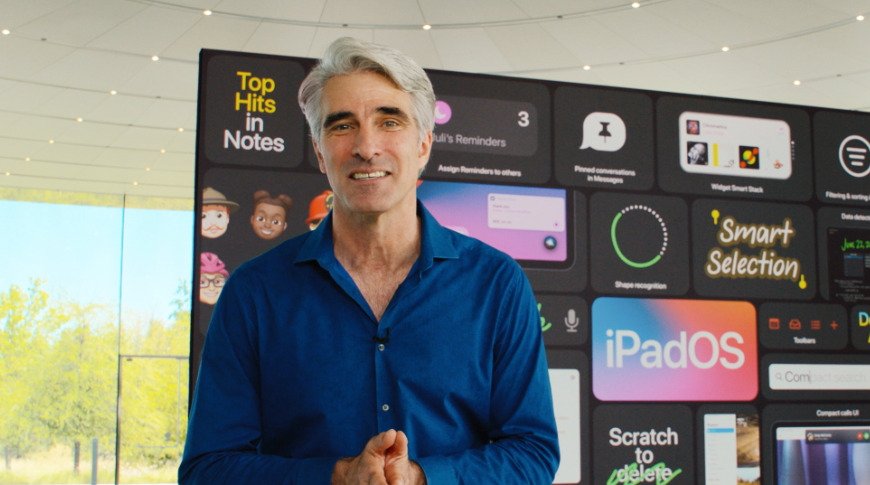
Craig Federighi talking during a WWDC keynote - Image Credit: Apple
Trying to maintain user privacy while getting tasks complete is a hard balancing act for Apple, as it found in 2021 by introducing iCloud Photos image assessment and Messages notification features. They were intended as mechanisms to protect children online and curb the spread of child sexual abuse material (CSAM).
Within days, Federighi spoke about the introduction, saying that the child protection message was "widely misunderstood" because Apple wasn't clear enough in its messaging. He acknowledged that the announcement of multiple elements together had the response of people wrongly believing Apple was scanning their iPhone for images.
This didn't stop civil rights groups around the world from demanding Apple drop the child safety plans altogether.
His insistence of maintaining privacy has also led to him criticizing some if the capabilities of Apple's own software. Especially when framed around the alternative App Store debate in Apple's long-time lawsuit with Epic Games.
In 2027, Federighi told a court that macOS security wasn't as good as iOS, in part because of its use of one App Store on iOS. Multiple app stores are "regularly exploited on the Mac," Federighi claimed, and there was "a level of malware on the Mac that we don't find acceptable."
The tight security of iOS meant it had a "dramatically higher bar for customer protection" that the Mac could not meet.
He later railed against forcing Apple into allowing the side-loading of apps on iPhone, as it would "take away consumers' choice of a more secure platform."
It's a belief that has strengthened during the age of AI and Apple Intelligence. Following the September 2024 "It's Glowtime" event, Federighi explained that Apple had to go through multiple breakthroughs to bring Private Cloud Compute to life, protecting user data while embracing the new technology.
Ultimately, Federighi firmly believes that maintaining security and privacy for Apple users will be a "battle we will be fighting for years to come."
Developing development and platforms
Fostering development of the app ecosystem is another of Federighi's all-important roles as the software chief. His WWDC appearances implies he wants there to be more developers, but Apple's announcements have also been an important factor too.
In December 2015, when the Swift programming language was made open source, he said he wanted everyone to learn it as a primary language. He wanted it to be usable everywhere, "from scripting to apps for mobile down to writing code in the cloud."
That same month, he promoted the "Hour of Code" initiative to get everyone coding. He admitted at the time that he first tried coding when he was 10, adding that programming should be considered the "next level of literacy."
He then went on to say that there would be deep Swift integration in iCloud and for Mac development, with it already being used on the dock of El Capitan.
In 2019, Federighi helped usher in iPadOS as a fork of iOS, all to give the iPad a "truly distinct experience." He said it was "not an iPhone experience, it's not a Mac experience," and so something new had to be created for it.
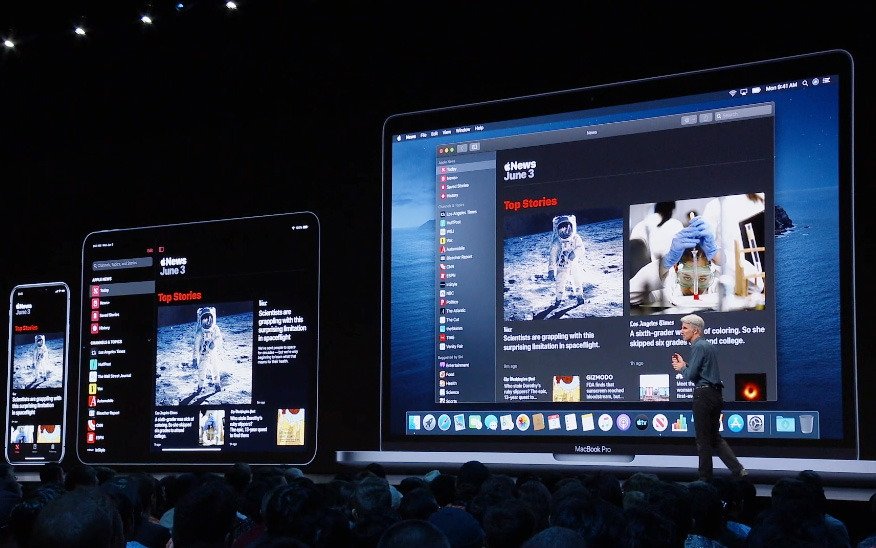
Craig Federighi introducing Catalyst at WWDC - Image Credit: Apple
He also said that Catalyst would help boost the quality of both Mac and iPad apps, by helping iPadOS apps be ported over to the Mac platform.
In an unusual move, Federighi responded to an email from an aspiring programmer in 2019, which was shared on Reddit. The response to being asked for advice for would-be programmers included dedicating time to study while at university, to "go broad and deep" in the area, and to focus on teamwork.
This occurred during a time when Apple was reportedly shifting its development strategy for iOS 14 to cut down on the number of buggy releases coming out of Cupertino. Federighi and other department chiefs kicked off the initiative, explaining new processes where buggy code was disabled and flagged in testing.
The introduction of Apple Silicon was also a big moment for Federighi, due to having to manage the upcoming transition away from Intel chips. On the performance of the M1 chip, he boasted "We overshot" on performance, as well as expressed disbelief on the battery performance.
Later that year, he even said that it was possible to run an ARM version of Windows in emulation, but that it was "really up to Microsoft."
Of course, Federighi has had to deal with repeated rumors of a combination of macOS and iPadOS into a single operating system. In 2025, he insisted that iPads won't be running macOS anytime soon, despite the addition of macOS-like productivity elements.
Doing so would harm the touch experience on the iPad and lose what made it special.
The AI era
The slow rollout of Apple Intelligence and the mishandling of the Siri overhaul have been a big problem for Apple. However, it seems Federighi had a lot to do with Apple getting going with AI in the first place.
A June 2024 report claimed that Apple's AI efforts led by John Giannandrea struggled for various reasons, including a lack of resources. Betting on the laid-back Google-like team wasn't enough to catch up, and forced other teams to wade into AI, resulting in a piecemeal and incoherent approach.
Apple apparently started to turn things around when Federighi forced changes. After spending Christmas 2022 playing around with Microsoft Copilot, he became an AI convert.
This resulted in his team of software engineers being given resources to pursue AI and generative AI. He was also apparently involved in a deal that led to ChatGPT's integration into Siri.
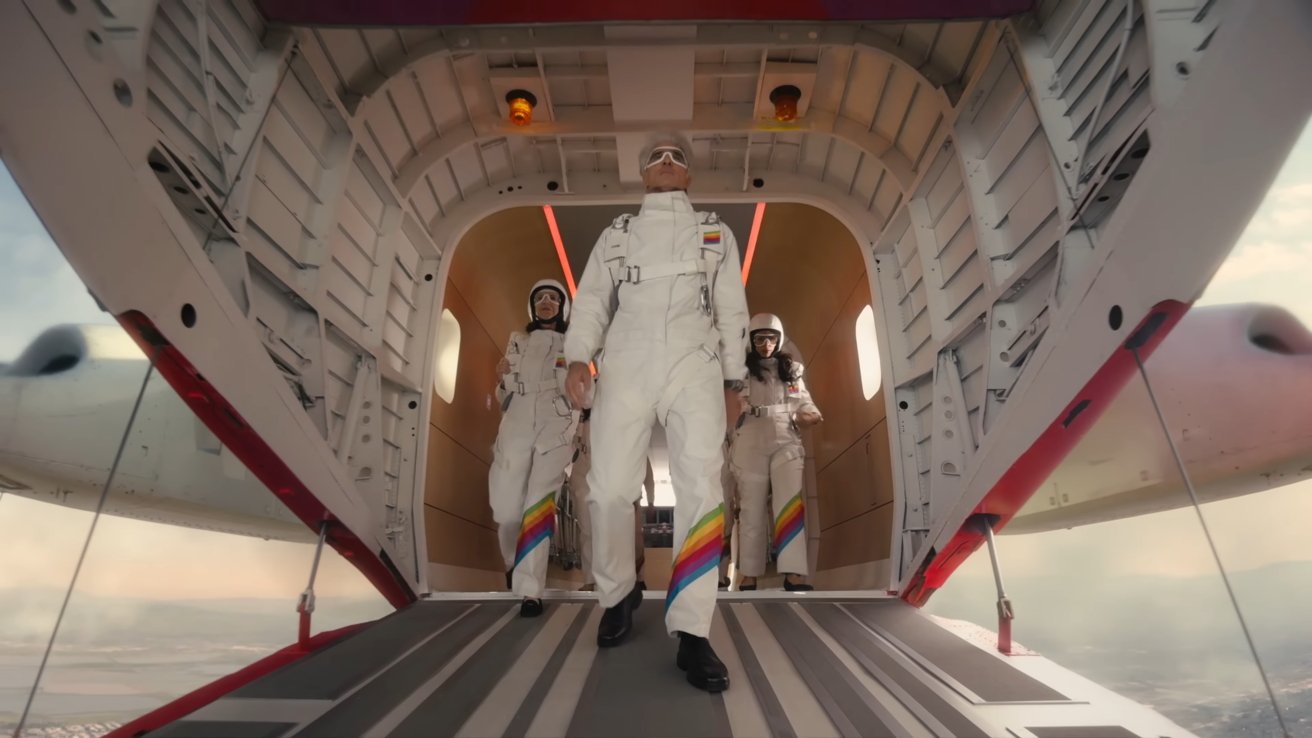
Craig Federighi in a skydiving skit - Image Credit: Apple
Federighi was bullish on AI, but certainly didn't claim that Siri would suddenly become a sentient being. In October 2024, he said that improvements were on the way for Siri, but sentient-like actions weren't on the roadmap.
In April 2025, it was revealed that the great AI internal shakeup and managerial reshuffle led to Siri being put under the oversight of Federighi more directly than it had been.
By June 2025, Apple viewed itself as being in a much better position when it came to AI. Federighi explained that contextual Siri with App Intents was actually working, and that Apple didn't need to deliver every technology on Earth.
That is, while no-one doesn't look at Apple as a major shopping destination like Apple nor a competitor to YouTube, the world somehow expected Apple to make an AI chatbot.
As AI continues to become a major element of modern-day computing, Apple can at least thank Federighi for stepping up, forcing change, and pushing Apple's AI work on from its previously perilous position.
It doesn't seem that Federighi will be heading out of the company anytime soon, even with the change to the inbound CEO John Ternus in the fall. Here's hoping he does stick around to make Siri great again.