Months after President Trump announced 100% tariffs on any movie shot outside the States, he is at it again — which may have implications for Apple TV+ programming coming.
Trump's reciprocal tariffs have cost Apple around $2 billion, and of course also put small firms out of business. His newly repeated threat to levy a tariff on foreign-made movies could also affect Apple TV+, but the entertainment industry says there's no earthly way to tell.
As spotted by Deadline magazine, Trump took to his Truth Social platform to announce the tariffs. The substance of the announcement is the same as his last one on the topic in May, but there is a difference.
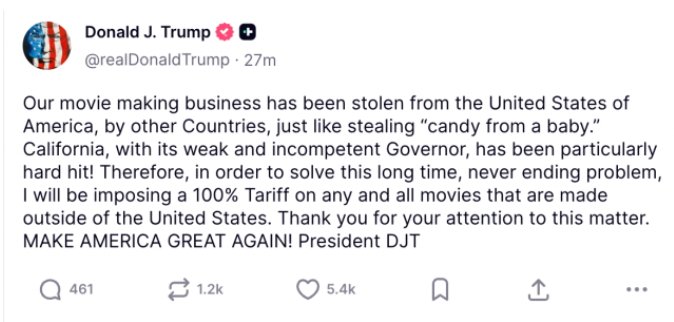
Trump's latest posting on Truth Social about the film tariff — image credit: Truth Social
The difference this time is that Trump has said he is imposing the 100% tariff. Previously he told reporters that he was authorizing the US Trade Representative and the Commerce Department to do it.
That seemingly did not happen, and there has also been no result from the claims that actor Jon Voight was devising a plan to somehow save Hollywood. Voight has, though, been speaking with entertainment unions.
It's possible that the new Trump announcement is a result of those talks. It's no clearer over when such a tariff might be imposed.
How this affects Apple
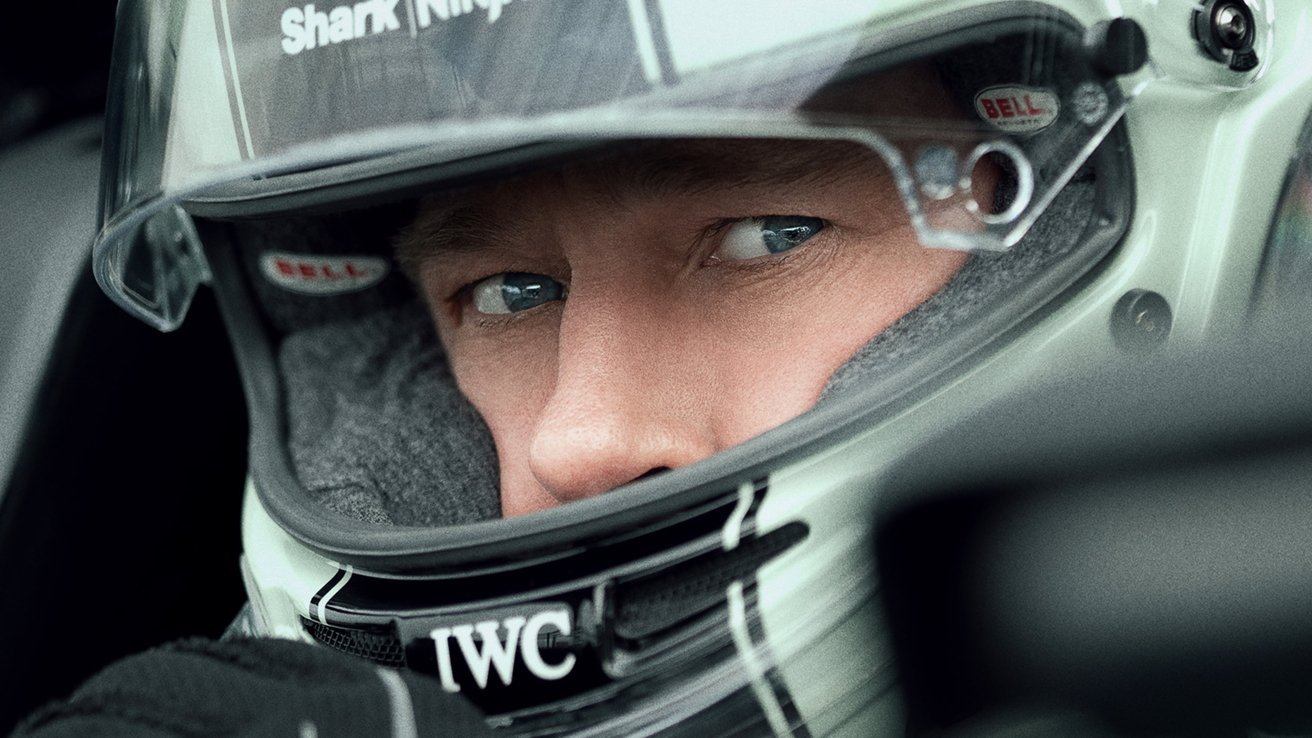
Apple TV+ is a global streamer which not only screens films worldwide, it makes them internationally too. Its biggest theatrical hit to date, "F1: the Movie," was shot in Belgium, Italy, the UK, Japan and more.
Compared to other studios, Apple makes few films. However, it does produce or sometimes acquire shows made outside the US, which may or may not count.
"Slow Horses," for instance, is made entirely in the UK, and at least most of "Silo" is filmed there too. And "Bad Sisters" and "Foundation" are chiefly shot in Ireland.
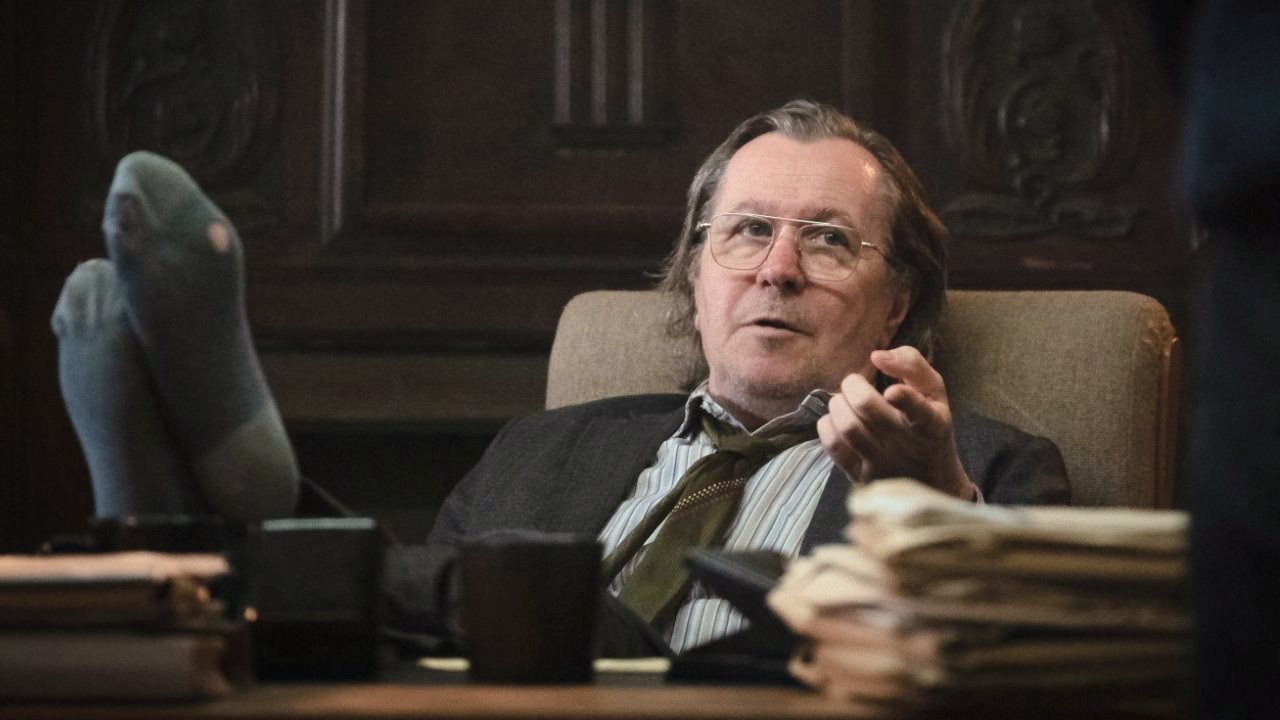
Would "Slow Horses" be subject to a tariff or is just movies? No one knows. Image credit: Apple TV+
However, as noted by Variety at the time of Trump's first announcement, he has not specified whether television series are included. The trade publication also questioned how any part of the plan would work.
For instance, there's also a question over what the tariff amount could be applied to. Apple has acquired completed films, such as "CODA," although that was shot entirely in the US.
Presumably if Apple acquires a foreign-made film, the company would have had to pay a percentage in tariffs.
But that's clear cut compared to when a company produces the film outside the US. If Apple shoots a movie in Switzerland, that's not a Swiss company making the film.
Then there are movies that split their production between overseas locations and Los Angeles-based studios. Trump has not qualified whether those films would be subject to any, some, or all of this 100% tariff.
Plus there are films that are currently in production which may have wrapped their foreign filming, yet not been released yet. It's simply not known whether they would have some kind of tariff imposed on them as well.
What happens next
Leaving aside that it hasn't been said when the tariff would be implemented, there are all of these significant issues yet to be revealed.
Then on top of that, there is the issue of whether or not foreign-made films really represent a threat to national security. Variety stresses that no one in the industry has asked for this, that no one thinks it will help anything.
It would mean US film studios and streamers such as Apple paying the tariff fees, so raising costs. Just as with manufacturing, studios would have to weigh the costs of the tariffs against the savings they generally get filming overseas.
If this tariff does go ahead, it will bring in some money to the government from the film studios.
And if this tariff does go ahead, foreign countries are surely going to impose their own on US movies. Many films, including "F1," depend on foreign ticket sales, and the US exports very many more films than it ever imports.