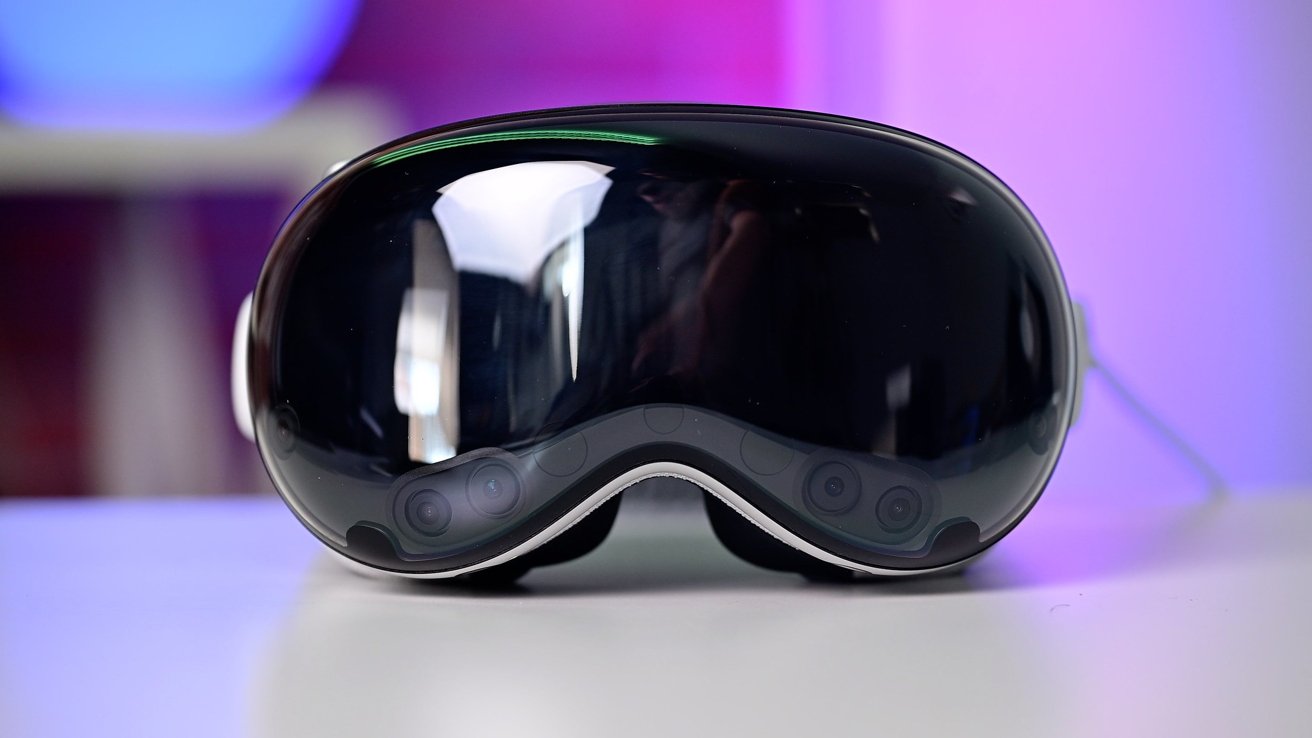
The M5 chip gives Apple Vision Pro a small but welcome boost in speed and comfort, though its $3,499 price still keeps it out of reach.
Apple's second-generation Vision Pro headset brings clear improvements in speed and comfort but keeps many of the same old issues. Reviewers largely agree that the M5 model refines the experience without redefining it.
The 2025 refresh adds Apple's M5 chip, a Dual Knit Band for better balance, and a modest boost in battery life. The headset still costs $3,499 and feels bulky.
Major reviews call it the best mixed-reality headset on the market. Most people, though, won't need it or feel it's worth buying.
TechRadar
TechRadar's Lance Ulanoff said the Vision Pro M5 "finally caught up with the hardware Apple introduced more than two years ago." He called the M5 chip "powerful enough to take full advantage of all those 4K-plus-per-eye pixels," making everything look "a little sharper, especially in virtual desktop mode."
He praised the redesigned Dual Knit Band as "a vast improvement," saying it "finally spreads out and balances the headset's 600 grams of weight." Ulanoff said the new fit makes the headset more usable without changing its fundamental bulk.
Still, he called the $3,499 price "shocking," arguing that "Apple should adjust the price" if it wants the Vision Pro to go mainstream. Ulanoff concluded that the M5, visionOS 26, and the new band make for "a strong update for Vision Pro fans."
Even so, he said most buyers will "still be in the minority" willing to pay for it.
Marques Brownlee (MKBHD)
In his video, Marques Brownlee breaks down the 2025 Vision Pro refresh and what it reveals about Apple's strategy. He said the move from the M2 to the M5 chip brings "faster app loading, 10% more pixels, and about 20% longer battery life."
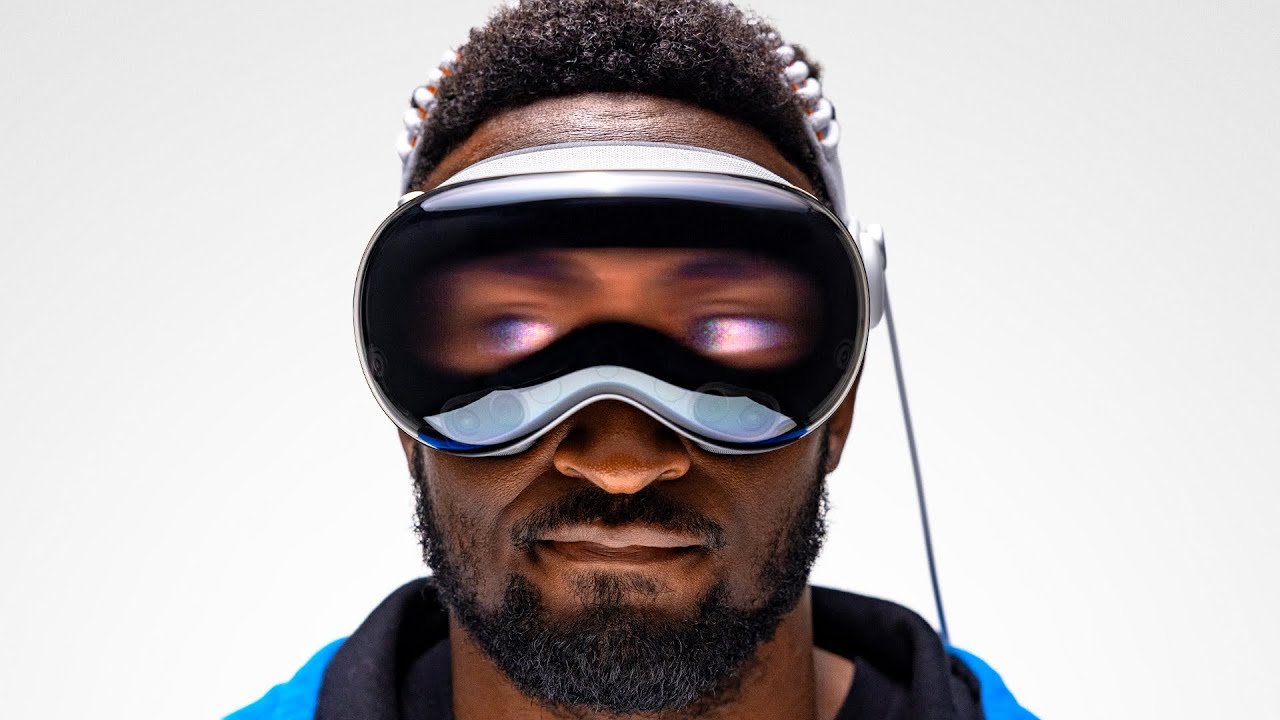
Brownlee emphasized the new Dual Knit Band as the most significant physical change, describing it as "more comfortable" and improving balance with tungsten counterweight. The rest of the hardware, including displays, sensors, and form factor, remains unchanged, as does the $3,500 price.
He suggested that these small updates indicate a shift in Apple's focus. With movie watching and lighter AR glasses like Meta's Ray-Bans gaining popularity, Brownlee believes Apple realizes the Vision Pro won't be a massive success.
Tom's Guide
Tom's Guide's Mark Spoonauer said he was "shocked by how little new the Vision Pro M5 brings to the table." He praised the faster M5 chip, longer battery life, and comfier Dual Knit Band but said "that's it for the newness."
The design is "nearly identical to the original model but somehow heavier," and the $3,499 price remains "a tough sell."
He noted the 120Hz refresh rate and sharper visuals make the experience "feel more natural," but the headset still lacks key apps and "any real multi-modal AI." Spoonauer concluded, "I called the original Vision Pro a revolution in progress. Now I feel like that revolution has stalled."
TechCrunch
TechCrunch's Lauren Forristal reported that the M5 chip enhances display rendering by 10%. It also supports refresh rates up to 120Hz and accelerates AI-powered features, making them 50% faster.
She said battery life is "improved by 30 minutes," reaching "2.5 hours of general use and three hours of video playback."
The update includes a new Dual Knit Band for a more comfortable fit, but the $3,499 price stays the same. Forristal said Apple's focus is shifting to smart glasses, so the M5 Vision Pro is an interim step, not a full redesign.
The Verge
The Verge's Victoria Song reported that Apple's Vision Pro now runs on the M5 chip, which "renders 10 percent more pixels on the OLED displays and can increase refresh rates up to 120Hz." She said AI-driven features such as Personas and spatial photos are "up to 50 percent faster," with battery life "improved by about 30 minutes."
Song described the new Dual Knit Band as "a hybrid of the Solo Knit and the Dual Loop Band," offering a more adjustable fit with a side dial. It's available in multiple sizes and sold separately for $99, compatible with both the M5 and the original Vision Pro.
Engadget
Engadget's Mariella Moon and Devindra Hardawar said the M5 Vision Pro is "slightly faster and sharper, but otherwise it's a minor refresh." They noted the M5 chip adds a 10-core GPU with hardware-accelerated ray tracing.
The chip "renders 10 percent more pixels on its micro-OLED displays." Bbattery life now lasts "two and a half hours of typical use and three hours of video playback."
They called the new Dual Knit Band "a top strap for extra security and comfort," available separately for $99. The review said Apple's decision to keep the $3,499 price means the headset "remains more of a developer kit than a full-fledged consumer product.
Gizmodo
Gizmodo's James Pero highlighted Apple's Vision Pro M5's increased power and cost. Apple claims "10% more pixels on custom micro-OLED displays" due to the M5 chip, providing a sharper viewing experience.
The new 10-core GPU adds ray tracing for immersive visuals, while the 120Hz refresh rate enhances motion smoothness. AI features like Personas and spatial video run 50% faster.
Battery life improves to 2.5 hours of general use and 3 hours of video playback, and the new Dual Knit Band improves comfort.
Despite the $3,500 price tag, Pero acknowledges it's a significant investment for a headset, but it's the best and most performant one available for those with the budget.
Final thoughts
Reviewers agree that the Apple Vision Pro M5 offers faster performance, better comfort, and top-tier visuals. However, it doesn't provide a compelling reason for most people to purchase it.
The conclusions lie between Apple's Vision Pro M5 is an engineering triumph and that it still needs a real-world purpose.