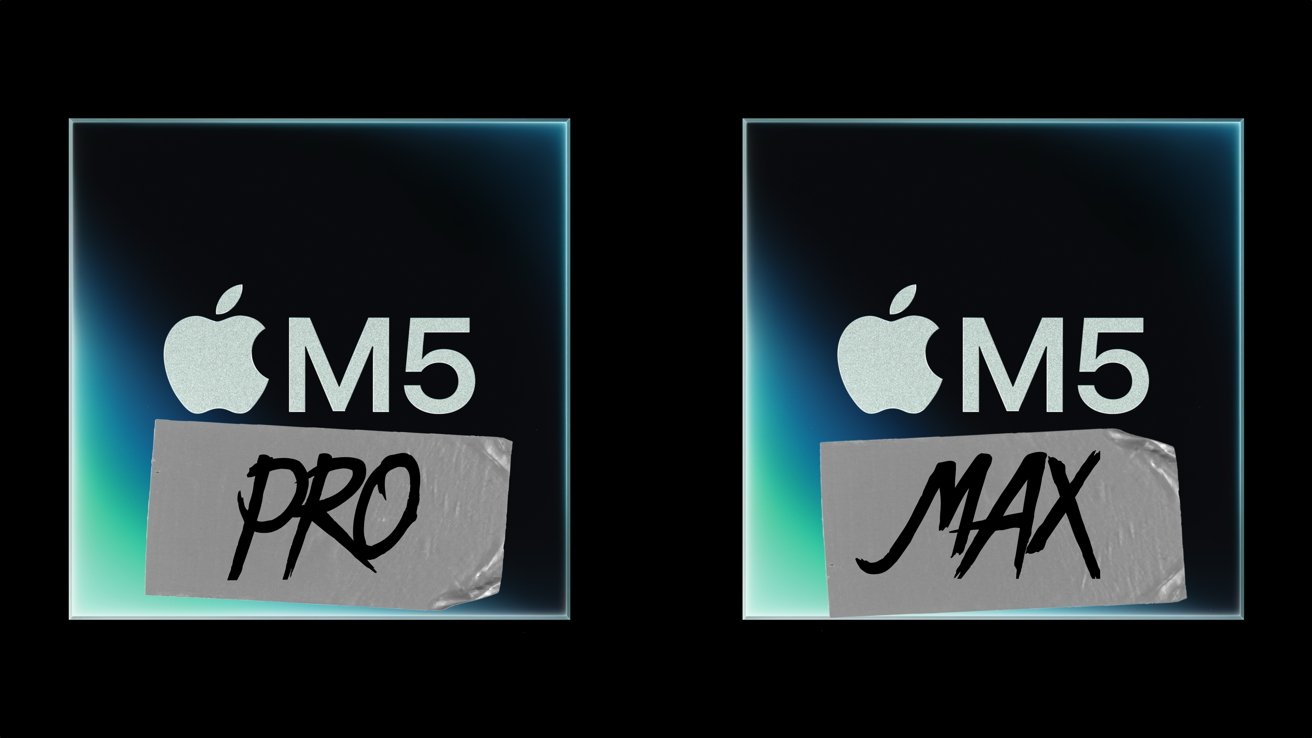
The core M5 chip says a lot about what the M5 Pro and M5 Max will deliver in new MacBook Pro models in 2026. Here's what to expect from the next Apple Silicon release.
The M5 has launched, with the usual crowing of it being considerably better than the previous generation's base-model chip. This is fairly typical, but so is the daydreaming of what the next chips will bring to the table.
While the release timing varies, the Pro and Max versions of a new Apple Silicon generation boast higher performance, delivering power for those who need considerable number-crunching capabilities.
Until Apple actually brings out its fifth-generation Pro and Max chips, and before the inevitable leaks, extrapolation of existing benchmark data, and some trend analysis of previous generations, detail how Apple's top-tier chips will actually perform.
A disclaimer
The estimates for the M5 Pro and M5 Max are based upon a few factors, including examining the specifications of previous chips and differences in chip generations. However, we cannot simply average out changes and apply them blindly to determine Apple's future releases.
The data is analyzed by AppleInsider's editorial, taking into consideration the practicalities of manufacturing and Apple's general tendencies when revising its products.
The forecasts for the M5 Pro and M5 Max are therefore at best an educated guess at what Apple could actually release to the public in the future.
CPU core counts
To consider what the Pro and Max versions of M5 will bring to the table, we have to look at what the previous versions of each did first. Once we see patterns, we can extrapolate from there.
The most obvious thing to look at are the core counts of each. And, for now, we're mostly going to ignore the Ultra version. More on that in a bit.
The 14-inch MacBook Pro is the first Mac to get M5. - Image credit: Apple
We know that the M1 Pro started with 8 or 10 cores, with 6 or 8 performance cores and 2 efficiency cores. The M1 Max had 10, with 8 performance and 2 efficiency.
When it came to the M2, the Pro had 10 or 12 cores, with 6 or 8 performance cores and four efficiency cores, with the M2 Max using the upper of the two combinations.
The M3 went in a slightly different direction for the M3 Pro, as it had 5 or 6 performance cores and a higher-than-normal 6 efficiency cores. It's still not entirely clear why Apple went down this road.
Apple went back to "normal," if you can count two examples as that, for the M3 Max with 10 or 12 performance cores and 4 efficiency cores.
Everything was back on track for the M4, with the M4 Pro having 8 and 10 performance core counts alongside 4 efficiency cores. The M4 Max continued adding more cores to the count, with 10 or 12 performance cores and 4 efficiency cores.
With the exception of the M3 Pro, there is a clear indication of Apple increasing the number of performance cores over time, while keeping the efficiency core count practically the same.
To go along with the core counts, consider that the performance core clock speeds have also increased with time. The 3.23GHz of the M1 versions pales in comparison to the M4 Pro and Max at 4.51GHz.
Even if Apple decided to keep the performance core counts the same across the generations, the core speed changes would've still provided newer chips with more performance than the old ones.
When it comes to the M5 Pro and Pro Max, Apple will be inclined to go higher again. That means an M5 Pro with 10 or 12 performance cores and 4 efficiency cores, with the M5 Max going to 12 and 14 performance, 4 efficiency cores.
At the very least, Apple will keep the core counts the same as the M4. The improvements in clock speed and other elements would make up for that anyway.
GPU improvements
A similar progression can be observed with the GPU, which powered the graphical elements of the chip and the attached Mac. Again, core counts are an important change, but not the only ones.
For example, the M3 GPU benefited from Dynamic Caching, which allocated local memory in real time, and only for the amount of memory needed for performing a task. There was also Mesh Shading and the all-important introduction of hardware-accelerated ray tracing.
The standard edition M5 GPU also incorporated a Neural Accelerator into each GPU core, which improved the GPU compute performance for AI.
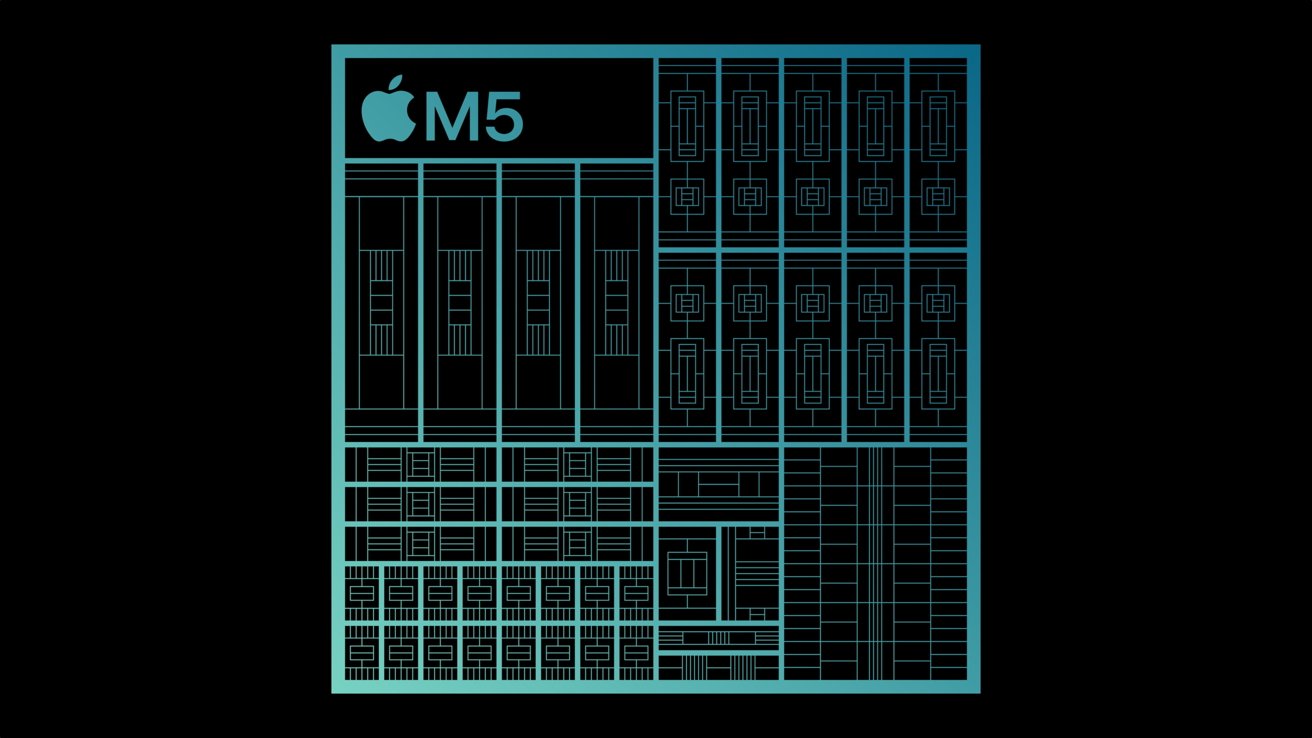
A diagram of Apple's M5 chip - Image Credit: Apple
Then there are the improved GPU core clock speeds over time. The M1 Pro and Max had 1,296MHz GPU cores, but this grew to 1,470MHz in the M4 Pro and 1,578MHz in the M4 Max.
On the GPU core count side, the M1 Pro had 14 and 16-core options, while the M1 Max had 24 or 32-core GPUs. The M2 Pro went up to 16 or 19 cores, and the M2 Max had 30 or 38 core options.
The M3 Pro had 14 and 18-core GPU choices, and the Max went up to 30 or 40 cores. Lastly, the M4 Pro had 16 and 20-core configurations, and the Max had 32 or 40 cores.
The increases between generations here are not as pronounced as the CPU core counts, but they again tend to trend upward over time.
It's almost certain that the M5 Pro will have more than the M4, possibly with 20 to 24 GPU cores. While Apple has the capability to cap the M5 Max GPU at 40 cores again, it has the opportunity to use 40 cores as the lower level and have a new higher-tier option, such as 48 cores.
Neural Engine
A thing that was less important at first but more so later is the Neural Engine. Apple's name for its neural processing unit, for handling AI and machine learning tasks more efficiently than the CPU alone.
Over time, this has been the same core count across all Pro and Max variants, but there were generational improvements in TOPS, the trillion operations per second count.
The M1 generation could manage 11 TOPS, with the M2 doing 15.8 TOPS. The M3 got to 18 TOPS, and the M4 does 38 TOPS.
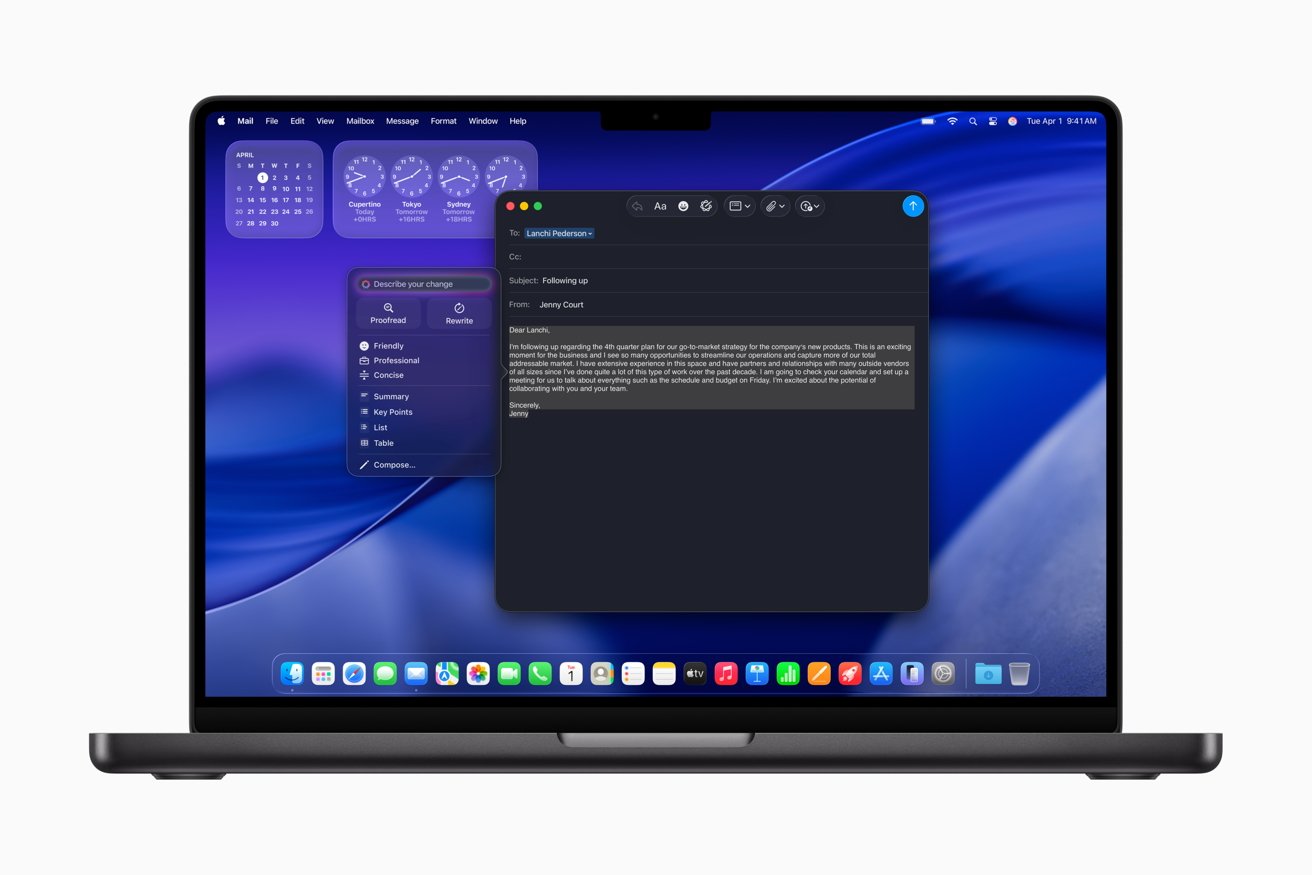
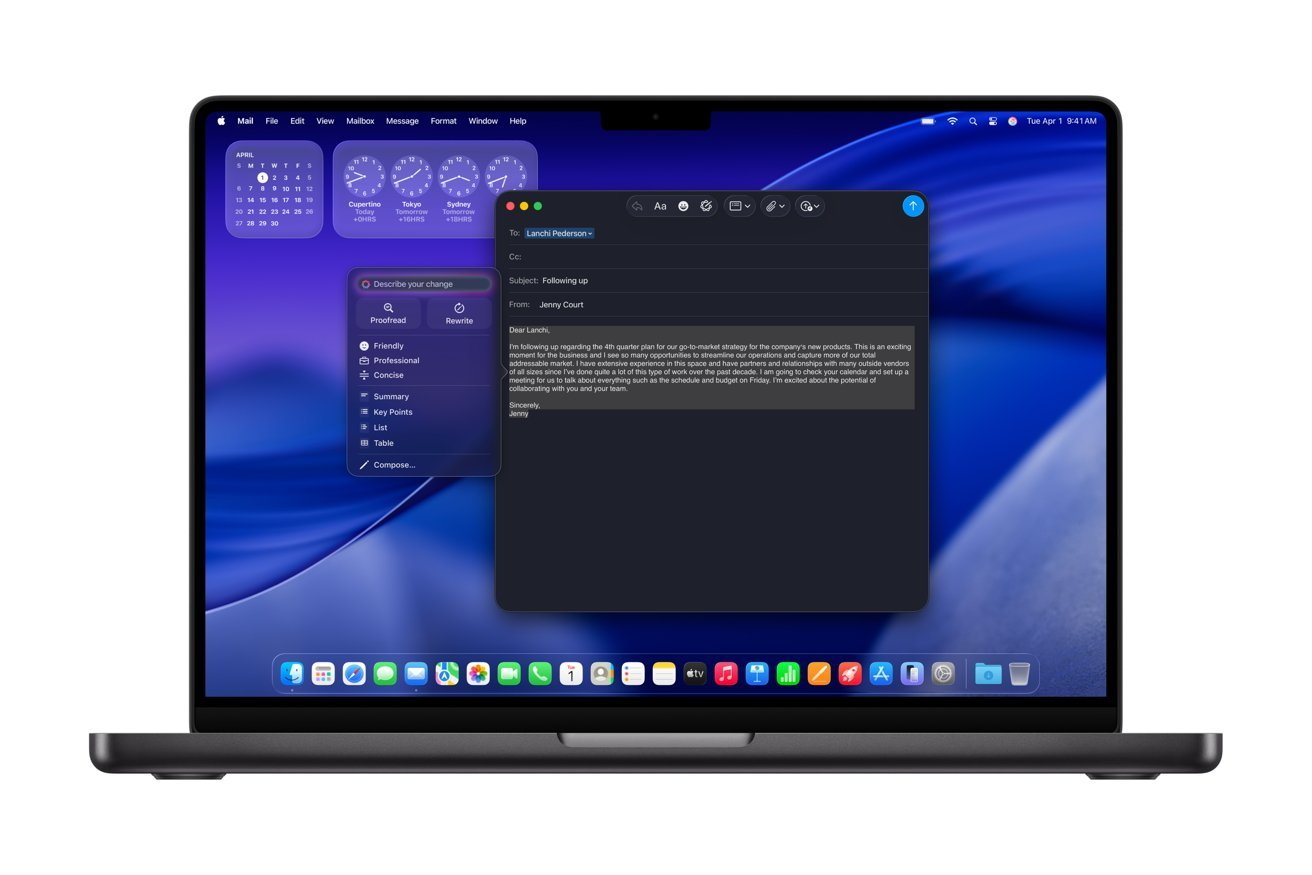
Apple Intelligence's Writing Tools won't task the M5's Neural Engine that much... - Image Credit: Apple
When it comes to the base M5, Apple hasn't actually revealed a TOPS figure for its Neural Engine alone. Instead, Apple doubled down on the AI-processing credentials of its new GPU Neural Accelerators.
It does place any attempt at determining the AI performance of the M5 Pro and M5 Max chips in a difficult spot, since we have to factor in the edge provided by the higher GPU core counts.
Suffice it to say, it will be a phenomenally faster experience when it comes to those sorts of tasks.
Memory
Another thing that affects performance is the memory, which can be adjusted in a few ways, but the key factor to look at is the bandwidth. This is important as the higher the number, the more data can be shifted around quickly.
The M1 Pro and Max had moderate bandwidth levels, at 200GB/s and 400GB/s, respectively. Apple declared the M2 Pro and Max had the same levels.
The M3 Pro was, again, an oddity in that it had 150GB/s memory bandwidth. This was less than the previous Pro-tier chips.
The M3 Max also changed to have two different tiers of memory bandwidth, depending on the CPU core count. The 14-core version had a bandwidth of 300GB/s, but you saw 400GB/s if you had the 16-core model.
The M4 Pro was a return to form, reaching 273GB/s of memory bandwidth. Again, the M4 Max provided the most bandwidth, bumping the amount to 410GB/s for the 14-core model, 546GB/s for the 16-core version.
When it comes to the M5 Pro and Max, expect memory bandwidths to be at the same level as the M4 versions at a minimum. Improvements to a higher level are also a solid expectation here.
Potential benchmarks
While we cannot create exact figures, we can produce ballpark numbers for what each M5 chip could score. By using existing Geekbench scores, looking at core count, calculating the percentage change between generations, and examining a few other architectural factors, we can make an educated guess at the future scores.
For the calculation, and for consistency, the top-performing scores in the Geekbench Mac benchmarks table were compiled for each chip generation and tier, regardless of the model of Mac.
They were then analyzed with a spreadsheet (Numbers, and Excel) to determine the generational percentage change between the M1 and M4 models, as well as the percentage improvement between the M3 and M4, and the M4 and M5 for the base model.
Doing this served as a check to make sure the calculations were working the right way, rather than blindly using the previous generation's percentage increase.
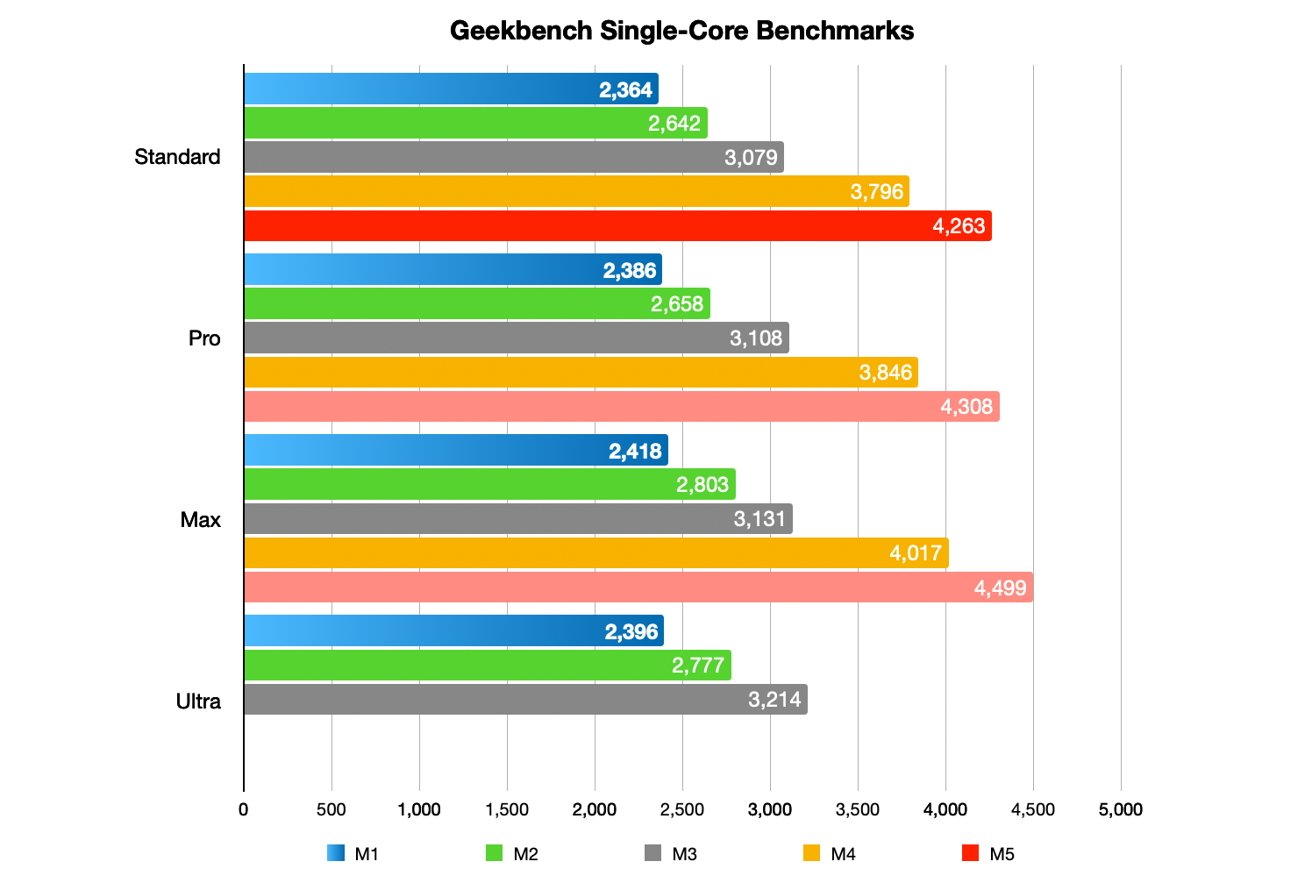
Geekbench single-core scores and M5 Pro and M5 Max forecasts.
On the single-core side, the difference between the standard M3 and M4 is 23%, while the M4 to M5 difference was a much lower 12%. As a single-core extrapolation, it's safe to stick to the 12% change here.
Extrapolated out, the M5 Pro is expected to score around 4,300 for the single-core benchmark, and in the ballpark of 4,500 for the M5 Pro.
On the multi-core side, things are messier due to variations in core counts. We are more inclined to use the M3 Max to M4 Max change percentage here for the M5 Max, which results in a score around 32,400.
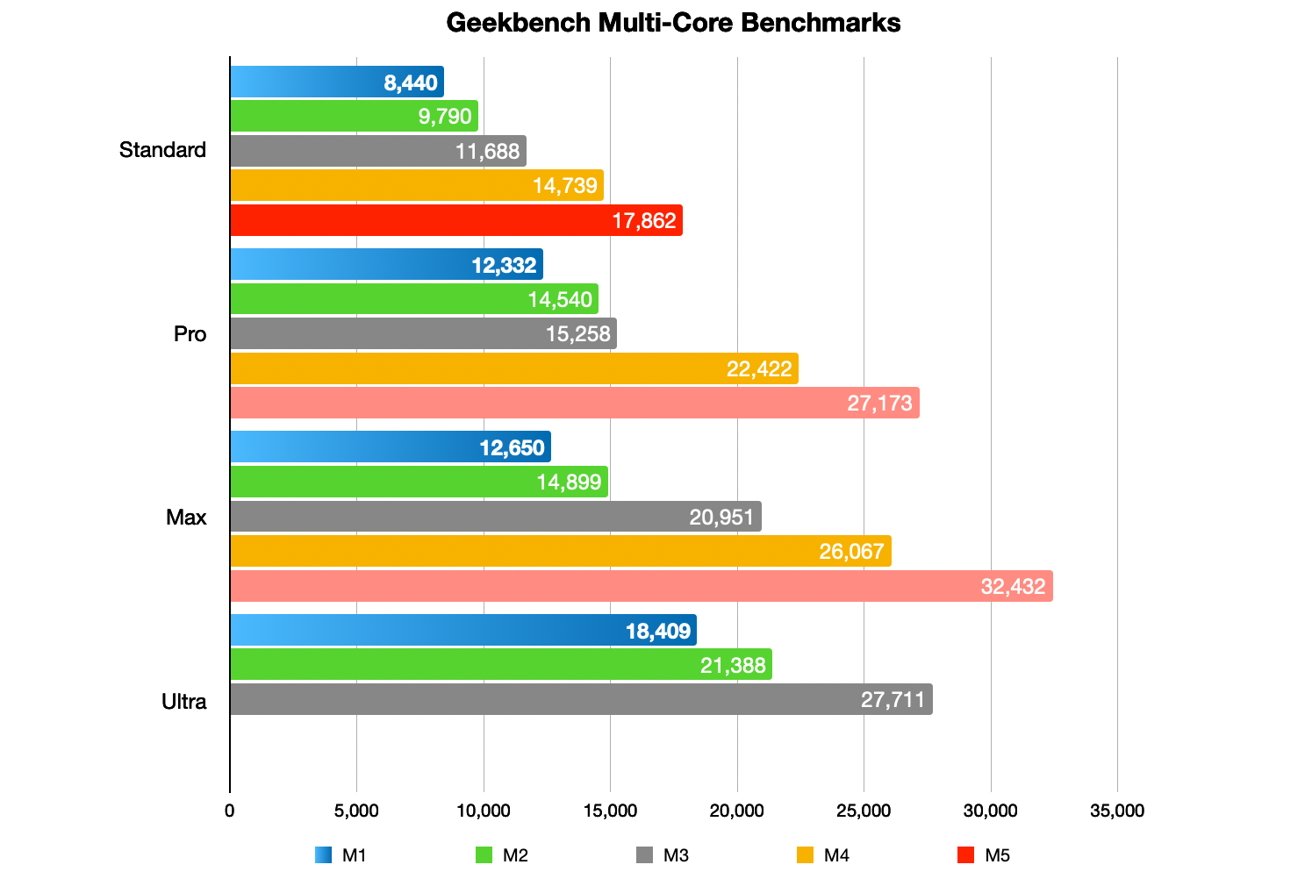
Geekbench multi-core results for M-series chips, and M5 Pro and M5 Max estimates.
We cannot do the same for the M3 Pro to M4 Pro percentage change because of the M3's underwhelming specifications. This has the effect of bumping the difference up to a massive 47%, which is too unrealistic for Apple to maintain.
Instead, we will use the 21% observed difference between the base M4 and M5 as a guide, and put the M5 Pro as scoring 27,170.
The Metal score extrapolation is nigh on impossible here, due to the sheer number of cores at play, as well as Apple's new AI acceleration smarts in each core.
Even so, we can use the difference between the M4 and M5 scores as a guide, which works out to be about 30%.
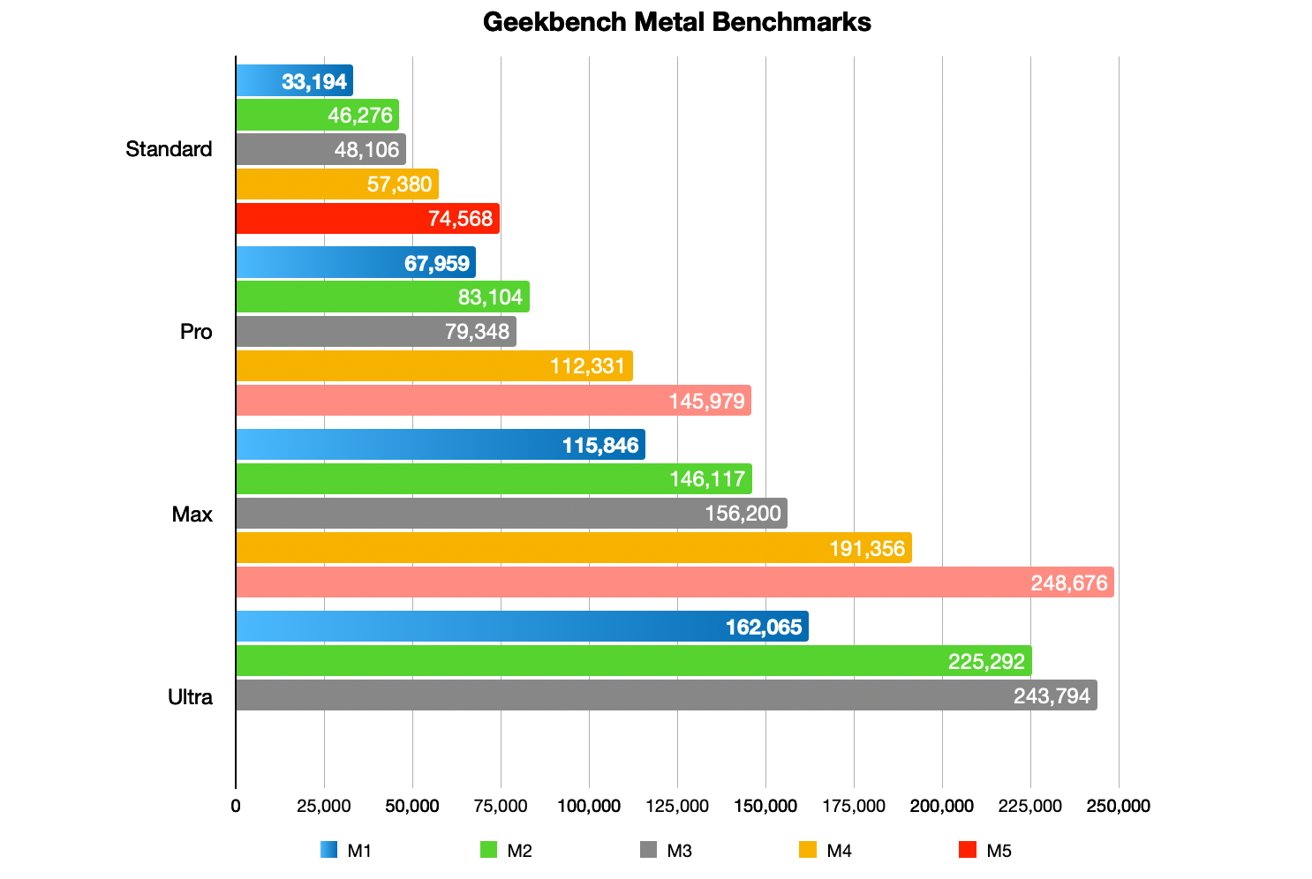
Geekbench Metal results for M-series chips, as well as some M5 Pro and M5 Max forecasts.
If somehow accurate, the M5 Pro will score about 146,000 for the test. The M5 Max will be touching the threshold of 250,000.
Of the three, the Metal result is the least useful set of speculative figures. We know that whatever Apple brings out for the M5 Pro and M5 Max, they will be very powerful, and they will be higher than what's been worked out here.
But about M5 Ultra?
We're not going to extrapolate to the M5 Ultra. Ultra is no longer as simple as joining two Max chips together, and there's no M4 Ultra to work from.
That there's no guarantee that there will be an M5 Ultra chip release. Indeed, there's no guarantee that whatever Ultra chip Apple does end up shipping will use the M5 tag at all.
After bringing out the M1 Ultra and M2 Ultra chips very late in each cycle, Apple then took a moment to reconsider its chip lineup. An M3 Ultra release didn't happen during the M3 generation itself, but it did eventually arrive alongside the M4 Max in the Mac Studio.
Apple could do something similar for the M4 Ultra or even the M5, but there is never a guarantee that it will happen. Apple confirmed in March 2025 that not every chip generation will get an Ultra-tier chip.
The prospect of an M4 Ultra is very slim. Analysis of the M4 Max indicates it doesn't have UltraFusion connectors, and so cannot be easily doubled-up to become an Ultra chip.
An M4 Ultra is not going to happen for Apple unless it does a major redesign of the chip. The M5 Ultra still has a chance, but it all depends on how Apple builds the M5 Max.
When will M5 Pro and M5 Max arrive
Apple is probably done with Pro-level hardware for 2025. There may be some releases, the low-cost MacBook is a possibility, and then there's the evergreen HomePod refresh and Apple TV 4K rumors.
None of those are expected to have M5 Pro or M5 Max chips. The next lineup expected to see a refresh is the MacBook Pro beyond the core M4 processor, which are expected to have Pro and Max variants in early 2026.
As to why Apple has broken up M5, M5 Pro, and M5 Max, it probably comes down to product differentiation. The M5 now, in products that are more holiday-oriented than MacBook Pro makes sense if Apple wants to spread out its release timing more than it already has.
It's not clear if the M5 Mac mini exists, as the line skipped M3. And if it does, the earliest we expect that with a M5 Pro chip at a premium is the spring of 2026, probably earlier rather than later.
Ultimately, time will tell what M5 Pro and M5 Max brings to the table, but we think we're close with performance estimations above. Our advice, as always, is buy what you need now. There's always something faster coming.