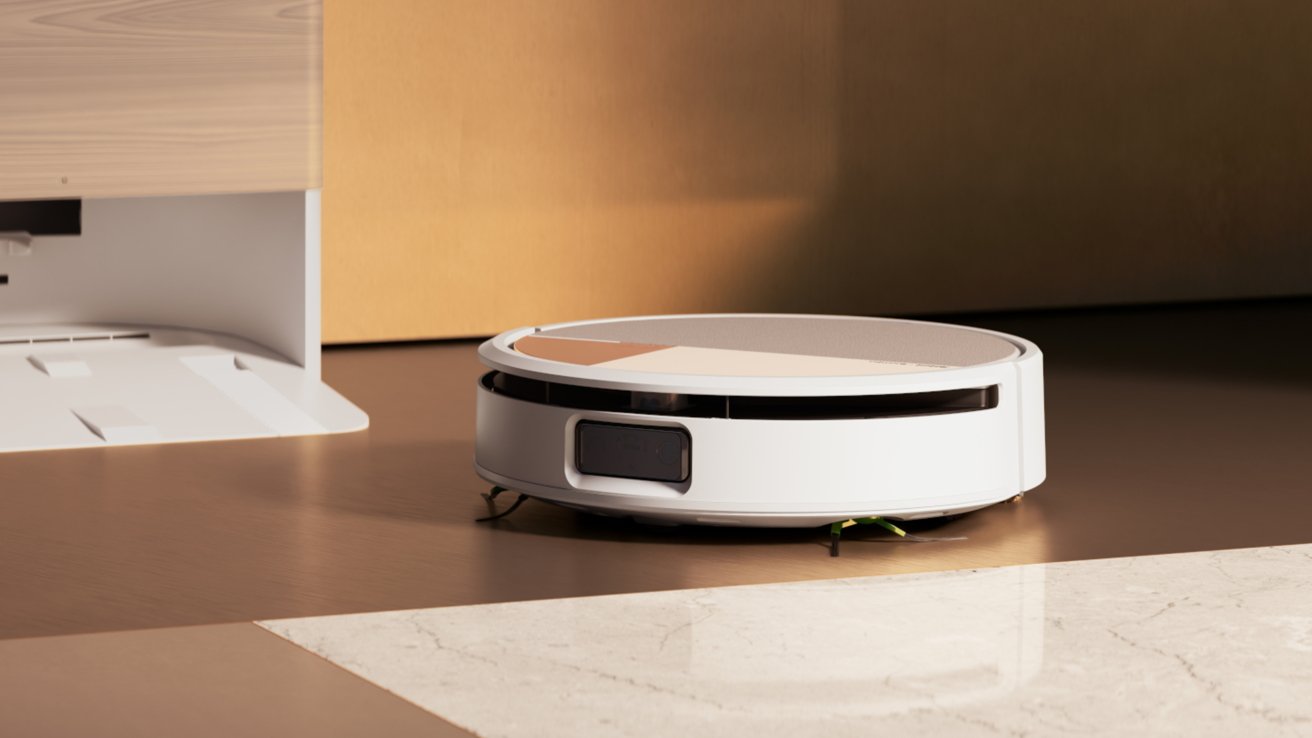
The continued existence of iRobot is questionable, as it is spending the last of the money it has to keep its already-sold products alive in the hopes of finding more cash or a buyer.
The third-quarter financial results for iRobot were a disaster, with the company reporting it had cash and cash equivalents under $25 million. This is a considerable step down from its balance sheet in June, which said it had over $40 million available to it.
A drop in revenue in the quarter saw it bring in just $145.8 million for the period, versus $193.4 million in the year-ago quarter. The cash went down because of the reduced revenue, forcing it to rely on its cash reserves.
This reduction was "well below" internal expectations, said CEO Gary Cohen, adding that this increased cash use and "pressured profitability." The lack of revenue was blamed on market headwinds, ongoing production delays, and shipping disruptions.
Cohen warned the company "has no sources upon which it can draw for additional capital," reports The Verge.
The financial status for the once-leading robot vacuum producer has worsened over the years in the face of stiff competition. One attempt to be sold to Amazon back in 2022 didn't pass regulatory muster, leaving it in severe debt from a loan to stabilize the business during negotiations.
Despite combating the financial issues with mass layoffs, and an attempt to revive the brand with new models, it hasn't been enough to fix the situation. An SEC filing earlier in November advised that it may have to seek bankruptcy protection.
It was reportedly looking for additional funding sources once again, following another failed sale of the business.
Smart home suckers
The prospect of the closure of a smart home device producer is a problem that doesn't just impact investors. Consumers may also be left in the lurch if iRobot collapses, due to the Internet-connectivity of their hardware.
Like many smart home devices, iRobot's Roombas connect using apps that rely on cloud servers operated by iRobot. If iRobot goes under, those servers could also become unavailable.
Since a Roomba can be run in offline mode with basic cleaning capabilities, a closure of iRobot won't mean they will stop working completely. Instead, it would prevent some of the advanced features from working at all.
Consumers will at least avoid the worst possible result of connected device business failure.
This was demonstrated in December with Embodied's Moxie robot, an AI-based companion for children that relied on cloud processing of large language models. At first, parents faced having to explain to children why their digital friend had stopped working, but then an effort was made to work around the cloud server problem via a local server application.
There is also the possibility of iRobot's cloud services being kept active after the company's failure.
In the case of Neato, it ceased operations in 2023, but its servers remained active until October 2025. Vorwek, the parent company of Neato, kept the servers running to maintain a five-year service promise to consumers.
For the moment, iRobot is still alive as a company, but it's running out of cash. It could be the subject of a rescue effort from someone willing to take on the smart home device producer's issues.
At the very least, consumers will still be able to set their robot vacuums going long after its demise, whenever it happens.