Firms that attended Apple's Manufacturing Academy say the two-day training isn't all they got. It's been followed by months of Apple engineers joining their factories to solve business problems.
One criticism of the Apple Manufacturing Academy was that it was solely based in Detroit, although the company has since added a version online nationwide. But according to Wired, many participants are saying that Apple engineers have accompanied them back out to their factories across the country — and are making a significant difference.
Then the Detroit program is also a two-day one, but this engineering on-site help has been taking place for months. For instance, three Apple employees visited ImageTek in Springfield, Vermont, to see if they could help the company's production of food labels — and then seven more joined in the effort.
Marji Smith, ImageTek president, says that everything from worker errors to humidity were affecting the color quality in its bacon food label printing. The issue was serious enough that ImageTek could have lost a key customer.
Then Apple stepped in.
"We're not a gigantic company, and we don't have any AI or software team," Smith says. "What Apple is doing is positively impactful for us."
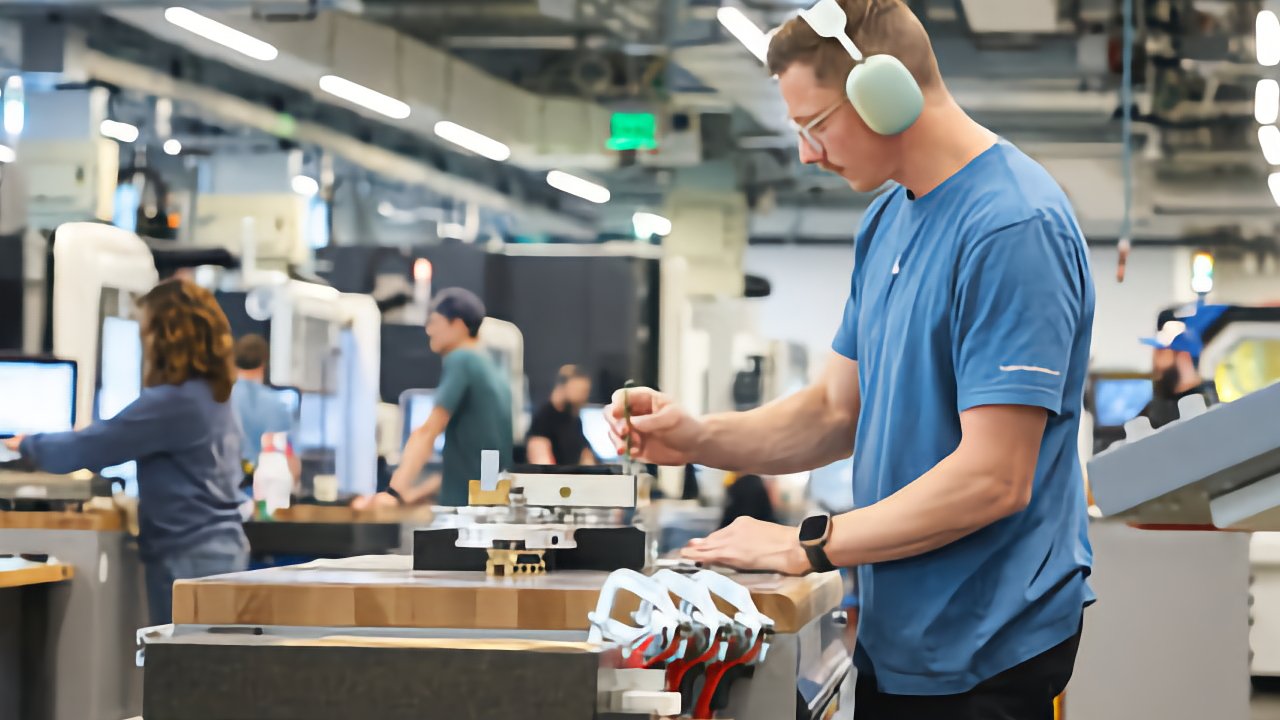
Apple provides training, not AirPods Max — image credit: Apple
Apple reportedly suggested automated sampling of the color printing where a batch could be compared to how it should look. ImageTek has now set up such a camera system, and it runs AI software that Apple developed specifically — and gave to the firm.
"We haven't talked about licensing or rights," says Smith, and it doesn't look as if they ever will.
For Apple's Jamie Herrera, who oversees the academy, says that there is no plan to get any direct benefit from this work at all. And that's despite what he calls a significant investment by the firm.
"What we're looking at is that rising sea for all ships," he says. "The fact that we're able to help US manufacturers in any way we can to elevate and accelerate their progress, it's only going to be better for everyone."
Competing with overseas firms
Based in suburban Detroit, Jay Patel is CEO of the electronics firm his father set up, Amtech Electrocircuits, and is similarly enthused about Apple.
"I will not camp outside an Apple store to get an iPhone," he says. "But I will camp outside the manufacturing academy to make sure we get in."
Since getting into the first academy session in August, Patel's team has been having video meetings with Apple engineers for an hour every week or two. In this case, it's been about using sensors to cut downtime in the firm's manufacturing of electronics for agriculture, medicine, and more.
It's also really about helping ensure that Amtech Electrocircuits reduces any costs or delays it can to compete with overseas firms. "We need to mitigate the waste so we can be more competitive," says Patel.
Production bottlenecks
Then three Apple directors and managers reportedly spent around five hours at Polygon, a firm in Walkerton, Indiana. Polygon makes industrial tubes used in medical operations, and to date equipment issues have meant manually checking thousands of parts every day.
Ben Fouch, Polygon CFO, says that of course the company has been trying to find a way to use automated sensors, but there are so many options to try out.
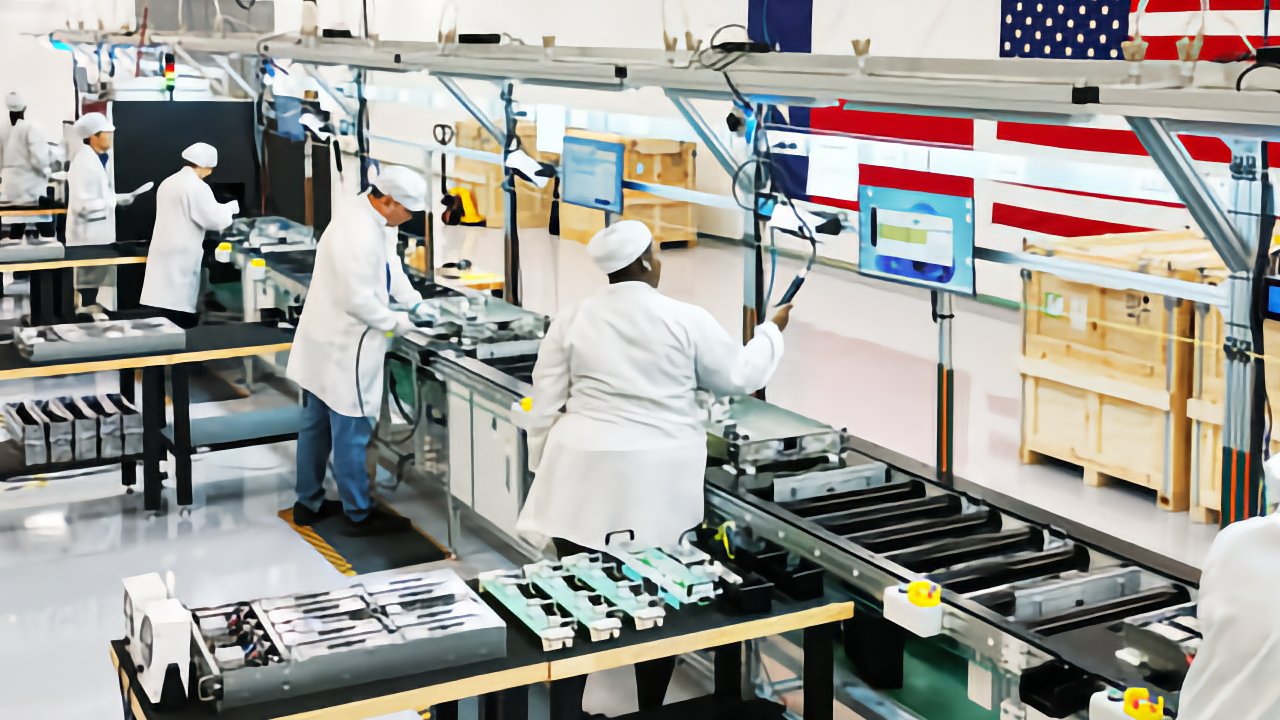
A Houston factory that Apple has invested in — image credit: Apple
"The worst thing you can do, in a smaller business especially, is muddle through pilot purgatory, hoping to find a viable product," he says. "When someone else has done it before, they know the viable path, and they can save you the time and the expense."
Apple's team helped Fouch find a detailed strategy that would affordably track production and spot problems. Fouch says that the system is going to cost the firm around $50,000 in equipment and training, where an automation consultancy would have charged $500,000.
Solving problems
There are more such examples of companies getting help from Apple either in the Detroit sessions or through on-site visits. According to Herrera, it comes down to which firms can present a "problem statement" that Apple believes it can help with.
It's all still a comparatively small program next to the kind of nationwide training that would be needed to bring manufacturing back to the US. Reportedly, Apple is investing $2.5 million in the first year of the academy, and even the online version can't really do what government-backed programs would.
Yet ImageTek's Marji Smith is positive about what she believes is a growing trend in America today.
"We see what's happening with the return of tech manufacturing to the US, and we want to be a part of that," she continues. "We're investing and growing a lot right now, and we're hungry for support."