The United States will hold off on raising its new tariff on Chinese semiconductor imports until June 2027, delaying the financial hit on Apple's component sourcing efforts for Mac, iPhone, and other products.
The US-China tariff battle led to fears of massive tariffs on Chinese imports into the United States and potentially sky-high price rises for Apple products. While the world held its collective breath for tariffs to be introduced against semiconductors in January, importers have been given a reprieve.
In a Federal Register filing on Tuesday, reports CNBC, the Trump Administration confirmed it will take action against China under Section 301 of the Trade Act of 1974, and the response will be a tariff on semiconductors.
However, rather than delay the actual tariff's implementation, the Trump Administration is applying it immediately, but is setting the rate of the additional tariff at zero. Instead, the Trump Administration plans to increase the tariff level on June 23, 2027, effectively delaying the impact.
As for what that percentage could be, the Trump Administration declined to say. Instead, it will be announced at least 30 days ahead of the scheduled increase.
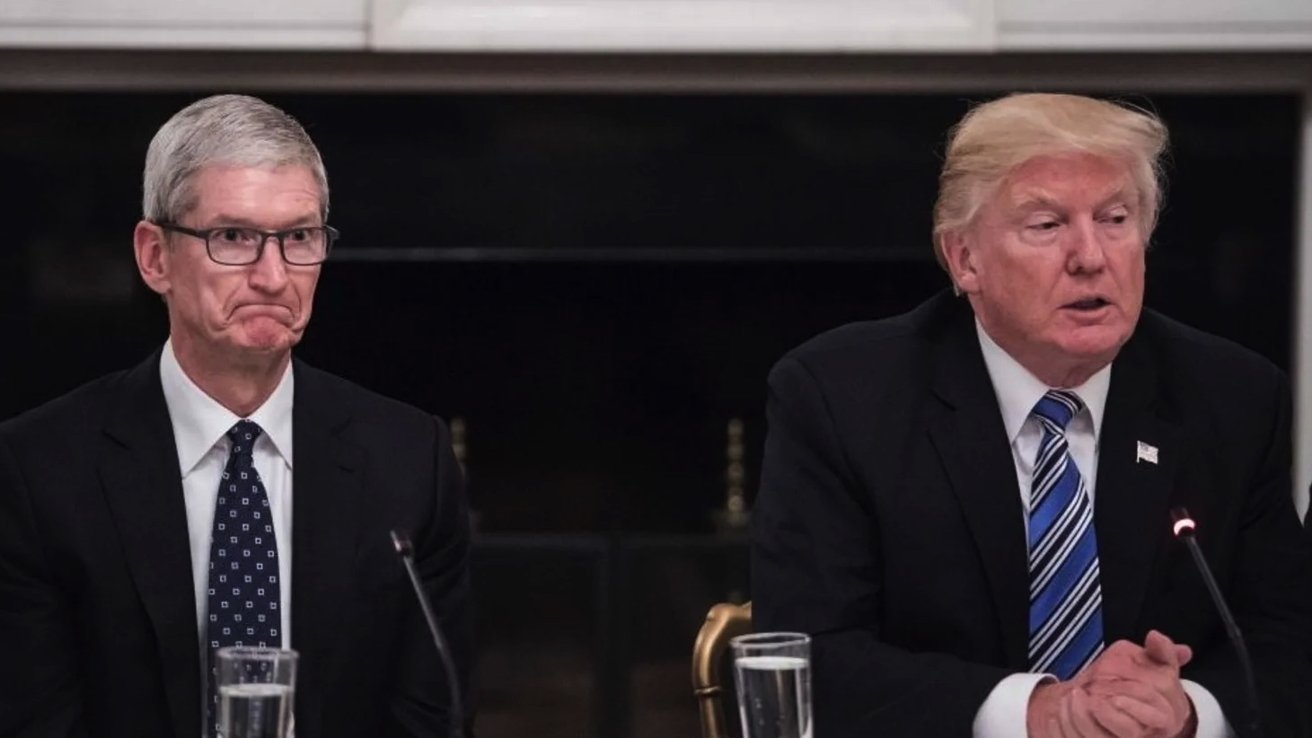
The decision to set the rate at zero to start is an indication that the White House wants to cool down the ongoing trade war between the two countries. U.S. President Donald Trump and Chinese President Xi Jinping had reached a deal in October to ease the tariff fight, with the U.S. cutting some tariffs while China opened up rare earth metal exports.
Its implementation, even at a zero rate, is still a reminder to China that the U.S. has the ability to tax this specific category of imports. It just elects not to do so right now.
Helpful to Apple
The decision to hold off on raising the tariff cost will be helpful to many manufacturers. Aside from avoiding extra tariffs on current and near-future imports, it also buys companies time to arrange sourcing from other countries not affected by the tariff situation.
This is also of benefit to Apple, given its massive supply chain embedded in China, but quickly growing in size in India. Though not for the main processors used in the iPhone and other products.
Since Apple sources its A-series and M-series Apple Silicon chips from TSMC in Taiwan, the components are still subject to a 20% reciprocal tariff, but not on tariffs specifically targeting China.
Though the processors are safe, Apple still relies on many different suppliers for components for its hardware. The semiconductor tariff would apply to chips used for power management, as well as other integrated circuits used throughout its products.
Apple was previously safe from the threat of a 100% semiconductor import tariff. It escaped that tariff because in August, it pledged to invest $100 billion in U.S. manufacturing efforts.
Whether President Trump's claim that Apple's commitment to build means "there is no tariff" still applies remains to be seen.
Though the 18-month delay will encourage some manufacturers to renegotiate and re-source products to avoid the delayed tariff, they may not escape tariff changes altogether.
The Information reports that there is also a broader national security probe underway that could result in semiconductor tariffs being applied to all countries, not just China.