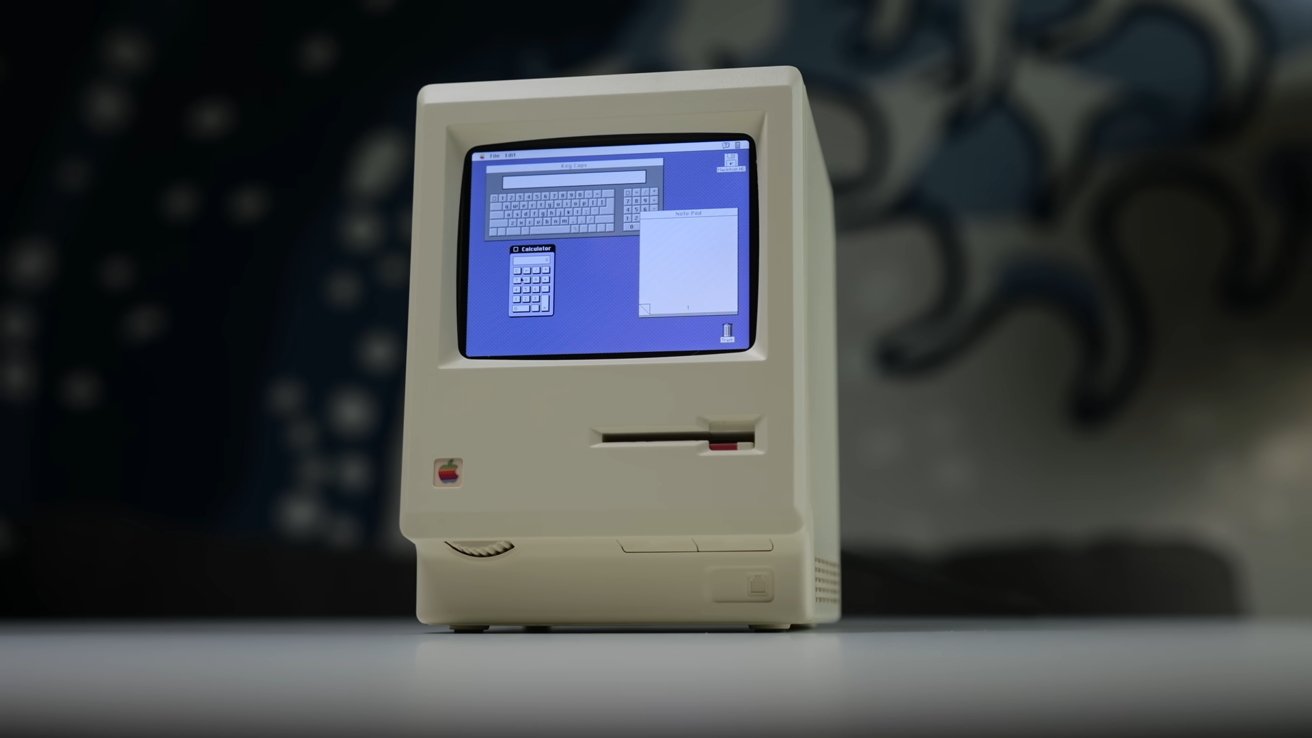
It was only a matter of time. A YouTuber turned a palm-sized classic Mac styled clock into a working computer. Here's how he did it.
I'm sure almost everyone reading this is aware of the meme "Can it run Doom?" — the meme that challenges tech-savvy DIYers to get Doom up and running on just about anything. But maybe what we should actually be asking is, "Can it Mac" coupled with playing Doom.
YouTube channel This Does Not Compute has taken up the mantle, it seems, and has actually taken a Mac-inspired clock from cute tchotchke to functional computer. The process is documented in a fifteen-minute-long YouTube video that is worth watching.
The reason the project exists in the first place is that the RayCue Maclock is a surprisingly faithful recreation of the exterior of original Mac. It's also tiny, standing about four inches tall.

The project requires some basic soldering skills and the confidence to pry open a small cube of plastic. While it may not be a beginner-friendly project, I'm fairly positive that most tech-savvy folk who know their way around a soldering iron would be able to knock this out — the project is pretty well documented after all.
The necessary hardware includes a Zero 2 W Raspberry Pi, a Waveshare 2.8" LCD screen, and a 32GB microSD card. There's also an extra step for a 3D printable screen bracket, too.
If you're interested in doing the project yourself, the This Does Not Compute GitHub repository has all the information on software and steps available here.
So maybe it's not a true "Can it run Doom?" style project. It mostly just uses the body of the clock and is a pretty standard Pi project otherwise.
That being said, for $100 in parts and a relatively minor time investment, it's still an impressive project. Plus, who could deny how cool it would be to have a functional 4-inch-tall Mac on your desk?
Colin, the voice and hands behind the project, acknowledges that it could be taken even further. He notes that it wouldn't be too difficult to use the fake floppy disc to actually turn on the Pi, or even make it an SD card reader.
It would be interesting to see how far the project could be pushed. There's not much room inside the Maclock, but that certainly didn't stop Colin.