Brazil's federal police have uncovered a large-scale money laundering group involving influencers and musicians, all thanks to an iCloud backup.
iCloud backups have played a key role in exposing organized crime, helping police uncover a poker rigging scheme in October 2025, and now contributing to the discovery of a $320 million money laundering operation in Brazil.
As part of an investigation into alleged illegal gambling and international drug trafficking, Brazilian authorities arrested accountant Rodrigo Morgado. Upon gaining access to his iCloud backup, however, investigators found evidence of a separate, complex money laundering scheme.
As 9to5mac notes, this discovery led to 39 temporary arrest warrants and 45 search and seizure warrants in eight states and Brazil's federal district.
Authorities claim they were able to map the structure of a group suspected of laundering more than $320 million via illegal betting, raffles, proxies, international drug trafficking, shell companies, cryptocurrencies, and overseas transfers.
In essence, the accountant's iCloud backup allowed Brazil's federal police to cross-reference bank statements, contracts, conversations, corporate records, financial documents, legal documents, receipts, and more. This proved essential in identifying the relationship between shell companies, influencers, and artists.
Musicians MC Ryan SP and MC Poze do Rodo were key figures in the money laundering scheme, and both were arrested. Influencers Raphael Sousa Oliveira and Chrys Dias were also arrested.
According to the Brazilian publication G1, Rodrigo Morgado "placed great trust in the digital security of iCloud, which ultimately allowed the Federal Police to map the organization." Authorities seized luxury cars, watches, jewelry, weapons, cash, documents, and electronic devices.
New warrants for the data stored on these seized devices, as well as for the iCloud and Google Drive accounts on them, have been issued. Additional iCloud backups may reveal more about the group's scheme, if any are found.
Apple's compliance with government orders
Apple has always been clear about the iCloud backup data it provides to law enforcement with a subpoena. The Apple Platform Security support documentation outlines the exact details.
"If the user has enabled iCloud Backup, the CloudKit Service Key used for the Messages in iCloud container is backed up to iCloud to allow the user to recover their messages even if they have lost access to iCloud Keychain and their trusted devices," explains the documentation.
Apple typically provides iCloud Service Keys to law enforcement to comply with government warrants and subpoenas. However, the company has refused to compromise the security of its hardware products by implementing encryption backdoors.
In 2016, Apple was involved in a dispute with the FBI over the data contained on an iPhone used by a San Bernardino terrorist. Apple was asked to create specialized software to bypass the security measures of the device, but it refused, arguing this would undermine security for all users.
The back and forth between Apple and the FBI hasn't stopped since then, either.
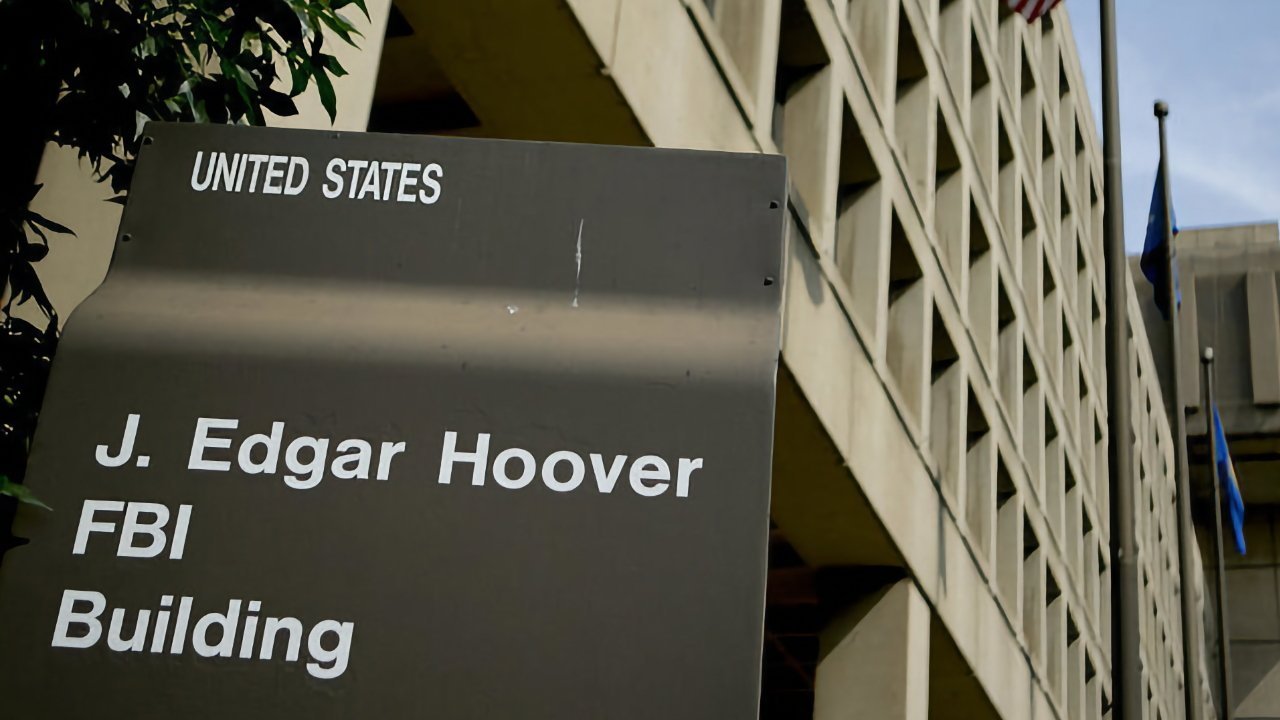
In the past, the FBI has expressed deep concern over iCloud security features like Advanced Data Protection.
In 2022, iCloud security was enhanced with a feature known as Advanced Data Protection. Apple's head of security at the time described Advanced Data Protection as the company's "highest level of cloud data security."
With Advanced Data Protection, iCloud data is secured via end-to-end encryption, and the files can only be decrypted on users' trusted devices.
Commenting on the feature, the FBI said it was "deeply concerned with the threat end-to-end and user-only-access encryption poses."
The organization claimed that Advanced Data Protection hindered the FBI's ability to "protect the American people from criminal acts ranging from cyber-attacks and violence against children to drug trafficking, organized crime, and terrorism."
Meanwhile, in the UK, Apple was forced to disable Advanced Data Protection, as the company refused to comply with an encryption backdoor demand.
In essence, Apple cooperates with law enforcement to the extent that it's required to do so, while still trying to ensure the security of its user base.