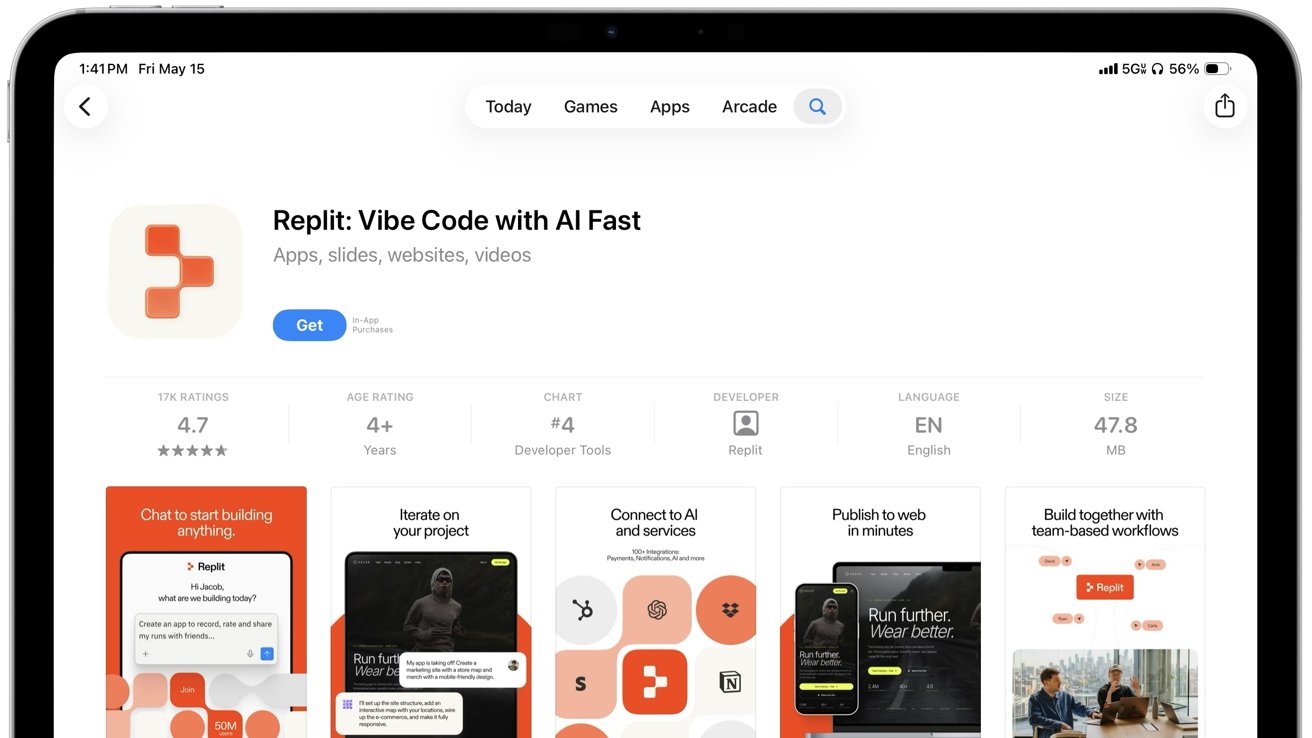
Replit has released its first iPhone app update in four months after resolving an App Store review dispute with Apple over how AI-generated apps can be previewed and developed on iOS.
CEO Amjad Masad said on May 15 that Replit had "worked things out with Apple" and published its first iPhone app update in four months. The update brings Replit Agent 4 to mobile users, along with support for parallel agents, team collaboration through merge flows, and project viewing across workspaces.
The update follows a dispute that began after Apple reportedly pushed back on new versions of the App Store app in March. Reporting around the conflict said Apple objected to how Replit let users preview AI-built apps on iPhone, an area tied to Apple's long-standing restrictions around downloaded and dynamically executed code.
Replit belongs to a fast-growing category of "vibe coding" tools that let users describe software in plain language and have AI generate the code. Desktop versions of those tools resemble modern cloud development environments where users can build, test, and modify apps through conversational prompts.
Running the same workflow on an iPhone raises a tougher App Store question because the app can create interface layouts, preview software behavior, and deploy projects from a mobile device. Apple has historically restricted apps that change functionality after review to prevent unreviewed software from effectively operating inside another App Store app.
Replit is testing the edge of Apple's App Store rules
Apple has not explained what changed between the March App Store dispute and Replit's newly approved update. Replit CEO Amjad Masad said the companies "worked things out" after four months without updates.
Neither company explained whether Replit changed how the app previews AI-generated software on iPhone. Apple isn't blocking AI coding tools outright, and the company continues adding AI-assisted development features to Xcode.
We worked things out with Apple, and just published our app for the first time in 4 months.
— Amjad Masad (@amasad) May 15, 2026
Thanks to all our customers and creators who helped out.
It's been a journey, but we never give up and stay winning!
Enjoy the updates! Lots of new things coming. pic.twitter.com/ClpA3SDlwd
Developers already use a wide range of AI tools to build software for Apple's platforms, including iPhone, iPad, and Mac apps. Instead, Apple's concern appears to center on where AI-assisted development starts resembling its own runtime environment inside iOS.
Chatbots that explain code fit comfortably inside the App Store, though apps that generate, preview, and package software from an iPhone create a much harder review and security problem.
Replit's update also arrives as the company tries to pull users from other vibe coding platforms. A promotion tied to the release lets users import projects from Lovable, Base44, and V0 into Replit, then use Replit Agent to turn them into mobile apps.
Apple needs AI developers without losing platform control
The Replit dispute highlights the position Apple faces as AI agents move from experimental tools into real software development workflows. Apple wants developers building AI-powered apps for iOS and iPadOS, though the App Store review system was originally designed around static apps approved before reaching users.
AI coding tools disrupt that model by generating software continuously, quickly changing projects, and giving nontechnical users a way to build apps without Xcode or a Mac. Apple's review process becomes much harder to manage when software behavior can evolve rapidly after an app reaches users.
Apple has strong reasons to be cautious because an iPhone app that behaves like an unreviewed software environment creates obvious security, moderation, and platform control concerns. Overly rigid enforcement of older App Store rules could also make iOS less welcoming to one of the fastest-growing software categories in years.
Replit's latest update carries more significance than a routine App Store release because it suggests Apple is still willing to allow AI coding apps on iPhone under certain conditions. WWDC begins June 8, and AI agents are expected to become a larger part of Apple's developer strategy.