
Apple just gave the keynote for WWDC 2026, and it's made one thing abundantly clear: it's going to ship those promised AI features come hell or high water.
It's June, which means Apple's Worldwide Developers Conference, or "WWDC" for short, or, ugh, "dub-dub" for even shorter, is underway. Ostensibly, it's a yearly, week-long conference that Apple uses to tell developers what to expect in the next major Apple software updates.
In practice, it's every bit as much of a hype event for the general public. While developers may find out which new tools, toys, and features they'll have access to, consumers can extrapolate from that to what they can expect to see in the coming months.
Sometimes WWDC is overwhelmingly a hit. Other times, it's decidedly less so.
Usually, it lies somewhere between, with a handful of useful features intermixed with relatively benign ones and, occasionally, questionable ones.
But how did 2026 fare? What are the best features for the "average" user?
What actually happened this year
Last year was abysmal as far as WWDCs go. We got Liquid Glass and not a lot else. And sure, you could say "well, that was a pretty big update, Apple's working to standardize the experience across all its platforms."
And I'd be willing to give that to you, for the record.
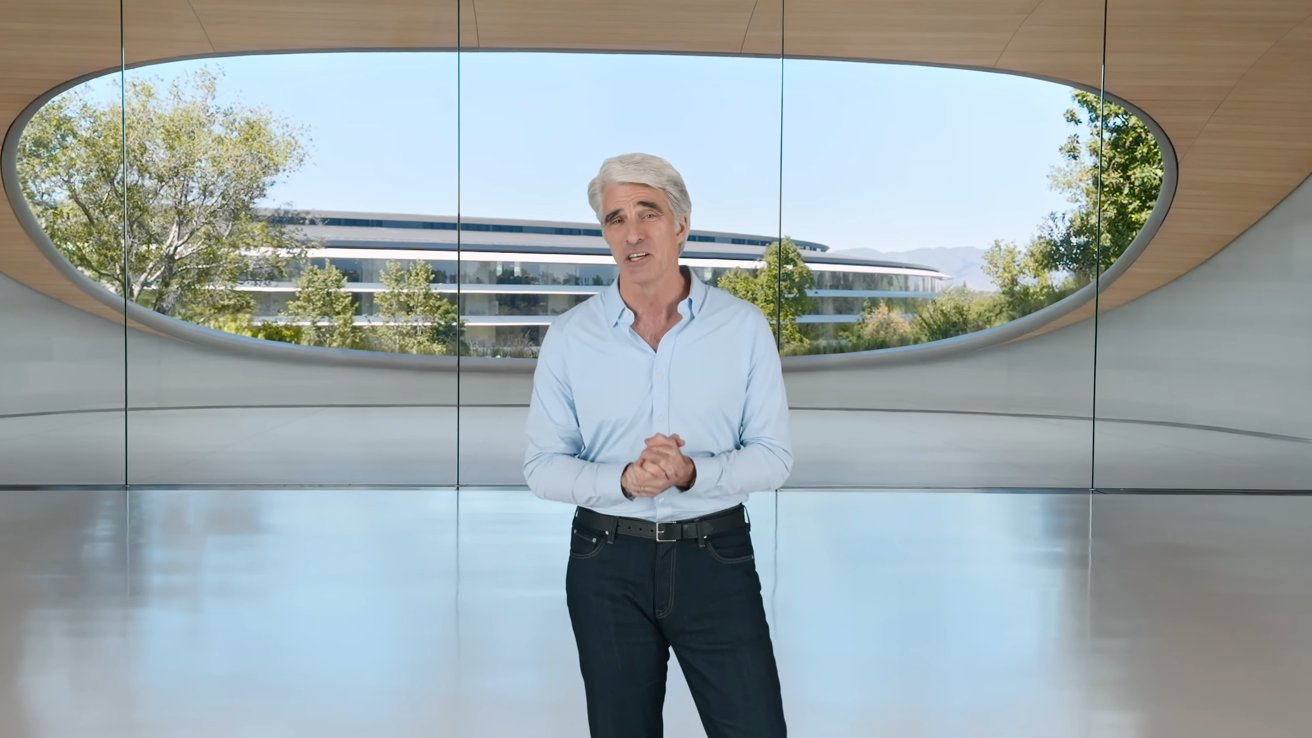
"We look forward to sharing more about it in the coming year," Craig Federighi, June 9, 2025
WWDC 2026 keynote wasn't any better.
Monday's keynote felt extremely bloated with demonstrations. Every Apple Intelligence feature had a demo that seemed to go on much too long, and didn't really show off the feature that well.
Mike and I had talked about it after things had settled down, and the consensus was that Apple really didn't give us much to go off of. They didn't talk much about individual platforms. There were no breakout sections for iOS, macOS, and iPadOS. The tvOS updates were an afterthought in a bullet list, and the word "HomePod" wasn't even said once.
More on that in a bit, though.
Maybe developers will learn more about each platform in the coming days. I mean, I doubt it, and it likely wouldn't be anything notable to end users anyway.
I kept waiting for the bento graphics, but none arrived.
And truthfully, I think that's because Apple is still trying to recover from the fumble that was 2024. Apple Intelligence flopped, and it flopped hard.
At this point, I think Apple is going to drag that horse across the finish line, regardless of the condition of its four legs. I assume that the horse may not even have all four legs.
Will these new features be any good? Honestly, your guess is as good as mine.
But I do know one thing: we're going to get them regardless. And I really do think that the xOS 27 cycle is going to be a year's worth of Apple studying how its customers interact with Apple Intelligence and correcting as they go.
So, somehow, I think that this WWDC may have been even less impressive than last year's.
But it wasn't all bad, and we do at least know what we might be getting in September. So, here's what WWDC 2026 means for you, dear reader.
The big winner: Parents and kids
While most of this year's keynote focused on Apple Intelligence, I think that actually isn't the most impressive feat.
I really think Apple front-loaded the keynote with the best, and most required legally and politically in mid-2026. Apple started with parental controls across Apple devices.

Apple continues to expand features to Child Accounts
I know what sort of dark digital alleys I went down as a child in the 1990s and early 2000s. They were rarely ever good, and I count my lucky stars that it wasn't worse than it was.
But the main advantage is that my computer lived in the dining room, not in my back pocket. If a situation turned bad, I could just turn the computer off and go elsewhere.
None of the strangers I talked to knew where I lived or what I looked like, for the most part. Not everyone was a super sleuth who could deduce who you were or where you lived from a single picture or a shared screen name, either.
Kids don't have that luxury these days. Plenty of kids get social media before they turn 13, and a shared screen name across platforms is a liability.
There certainly was no AI when I was 14. And I am so, so grateful.
Not to mention, you can't just turn off your phone, unless you want your parents to automatically assume you're dead in a ditch. The internet is, unfortunately, a wood chipper designed to ruin a young person's life if they're not careful.
Apple's push to make all of its devices safer for kids is, honestly, the best thing they've done in the last three years or so. Giving parents a one-touch button to approve or deny apps, websites, and contacts lets them sleep easier, knowing their kids aren't trawling through places they shouldn't be.

Improved child account controls will allow parents to approve websites alongside apps
It is also great for kids. It gives them a bit more privacy on their end, too.
After all, if a kid can't download potentially dangerous apps or visit potentially dangerous websites, there's less of a reason for a parent to go through their phone. And if their parents know who they're talking to, kids can, hopefully, be allowed to have those conversations in private.
Kids are humans, too, and while the spaces should be moderated, they shouldn't be invaded. I really think this is the correct way to do it.
Out of everything announced today, I think the parental controls will be both the most used and the most beneficial. I think that we, as a society, are starting to realize that there needs to be some boundaries for kids vis-a-vis social media, texting, and gaming.
Any tools we can give to parents to help them are a win. Apple will provide the education on the feature, of course. And so will we.
We can't make parents educate themselves on parental controls, especially the ones who want to blame Big Tech for all their parenting problems, of course. We're going to try.
It's about damn time: Improved Image Playground & Photos
You thought I was going to say Siri. Joke's on you, I've got a whole section dedicated to that coming up.
No, this is for a feature that's pretty much sucked since it came out: Image Playground.
To be clear, I don't actually care that much about AI-generated images. Or maybe it's more that I actively despise them.
That being said, it's nice to see that Apple may actually be able to compete with Gemini and ChatGPT to some degree. Before, Apple's Image Playground was concerningly bad.
Last year, when I wrote my "If you were underwhelmed by WWDC 2025, you're not alone" piece, I pointed out that the state of Apple Intelligence was somewhat dire.
Apple struggled with image generation, which surprised me. Sure, it could have been because Apple was only "ethically" training its models, but truthfully, I just think it wasn't there yet.
Which is why you guys got to see the battle of the Lobster Doctors.
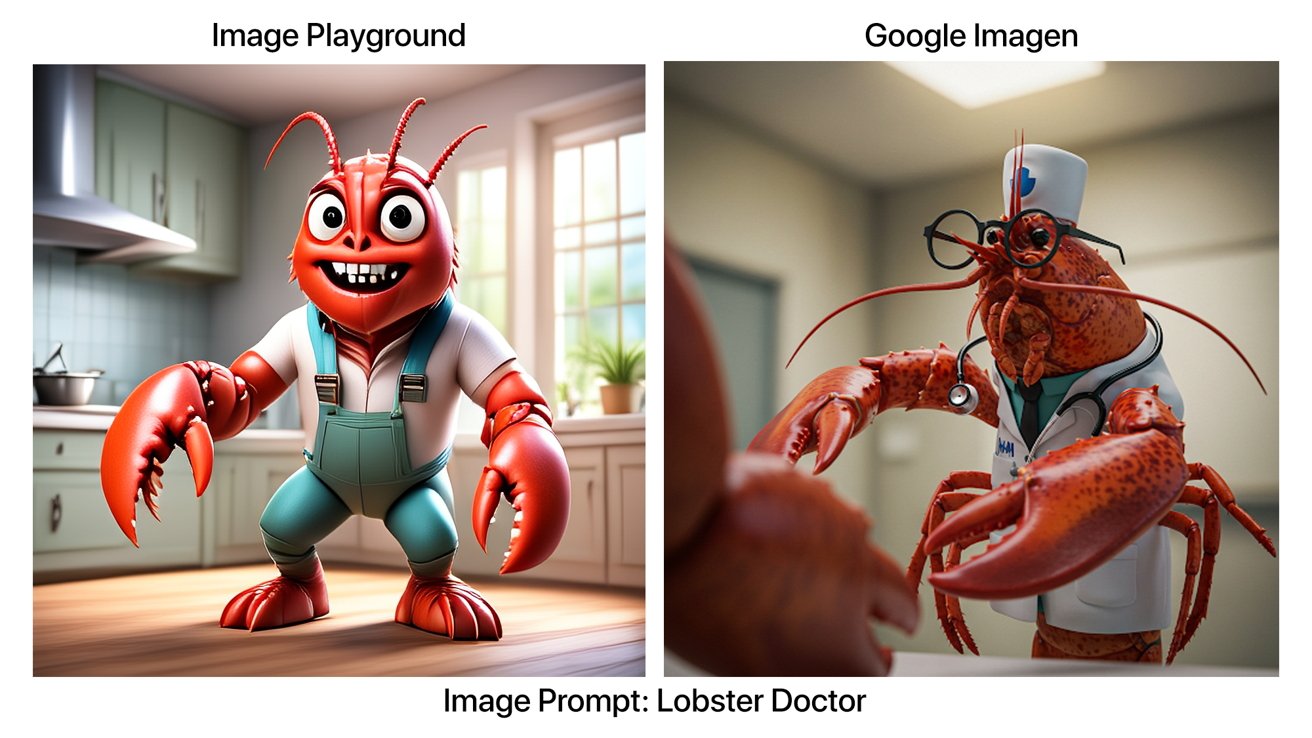
Nightmare fuel, really
Again, truly horrifying. Both Apple's attempt at the prompt and the subject itself.
This time around, Apple seems to be a little more serious about the Image Playground. Which seems a little impressive, said in a derogatory way, given how long it took.
While we won't know for sure until Apple releases it, Apple says Image Playground lets users create images in "pretty much any style you want — including photorealistic."

An image generated by the improved Image Playground
And the example images they gave seem pretty solid, too. So, if you were a person who wanted better iPhone image generation, I suppose you have that to look forward to.
Could be good: Apple Intelligence crafted extensions and shortcuts
Shortcuts are one of those things that most my compatriots love, and I tolerate. If I'm using an app and it'll make a Home shortcut for me, sure, I'll use it.
But actually creating a shortcut is incredibly annoying. And Apple is fully aware that many people do not want to do that at all.
The idea of being able to describe a shortcut and automating some little annoying task I do on the regular is nice. Again, I'm curious to see how this will actually work once it arrives, but if it works, I think it'll be a nice addition.

An example of a natural-language created shortcut
Same with extensions, I suppose. Sort of.
Extensions seem particularly tricky. A lot of popular extensions circumvent legally gray areas, paywall-breaking features, ad blockers, and so on.
I'm sure there's some use case here, I'm just not sure what to expect or how much the average user will use it.
Liquid Glass improvements
It needed to be done, but it didn't need to get as much Keynote time as it did, again. 2025 was the year of Liquid Glass. That was pretty much the thing Apple talked about.
I expected it to stay in 2025. After all, it's already the UI we're using. For Mac, it's probably user training for that touchscreen MacBook Pro that's coming.
But alas, Apple felt differently.
For some reason, we got a full three-minute breakdown of the ongoing Liquid Glassification of Apple's UI. And it pretty much boils down to this:
- Improved transparency controls
- Extended sidebars
- Standardized corner radius
- Multi-layer glass icons
To be clear, I think all of these are improvements. The transparency controls are likely to be a win for accessibility.
I'm still not sure why this wasn't a footnote somewhere. Either way, as a person who genuinely prefers Liquid Glass to the last two iOS design themes, I'm glad Apple's refining it.
It's going to be what it's going to be: Siri AI
I honestly don't have any idea what to expect from Siri. I understand what Apple showed in the keynote, but it showed similar things in the WWDC 2024 keynote.
There are parts of this proposed new Siri, now dubbed Siri AI, that I think sound okay. Or, at least as "okay" as I'm willing to admit as AppleInsider's resident luddite.
It might actually surprise some of you to learn that I do think that there are use cases for AI. And I do think that Apple has identified some of the best ones.
The demo showing someone requesting multi-stop driving directions based on personal context was fantastic. I think that Siri should be able to find addresses via the web, Messages, and Contacts, and create a route accordingly.

Using Siri to identify a location for a road trip
Being able to verbally filter, select, and manage photos is ideal, too. I know that my camera roll gets clogged with tons of random pictures, and being able to ask for ones that contain specific people would be very convenient.
I like the idea that Siri is still doing some of its work on-device, at least for the iPhone 17 Pro and iPhone Air lineup. I think that's a far more responsible take on AI than Apple's competitors.
Of course, Siri's not exclusively on-device, and I can't imagine a world where any AI is truly, wholly on-device. But keeping at least some percentage of that out of data centers is still an impressive feat.
I'm skeptical that Siri will be able to nail a user's tone. I've seen this argument from many LLM fans, only to read writing that is immediately clockable as AI.
Again, I'm not really sure what to expect out of Siri. We were promised many of these features two years ago, and they never came to fruition.
Until Siri actually makes it to the iPhone, and to a lesser extent macOS, it'll be hard to tell if Apple's done anything special. I worry that it's another push to incorporate AI in a way that ultimately falls flat.
Looking forward to WWDC 2027
I maintain that this year was a pretty lackluster showing from Apple, but I suspect there are reasons for that. As I said above, I think Apple has reached the point where it will start pushing out AI features to keep up with its competitors.
And, because of that, it might necessitate a year, or maybe two, of relatively quiet software-side updates.
Apple may have ignored the HomePod entirely for a reason. The company still has its yet-unannounced "HomePod with a screen," in the works. This device most assuredly will utilize Apple Intelligence, and more specifically, Siri AI, heavily.
It's also true that Apple is continuing to standardize the experience across all its devices. Maybe many of the changes we see from here on out will be incremental, ones that would need to be easily reflected across all devices, rather than device-specific.
Regardless, while WWDC 2026 ultimately was pretty tame, as always, it's worth looking at. I suspect that next year, and probably going forward, WWDC 2026 may establish itself as another doorway to a newer, more distinct "era" of Apple.
After all, it'll be John Ternus' first as head of the company, and that WWDC will have his decisions and handprints all over it.