A recent auction turned Apple checks signed by Steve Jobs, sealed iPhones, and even rainbow sunglasses into prized collectibles worth tens of thousands. Here's what sold for big money.
Apple memorabilia continues to command sky-high prices at auction. What began as a scribbled payment to Pacific Telephone has transformed into a valuable pieces of early Apple history.
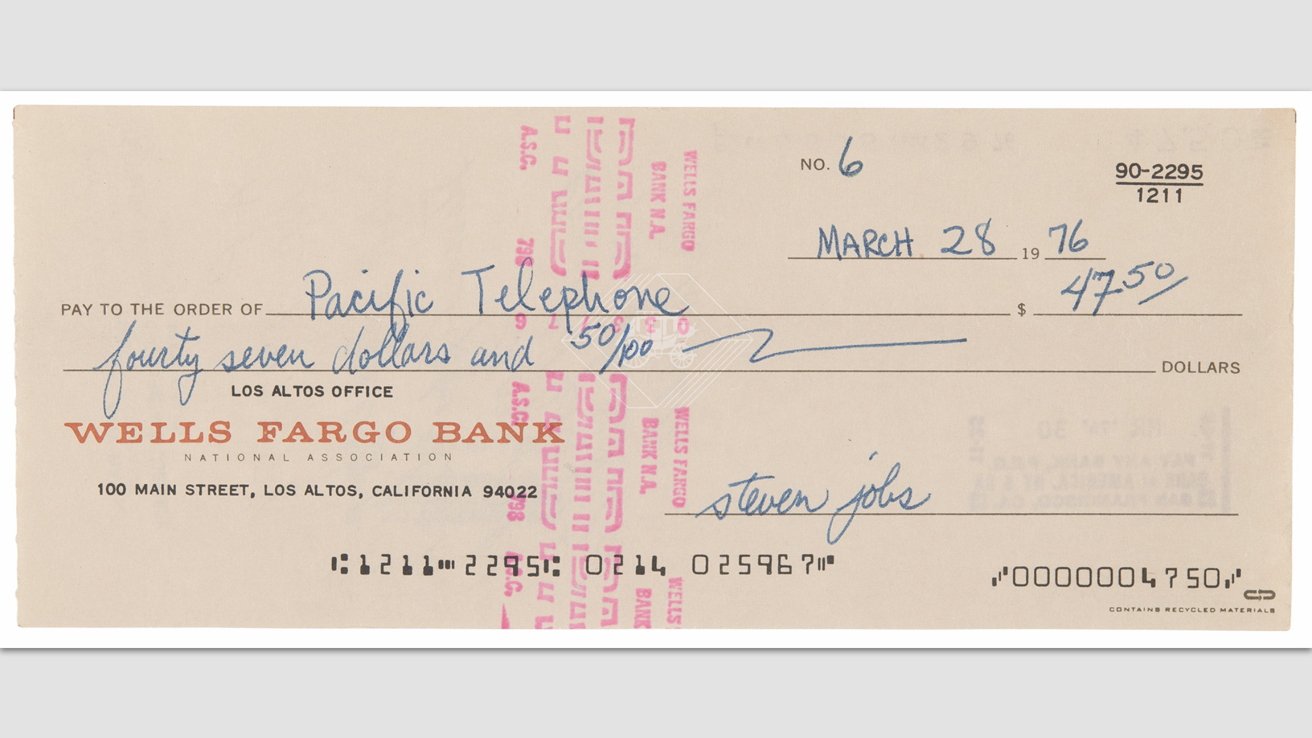
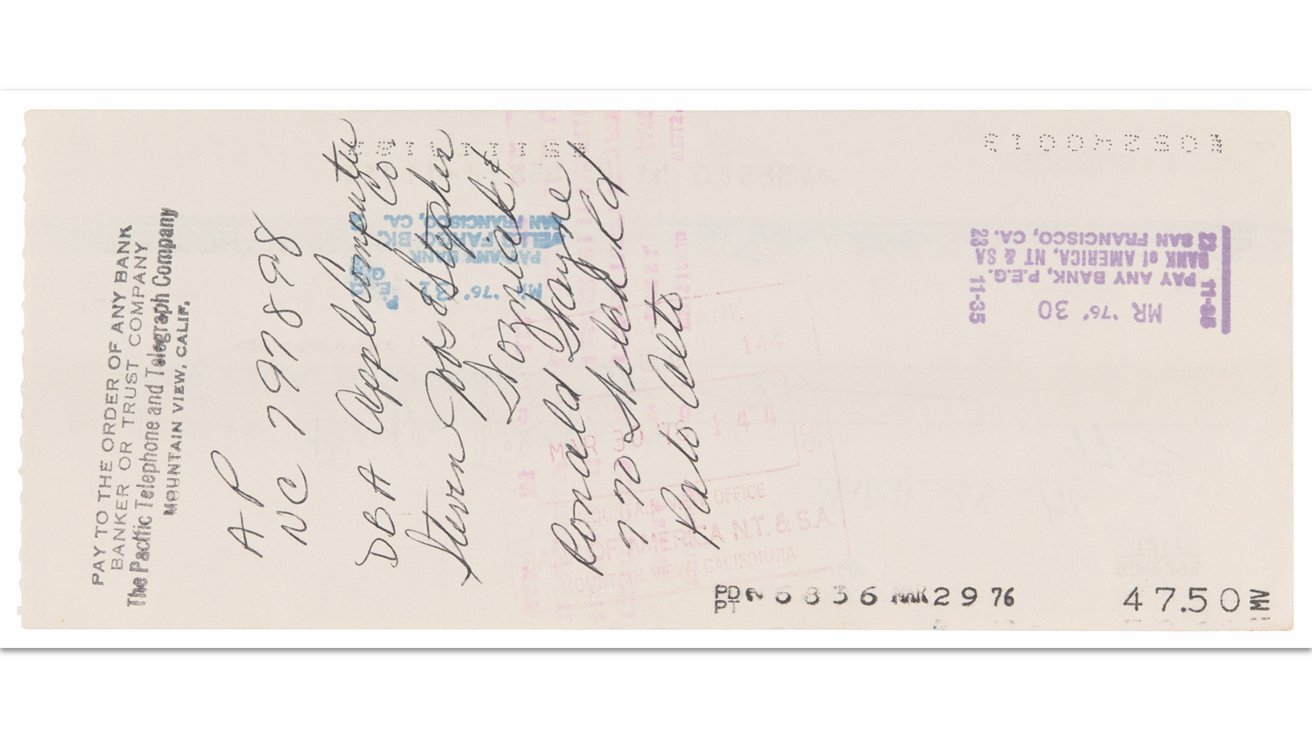
The check, filled out and signed by Jobs, sold for $87,940 in RR Auction's "Steve Jobs and the Apple Revolution" event, which closed August 21, 2025.
Dated March 28, 1976, the Wells Fargo temporary check was made out for $47.50. On its face, it looks ordinary. But the reverse tells a very different story.
A teller's notation includes the partnership's legal designation: "DBA Apple Computer Co., Steven Jobs & Stephen Wozniak & Ronald Wayne, 770 Welch Rd., Palo Alto."
That makes it one of the only surviving documents with all three Apple co-founders listed together. Wayne's involvement is often forgotten. He sold his 10% stake back to Jobs and Wozniak within two weeks of Apple's formal founding on April 1, 1976 — for just $2,300.
Historians call Wayne the "lost founder." His decision to walk away very early left behind a fortune that today would have been worth tens of billions of dollars.
Why collectors value scraps of paper
To outsiders, it may seem absurd that a $47 check is now worth nearly $88,000. But collectors prize tangible artifacts from the garage era. They see them as physical links between myth and reality.
The pull comes from more than rarity. Nostalgia is driving demand, and Apple's early products tap into memories of a time when personal technology was just starting to change the world.
"This is one of the most historically significant Apple checks we've ever handled," said Bobby Livingston, executive vice president at RR Auction. "It ties together the garage-era mythos with the real-world business of paying bills."
To outsiders, it may seem absurd that a $47 check is now worth nearly $88,000
The early Apple story has been told so often that it risks sounding like folklore. Yet here's a piece of evidence showing the founders weren't just visionaries — they were also young men scraping together money to keep the lights on.
Apple's humble beginnings
In March 1976, Wozniak had just completed the design of the Apple-1. Jobs was figuring out how to market it. The company was little more than an idea.
The partnership agreement that followed a few days later gave Apple its start, but the financial picture was fragile. Jobs and Wozniak both had to sell personal items to fund their work. Jobs even sold his Volkswagen bus.
That context makes the Pacific Telephone check more poignant. The founders were paying a phone bill, not purchasing high-tech equipment. Yet that act of stability allowed them to communicate, network, and build what became Apple Computer, Inc.
The allure of Apple nostalgia
If you've got old Apple gear sitting around, especially something sealed or from the 70s and 80s, it's worth getting it appraised. What looks like clutter in your closet might be worth far more than you expect.
Apple history has become its own category of memorabilia, on par with sports cards or comic books. The fascination isn't just about technology. It's about origin stories, human drama, and missed opportunities.
Wayne's short-lived role looms large in this mythology. His quick exit makes every surviving document with his name unusually rare. That scarcity fuels collector demand, especially when combined with Jobs' signature.
The cultural weight of Jobs himself can't be overstated. Since his death in 2011, anything tied directly to him has surged in value. From old business cards to signed manuals, collectors view his autograph as holy scripture.
Other auction highlights
A factory-sealed first-generation Apple iPhone 4GB sold for $81,989. The device was originally priced at $499 in 2007, making the auction result more than 160 times its retail value.
Another 1976 Apple Computer Company check signed by Steve Jobs and made out to IBM sold for $45,125. Like the Pacific Telephone check, it offered a glimpse into Apple's earliest financial transactions.
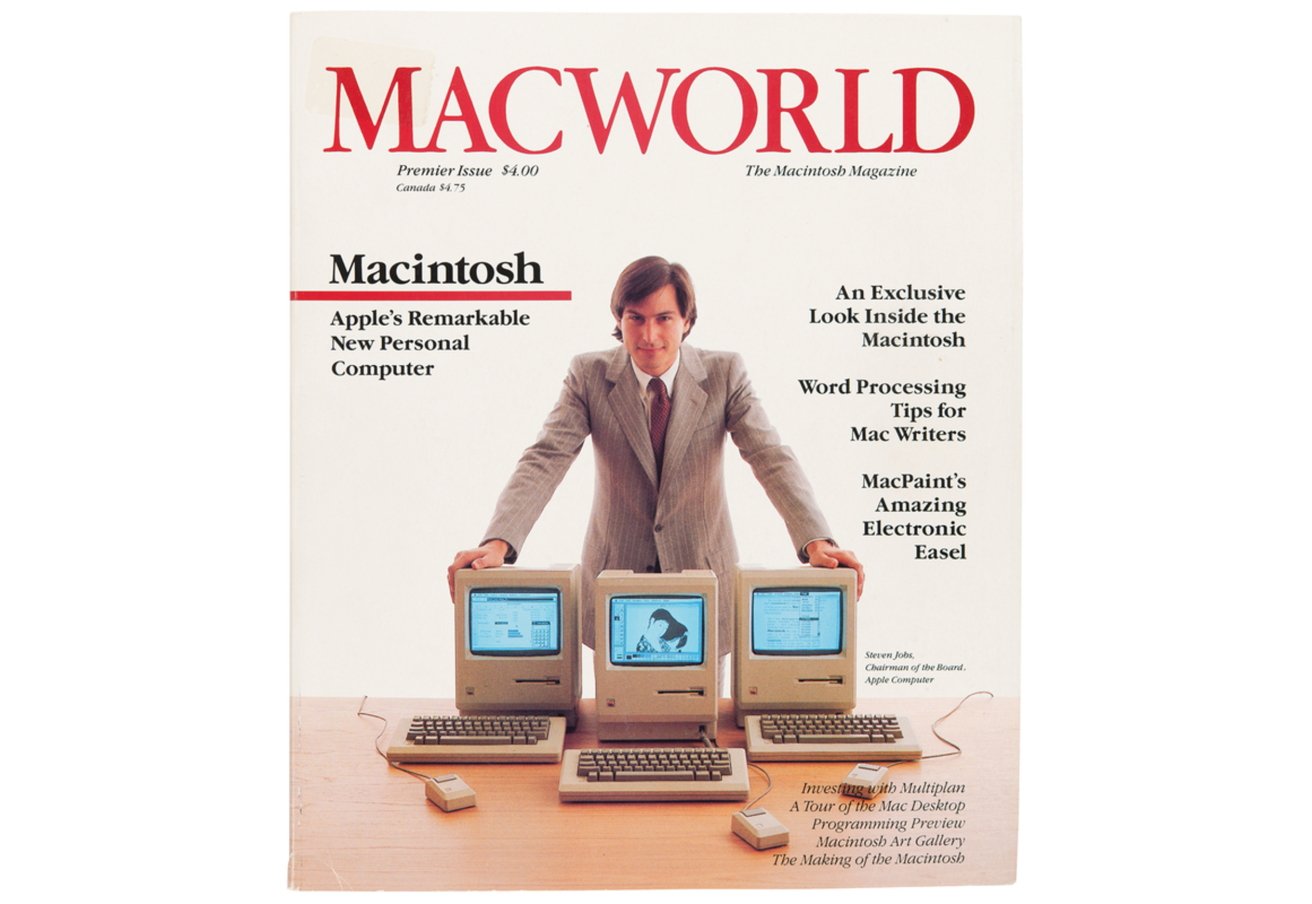
Steve Jobs: Macworld Magazine Premiere Issue (February 1984)
A sealed first-generation Apple iPod Classic sold for $40,264, double its estimate. The iPod helped revolutionize digital music in 2001, and pristine examples have become increasingly sought after by collectors.
A set of seven Steve Jobs business cards from 1997 to 1999, listing him as "iCEO," went for $16,643. The cards marked his return to Apple and the beginning of its turnaround.
Steve Wozniak's rainbow Apple sunglasses from 1979 fetched $11,688. The quirky collectible reflected Wozniak's personality and Apple's countercultural roots.
These sales show a growing appetite for Apple collectibles. Sealed iPhones and iPods are increasingly treated like fine art, their prices moving far beyond the hardware's original retail value.