Apple's iPhone loyalty takes a small hit when customers switch carriers, but it remains stronger than Android even under pressure.
Consumer Intelligence Research Partners (CIRP) published new data in August 2025 showing how much Apple's U.S. sales lean on carriers. About three-quarters of iPhone sales go through AT&T, Verizon, and T-Mobile.
Those deals are often bundled with financing or promotions. Store staff play a big role in which phone a customer takes home.
The survey — from June 2024 to June 2025 — found that iPhone loyalty overall sits at 89%, a figure most rivals would envy. Loyalty climbs higher, to 92%, if users keep their existing carrier.
But when people change carriers, it slips to 79%. Even at that lower point, Apple still outperforms Android by a wide margin, since Android customers switching providers churn at far higher rates.
Loyalty depends on carrier stability
Carrier switches create friction, and that's where Apple's grip weakens. Roughly one in five iPhone owners who move to a new provider decide not to buy another iPhone.
By contrast, nearly everyone who stays with their carrier sticks with Apple. Carriers remain the main gatekeepers of U.S. phone sales.
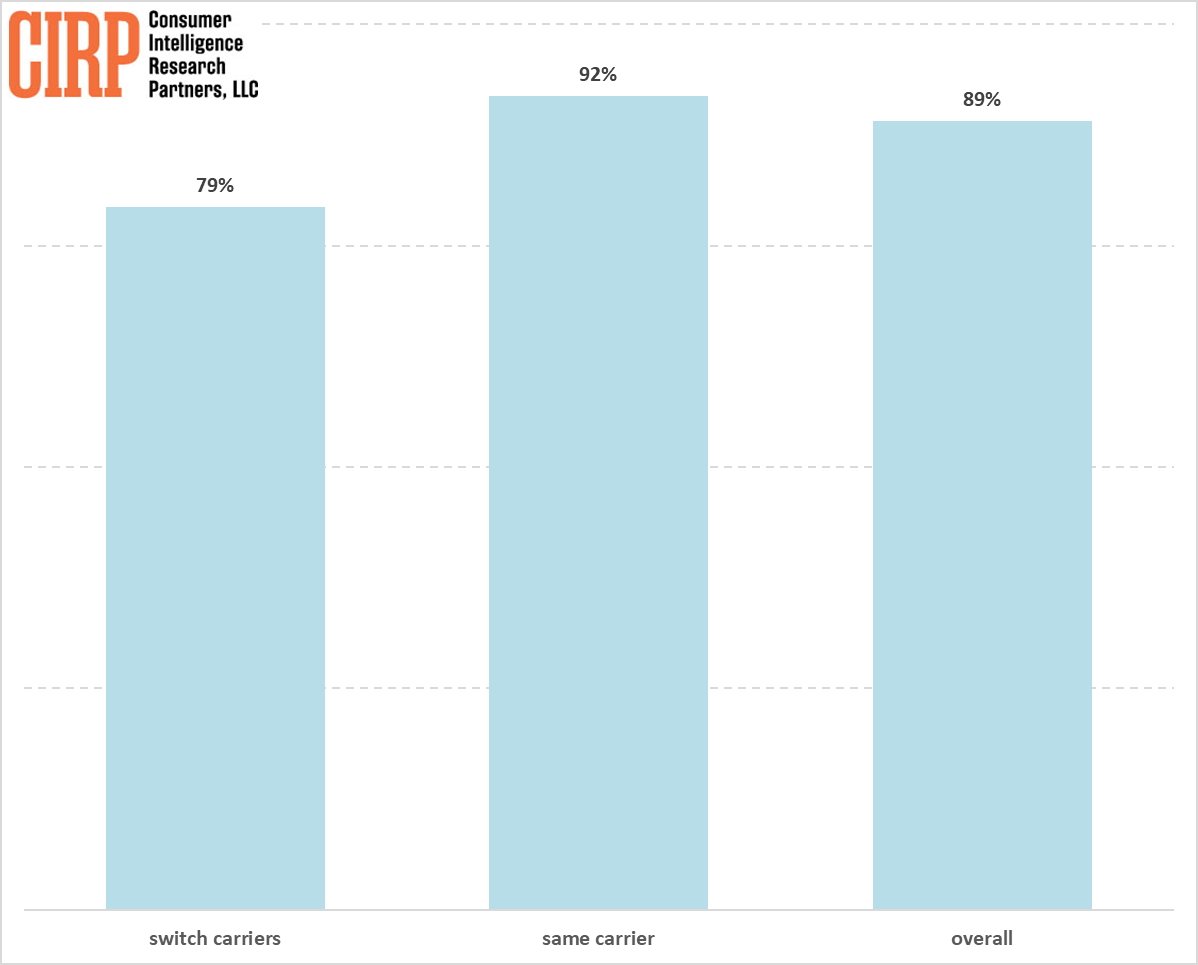
Share of iPhone owners who stayed with Apple after changing carriers in the 12 months to June 2025. Image credit: CIRP
Most Americans still get new phones from their carrier's store or website. That means associates and promotions have real power to sway a buyer toward a discounted Galaxy or away from an iPhone installment plan.
Why people switch
Apple knows it can't take its in-store displays, trade-in offers, and financing deals for granted. When customers switch from Verizon to T-Mobile, they're more likely to consider Android options.
Price is the main factor in carrier changes, as network coverage and customer service are similar among AT&T, Verizon, and T-Mobile. Those seeking cheaper plans may also opt for cheaper phones, which Android offers in abundance.
Apple's advantage lies in the fact that fewer than one in four iPhone owners switch carriers when upgrading, minimizing risk. Most stick with their provider, and Apple loyalty in that group is strong.
Loyalty dips when customers switch carriers, sliding from 92% to 79%. But even at its weakest point, iPhone loyalty still beats Android's average retention by a comfortable margin.
That resilience is what truly matters. While carrier switches do cause some churn, Apple's customer base is significantly less likely to switch to Android. Unless competitors close that loyalty gap, Apple's hold on the premium market is secure.