
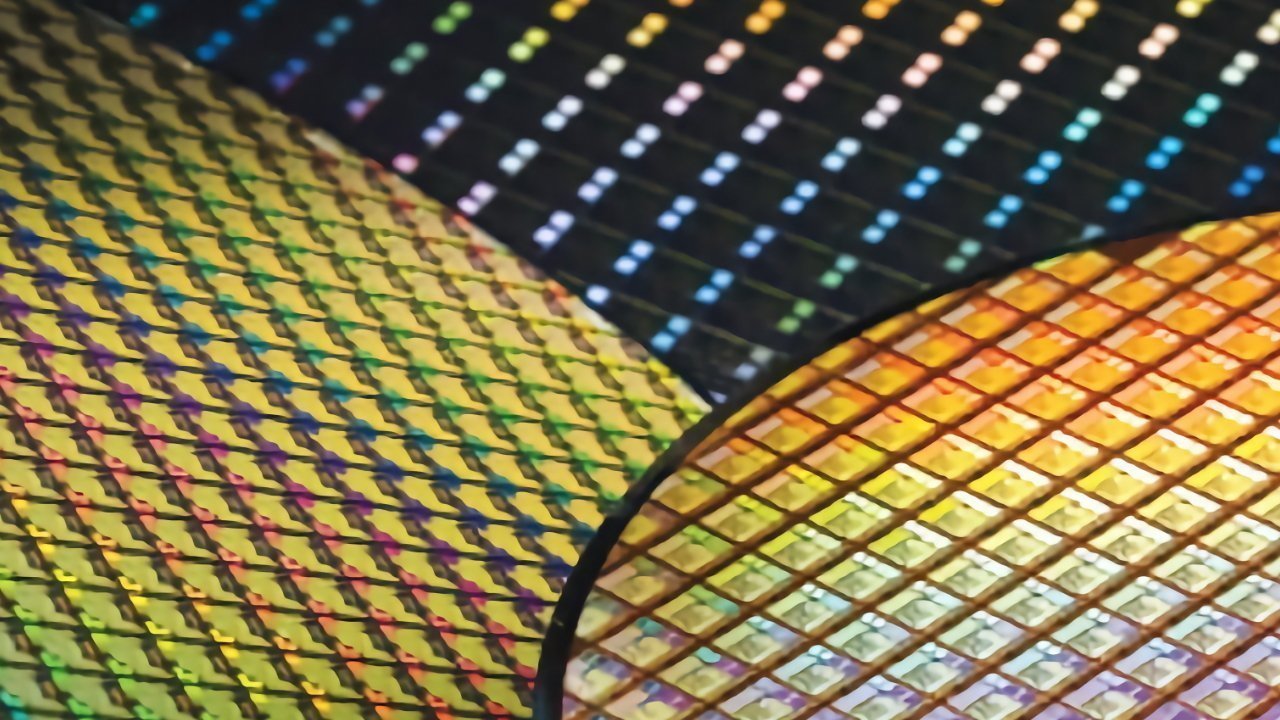
Apple supplier TSMC is anticipated to start full-scale production of 2-nanometer chips by the end of 2025, with Apple apparently occupying close to half of the total manufacturing capacity.
The move to 2-nanometer processors has been anticipated for a while, with TSMC working to improve the yields of production for quite some time. Now, it appears that TSMC is getting very close to full-scale manufacturing of the chips.
According to DigiTimes on Wednesday, TSMC is going to keep to its schedule of mass-producing 2-nanometer process chips in the fourth quarter of 2025. To match, it has been increasing its production capacity in the Baoshan and Kaohsiung plants, and expects for all of its availability to be fully used until the end of 2026.
The initial clients that will benefit from the 2-nanometer process includes Apple, AMD, Broadcom, Intel, MediaTek, and Qualcomm. Production will increase for the six companies throughout 2026, with Nvidia and others joining the roster in 2027.
Of the initial capacity, Apple is said to remain TSMC's main focus. Insiders say Apple has managed to secure almost half of the total available capacity, with Qualcomm the second biggest client.
Smaller, but better
Apple's use of the 2-nanometer process won't benefit its customers initially, but it will do in future releases.
So far, the schedule matches current speculation surrounding the chips and their use by Apple. It's far too late to be used in the A19 series, which will be used by the iPhone 17 range this fall.
However, it is far more probable that it will be in use with the iPhone 18 generation, due in late 2026. Not only does the schedule line up, but analyst Ming-Chi Kuo has repeatedly expressed an expectation for the 2026 iPhone to use the tech.
It is so roundly expected to arrive in those devices that even semi-reliable Weibo leakers have made the same claim.
The main benefit for the die shrink is that of performance. The combination of a 2-nanometer process and a switch in chip packaging methodology could result in performance gains of between 10 and 15%.
The change should also help reduce energy requirements, saving battery life and maybe even helping it run cooler.
The rumored switch to Wafer-level Multi-Chip Module packaging for the A20 should also allow Apple to take advantage of multiple dies, enabling it to produce multiple variants of chip in the same chip family without relying on chip binning.