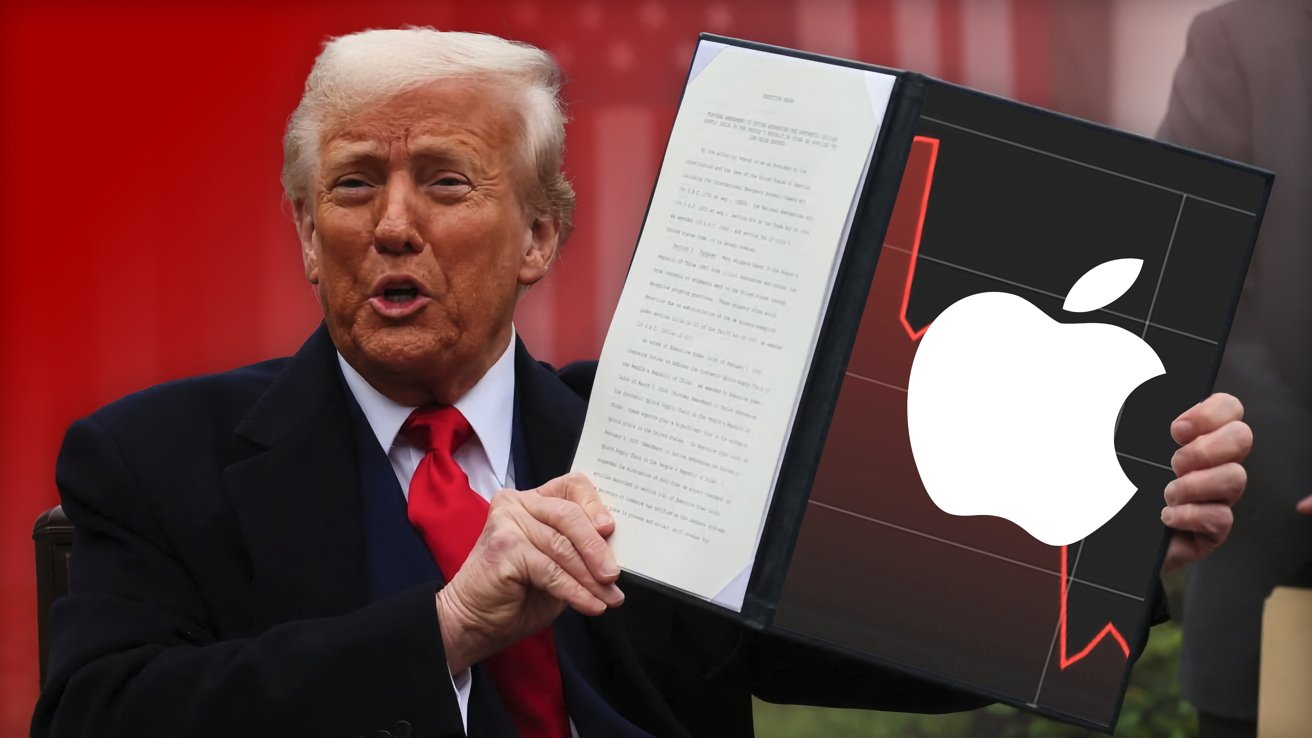
President Trump has again said the long-promised semiconductor tariffs are coming very shortly, and will be harsh. But, he also implies that Apple and the rest of US big tech will not be hit by them.
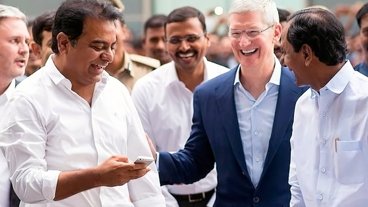
Trump's remarks came during his dinner with Big Tech CEOs, including Tim Cook, at the White House. His comments were not especially clear, but the implication was that companies represented at the dinner would be exempt.
"I've discussed it with the people here, chips and semiconductors, and we'll be putting tariffs on companies that aren't coming in," the President said, according to CNBC.
"We'll be putting a tariff very shortly," he continued. "You probably are hearing we'll be putting a fairly substantial tariff, or not that high, but a fairly substantial tariff."
Trump started talking about a semiconductor tariff in late April. He then stated that the semiconductor tariff would be announced in mid-August 2025.
The president has also said that the tariff would be 100%. The previous chip tariff, prior to the legally-challenged "reciprocal" tariffs, were between 2% and 5%.
What the semiconductor tariff means
Ostensibly, the semiconductor tariff is to follow a national security investigation into the use of foreign processors in the US. In theory, should the probe discover reasons to be concerned over security, the administration would raise tariffs on such processor imports.
It's not clear how that would alter any security issues. But it is clear that the tariffs are not actually dependent on the outcome of the investigation, because the White House pre-judged that result and announced tariffs are coming.
Apple, however, might be exempt. In August 2025, when Trump was saying it would be "a very large tariff," he announced that there would be no charge for firms such as Apple, and other companies that were making moves to manufacture in the US.
Despite the tariff being part of Trump's stated aim of bringing manufacturing back to the US, he has seemingly abandoned his efforts to include Apple in that. This, and presumably the tariff exemption, is likely because of Apple's committing a total of $600 billion in US manufacturing.
Apple's $100 billion announcement had very little to do with actually assembling the iPhone in the US, nor was there a notable expansion of suppliers inside the US. All of the investments were in companies already partnered with Apple.