Apple's iPhone 17 Pro processor, the A19 Pro, isn't just Apple's fastest chip ever, it's neck and neck with Samsung in the fastest smartphone race.
Geekbench results from September 10, 2025, show the iPhone 17 lineup with its A19 chip is delivering clear performance gains. Apple had promised better efficiency and faster speeds at its "Awe Dropping" event in Cupertino.
The new scores now give a concrete look at how the iPhone 17 compares to last year's model. Benchmark tests confirm the performance boost is real.
The iPhone 17, identified under multiple model IDs in Geekbench, posted single-core scores ranging from 3,523 to 3,895. Its multi-core performance spanned from 8,810 to 9,746. These scores suggest a consistent bump in raw processing power compared to the previous generation.
Performance variation across models is typical, as Geekbench tests depend on thermal conditions, background activity, and even early firmware. Still, the range shows that all iPhone 17 models beat the iPhone 16 Pro for the most part.
Apple's A19 Pro chip in iPhone 17 Pro shows about a 10% Geekbench bump over A18 Pro, hitting 3,895 single-core and 9,746 multi-core. One detailed result is on Geekbench test.
Google's Tensor G5, built on TSMC's 3nm process, emphasizes AI gains over raw speed. Reports cite up to 60% faster AI performance and a 34% CPU boost.
Samsung's Snapdragon 8 Elite in the Galaxy S25 Ultra scores lower in single-core tests at 2,773. It pulls ahead in multi-core at about 9,531 while focusing on thermal stability and AI workloads.
Apple's A19 Pro in the iPhone 17 Pro posts about 3,895 single-core and 9,746 multi-core in Geekbench 6.
Google's Tensor G5 in the Pixel 10 Pro XL hits 2,296 single-core and 6,203 multi-core. That's a clear gap behind Apple and Qualcomm's top chips.
Samsung's Snapdragon 8 Elite in the Galaxy S25 Ultra delivers roughly 2,862 single-core and 9,481 multi-core. A U.S. variant even pushes to 3,148 and 10,236, depending on firmware and CPU binning.
These numbers tweak the narrative. Apple still leads what's generally most important to smartphone tasks in single-core speed, but Samsung now is very slightly ahead in multi-core territory.
iPhone 16 Pro baseline
The iPhone 16 Pro, powered by the A18 Pro chip, scored 3,396 in single-core and 8,655 in multi-core on Geekbench 6.5.0. That was already competitive with high-end Android phones, but Apple's new silicon is widening the gap.
Drilling into the subtests, the iPhone 16 Pro held its own in tasks like PDF rendering at 196.3 megapixels per second and photo library work at 135.1 images per second. The iPhone 17's higher aggregate scores suggest further gains in those areas, though detailed sub-test breakdowns aren't fully available.
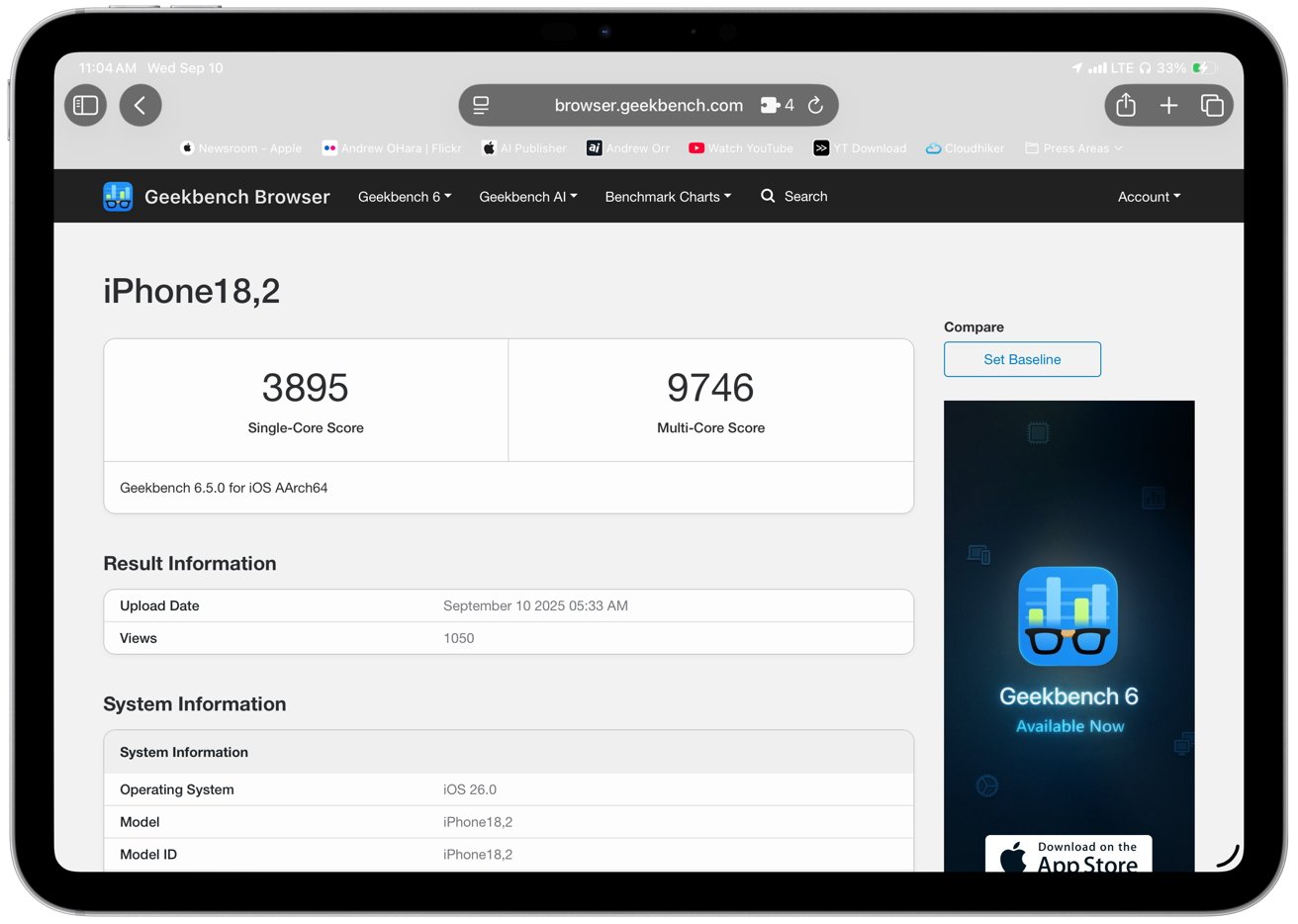
The iPhone 17, identified under multiple model IDs in Geekbench.
On paper, a 500-point jump in single-core might not sound dramatic, but single-core performance is still the metric that drives most everyday tasks. Faster navigation, smoother browsing, and speedier app launches are all tied to those results.
Multi-core improvements matter for heavier workloads like video editing, AI tasks, and gaming. A climb from 8,655 to around 9,700 is a real step up, pushing Apple's efficiency cores and performance cores further ahead of rivals.
Context in the lineup
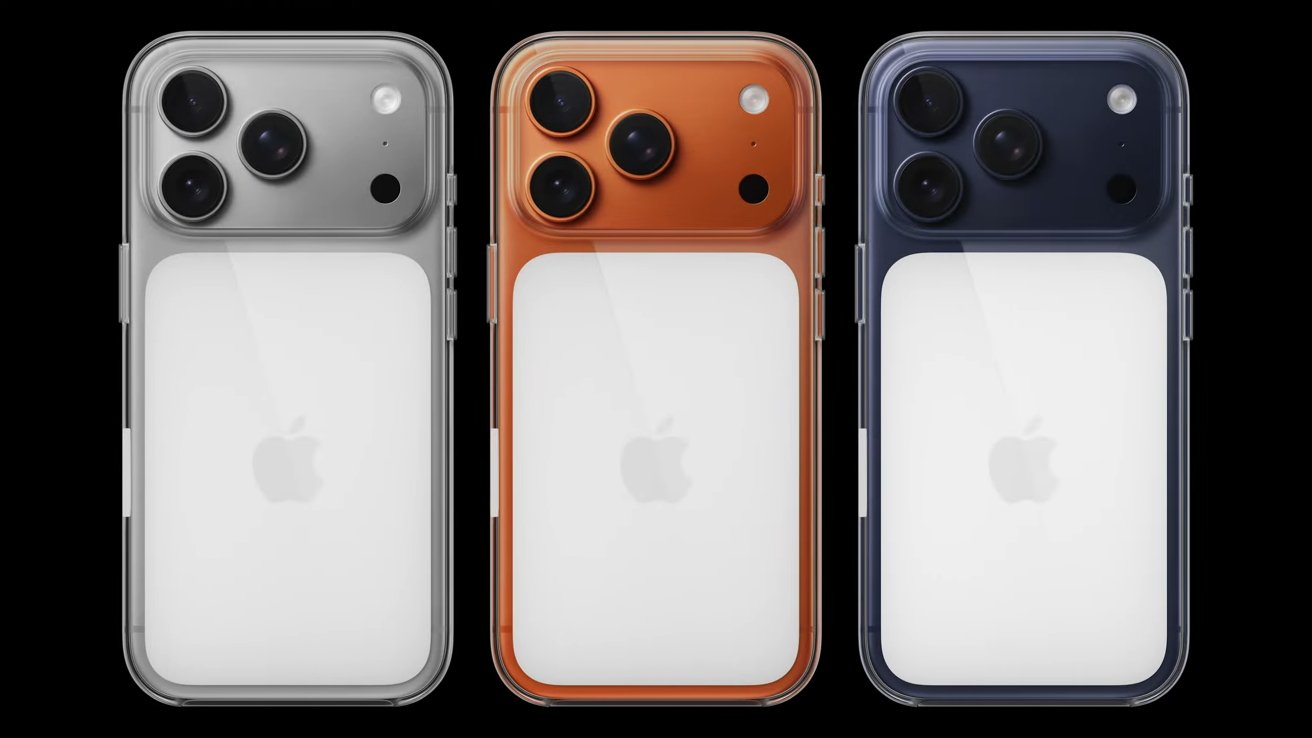
Apple introduced the iPhone 17 family on September 9, 2025. The lineup includes the iPhone 17, iPhone 17 Pro, iPhone 17 Pro Max, and the new iPhone Air. All run on variations of the A19 chip, which builds on the efficiency work Apple started with the A17 Pro.
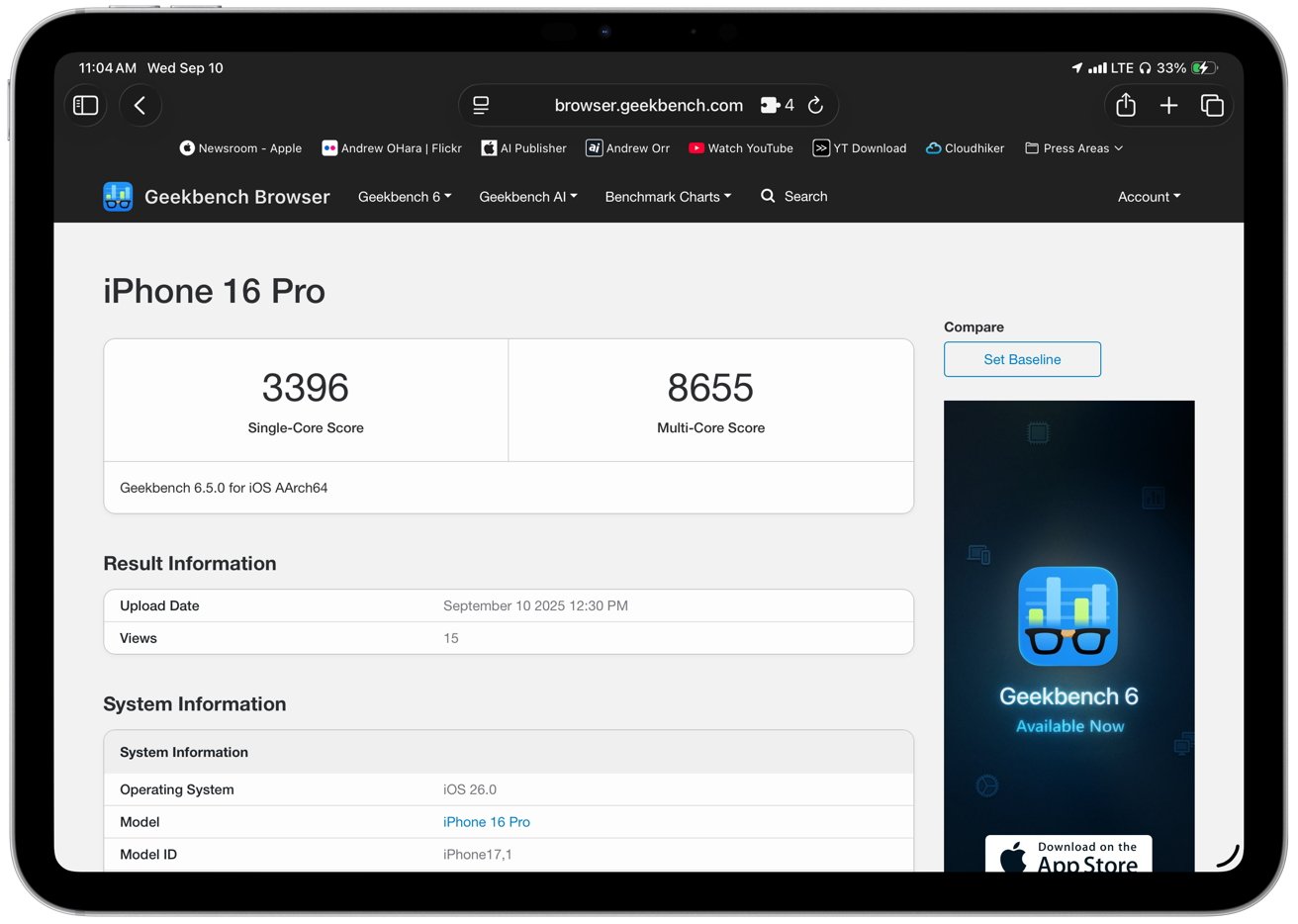
Multi-core improvements matter for heavier workloads like video editing, AI tasks, and gaming.
The iPhone Air, in particular, is being marketed as a "MacBook Air moment" for iPhones, with a thinner and lighter frame at $999. Benchmarks suggest that even the standard iPhone 17 models are no slouch, making the whole lineup a solid step above the iPhone 16 Pro.
However, benchmarks don't tell the whole story. They don't measure display brightness, camera quality, or wireless performance, all of which play a big role in the user experience.
They also don't capture how thermal throttling might affect performance during longer sessions, like gaming marathons or 4K video exports. There's also the question of diminishing returns.
The iPhone 16 Pro was already fast enough for nearly everything, and most users didn't hit its limits. For everyday consumers, the difference between these two generations will feel more like a marketing pitch than a tangible change.
The big picture
Still, the numbers don't lie — assuming they're accurate this early. Apple has again pushed its in-house chips past their previous limits, giving the iPhone 17 family stronger single-core and multi-core scores than the iPhone 16 Pro.
For buyers deciding between keeping their iPhone 16 Pro or upgrading to a 17, the performance boost is real, even if it isn't life-changing. For those hanging onto older models, the leap will feel far more dramatic.
Apple is betting that those kinds of gains, paired with new hardware designs, are enough to spark a fresh upgrade cycle. The Geekbench data backs up at least part of that gamble.