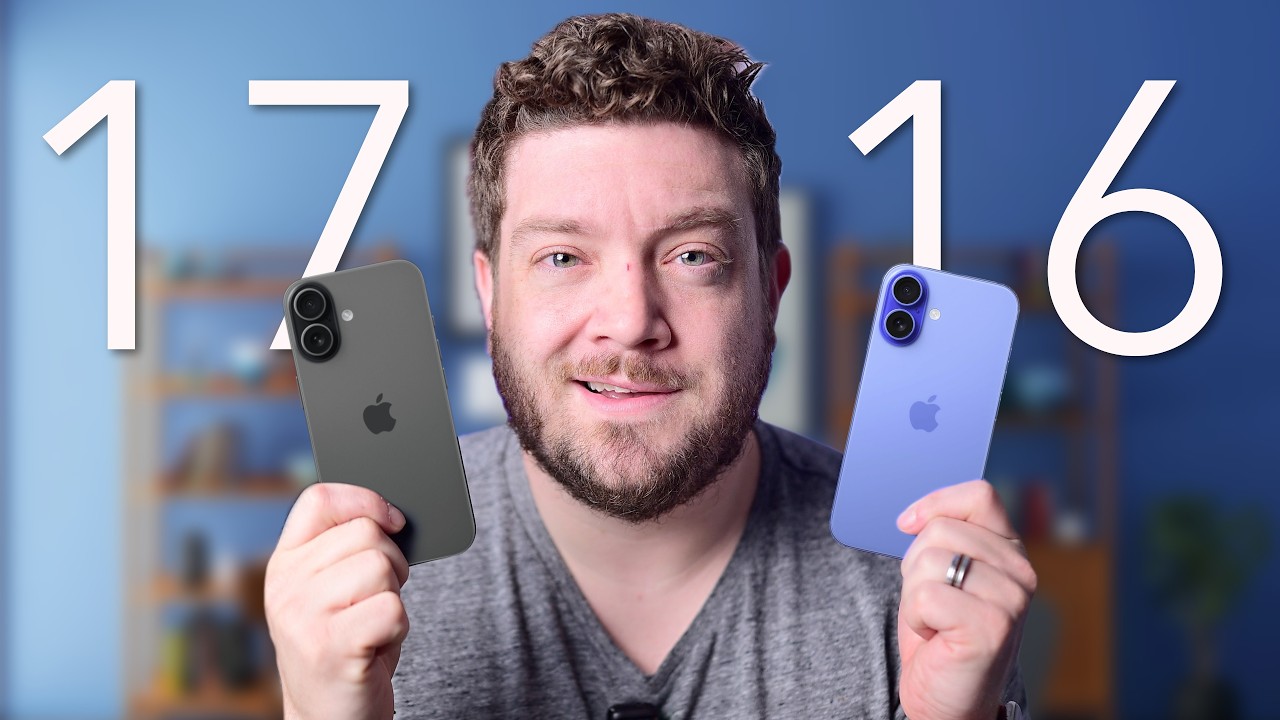
Apple's all-new iPhone 17 has finally arrived. Here's how the specs stack up, compared to the predecessor, the iPhone 16.
At its "Awe Dropping" event on Tuesday, Apple unveiled the iPhone 17 range. Although the ultra-thin iPhone Air was undoubtedly the star of the show, the base model iPhone also received a few noteworthy upgrades.
Compared to its predecessor, the iPhone 17 boasts a larger 6.3-inch display with ProMotion. It also has a more powerful A19 chip with Neural Accelerators, an 18MP Center Stage front-facing camera, and additional features.
iPhone 17 Pro
iPhone 17 vs. iPhone 16: Technical specifications
| Specifications | iPhone 17 | iPhone 16 |
|---|---|---|
| Starting Price (launch) | $799 | $799 |
| Dimensions (inches) | 5.89 x 2.81 x 0.31 | 5.81 x 2.82 x 0.31 |
| Weight (ounces) | 6.24 | 6 |
| System-on-chip | A19 | A18 |
| Display type | 6.3-inch Super Retina XDR, ProMotion, always-on display, 3,000 nits max | 6.1-inch Super Retina XDR, 2,000 nits max |
| Resolution | 2,622 x 1,206 at 460 ppi | 2,556 x 1,179 at 460 ppi |
| True Tone | Yes | Yes |
| Biometrics | Face ID | Face ID |
| Connectivity | 5G (Sub-6GHz and mmWave) Gigabit-class LTE Wi-Fi 7 Bluetooth 6 Ultra Wideband Gen 2 NFC Emergency SOS via Satellite Roadside Assistance via Satellite USB-C |
5G (Sub-6GHz and mmWave) Gigabit-class LTE Wi-Fi 7 Bluetooth 5.3 Ultra Wideband Gen 2 NFC Emergency SOS via Satellite Roadside Assistance via Satellite USB-C |
| Rear Cameras | 48MP Fusion 48MP Ultra Wide Camera Control |
48MP Fusion 12MP Ultra Wide Camera Control |
| Video Recording | 4K 60fps 4K 60fps HDR with Dolby Vision 1080p 240fps Slo-Mo Spatial Video Macro Video Sensor-shift optical image stabilization Action Mode Cinematic Mode Dual Capture up to 4K Dolby Vision at 30 fps |
4K 60fps 4K 60fps HDR with Dolby Vision 1080p 240fps Slo-Mo Spatial Video Macro Video Sensor-shift optical image stabilization Action Mode Cinematic Mode |
| Front Camera | 18MP Center Stage with Autofocus | 12MP TrueDepth with Autofocus |
| Battery Life (Video playback time) | Up to 30 hours | Up to 22 hours |
| Colors | Black White Lavender Mist Blue Sage |
Black White Teal Pink Ultramarine |
iPhone 17 vs. iPhone 16: Dimensions
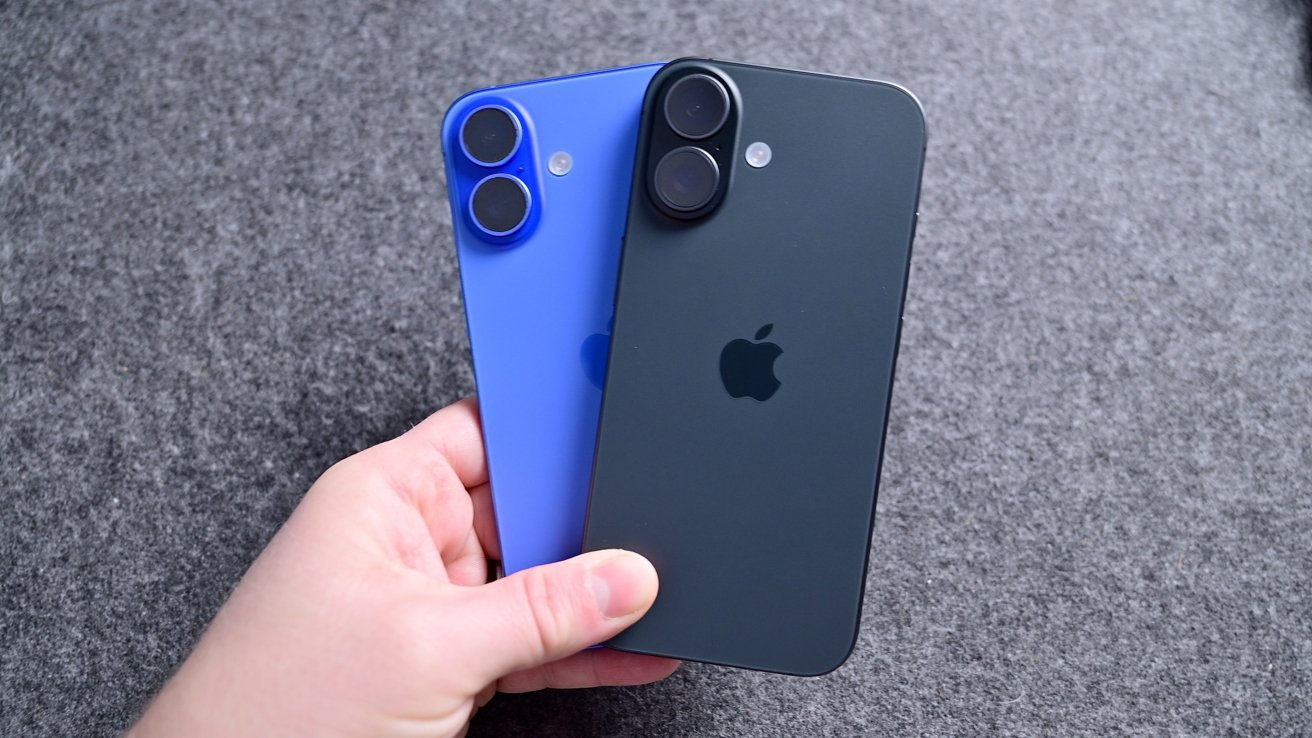
The base model iPhone 17 largely echoes the design of the preceding iPhone 16.
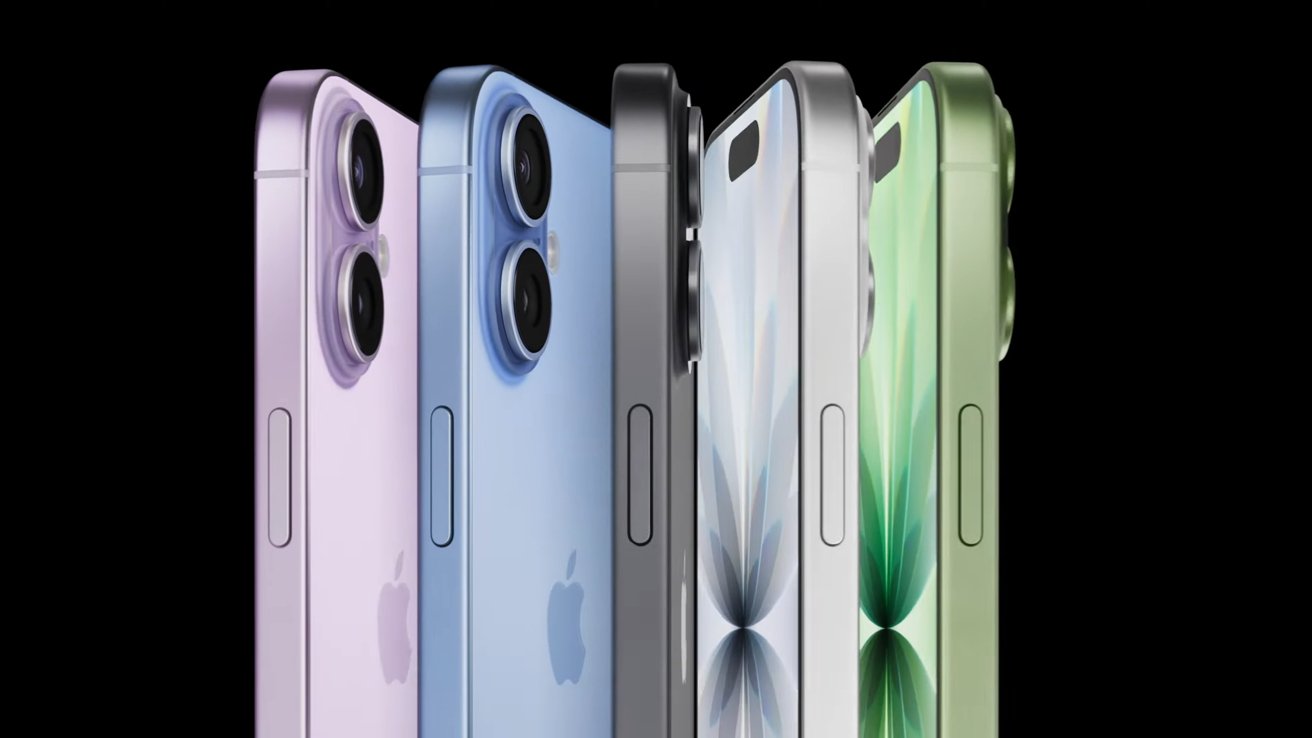
iPhone 17 vs. iPhone 16: The iPhone 17 maintains the vertical camera layout of its predecessor. Image Credit: Apple
The iPhone 16 introduced a vertical layout for the rear cameras, which allows for Spatial Video. There's also an Action button in place of the mute switch, as well as a capacitive Camera Control button.
All of these features can also be found on the base model iPhone 17, so not much has changed in that regard. The iPhone 17 is slightly larger than its predecessor, though.
The iPhone 17 has a footprint of 5.89 inches by 2.81 inches. The iPhone 16, meanwhile, measures at 5.81 inches by 2.82 inches.
There isn't any change in thickness, with both models measuring 0.31 inches thin.
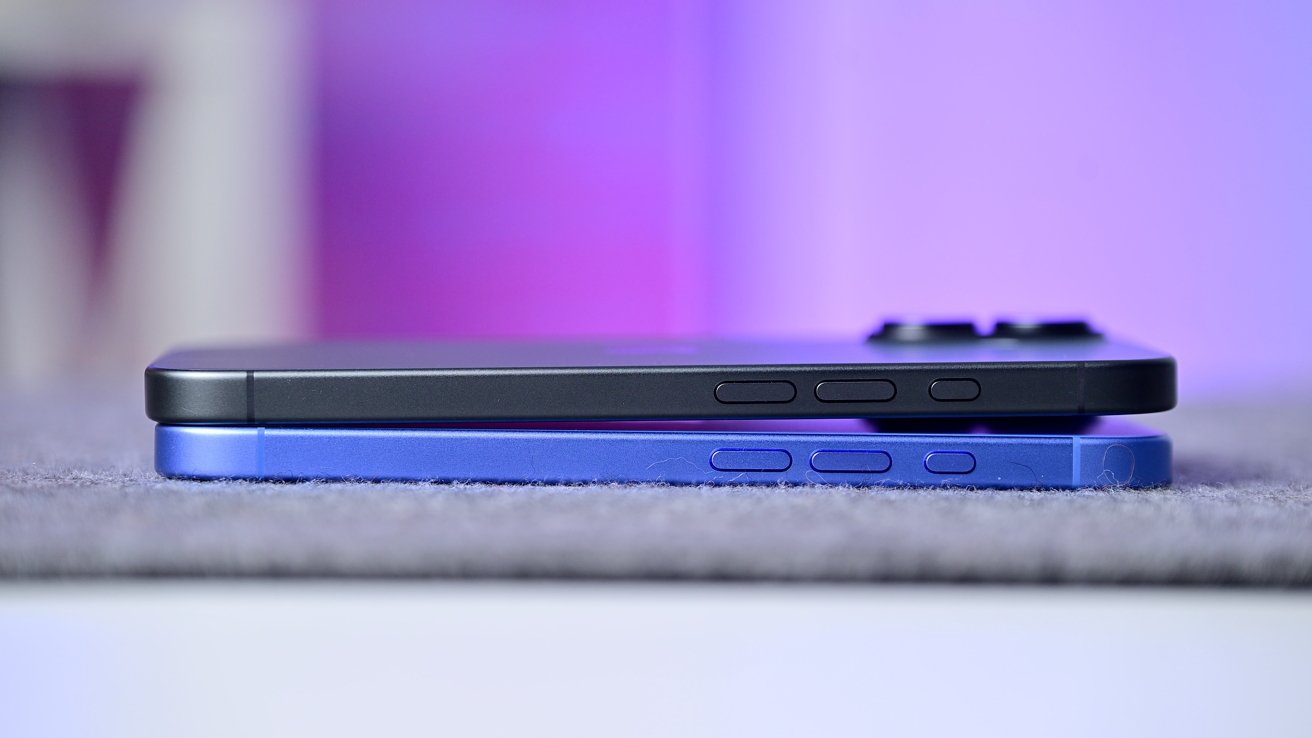
iPhone 17 vs. iPhone 16: The iPhone 17 (top) is nearly unchanged on the outside
In terms of weight, the iPhone 17 measures 6.24 ounces, while the iPhone 16 is slightly lighter, weighing in at 6 ounces.
The construction of the iPhone 17 is based on the standard glass sandwich design with a frame made of aerospace-grade aluminum.
Although the iPhone 16 and iPhone 17 appear nearly identical, their displays are wildly different.
iPhone 17 vs. iPhone 16: Display
The standard iPhone 17 has a 6.3-inch Super Retina XDR display with an OLED panel, which is also an always-on screen with HDR and True Tone support.
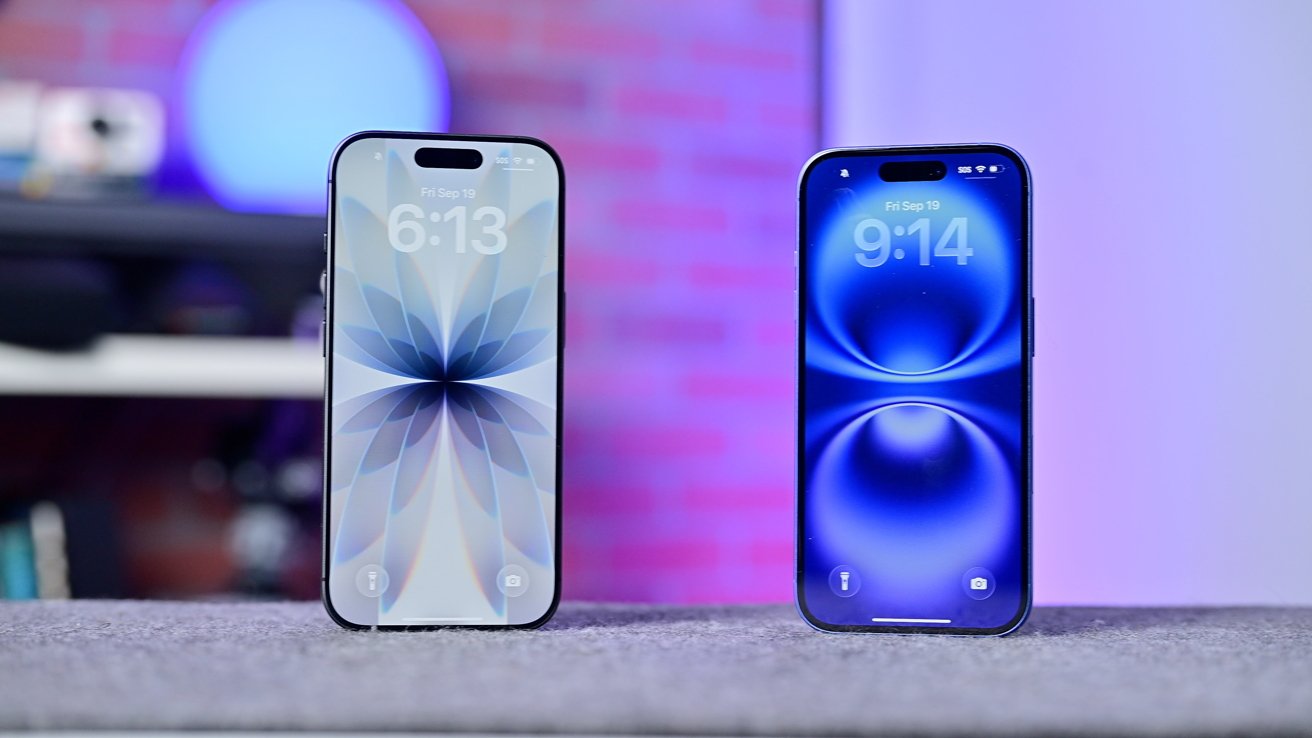
iPhone 17 vs. iPhone 16: The iPhone 17 is equipped with a 6.3-inch display that supports ProMotion.
Relative to the iPhone 16 display, which measured 6.1 inches, the iPhone 17 has a display that's 0.2 inches larger. The 6.3-inch form factor is a carry-over from the iPhone 16 Pro, so the change is not entirely unexpected.
Another Pro feature that made its way to the iPhone 17 is ProMotion. It offers a dynamic refresh rate of up to 120Hz, depending on the content being viewed.
The iPhone 16 display, meanwhile, has a fixed refresh rate of 60Hz.
It's a neat change, but nothing groundbreaking. ProMotion enables smoother scrolling, but offers little else.
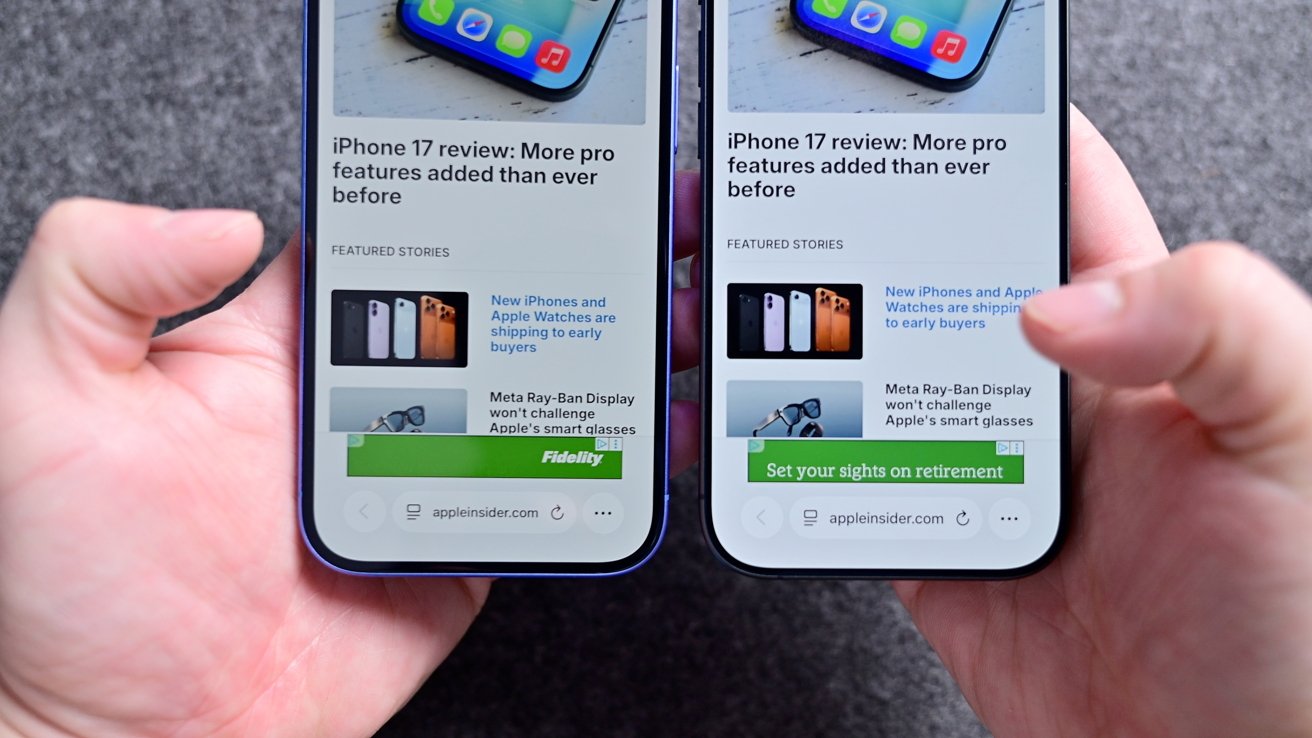
iPhone 17 vs. iPhone 16: You can see the slight bit of extra content that fits on the iPhone 17's larger display (right) compared to the iPhone 16 (left)
The iPhone 17 display has a resolution of 2,622 by 1206 pixels. Its predecessor, meanwhile, has a display resolution of 2,556 by 1179 pixels.
You get 507 additional pixels with the iPhone 17, which is not a lot. The pixel density, however, remains the same at 460 pixels per inch.
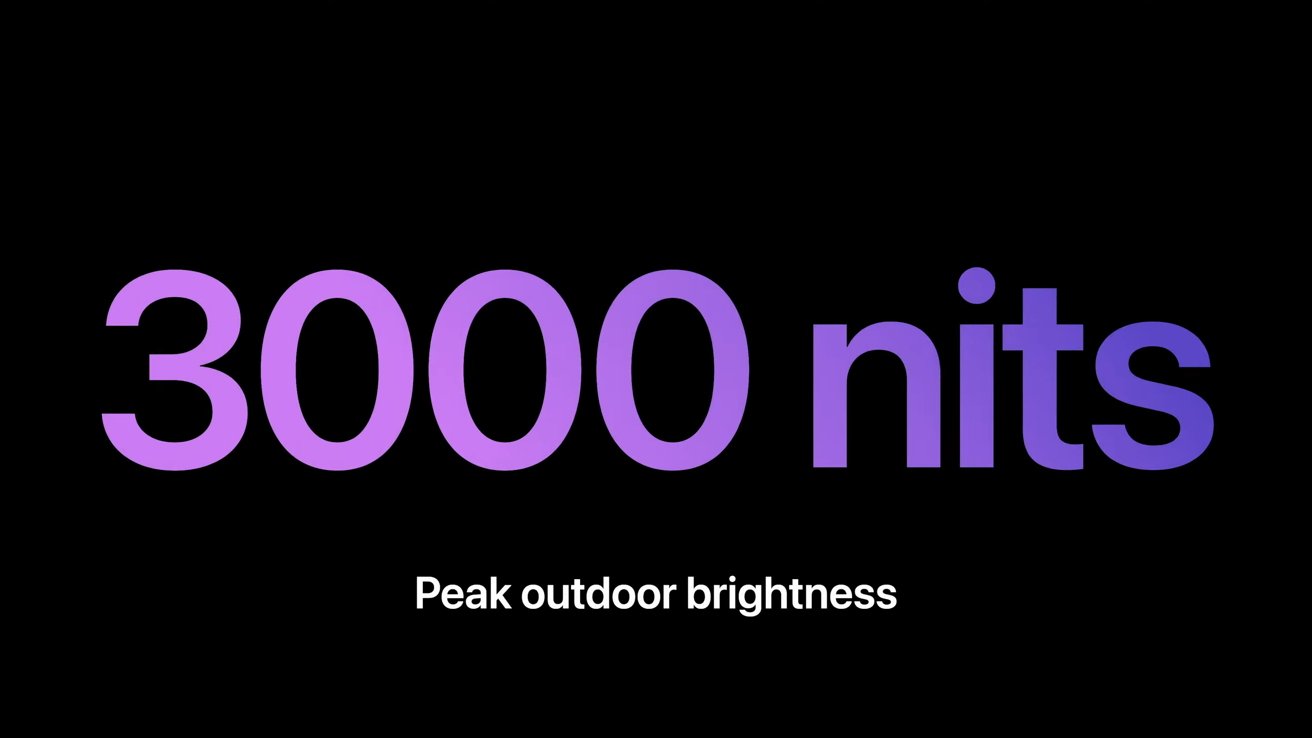
iPhone 17 vs. iPhone 16: The iPhone 17 display has a maximum brightness of 3000 nits. Image Credit: Apple
For brightness, Apple claims the iPhone 17 can manage 1,000 nits for typical content, 1,600 nits of peak brightness for HDR, and 3,000 nits of peak brightness for outdoor usage. Its display has a minimum brightness of 1 nit.
The iPhone 16 display has a maximum brightness of 2000 nits, meaning the iPhone 17 display can reach higher brightness levels. Its contrast ratio of 2,000,000:1, however, remains unchanged, relative to the iPhone 16.
Apple has included True Tone, Wide Color (P3), and Haptic Touch. There's also a fingerprint-resistant oleophobic coating on both the iPhone 17 and iPhone 16.
The iPhone 17 display is protected by Ceramic Shield 2. Apple says Ceramic Shield 2 offers three times better scratch resistance compared to the original Ceramic Shield, used on the iPhone 16.
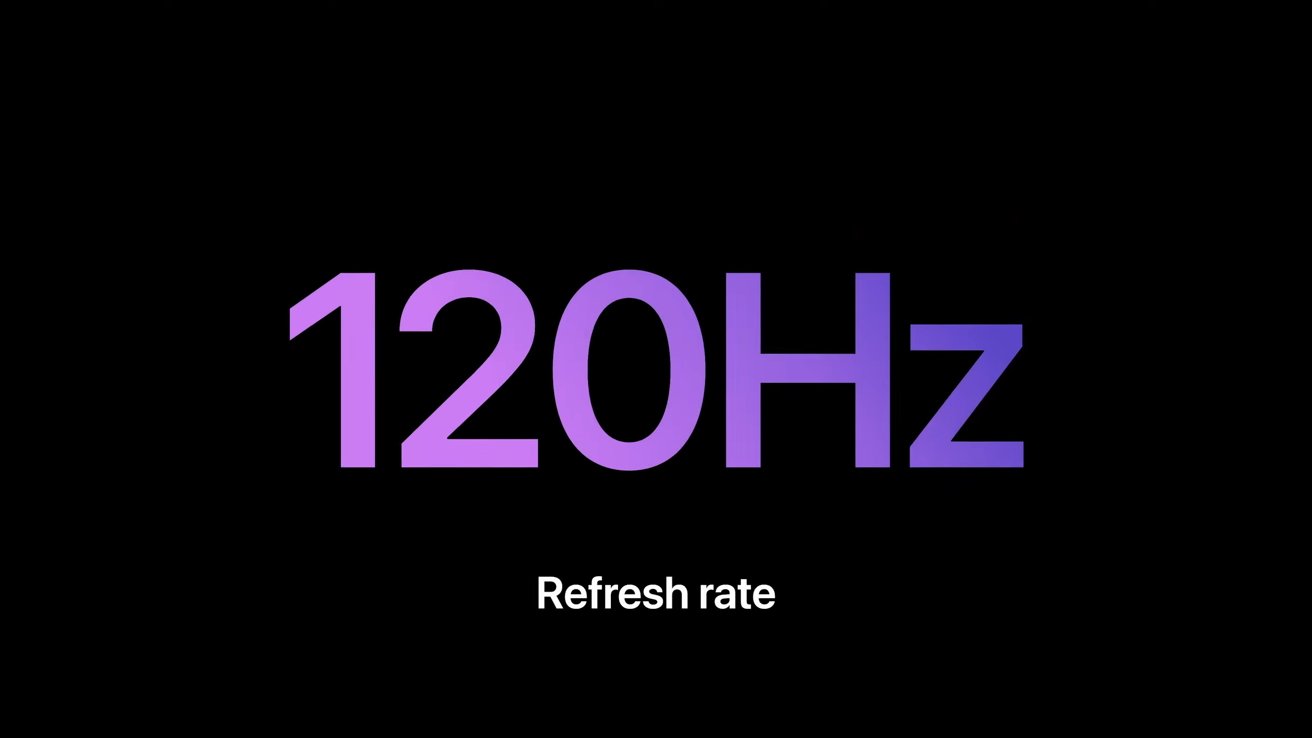
iPhone 17 vs. iPhone 16: The iPhone 17 supports ProMotion, which allows for a variable display refresh rate of up to 120Hz. Image Credit: Apple
Also part of the iPhone 17 display is a seven-layer anti-reflective coating. This makes text more easily readable in bright lighting, both indoors and outdoors.
The displays on both the iPhone 17 and iPhone 16 also feature Dynamic Island. Instead of the notch found on older iPhone models, the area around the camera cutout is used to display important information.
This includes recordings or media playback currently in progress, as well as countdown timers for select apps.
Overall, the iPhone 17 is equipped with a ProMotion display that's larger than the one on the iPhone 16 by a fifth of an inch and is more durable. It's a nice improvement, but nothing game-changing.
iPhone 17 vs. iPhone 16: Cameras
On the back of the iPhone 17 is a 48MP Fusion camera with an f/1.6 aperture, sensor-shift optical image stabilization, and 100% Focus Pixels.
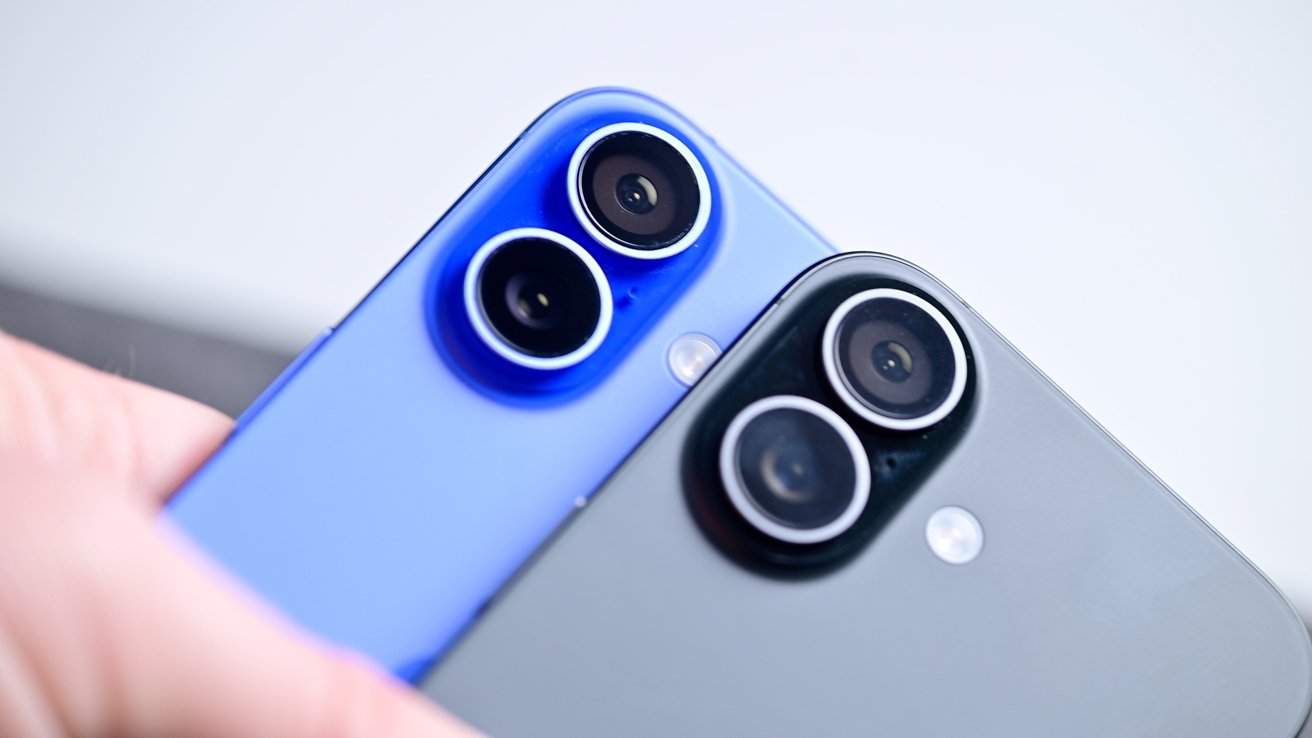
iPhone 17 vs. iPhone 16: The iPhone 17 offers a 48MP Fusion Ultra Wide camera, which is a great improvement from the 12MP Ultra Wide camera of the iPhone 16.
Apple calls it a Fusion camera because it can be used as a virtual 2x Telephoto lens. This is simply pulled off by heavily cropping into the 48MP sensor's image.
The capability is available on the iPhone 16 as well, so it's not a brand new trick.
There's also a 48MP Fusion Ultra Wide camera with an f/2.2 aperture and a 120-degree field of view. It's a great improvement over the standard 12MP Ultra Wide camera on the iPhone 16, letting you capture more details.
The entire camera system has a 4x optical zoom range.
Alongside the rear cameras is a True Tone flash. Both rear cameras feature sapphire crystal lenses, while the Fusion camera also has an anti-reflective lens coating that allows for reduced light artifacts.
In terms of features, the iPhone 16 brought the macro capability over to Apple's base model iPhones. It also has a capacitive Camera Control button. Both of these capabilities are available on the iPhone 17 as well.
Additionally, the iPhone 17 and iPhone 16 both offer Portrait mode with Portrait Lighting, Night Mode, 63MP panoramas, Photographic Styles, red-eye correction, and more.
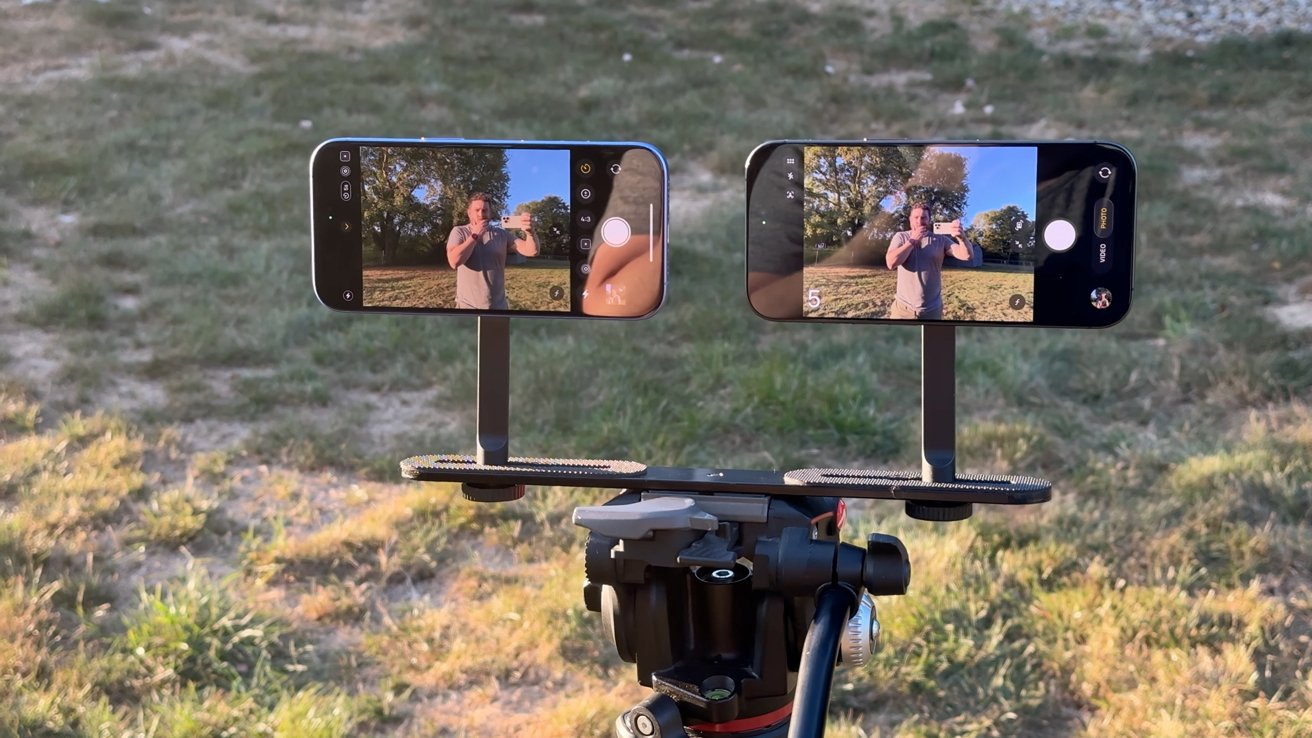
iPhone 17 vs. iPhone 16: On the front of the iPhone 17 is a new 18MP Center Stage camera.
On the front, the iPhone 17 uses a brand new 18MP Center Stage camera. It's capable of switching to landscape mode without rotating the iPhone itself. The iPhone 17 is also capable of Dual Capture, letting you record video from both the front and rear cameras simultaneously.
The front camera of the iPhone 16, meanwhile, is Apple's tried-and-tested TrueDepth camera array. Centered around a 12MP sensor, it has an f/1.9 aperture with Focus Pixels, and the same still image benefits as the rear cameras, except for panoramas.
As for video recording, the iPhone 17 can take 4K videos at up to 60 FPS. It can also record 4K 30fps using cinematic video stabilization, 2.8K video at 60fps in Action mode, and 1080p 240fps or 120fps Slo-mo videos. Dual Capture is available in up to 4K at 30fps.
The iPhone 16 offers practically the same capabilities, except for Dual Capture, which is exclusive to the iPhone 17 range.
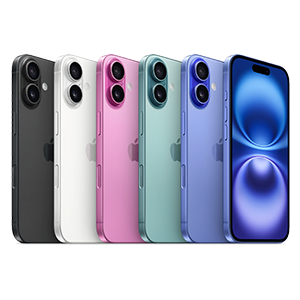
iPhone 16
With the iPhone 16, Apple also brought over Spatial Video recording, thanks to the vertical alignment of the rear cameras. They're recorded in 1080p at 30FPS, and the capability is also available on the iPhone 17.
There's also Spatial Audio to go with the stereo audio recording, along with a wind noise reduction setting. Audio Mix is built in as well, so users can easily add their own music choices and mix them into a recording without necessarily cutting out the subject's voice.
iPhone 17 vs. iPhone 16: Performance
The iPhone 17 is equipped with Apple's 3nm A19 chip. The system-on-chip has a six-core CPU and a five-core GPU with Neural Accelerators for improved AI processing.
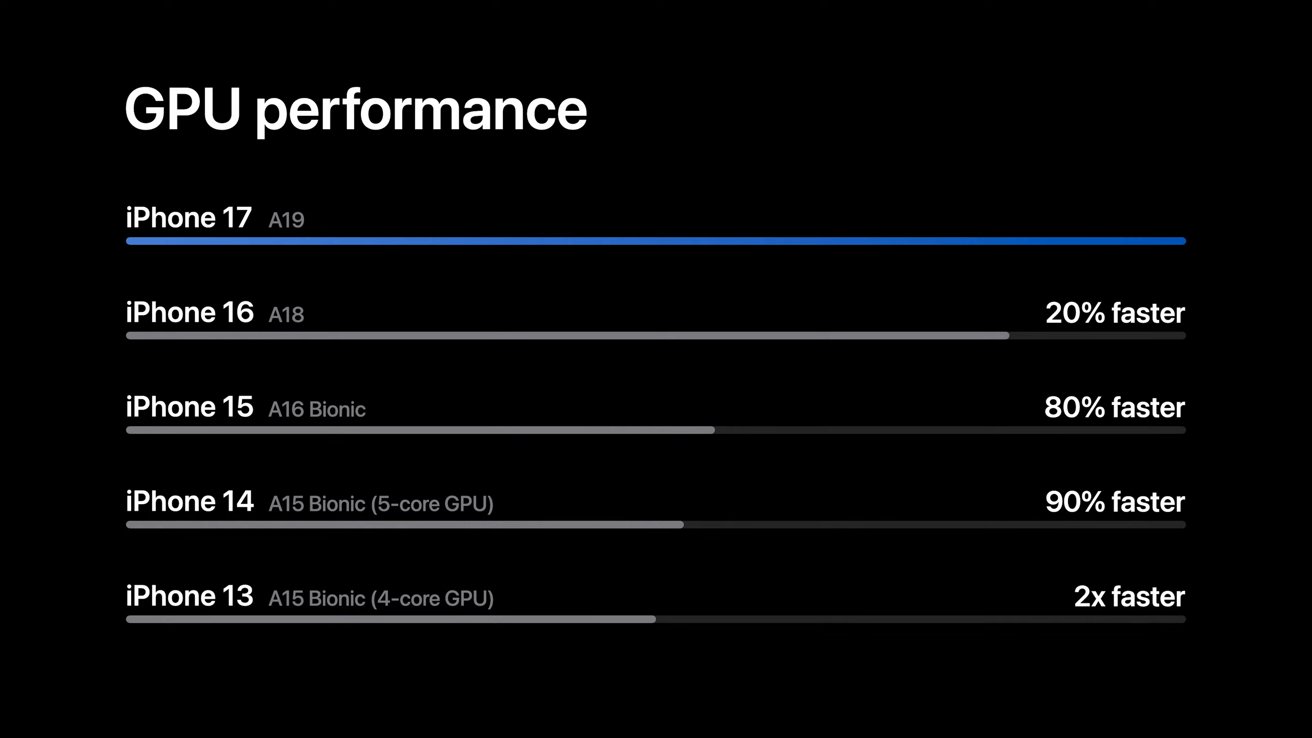
iPhone 17 vs. iPhone 16: The GPU of the A19 chip offers a decent performance improvement relative to the one in the A18. Image Credit: Apple
The A19 CPU consists of two performance cores and four efficiency cores, and Apple says it's 1.5 times faster than the CPU of the A15 Bionic in the iPhone 13.
The A18 chip in the iPhone 16 also consists of six CPU cores and five GPU cores. Apple claims the A18 CPU is 0.5 times faster than the one in the A15 Bionic.
Both the A19 and A18 feature a five-core GPU. The A19 chip of the iPhone 17, however, is equipped with Neural Accelerators, which help run powerful generative AI models on the device. Apple says the A19 GPU is 20% faster than the GPU of the A18 in the iPhone 16.
The A19 chip in the iPhone 17 also houses Apple's Display Engine, which helps power ProMotion and the always-on display. The A18 chip does not have this as the iPhone 16 display does not support ProMotion.
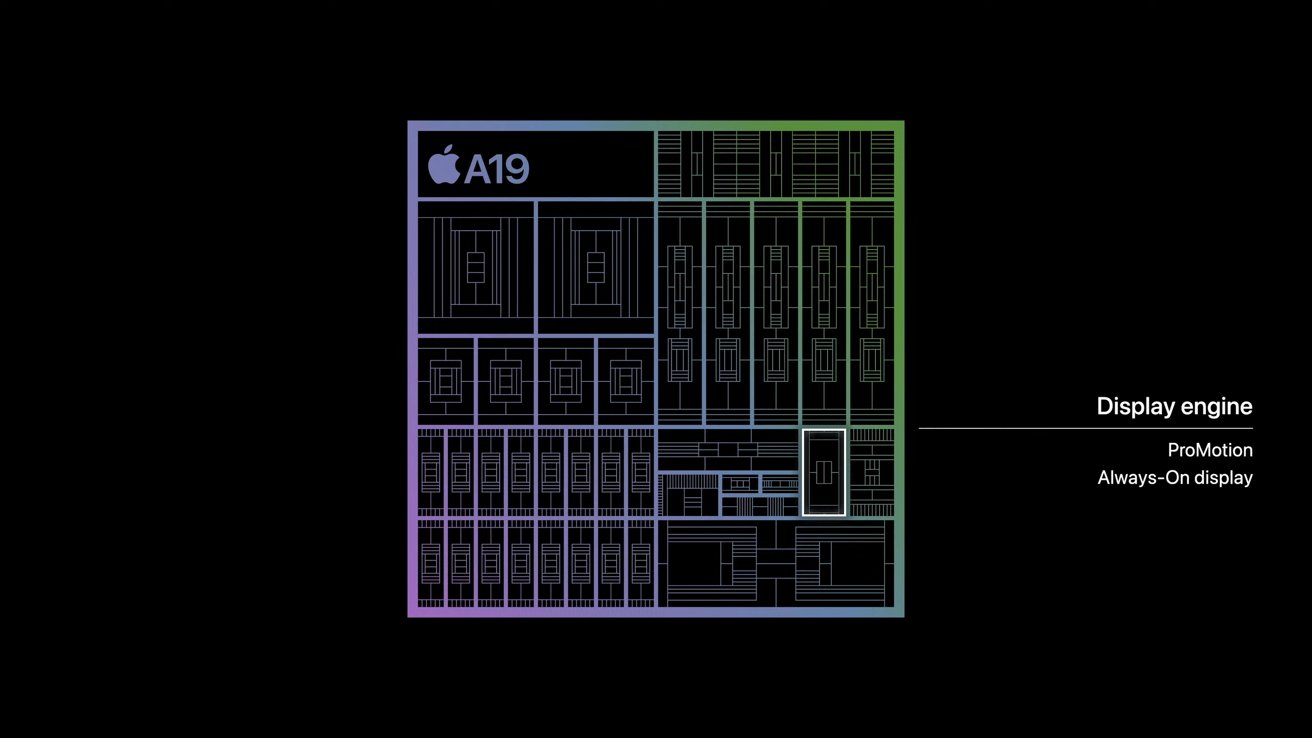
iPhone 17 vs. iPhone 16: The A19 chip features a Display Engine for ProMotion. Image Credit: Apple
The iPhone 16 has 8GB of LPDDR5 memory, which allows for Apple Intelligence features on the device. The iPhone 17 has improved memory bandwidth, but the A19 chip still has 8GB of RAM, just like the A18 in the iPhone 16.
Also important for AI is the Neural Engine. The A18 chip in the iPhone 16 contains a 16-core Neural Engine that can perform up to 35 trillion operations per second.
The iPhone 17 is also equipped with a 16-core Neural Engine, albeit with increased memory bandwidth.
In lieu of actual hardware to test or any released benchmarks, Apple's statements are the only available information pertaining to performance improvements. We'll be updating this post when we can confirm benchmarks for the new phone.
iPhone 17 vs. iPhone 16: Connectivity and battery life
With the iPhone 17, Apple has introduced its in-house Wi-Fi chip, dubbed the N1.
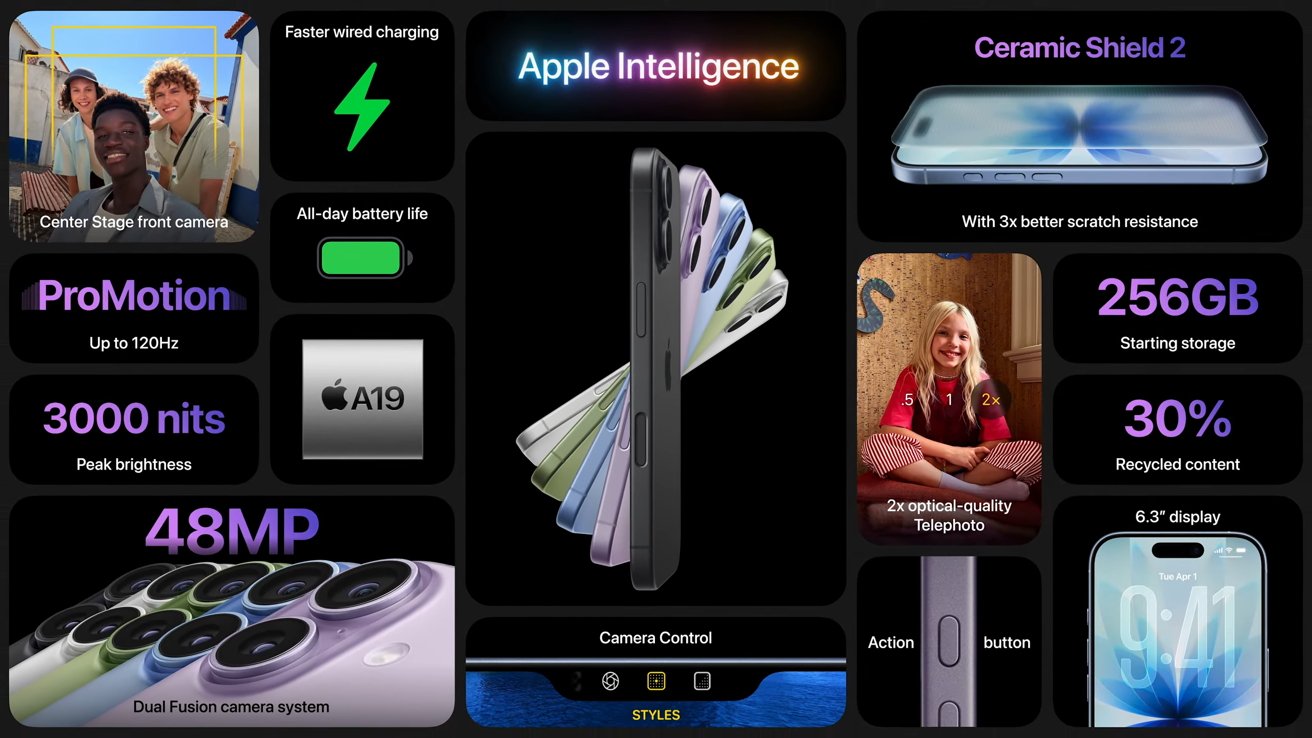
iPhone 17 vs. iPhone 16: The iPhone 17 offers better battery life relative to the iPhone 16. Image Credit: Apple
Relative to the iPhone 16, which also shipped with Wi-Fi 7, the Apple-designed Wi-Fi chip in the iPhone 17 offers a few noteworthy enhancements. It enables improved performance for AirDrop and Personal Hotspot.
It also brings Bluetooth 6 to the iPhone 17. For reference, the iPhone 16 only supports Bluetooth 5.3. This ultimately won't matter to most users for the time being, as you'll be able to connect keyboard, headphones, and other accessories without issue on both devices.
The iPhone 16 and iPhone 17 support 5G in both sub-6GHz and mmWave formats, with Gigabit LTE with 4x4 MIMO and carrier aggregation as a backup.
In terms of battery life, the iPhone 17 offers an additional 8 hours of video playback relative to the iPhone 16.
Apple also says the iPhone 17 can charge up to 50% in just 20 minutes, when used with the new 40W Dynamic Power Adapter. The iPhone 16 takes 30 minutes to charge to 50%.
The iPhone 17 and iPhone 16 can also charge wirelessly at 25W via MagSafe, up to 7.5W using a Qi charger, and 15W with Qi2.
iPhone 17 vs. iPhone 16: Color options and pricing
The iPhone 17 and iPhone 17 are both available in five different color options, though there are a few differences.
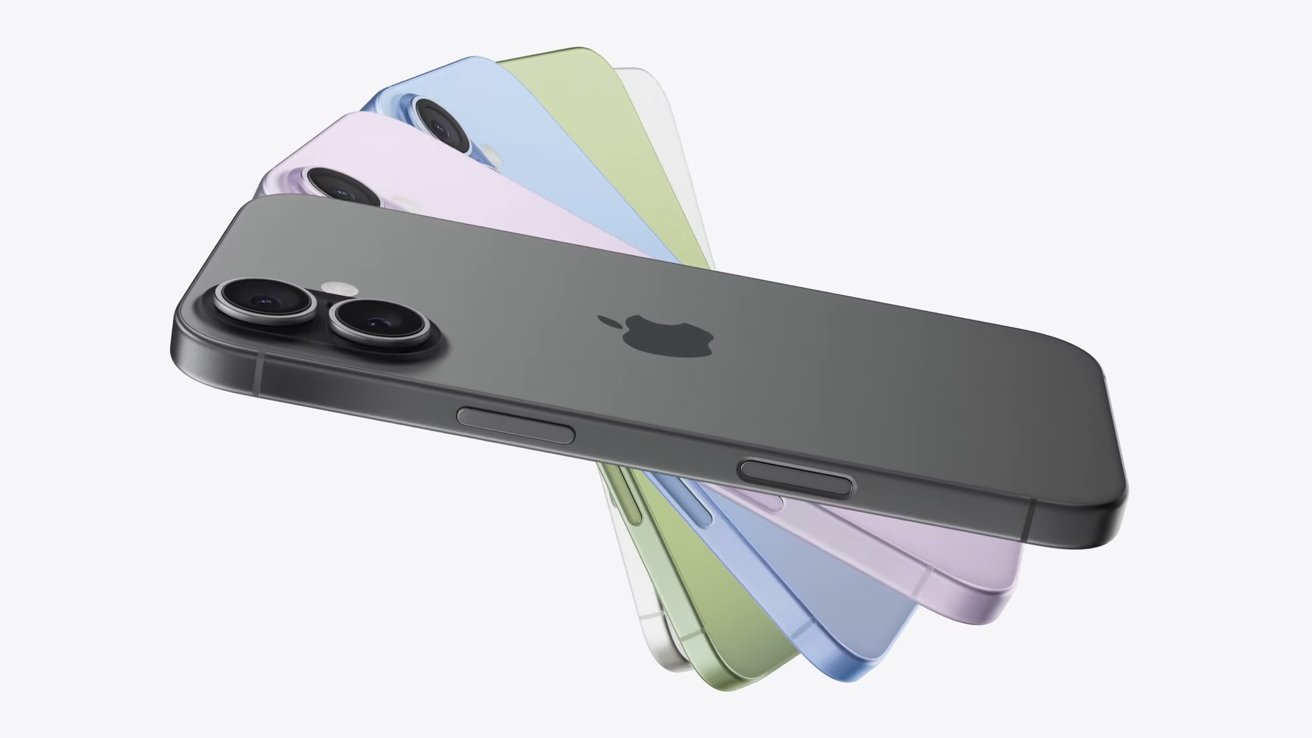
iPhone 17 vs. iPhone 16: The iPhone 17 is available in five colors, with more subdued tones compared to the iPhone 16 colors. Image Credit: Apple
Aside from the standard black and white colors, the iPhone 17 is available in Mist Blue, Lavender, and Sage. In comparison to the iPhone 16 color options, which include Ultramarine, Teal, and Pink, the iPhone 17 offers more subdued tones.
In terms of storage, Apple eliminated the 128GB option with the iPhone 17 range. The 256GB version is priced at $799, and there's also a 512GB variant which will cost you $999.
For reference, the iPhone 16 with the 128GB of storage started at $799. The 256GB model was priced at for $899, and the 512GB variant was sold for $1,099.
This means the base configuration of the standard iPhone 17 offers more storage for the same price point. The 512GB variant is also cheaper than its iPhone 16 counterpart by $100.
iPhone 17 vs. iPhone 16: Should you upgrade?
Compared to the iPhone 16, the iPhone 17 offers ProMotion, a larger screen, better cameras and improved performance.
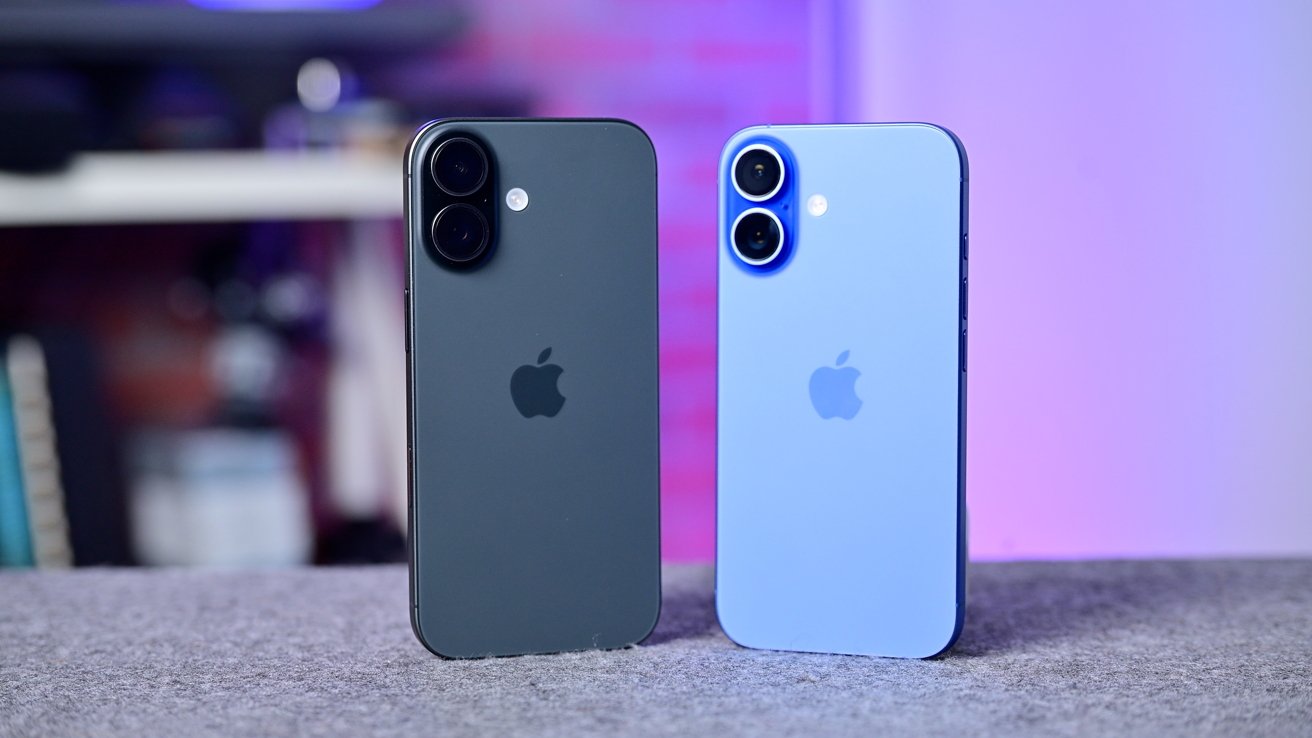
iPhone 17 vs. iPhone 16: The iPhone 17 is a good option if you're upgrading from an older iPhone.
ProMotion, however, is not an essential feature for most iPhone users, and the screen is only 0.2 inches larger. The camera improvements, however, are a welcome change.
The 18MP Center Stage camera is particularly impressive. It can switch to landscape mode despite the iPhone itself being vertically oriented. No previous iPhone model has had this capability.
Those are the only things you're missing out on if you have an iPhone 16. Both the iPhone 17 and iPhone 17 have Apple's Action button, Camera Control, and a 48MP main rear camera.
There's ultimately not much of a reason to upgrade unless you're coming from an older model. In that case, the iPhone 17 is a better purchase due to its arguably incremental improvements over the iPhone 16.
Where to buy Apple's iPhone 17 and iPhone 16 at a discount
Wireless carriers are offering aggressive incentives on the iPhone 17, along with closeout deals on iPhone 16 models.
Here are the highlights, with even more iPhone deals available in our dedicated deal roundup.
- T-Mobile: Save up to $1,100* on an iPhone 17, plus deals on iPhone 16 models
- AT&T: Save up to $1,100* on an iPhone 17, plus incentives on iPhone 16 devices
- Verizon: Save up to $1,200* on iPhones* *See site for terms and conditions pertaining to the offer.
You can also save on an iPhone by picking up a refurbished or pre-owned device. Back Market and eBay both have deals on new, open-box, and used models.
If you're looking to unload your used iPhone for cash, Gazelle is also offering a 10% trade-in bonus exclusively for AppleInsider readers.