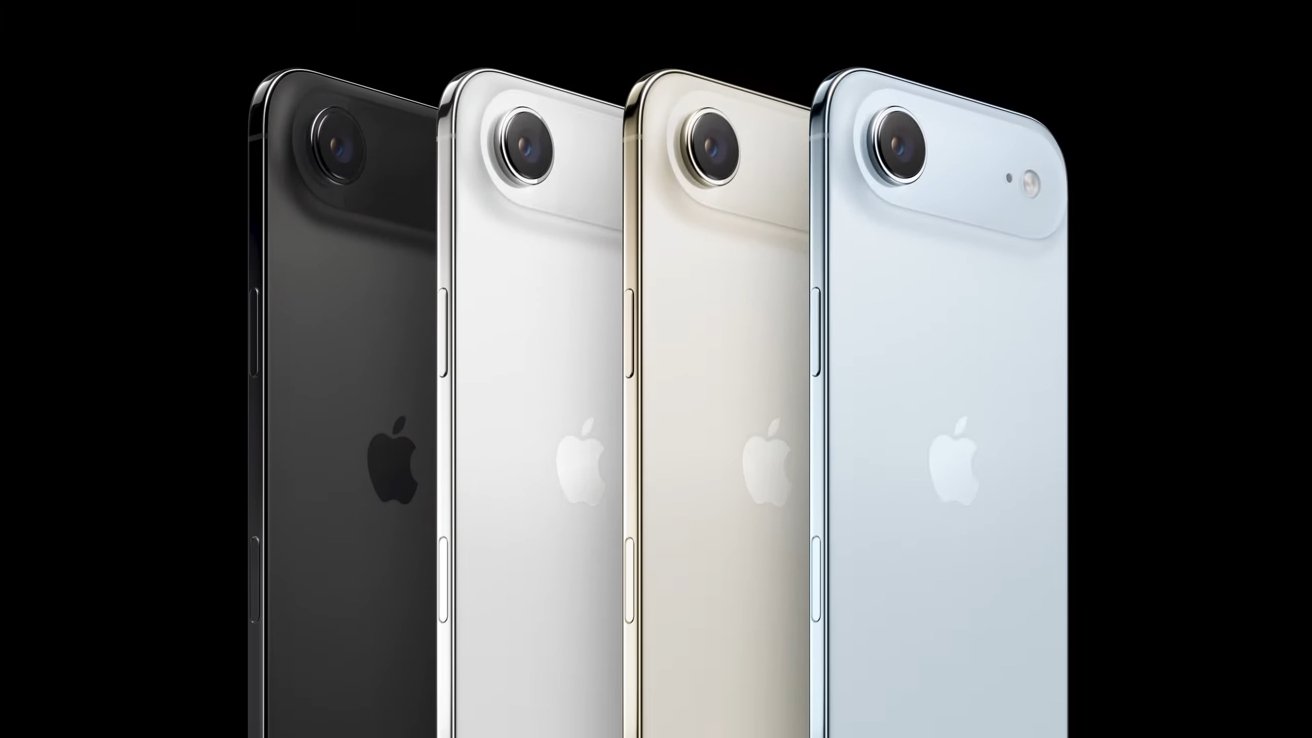
Apple has unveiled the iPhone Air as the new slimmest option in the iPhone 17 range, while still providing the utility of a fully-rounded flagship smartphone.
Launched as part of the new collection of iPhone 17 models, the iPhone Air takes up the fourth spot in the collection. It replaces the previous Plus model of iPhone that accompanied the standard non-Pro model.
The main roster is still four iPhones, with two standard models and a pair of Pro versions, and with the strong possibility of an iPhone 17e in early 2026.
While part of the iPhone 17 launches, Apple has curiously decided to use the iPhone Air name without the number.
Thin and flashy
As the name heavily implies, the iPhone Air is the thinnest model in the range. At just 5.6mm thick, it's about two millimeters thinner than the iPhone 16 and iPhone 16 Plus it replaces.
To get so thin, Apple uses titanium, a material previously used in the Pro range. It also uses Ceramic Shield 2 with improved antireflection, scratch resistance, and four-times crack resistance for the rear glass.
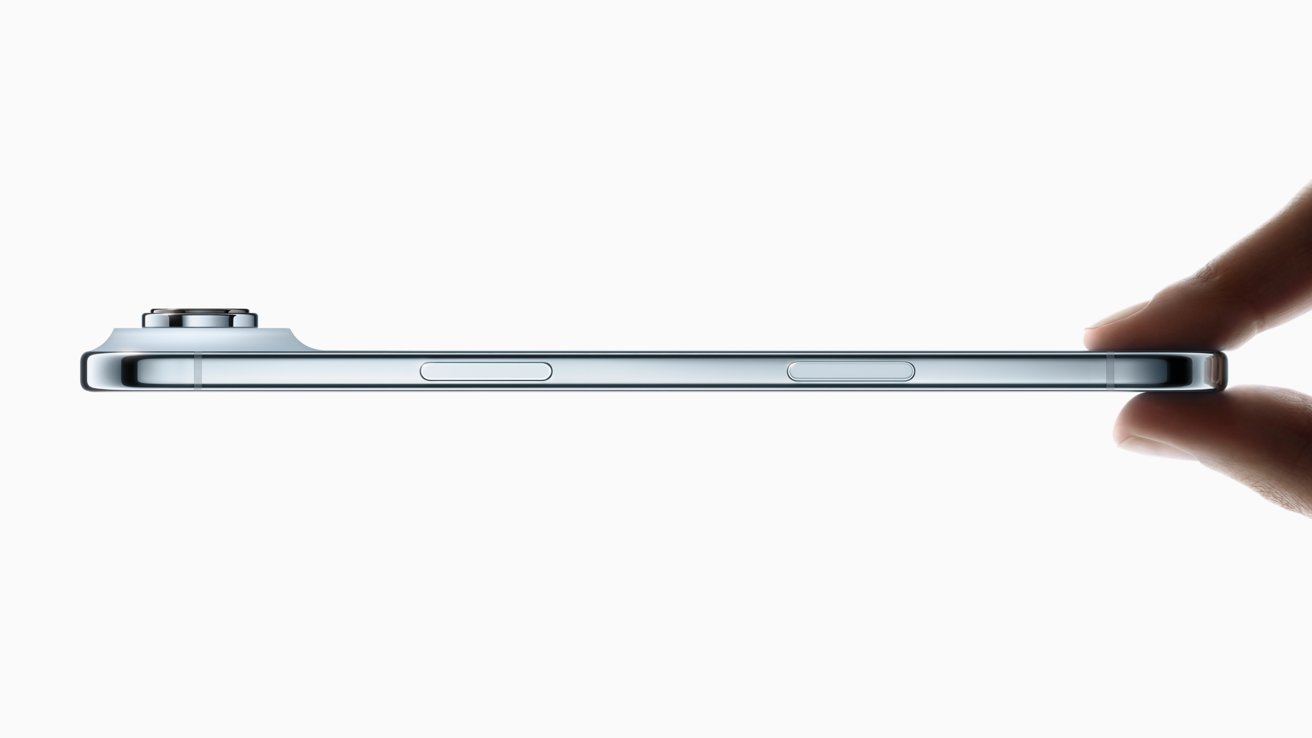
The iPhone Air is very thin - Image Credit: Apple
For the longest time, Apple has tried to design the iPhone and portables like the iPad as if you're holding a piece of glass. With the iPhone Air, it seems Apple's getting extremely close to that idea.
Still a great screen
While thin, it's still a sizable device, equipped with a 6.5-inch all-screen OLED display. Its resolution of 2,736 by 1,260 still gives it a great pixel density of 460 pixels per inch.
That screen is a ProMotion panel, borrowing the feature previously limited to the Pro models. That means it has an adaptive refresh rate going up to 120Hz.
For brightness, the iPhone Air can go up to 3,000 nits at its peak. The contrast ratio is 2 million to one, with it also supporting Wide Color (P3), Haptic Touch, and True Tone.
An A19 experience
Driving the iPhone Air is the A19 Pro chip, the same one used in the other iPhone 17 Pro models. It's Apple's fastest CPU in any iPhone, combined with a five-core GPU with second-generation dynamic caching and unified image compression.
Naturally, the AI has been improved with neural accelerators working in each GPU core.
Camera compromise
Since the iPhone Air is so slim, there had to be some compromises, and one of those is the camera. While the standard model has two cameras and the Pro models have three, the Air only has one.
The rear shooter is a single 48-megapixel Fusion camera, a Wide camera that doesn't have Telephoto or Ultra Wide counterparts. Sensor Shift optical image stabilization is also included.
The back of the iPhone Air - Image Credit: Apple
That said, Apple is still including two "cameras" in the Camera app. It's pulling off its image cropping trick to create a virtual 12MP 2x optical zoom level, while still using only one camera sensor.
While the rear has one less camera, the front continues to use a TrueDepth camera array, complete with a new 18MP sensor and depth mapping. This time it has Center Stage support, as well as a sensor design that can allow users to go from portrait to landscape orientation shots without rotating the iPhone itself.
It can even reframe automatically if more people join the shot.
When it comes to video, there's Dolby Vision support, at up to a 4K resolution at 60fps. Slo-mo video goes to 1080p 240fps.
Battery and connectivity
Battery life is now even longer despite rumors about the thickness killing battery capacity. Apple claims "all-day" battery life, with up to 27 hours of video playback.
If that's not enough, there's also a MagSafe Battery revival, which extends the life to 40 hours.

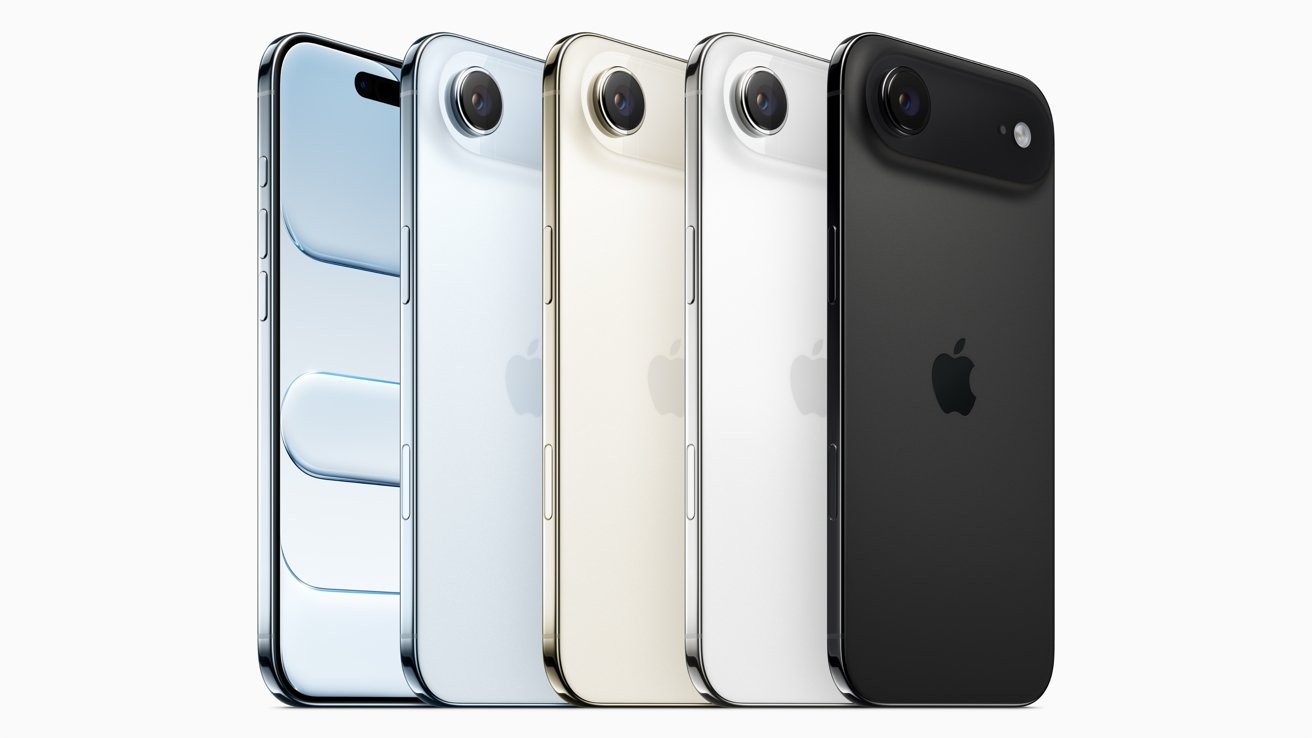
All four iPhone Air color options - Image Credit: Apple
Connectivity is handled by two chips, with the N1 handling WI-Fi 7, Bluetooth 6, and Thread. The Apple-designed C1X modem is twice as fast as the C1.
Continuing the trend, there's no SIM card slot in the iPhone Air. Instead, you will have to contend with eSIMs, a technology Apple has used in its products for quite some time.
Losing the SIM tray does offer one advantage: More physical space for the battery.
While there is a USB-C port in the base for charging, it's only operating at USB 2 speeds, not USB 3. You're not going to get the bandwidth for data transfers as you would get on the Pro models.
The iPhone Air will start from $999 for 256GB rising to $1,399 for 1TB, with preorders open from September 12. Availability starts from September 19.