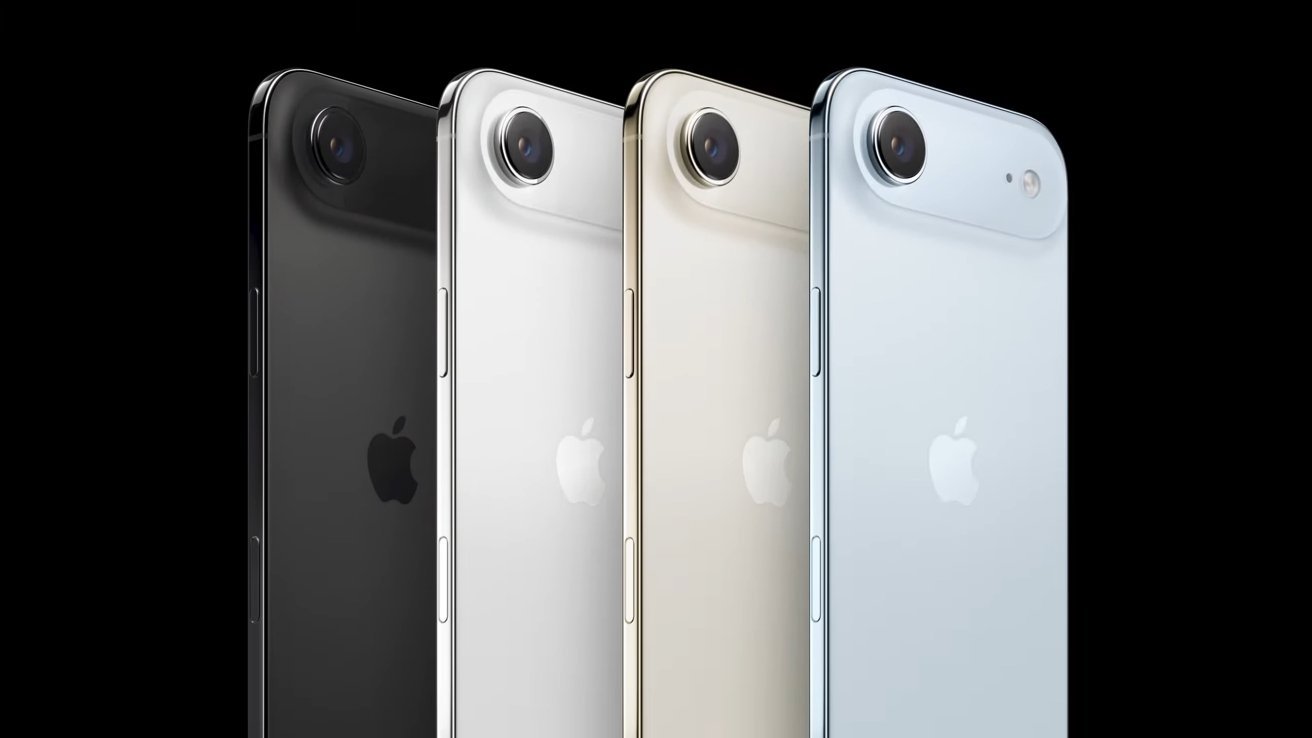
The thinnest iPhone ever made has already been bent, tossed, and tested by Apple before its launch, and executives from the company are tossing them to interviewers and offering a challenge.
Apple unveiled the iPhone Air during its "Awe Dropping" event in Cupertino on September 9, 2025. The $999 device measures just 5.6 millimeters thick, making it Apple's slimmest phone ever.
That razor-thin design reminded people of the iPhone 6 Plus from 2014. Users back then found that the larger body warped easily, leading to the term "bendgate."
It's time for our periodic reminder that "Watergate" was the name of a hotel in Washington D.C. Appending -gate to some kind of scandal, real or not, remains ridiculous.
Anyway, the iPhone 6 Plus was 7.1 mm thick with a 5.5-inch screen that was big for its time. Almost immediately, customers found that the phone could bend when they sat on it, because the physics of levers is clear.
The controversy grew enough that Apple switched to stronger aluminum in the iPhone 7 Plus to shore up durability.
After the iPhone 17 event, Apple executives John Ternus and Greg Joswiak joined a podcast where the topic of bendgate came up again. Ternus said the iPhone Air is stronger than any earlier iPhone, pointing to its Grade 5 titanium build, tougher Ceramic Shield 2, and IP68 water resistance.
From keynote to live test
Durability claims are one thing, and watching Apple's marketing chief toss his phone across a table is another. The iPhone Air uses a unibody titanium frame designed to be sleek and strong.
Apple machines the enclosure from a single piece of metal, which removes the weak spots that seams or joints often create. During the podcast taping, Joswiak tossed his personal iPhone Air across a table toward a reporter.
The phone bounced, landed unscathed, and was then handed over with a grin. Joswiak challenged him to try bending it. Under the cameras, the reporter gave it everything he had.
The iPhone Air flexed slightly but snapped back flat without a crack. Someone else took a turn and joked about whether Apple Store shoppers might try the same thing.
Both Apple execs explained that the phone is designed to flex a little under load and then recover instantly.
The company has used unibody construction since the MacBook Air in 2008. Making it work in a phone only 5.6 millimeters thick is a bigger challenge.
The result is apparently a chassis that feels solid in the hand. It can flex a bit under pressure and quickly return to shape without bending permanently.
Battery & internal protection
Skeptics might wonder about the lithium-ion battery inside such a thin body. Ternus addressed that directly, explaining that Apple encases the battery in a metal shell to strengthen it and reduce risk if the phone flexes.
According to him, the added protection makes the battery itself part of the phone's durability system. The extra shielding may reassure those worried that thinner equals weaker.
Apple's engineers believe the iPhone Air can handle pocket stress and accidental drops. They're also confident it can survive the occasional overenthusiastic bend attempt.
And of course, they're used to unscientific bend tests on YouTube complaining about the fact that a metal and glass slab will unsurprisingly bend.
The bigger picture
Apple's push for thinness is nothing new. The MacBook Air redefined laptops in 2008, prioritizing portability while promising durability.
The iPhone Air now carries that same branding logic: a sleeker, lighter product that doesn't feel fragile in the hand.
Still, Apple's marketing has to contend with the ghosts of bendgate and the social media pile-ons that come with every design. Critics are already roasting the iPhone Air online, with some pointing out the company's lack of specificity about battery life during the keynote.
Thin phones may look futuristic, but they often leave users nervous about longevity and practicality. Past Apple experiments in thinness have led to compromises, from keyboard failures in the butterfly MacBooks to antenna problems in the iPhone 4.
The company's challenge is proving that "thin" doesn't mean "cheap out."