With the iPhone 17, Apple rebuilt its front camera around how people actually use it — making the selfie wider, steadier, and more natural in every frame. Here's how and why Apple said they did it.
Apple announced the iPhone 17 during its September "Awe Dropping" Apple Event. During the event, Apple introduced its entirely reworked, 18 megapixel front-camera system, promising greatly improved selfies.
Business World sat down with Apple's Senior Product Manager, Meghan Nash, and Apple's VP of Camera Software, to discuss how the new selfie system came to be.
"As the new iPhone lineup this year really does completely reimagine the front camera experience with the Center Stage camera. It fundamentally changes the way that we capture our memories and communicate with our loved ones," McCormack said.
"We like to say that the iPhone is a really social camera, and this is especially true for the front camera. ... Globally, we took around 500 billion selfies on the iPhone last year."
It's hard to argue those numbers, especially when they average out to 16,000 selfies per second on iPhone alone. But, even for all its success, Apple noticed places where the selfie fell short.
Flipping the script — and the photo orientation
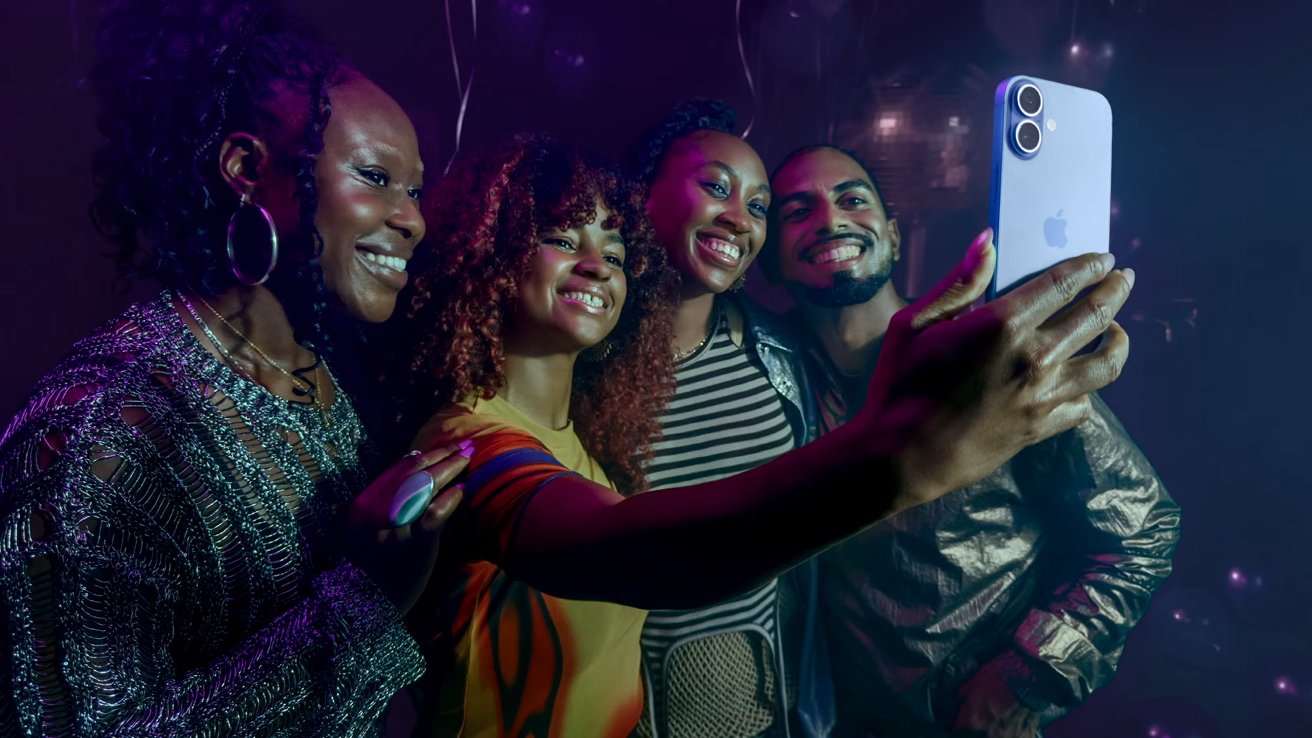
The selfie has, until this year, largely been a vertical or "portrait" format. This works well when you're sending a picture of yourself to a friend or family member.
It works less well when you're trying to send a picture of yourself in a picturesque location, thanks to the inherent tight crop. And if you're trying to get a group shot, it becomes even more of a hassle.
Users have come up with ways to combat this. McCormack highlights some of the workarounds, which include selfie sticks, switching to the ultra-wide camera, rotating the camera horizontally, and ensuring that the tallest person — the one with the longest arms — is in charge of any group shots.
But Apple knew it could do better.
Centering Center Stage
Center Stage came to iPad and Mac years ago. The feature is designed to keep people in the frame while using the camera — especially for video calls.
This was a game-changer when it debuted on those devices. That meant that it wasn't so much a question of if it would come to iPhone, but when.
As it turns out, that date was September 2025.
Bringing Center Stage to the iPhone meant rethinking the sensor. It needed to change the sensor from the standard rectangle to a square one.
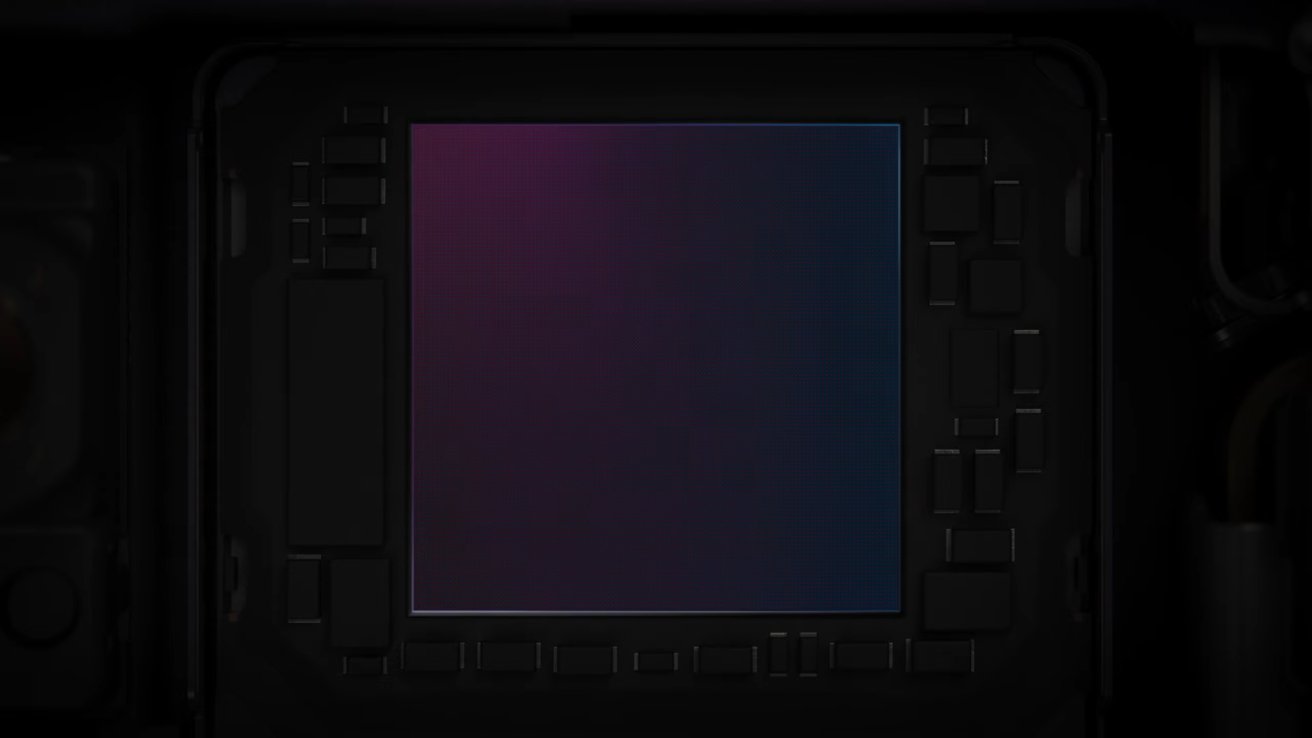
Apple's new square sensor | Image Credit: Apple
"So, the front camera and the sensor were developed together with very clear ideas about the customer experiences we wanted to enable," Nash told Business World. "Like John (sic) said, we knew we wanted to help users fit more friends in their group selfies, so we needed a wider field of view..."
"With the new Center Stage camera, we grew the sensor to almost double the size of the previous sensor to match pixel-for-pixel sharpness... The result is a wider field of view that fits more people or background in the frame, along with excellent image quality — really the best of both worlds."
In doing this, Apple solved a major problem. Users no longer had to rotate their phone sideways. They could simply tap to switch to horizontal.
Going au naturale
Center Stage also improves eye-gaze. If you've ever tried to take a selfie in horizontal mode, you already know what this is.
When your phone is oriented vertically, your eyes are already near the lens when looking at the screen. This isn't the case when you flip your phone sideways — suddenly, the target is pretty far away from the screen.
This often results in awkward or stiff poses. You have to refrain from looking at the screen and instead try to focus on your lens, turning the act of a quick selfie into a juggling act.
Center stage allows you to hold your phone vertically and keep your gaze in a more natural position. With this seemingly small change, the awkwardness of horizontal selfies is effectively eliminated.
And that's the entire premise. Apple's was looking for a way to make using the front camera more natural.
"Our goal with the iPhone's camera is always to make it invisible," McCormack said. "We achieved this by using the large overscan region on the sensor to enable this amazing stability..."
"The larger field of view and high-resolution sensor allow us to use Action mode automatically every time you capture a selfie video. You never even have to turn it on, so you can walk, bike, or run and know that your video is going to be great."
Double the cameras, double the fun
Also introduced with the iPhone 17 is Dual Camera recording. This new feature allows a user to record video from both the front and rear cameras simultaneously.
The goal is to give users the option to record both the action happening as well as their reaction to it. While it may be a niche use case, it is an impressive one nonetheless.
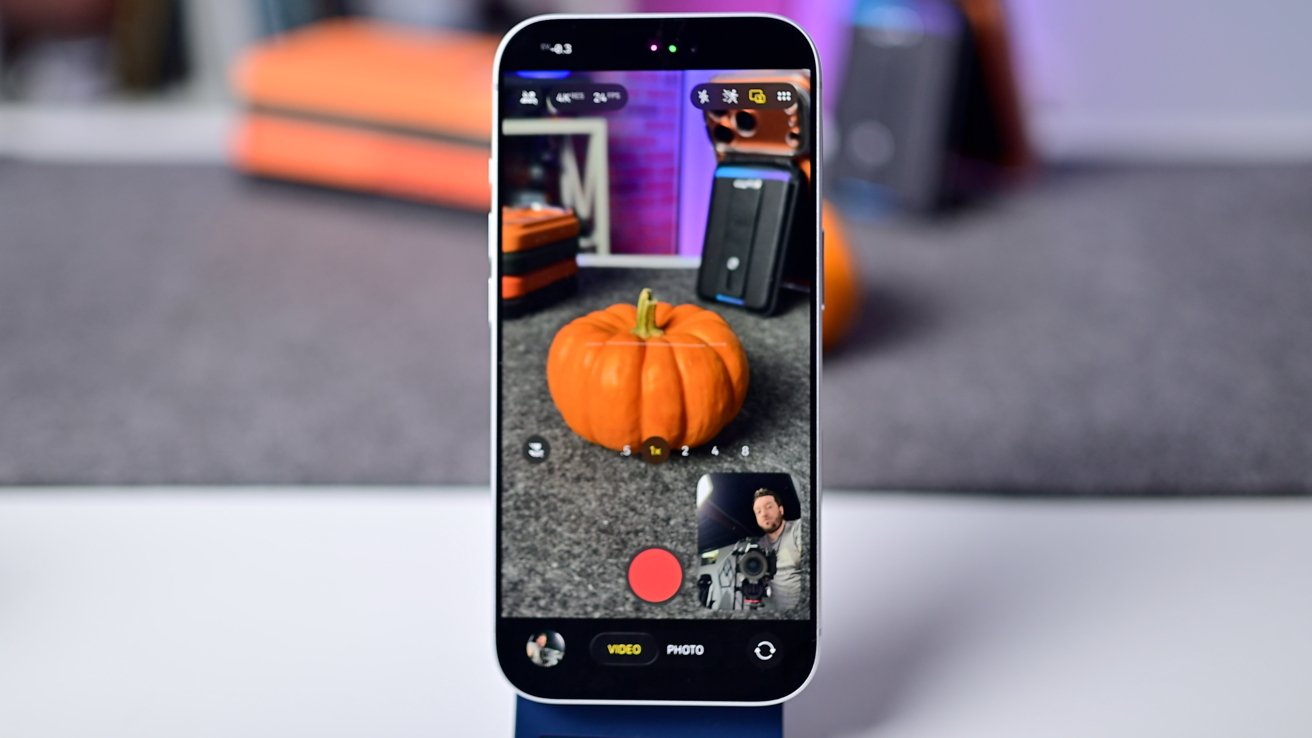
Dual Capture with the updated Center Stage selfie camera
"With Dual Capture, we achieve all of this while recording great video on the rear camera as well," McCormack says. "Stabilisation is especially important here... With face framing and Dual Camera, we actually create a more relaxed version of face framing because we want to balance keeping the background stable while keeping your head centered."
Beyond the iPhone 17
And, while these ideas may have been born in the iPhone 17 line, they're hardly exclusive to it. These features also exist in the front camera of the iPhone Air.
"We wouldn't compromise on image quality at all. It still needed to maintain that same great image quality, which meant we needed to have the same size pixels — we just needed a lot more of them in the X and Y directions..." McCormack says of the iPhone Air.
"The camera team, industrial designers, and thermal engineers all work side by side to create a device that seems unfathomable to put everything together, but we do it."
A new era for one of the world's most-used cameras
As Apple tells it, the front camera's reinvention isn't simply about showing off — it's about making the selfie camera slot perfectly into your daily life. Through a marriage of hardware and software the iPhone 17 turns the everyday act of taking a selfie even more natural.
And while it's easy to be cynical about camera upgrades, the company's latest efforts feel meaningful and human-centered. This time it seems less about megapixels and more about making technology fade into the background, letting people focus on the moment instead of the mechanics.