
The new Vince Gilligan drama "Pluribus" arrives November 7 on Apple TV, and an early preview proves that the company still values creative ambition even as the rest of the industry cuts back.
Gilligan, the creator of Breaking Bad and Better Call Saul, returns to television on November 7. His new Apple TV drama, Pluribus, explores what happens when humanity finally achieves perfect happiness.
But one woman refuses to accept it.
A preview by The New York Times detailed the production in Albuquerque and conversations with Gilligan and Rhea Seehorn. The Times called it an ambitious mix of science fiction and philosophy, while Apple presents it as a mystery about free will in a world without it.
Pluribus is one of Apple TV's biggest bets yet. The series blends science fiction with social allegory. It was filmed in and around Albuquerque, New Mexico, where Gilligan has worked for nearly two decades.
The Times highlighted the show's cinematic scope and philosophical ambition. However, Apple seems to be marketing it as prestige entertainment instead of a moral fable.
The story follows Carol, a successful author played by Rhea Seehorn. She discovers that almost everyone on Earth has suddenly become perfectly content after a mysterious signal from space.
Conflict, grief, and anger vanish overnight. Carol becomes the only unhappy person alive and clings to her misery as proof of free will.
Apple reportedly gave the project a two-season order before its premiere, an uncommon move in today's cost-cutting TV landscape. The company hasn't shared production costs, but Pluribus is said to feature large-scale sets, aircraft scenes, and a full suburban neighborhood built from real materials.
The Times described its scope as "as big as modern TV gets," though Apple hasn't confirmed any numbers.
Gilligan's first new world in a decade
The show marks Gilligan's first original creation since Breaking Bad ended in 2013. He spent the past decade co-running Better Call Saul and finishing El Camino. Those projects cemented his reputation as one of television's few remaining auteurs.
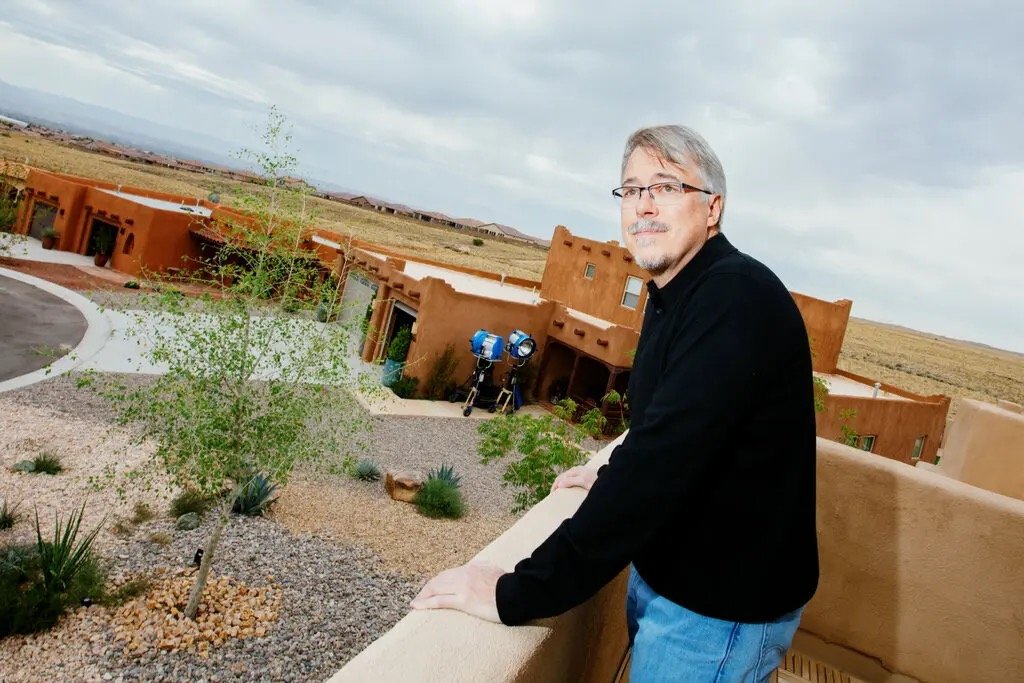
Gilligan on set, on the outskirts of Albuquerque. Image credit: The New York Times
The Times called him one of the "last auteurs standing" from the Peak TV era. This rings true as streaming moves toward tighter budgets and smaller creative risks.
Gilligan developed Pluribus under his long-running deal with Sony Pictures Television. Sony first recommended Albuquerque during Breaking Bad for its tax incentives.
Gilligan stayed for the light, the desert, and the crew that has followed him from show to show. That continuity now gives Pluribus the same production DNA that helped define his earlier work.
The partnership benefited the city too. The Breaking Bad universe created hundreds of local jobs and generated more than $300 million in economic impact.
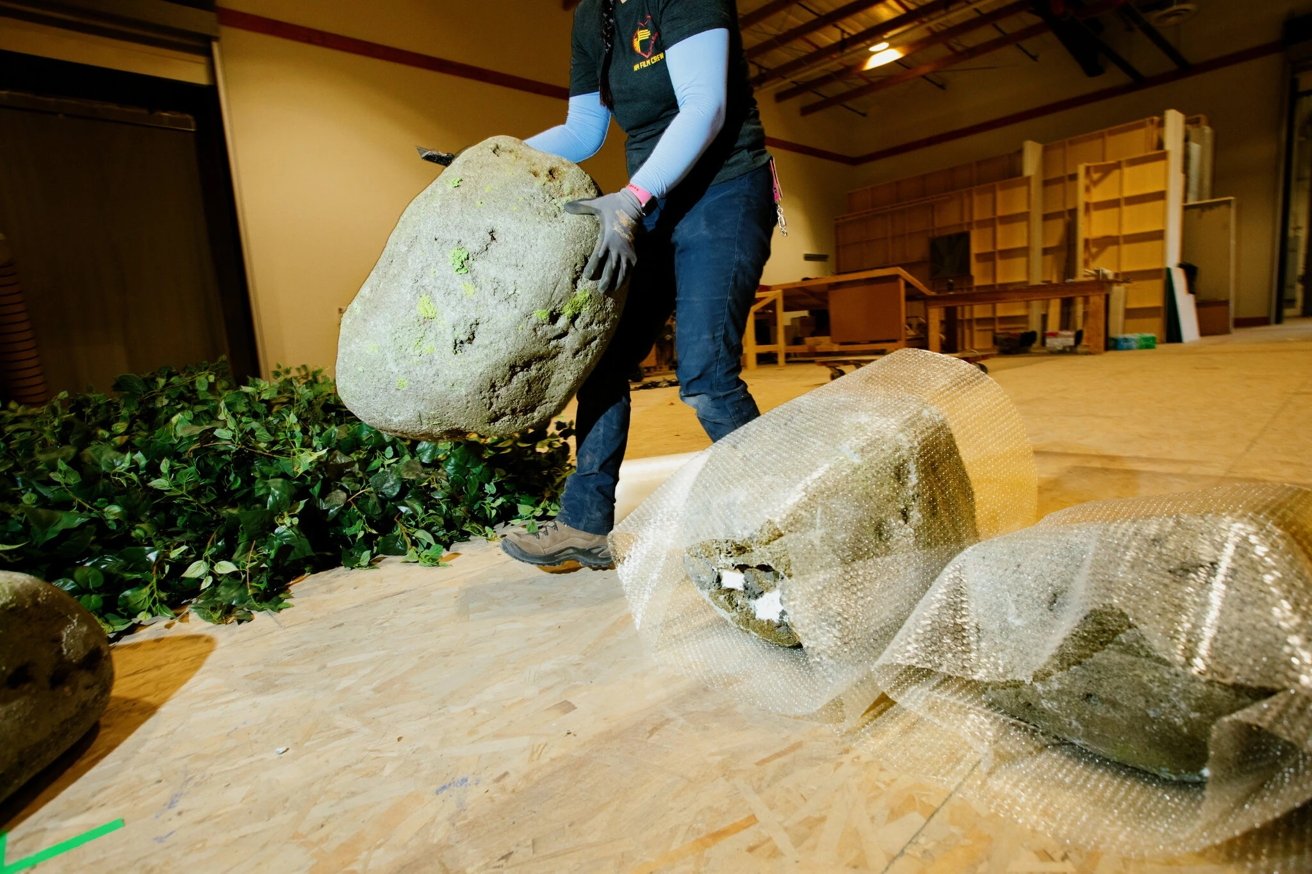
The houses in "Pluribius" were built to code out of real wood, stone and brick. Image credit: The New York Times
Statues of Walt and Jesse now stand outside the convention center, and Breaking Bad tours still roll through Old Town. The Times noted that nearly all of Gilligan's productions have been filmed in New Mexico.
The Rhea Seehorn connection
Gilligan wrote Pluribus with Seehorn in mind. He had watched her character Kim Wexler evolve through Better Call Saul.
When he finished several scripts, he told her about the role. Wexler reportedly cried before saying yes.
Filming in the same city with the same actress could have felt repetitive, but Gilligan chose to stay in Albuquerque. The production avoided recognizable Breaking Bad locations to keep Pluribus visually distinct.
Even Seehorn's hairstyle was changed to distance her from her earlier character. The Times pointed out that Gilligan was initially hesitant to repeat settings or faces, but practicality and loyalty ultimately outweighed perception.
Apple's creative strategy
Apple TV has built its reputation by partnering with established filmmakers such as Martin Scorsese, Ridley Scott, and Alfonso Cuaron. Adding Gilligan reinforces Apple's commitment to prestige storytelling over volume.

Part of the set. Image credit: The New York Times
The company continues to spend heavily on original productions while competitors scale back. The decision also reflects Apple's preference for creators with strong control over their work.
Gilligan is known for precision and consistency. On set, he's reportedly involved in every detail, from lighting to dialogue, maintaining the collaborative but demanding style that defines his shows.
Searching for meaning in perfection
Apple has avoided commenting on the show's deeper themes. Early descriptions suggest a story that's more philosophical than dystopian.
Instead of showing humanity's collapse, it asks what happens once conflict disappears. The premise could appeal to audiences tired of darker series, offering a new take on utopia as something quietly unsettling.
The Times leaned into that theme, calling Pluribus "a vision of a tedious utopia." That description hints at skepticism about whether the premise can sustain its scale.
Apple's marketing seems to focus on emotional curiosity, exploring what it means to feel alone in a world without suffering. That approach offers a softer, more human entry point for viewers who prefer character-driven drama over allegory on Apple TV.
Gilligan has often spoken about happiness as a moving target. He believes dissatisfaction can drive achievement. The idea fits both the series and the man behind it, a creator known for finding meaning in moral tension.
In that sense, Pluribus may be less about utopia and more about the cost of feeling human.
What it means for Apple TV
For Apple TV, Pluribus is a creative risk and a strategic statement. The company keeps funding ambitious projects from proven storytellers while much of the industry cuts costs.
The Times framed the show as a relic of the Peak TV era. Apple seems to see it as the next step, showing that prestige television still has value when it's built with precision and personality.
Whether audiences connect with a story where unhappiness becomes rebellion remains to be seen. Apple is betting that curiosity about life after happiness, and Gilligan's storytelling, will keep viewers watching.