Apple has highlighted its use of 3D printing to make Apple Watch cases, to cut material use — and to enable a new, thin USB-C port for the iPhone Air.
Most of the time, 3D printing is now associated with consumers and hobbyists, but Apple has been using it on a massive industrial scale. This isn't a new approach, either, as Apple has been researching the use of 3D printing for at least the last ten years.
Now, however, Apple has detailed just how 3D printing has gone from testing and into manufacturing. It's gone from an idea being explored, to being used in practice, at scale.
"We knew 3D-printing was a technology with so much potential for material efficiency, which is critical for getting to Apple 2030," says Sarah Chandler, Apple's vice president of Environment and Supply Chain Innovation.
"We're never doing something just to do it once — we're doing it so it becomes the way the whole system then works," she continues. "When we come together to innovate without compromise across design, manufacturing, and our environmental goals, the benefits are exponentially greater than we could ever imagine."
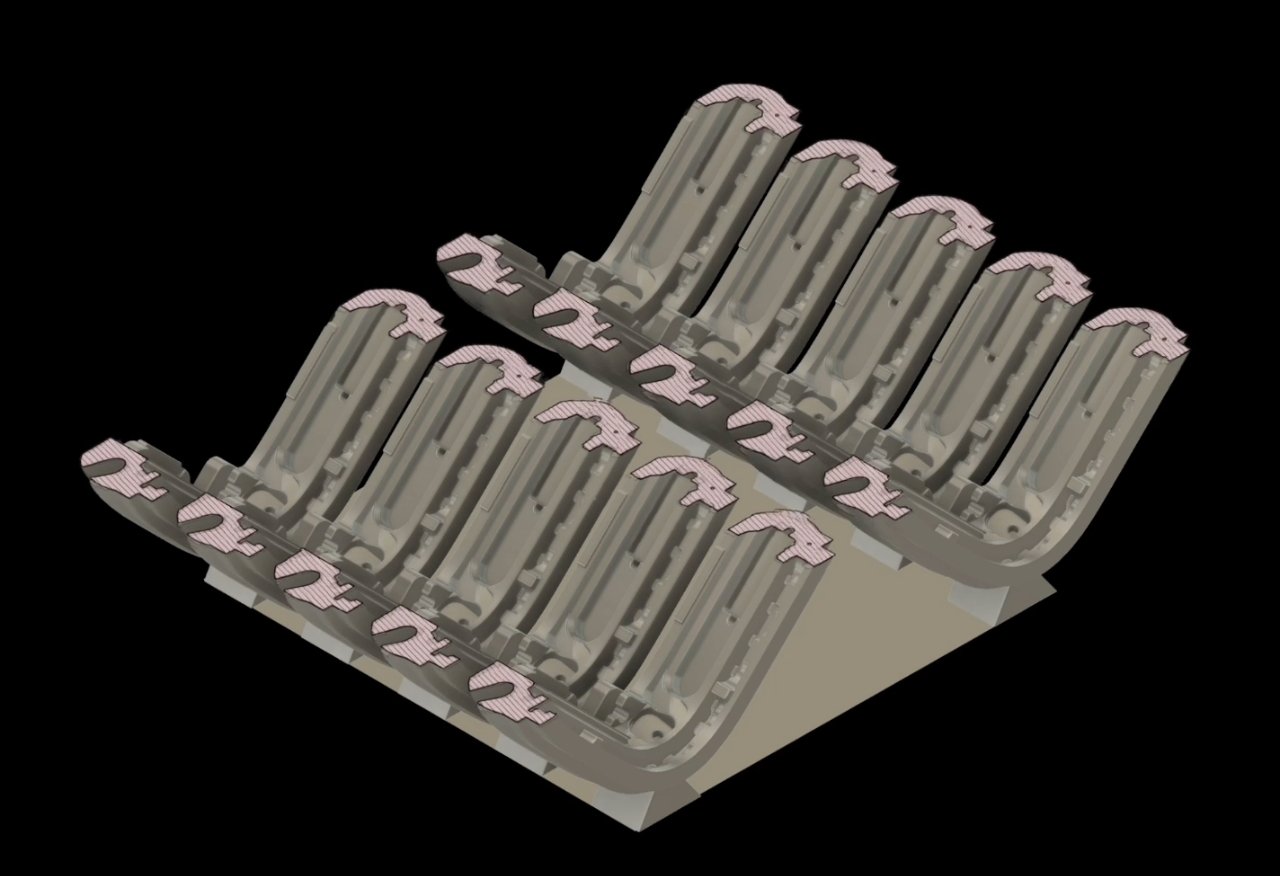
Illustration showing an Apple Watch casing being built up layer by layer — image credit: Apple
A specific benefit has been in the production of the titanium Apple Watch Series 11 and Apple Watch Ultra 3. According to Chandler, making these using 3D printing means saving 50% compared to how much titanium was previously used.
"You're getting two watches out of the same amount of material used for one," Chandler notes. "When you start mapping that back, the savings to the planet are tremendous."
Additive instead of subtractive
Like all 3D printing, Apple is now building up Apple Watch casings layer by layer. It means that only the material needed is used, as opposed to previous manufacturing where titanium would be shaved off in production.
Apple claims that making the Apple Watch chassis this way will have saved 400 metric tons of raw titanium during 2025.
"Using less material to make our products has always been the intention," says Dr. J Manjunathaiah, Apple's senior director of Manufacturing Design for Apple Watch and Vision. "Previously, we hadn't been able to make cosmetic parts at scale with 3D printing."
Manjunathaiah reports that Apple initially experimented with 3D printing to make cosmetic metal parts. Now the company has progressed to more core elements, such as the Apple Watch casing, which requires around 900 layers of titanium powder to make.
"The powder had to be 50 microns in diameter, which is like very fine sand," says Manjunathaiah. "When you hit it with a laser, it behaves differently if it has oxygen versus not... [so] we had to figure out how to keep the oxygen content low."
Each manufacturing machine has a galvanometer with six lasers working simultaneously. And before they can do anything, Apple has to atomize raw titanium into a powder.
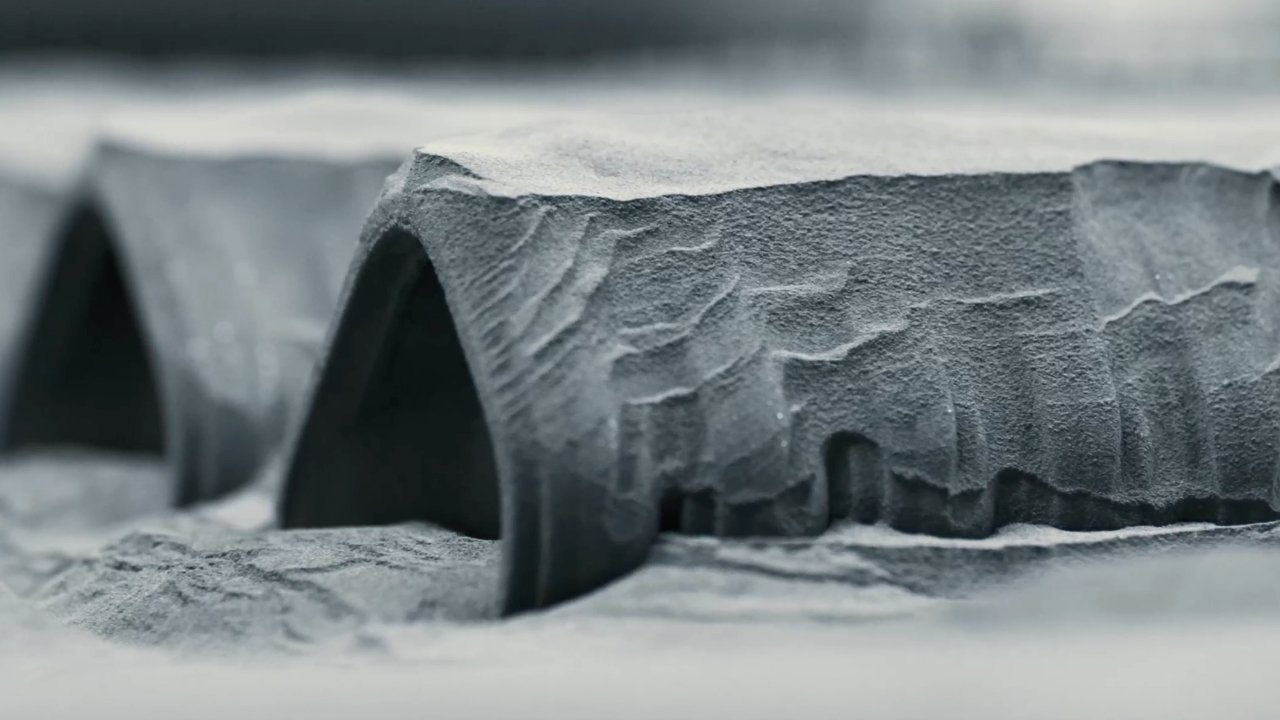
Not huts where Apple Watches are made, but their casings being built up layer by layer with 3D printing — image credit: Apple
"Dialing in that thickness so that each layer is exactly 60 microns means very finely squeegeeing this powder," says Kate Bergeron, Apple's vice president of Product Design. ""We have to go as fast as we possibly can to make this scalable, while going as slow as we possibly can to be precise."
More benefits from 3D printing
Apple does not say how long it takes to 3D print an Apple Watch case. Nor does it even compare the time to that of the previous manufacturing methods.
But the company does emphasize that on top of the materials savings, 3D printing has led to it being able to introduce new designs. Waterproofing is improved because 3D printing can make a texture that bonds better, and do so in a place where traditional cutting couldn't reach.
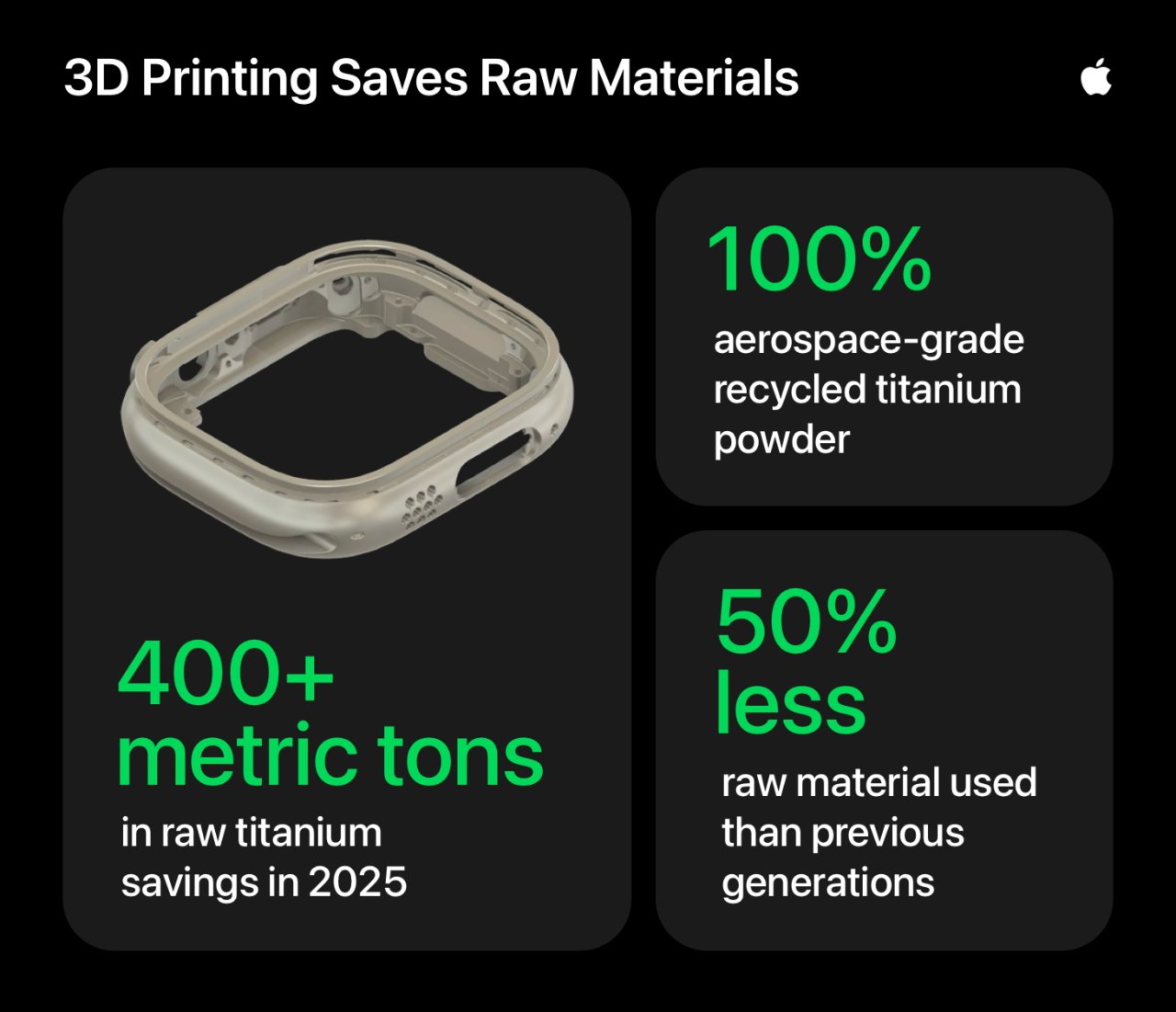
How much titanium is saved by using the new 3D process — image credit: Apple
Apple also says that it is because of 3D printing that it was able to make a thinner USB-C port for the iPhone Air. From the outside, it looks the same as any USB-C port, but reportedly it's an entirely new enclosure that is thin but durable.
"This has now opened up the opportunity for even more design flexibility than what we had before," says Bergeron. "Now that we've achieved this breakthrough at scale, in a truly sustainable way, and at the cosmetic and structural level that we need, the possibilities are endless."
Apple also stresses that implementing this 3D printing is essential for it reaching its goal of being carbon neutral by 2030. The company is now halfway through its ten-year plan to achieve this, although it's had criticism along the way.