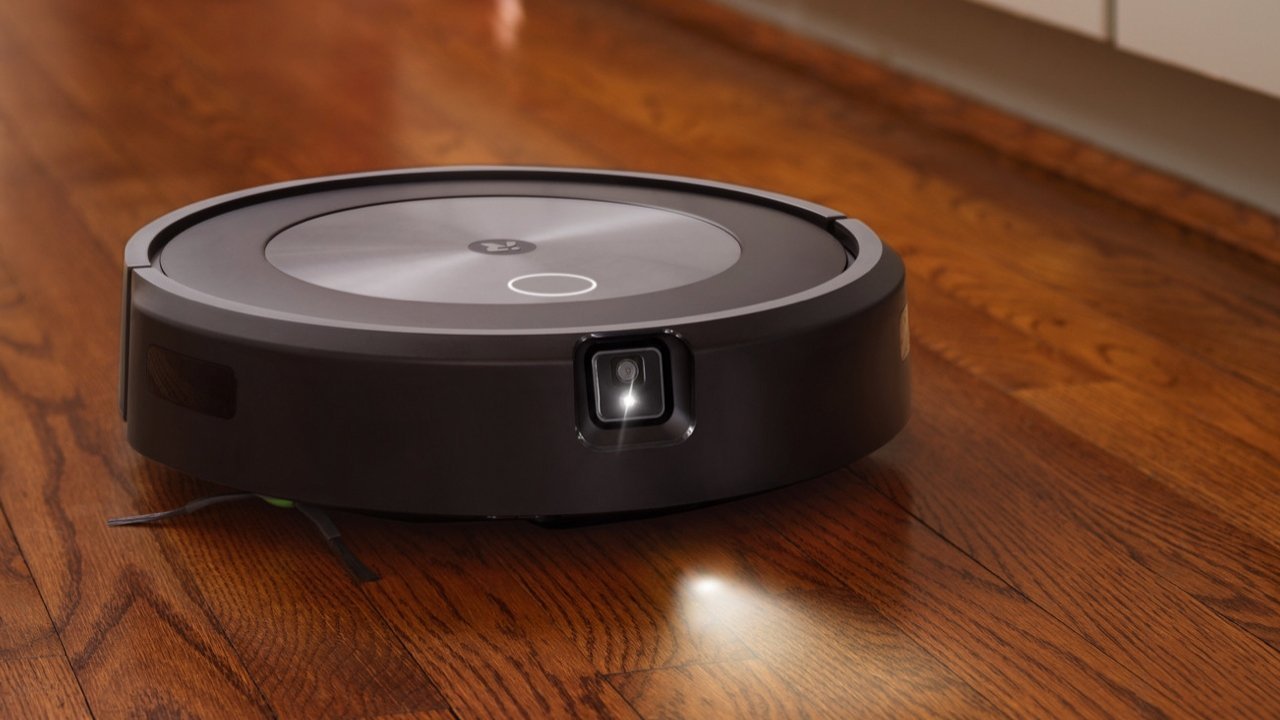
Roomba maker iRobot has filed for bankruptcy protection and will change its ownership, but your robot vacuum cleaners will probably be fine.
On Sunday, iRobot confirmed that it had commenced a pre-packaged Chapter 11 bankruptcy protection process. After warning its cash balance was running close to empty, it inevitably ran out, and has to fight for its survival.
The third-quarter financial results in November confirmed the company was in trouble, with it having less than $25 million in cash and equivalents, as well as an almost $50 million drop in quarterly revenue.
The plan under the pre-packaged process will see it taken on by new owners. This includes entering into a court-supervised "Restructuring Support Agreement" with Shenzhen Picea Robotics Inc and Santrum Hong Kong co. limited, Ltd., collectively referred to as Picea.
Under the agreement, Picea will gain 100% of the equity interests in iRobot, taking complete ownership. It is expected that the Chapter 11 process will be completed by February 2026, if there isn't any outside or court interference.
While Picea isn't really a household name in the West, it is closely linked to iRobot. It has served as the main manufacturer for the company's robot vacuum lines. BBC News reports that Picea has more than 7,000 employees around the world, including research and development and production facilities in China and Vietnam.
On its own, Picea has sold more than 20 million robot vacuum cleaners.
Gary Cohen, CEO of iRobot, called the announcement a "pivotal milestone" in securing the company's future. The move will strengthen its financial position and ensure continuity for consumers and its partners.
Rising tariffs, lowering value
The event is a seismic shift for a once highly valued company. With a hold of about 42% of the U.S. market and 65% in Japan, it should've been in a good position.
Indeed, it was valued at approximately $3.56 billion in 2021. However, as of December, it's now valued at an estimated $140 million.
The woes stem from multiple factors, including increased competition from rival firms. To try and compete, iRobot invested in new technology for its products and cut its prices, reducing its margins.
Tariff changes in the United States, a year-long news story that dominated 2025, also contributed to its downfall. Import duties of 46% on goods from Vietnam contributed about $23 million to iRobot's costs for the year.
Indeed, while the current plan to transfer ownership may be seen as being a relatively cheap deal for Picea. In 2022, there was an attempt by Amazon to acquire iRobot for a more impressive $1.7 billion, a deal scuppered by regulatory interference.
Robots will keep cleaning
For consumers, a company filing for Chapter 11 protections could be considered a death knell. For smart home products, this is particularly bad news.
Roombas, much like other robotic vacuum cleaners, connect to company servers so they can be managed. It allows consumers to set schedules and to otherwise remotely control the cleaner.
If a company goes out of business, its servers are usually disabled, which can severely affect products that are actively in use.
A major example of this was Embodied's Moxie robot, an AI-based companion for children that used cloud processing of large language models. Parents faced the prospect of explaining to their children why their digital friend had stopped working, until efforts were made to work around the cloud server problem.
Neato ceased operations in 2023, but its servers remained active until October 2025, thanks to efforts by parent company Vorwerk.
In the case of iRobot, an imminent server shutdown won't be a real concern here. As part of the handover, the company's "continuity" claims should mean that servers will continue to operate after ownership passes to Picea.
During the Chapter 11 process itself, iRobot foresees it will "continue operating" as normal, with "no anticipated disruption to its app functionality, customer programs," and ongoing product support.
At the very least, consumers have a few more months of usage. Beyond February, it will depend entirely on Picea upholding its promises.