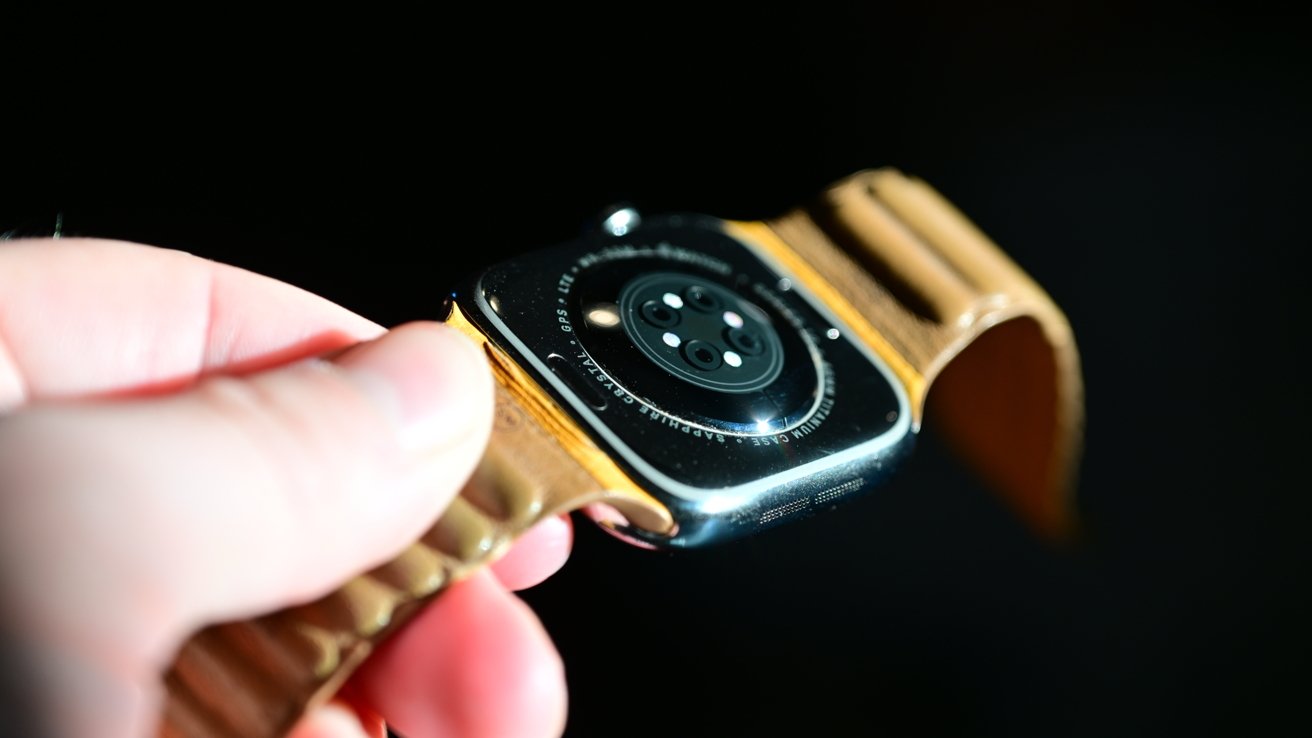
Apple has picked up another win in its legal battle with health tech firm AliveCor, this time over antitrust claims relating to the Apple Watch.
The new win, detailed in a January 8, 2026, decision by the Court of Appeals for the Ninth Circuit, brings an end to AliveCor's antitrust claims. It argued that Apple held a monopoly over access to the Apple Watch's heart rate monitoring tech.
This comes after AliveCor's patents related to similar technology were thrown out. The company had claimed the Apple Watch's heart rate sensor tech infringed upon those patents, causing the atrial fibrillation detection feature to be temporarily removed from some models in the United States.
Those same patents were later invalidated, prompting AliveCor to go the antitrust route. A route that has now been closed, bringing an end to a battle that began in 2020.
Alleging monopolization
Writing in the opinion, Judge Michelle Friedland noted that the "panel affirmed, on different grounds, the district court's summary judgment in favor of Apple Inc. in medical-technology company AliveCor's antitrust action alleging monopolization in violation of Section 2 of the Sherman Act."
The opinion continues to set the scene, explaining that while Apple ditched an Apple Watch algorithm used by AliveCor's SmartRhythm to detect atrial fibrillation, it did share details on its replacement.
Around the same time, Apple launched a similar feature to detect irregular heart rhythms. The new feature used a third algorithm, while support for the older one used by AliveCor's SmartRhythm was ended.
AliveCor argued that Apple's refusal to allow it to continue using the original heart rate algorithm data was an antitrust issue. The original rulung agreed with Apple — and so did the appeals court.
Ultimately, the court is of the belief that Apple's decision "was properly classified as a refusal to deal." Essentially, Apple was adjudged to be within its rights when it chose not to give AliveCor access to its data.
Further, the judgment notes a "general rule that there is no antitrust duty to deal." This allows Apple to choose what sensor data is given to whom.
AliveCor was found to be unable to establish an exception to that rule.
"Because AliveCor has not done so here, AliveCor's Section 2 claims fail as a matter of law," the opinion explains. That alone should bring an end to the company's antitrust claims.
That's assuming they don't appeal to the Supreme Court.