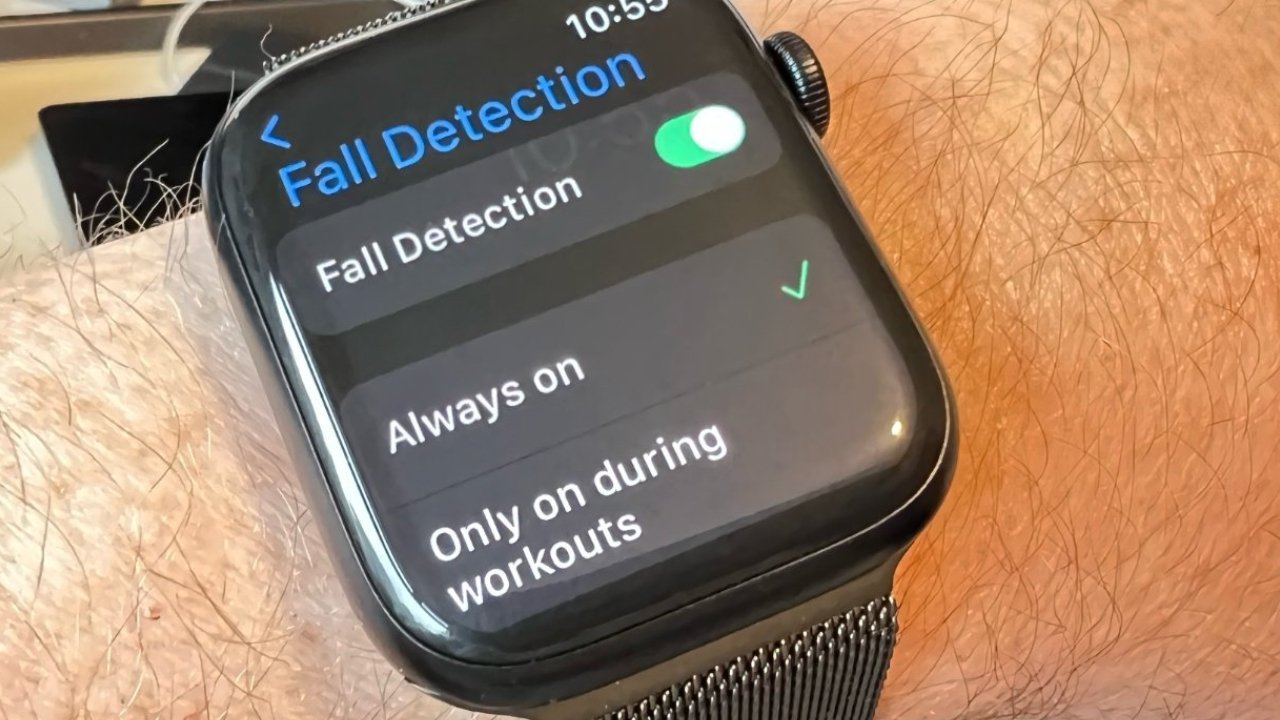
Fall detection wearable specialist UnaliWear says that Apple Watch and just about every other smartwatch ever made infringes on its fall detection patents. It's in for a long and costly battle.
There have been many patent disputes over the Apple Watch, including ones by patent trolls, and more famously by health firm Masimo. That company recently won $634 million at trial, after initially complaining to the US International Trade Commission (USITC).
UnaliWear of Austin, Texas, has now complained to the USITC, specifically over fall detection. The company maintains that its patents have been infringed by:
- Apple
- Samsung Electronics
- Garmin
In the case of Samsung, the complain specifies both the firm in Korea and its US division. For Garmin, the complaint concerns three divisions worldwide.
The complaint was filed on December 12, 2025, and added to on both December 31, 2025, and January 5, 2026. It says that the companies have infringed section 337 of the Tariff Act of 1930, which regards intellectual property rights, and is the same act that Masimo used.
Specifically, this act regards the ability of the ITC to ban imports into the US of infringing devices, or devices that include infringing components. The ITC's notice is of an intent to investigate, so there are no further details of the complaint.
Instead, the ITC has instructed Apple and the others to respond within 20 days. As yet, none of the accused companies have commented publicly.
UnaliWear's watches
UnaliWear was formed in 2013 and produces a range of smartwatches called the Kanega Watch. The watches sell for $299, and there is an annual subscription of $779.40.
The entire selling point of the Kanega Watch appears to be this fall detection feature. So, this is not a case of patent trolling, as UnaliWear is a genuine manufacturer.
Its products do squarely compete against the Apple Watch, at least in terms of fall detection. The company's website runs a standard comparison chart, though, which has some dubious claims.
For instance, it says that the Kanega Watch offers "3 ways to get help: button, voice, or fall detection," and that the Apple Watch does not. This is a questionable claim at best.
It also presents "no tiny touchscreen" as a benefit over Apple's product. No touchscreen is somehow better, apparently.
What happens next
Without knowing the specific details of UnaliWear's case, it does appear to have grounds for the complaint based on the vague patents that we reviewed this morning. But, right or wrong, it is going to face many years of legal costs and it will likely all come down to interpretation of that vagueness of the filed patents.
Masimo, for instance, had more specificity, and did win $634 million, but that was far from guaranteed. It did also briefly win a ban on sales of the Apple Watch in the US.
In that case, the ITC upheld Masimo's complaint that Apple had violated parents and also stolen trade secrets, regarding the Apple Watch blood pulse oximeter.
The result of this was that the ITC imposed a ban, but to end it, Apple turned off the feature on Apple Watches sold in the US. Eighteen months later, as the legal cases continued, Apple brought the feature back, although without explaining how it was circumventing the ruling.
And, Masimo's patents are under new legal challenges, and may yet be invalidated. We'll certainly be hearing more about that in 2026.
Masimo has, to date, spent over $100 million in legal fees. Consequently, this is a protracted and expensive case, perhaps made more so by UnaliWear taking on Google, Samsung, and Garmin as well as Apple.
UnaliWear could presumably have filed a complaint at any time since 2018 when the Apple Watch Series 4 added fall detection. The fact that it has waited eight years to take legal action suggests that it may have tried other remedies, such as talking with the companies.
We may not know that until, or if, this case goes to trial. We've reached out to UnaliWear, and Apple, for comment.