Apple has secured a partial win in a lawsuit claiming it violated privacy laws in California, but the ruling came down to technicalities and sloppy preparation rather than on merit.
Apple stands accused of violating the privacy of iPhone owners in California by collecting data on its users using its first-party apps, based on a report from developers Mysk in 2022. While the case is still ongoing, Apple has managed to get some of the claims dismissed from the overall lawsuit.
In a filing to the U.S. District Court for the Northern District of California in San Jose on January 20, the court granted a motion from Apple to dismiss some of the claims. The filing, shared by Bloomberg Law, says the court agrees with Apple that it shouldn't face a number of elements in the lawsuit.
While this may seem like a vindication of Apple's practices, the reality is that it's more a failure on the plaintiff's side.
Apple fights off the claims because of legal definitions and failures on the side of the plaintiffs suing it, instead of proving to the court that it's in the right.
First party data collection
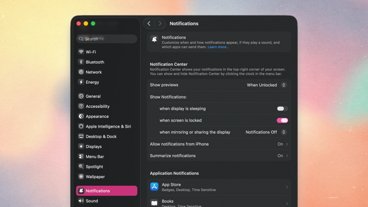
The lawsuit alleges that Apple improperly collects user device data when users interact with first-party applications, including the App Store, Apple Music, Apple TV, Books, Stocks, and Game Center apps. Apple is also accused of misleading consumers into believing certain settings would limit Apple's collection of the data, on the belief that the settings didn't really do anything at all.
There are accusations that Apple violates the California Invasion of Privacy Act (CIPA) as well as Pennsylvania's Wiretapping and Electronic Surveillance Act (WESCA), a constitutional invasion of privacy, and California Unfair Competition Law (UCL), breach of implied contract, among others.
Apple petitioned the court to dismiss based on the complaints failing to meet the court's rules. The complaints must contain "sufficient factual matter" to be accepted as plausible, and must meet a standard to be acceptable in the first place.
The court agreed, dismissing claims based on a number of arguments, largely centered on the accusations failing to satisfy the court in their current form.
This includes contradictions on the definition of a "pen register," the actual recording element, and the capabilities of said instrument when applicable to the claims of the lawsuit. Claims over confidential communication are also disregarded as expectations that no usage data would be sent to Apple is "objectively unreasonable," and plaintiffs failed to prove otherwise.
There were also dismissals based on a lack of detail in the wiretapping allegations. This includes defining an intercepting "device" under WESCA, the collection of "contents", and that WESCA defines that there is no interception if the accused is a direct party to the communication in the first place.
Not a closed case
While numerous claims are rejected by the court, it doesn't actually end the case entirely. In part because the court is giving a final Hail Mary to the plaintiffs.
"It is doubtful whether Plaintiffs can sufficiently plead their dismissed claims given the deficiencies addressed in this Order, which have remained despite Plaintiffs' having had an opportunity to amend," writes Judge Edward J. Davila.
Despite the damning comment on the failures in the lawsuit's claims, the court still grants a last chance to fix things, "out of an abundance of caution." There's a 30-day window for an amended complaint to be submitted.
Given Judge Davila's comments disbelieving that the claims could be made to work, it seems probable that the claims won't come back to haunt Apple as the rest of the lawsuit continues.