
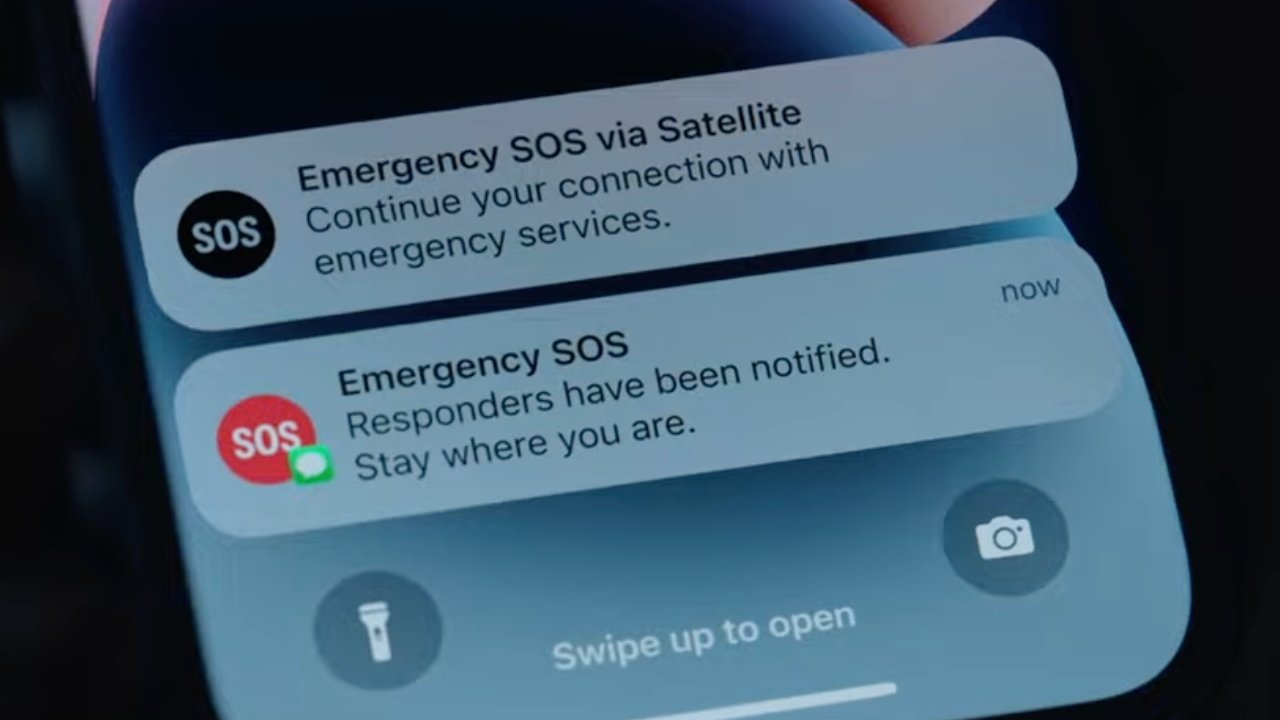
Apple's Emergency SOS via satellite helped rescue six skiers after an avalanche near Lake Tahoe on February 18, according to California emergency officials.
Authorities said the group maintained contact with rescuers for roughly four hours despite having no cellular coverage in backcountry terrain. The rescue offers a clear real-world example of Apple's satellite emergency system in a life-threatening situation.
An avalanche hit a guided ski group in Nevada County, California, near Lake Tahoe, leaving six survivors stranded without cell service. They managed to contact rescuers using Apple's Emergency SOS feature on the iPhone and a separate emergency beacon.
Don O'Keefe, law enforcement chief for the agency, said one of his personnel communicated with a guide for roughly four hours. Information relayed through the iPhone helped coordinate the response with the Nevada County Sheriff's Office.
Officials didn't say the iPhone feature alone completed the rescue, as reported by The New York Times, but they did confirm it played a direct role. It helped maintain two-way communication during a critical window while crews assessed conditions.
How Emergency SOS via satellite works
Apple introduced Emergency SOS via satellite with the iPhone 14 lineup in 2022. The feature allows users to send text messages to emergency services when cellular and Wi-Fi networks are unavailable.
You need to be outside with a clear view of the sky and horizon for your iPhone to connect to a satellite. Apple suggests trying a regular emergency call, like 911 in the U.S., before using satellite text if the call doesn't go through.
In the United States, the feature needs iOS 16.1 or later and works on iPhone 14 and newer models. Apple offers the service for free for two years after activation, but they haven't shared the long-term pricing for other regions yet.
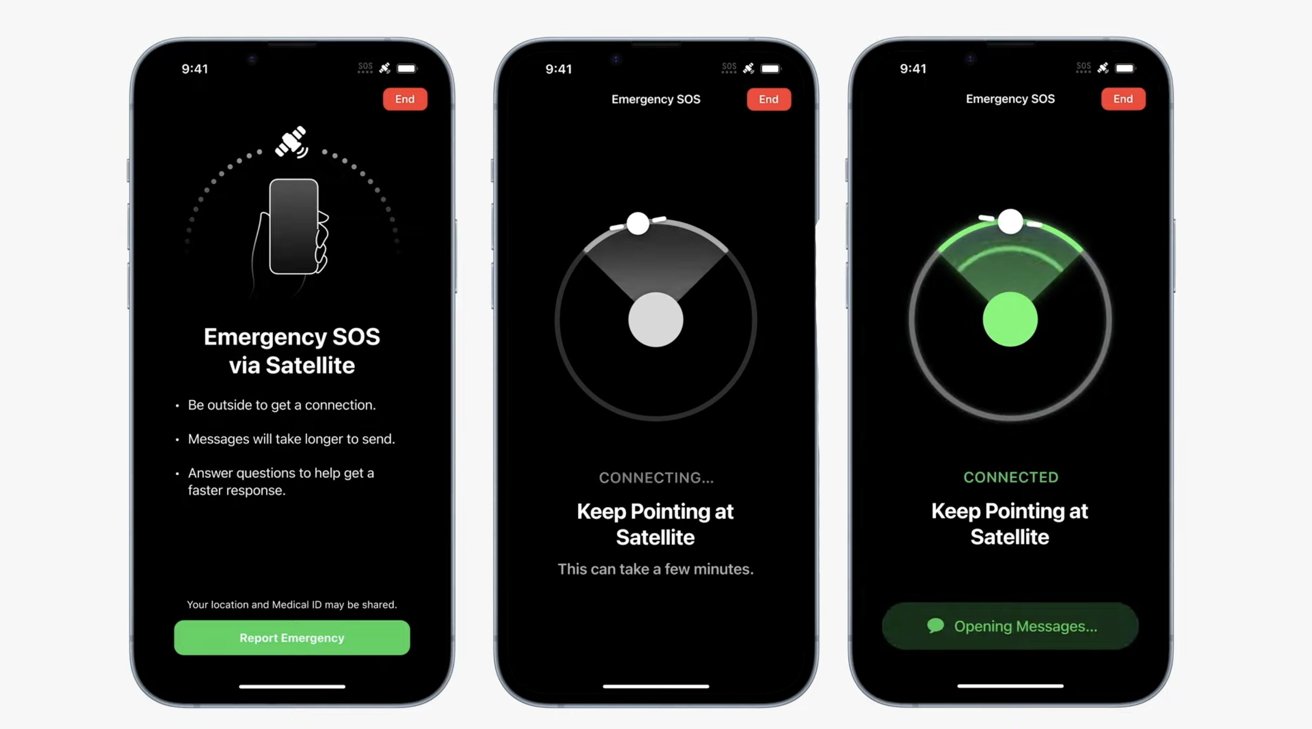
You need to be outside with a clear view of the sky and horizon for your iPhone to connect to a satellite.
Emergency responders who receive satellite texts can ask for details like precise location and remaining battery life. Those details help crews plan their approach and prioritize resources in remote terrain.
Law enforcement confirmation adds weight
Apple has consistently described satellite connectivity as an emergency safeguard rather than a general communications replacement. The Lake Tahoe rescue provides confirmation from state emergency officials that the system functioned as designed in a prolonged backcountry emergency.
Mountain regions in the Sierra Nevada frequently lack reliable cellular coverage. Satellite texting bridges the gap between no signal and full network access, offering limited but critical communication when traditional networks fail.
Officials described sustained, two-way communication that allowed rescuers to coordinate timing and permitted actions during the four-hour response window.
Apple was the first major smartphone vendor to deploy consumer satellite emergency texting at scale in the United States. Competitors have since followed, with certain Google Pixel 9 models and all Pixel 10 models offering satellite emergency messaging capabilities.
Satellite connectivity is becoming a standard safety layer in premium smartphones. Manufacturers are prioritizing emergency satellite features even as broader satellite messaging remains limited.