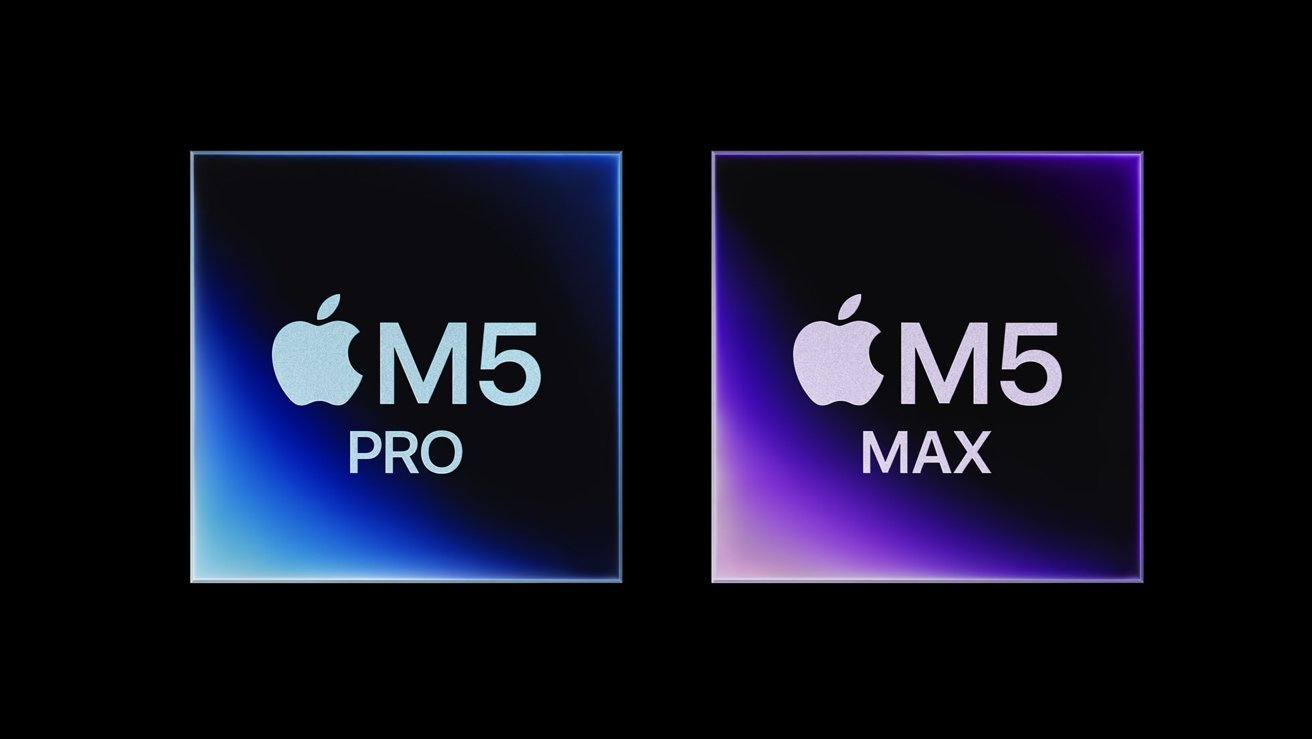
On Tuesday, Apple introduced M5 Pro and M5 Max, debuting a dual-die Fusion Architecture that pushes Apple Silicon further into AI-heavy professional workflows on the latest MacBook Pro. Here's how.
The new chips combine two third-generation 3-nanometer dies into a single system on a chip, expanding CPU performance, GPU compute, and unified memory bandwidth. Preorders begin March 4, with availability starting March 11.
Apple describes the shift as more than a routine core bump, framing it as a structural change in how MacBook Pro-class silicon scales.
M5 Pro and M5 Max connect two separate dies inside one processor package using advanced packaging technology. The approach bonds the dies with ultra-high-bandwidth, low-latency interconnects so macOS treats them as a single unified chip.
Apple previously scaled performance by enlarging a single die or adding cores within it. Moving to a dual-die design inside a laptop-class processor mirrors the approach used in Ultra-class desktop chips.
M5 Pro and M5 Max CPU performance targets pro multithreaded workloads
Both chips feature an 18-core CPU with six high-performance "super cores" and 12 new performance cores optimized for multithreaded tasks. Apple says the new architecture delivers up to 30% higher performance in pro workloads compared with M4 Pro and M4 Max.
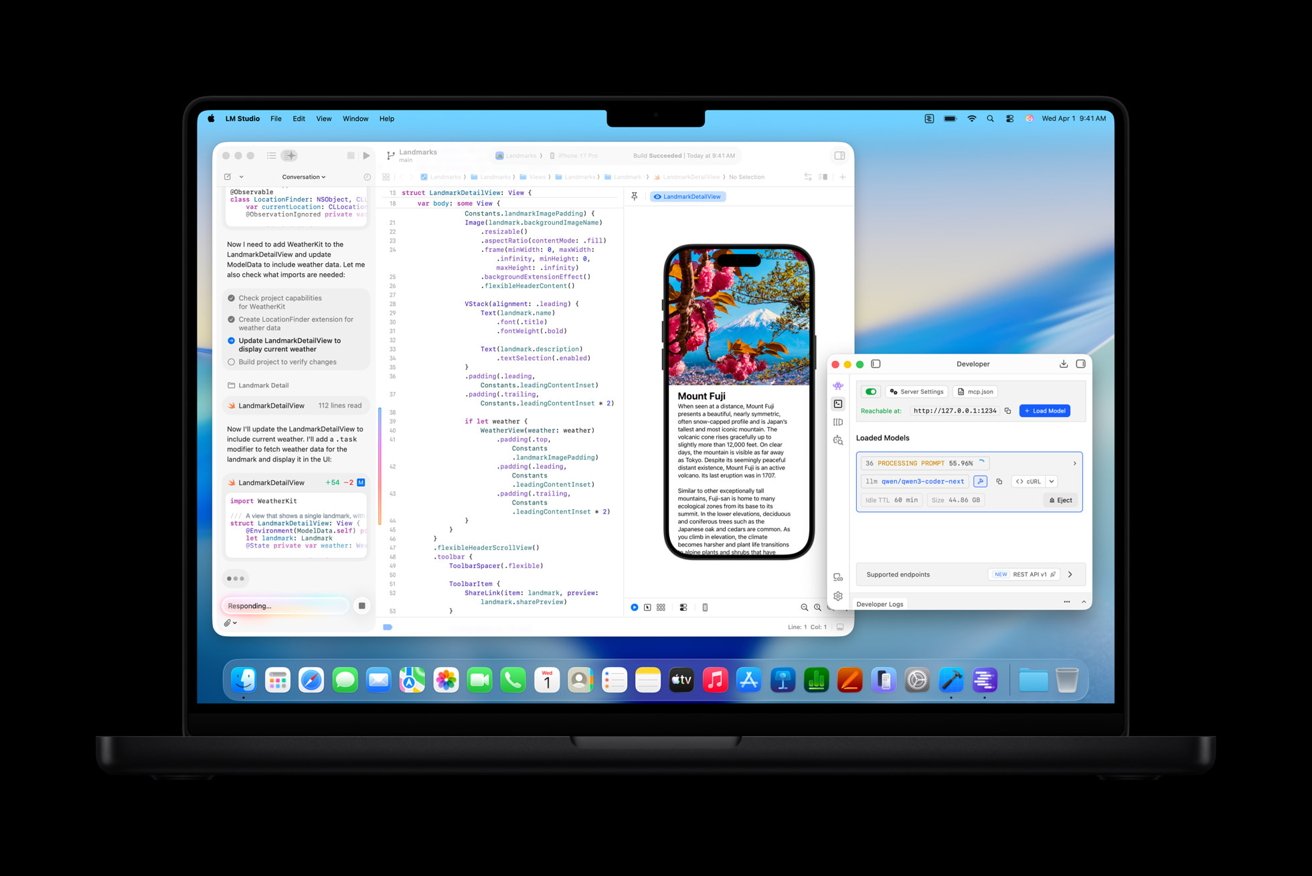
Apple previously scaled performance by enlarging a single die or adding cores within it
Apple also claims up to 2.5 times higher multithreaded performance than M1 Pro and M1 Max. As with all vendor benchmarks, real-world gains will vary depending on the software and workload.
GPU and AI performance gains drive Apple Silicon strategy
Graphics and AI acceleration are central to M5 Pro and M5 Max. M5 Pro supports up to a 20-core GPU, while M5 Max scales to 40 GPU cores.
Apple says each GPU core includes a Neural Accelerator, contributing to more than four times the peak GPU compute for AI compared with M4 Pro and M4 Max. The company also claims up to 35% faster ray tracing on M5 Pro and up to 30% faster ray tracing on M5 Max compared with their M4 counterparts.
The dedicated 16-core Neural Engine has also been updated, separating system-level machine learning tasks from GPU-based AI compute. Apple is leaning heavily into on-device AI development and inference as a differentiator for MacBook Pro.
Unified memory bandwidth expands for AI and large language models
M5 Pro supports up to 64GB of unified memory with bandwidth of up to 307GB per second. M5 Max increases that ceiling to 128GB of unified memory and up to 614GB per second of bandwidth.
Higher bandwidth is essential for tasks like large language models, high-resolution video editing, and complex 3D scenes. In those workflows, moving data quickly can matter as much as adding more cores.
Apple also introduced Memory Integrity Enforcement, an always-on memory safety feature designed to block certain classes of exploits without affecting performance.
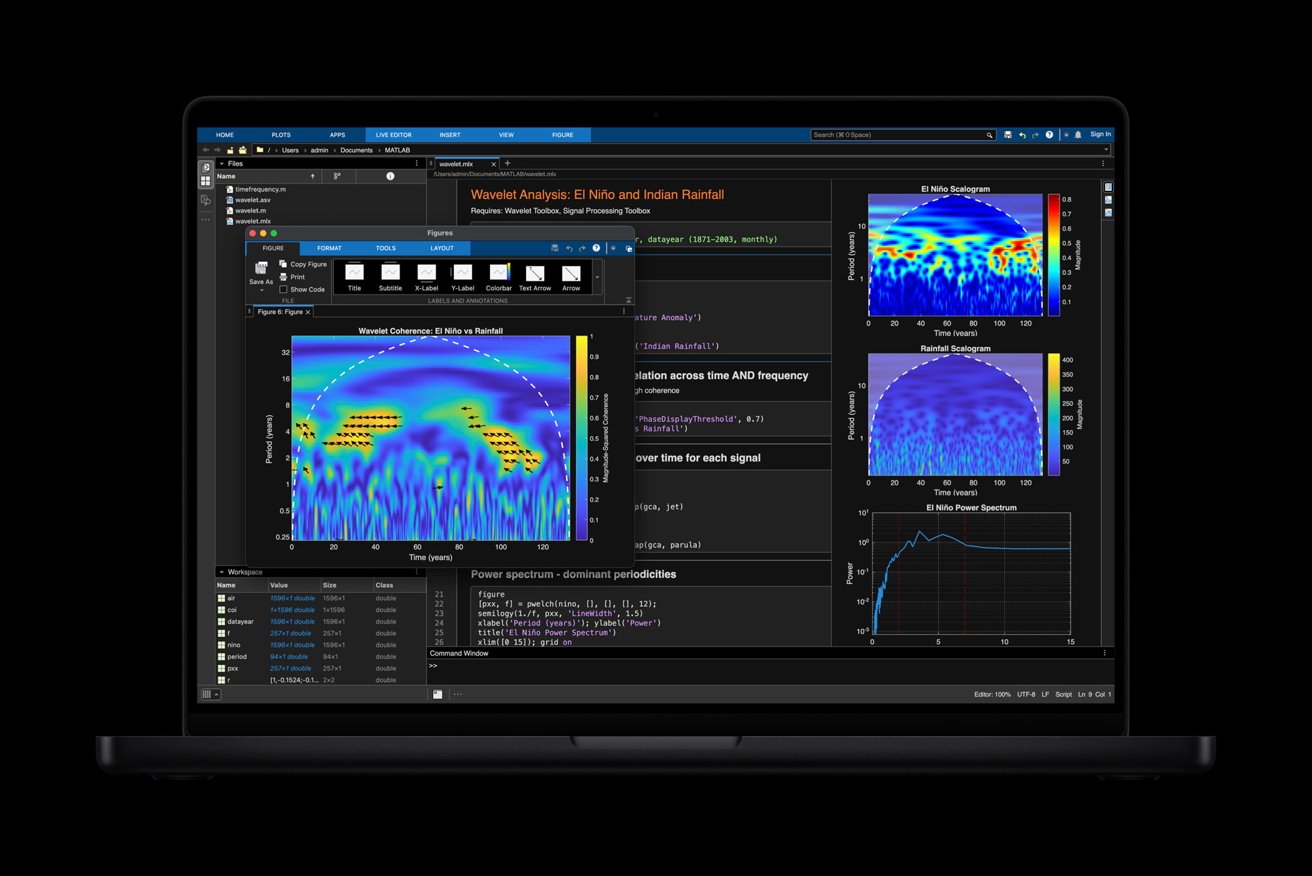
Both chips feature an 18-core CPU with six high-performance "super cores" and 12 new performance cores optimized for multithreaded tasks
Both chips support Thunderbolt 5, with each port backed by its own on-chip controller to reduce bandwidth contention. Professional users connecting multiple high-resolution displays or high-speed external storage should see more consistent sustained performance.
Apple introduced an updated Media Engine that includes hardware-accelerated H.264 and HEVC, along with AV1 decode support. It also features ProRes encode and decode engines, giving users more hardware acceleration options for modern video codecs.
Why M5 Pro and M5 Max matter for Apple Silicon and pro laptops
M5 Pro and M5 Max extend Apple's vertical integration strategy by scaling up Apple Silicon without discrete GPUs. The dual-die Fusion Architecture keeps performance gains within the MacBook Pro form factor, avoiding high-end capabilities for desktops.
M5 Max is expected to power a future Mac Studio refresh, continuing Apple's pattern of using "Max" chips in high-end MacBook Pros and compact desktops. Apple hasn't announced an Ultra-class M5 variant, and it's unclear if a dual-die-to-dual-die scaling approach similar to prior Ultra chips will return this generation.
While not revolutionary, the shift represents a meaningful evolution in Apple's approach to performance, bandwidth, and AI acceleration. Tighter integration and higher memory throughput aim to keep MacBook Pro competitive in the premium pro laptop market.