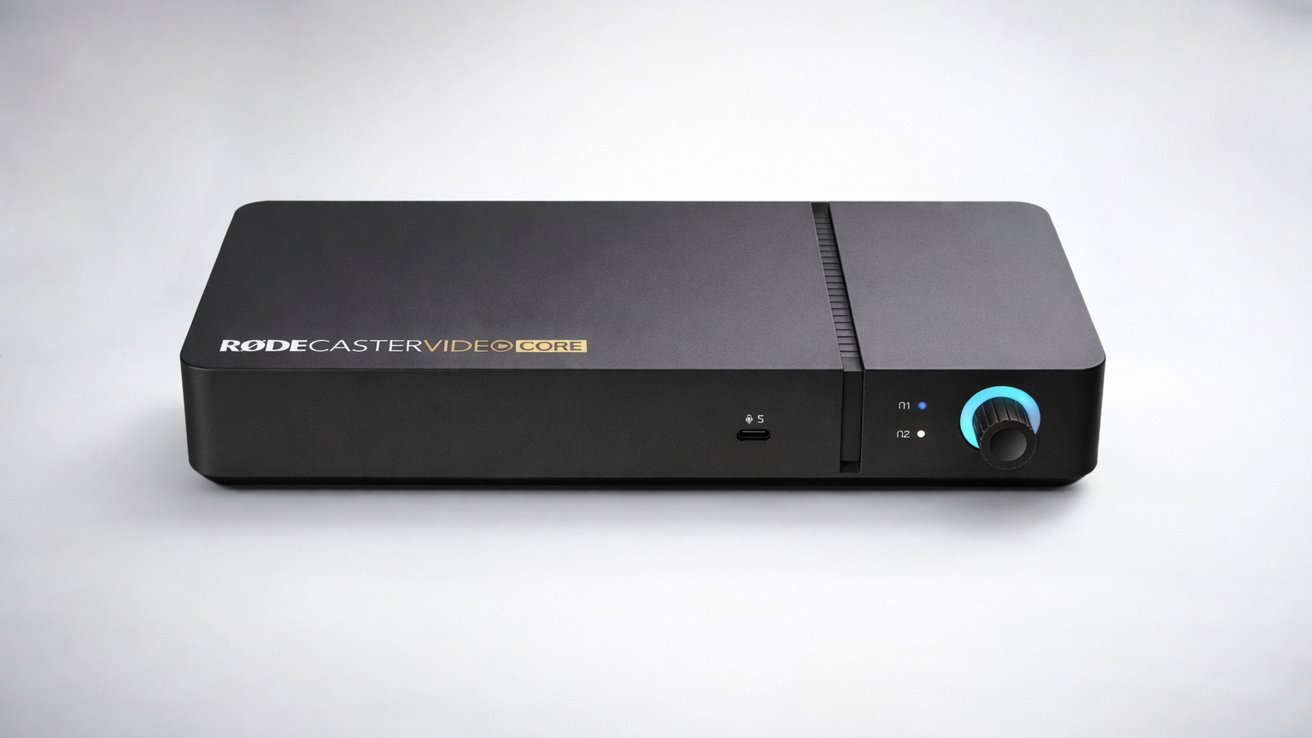
The new RodeCaster Video Core brings iPhone and Mac video switching, audio mixing, recording, and streaming to a single hardware mixer.
Creators can place the console alongside a Mac or iPhone as the center of a small studio setup. Rode says the goal is to simplify production without requiring traditional broadcast gear.
The console also works with Rode Capture to turn an iPhone into a dedicated production camera. Creators who already rely on Apple devices can integrate an iPhone directly into a video workflow.
Turning an iPhone into a production camera
The RodeCaster Video Core crucially delivers support for using an iPhone as a video source. The console works with the free Rode Capture app, to allow an iPhone to act as a camera for podcasting and livestream setups.
The configuration supports dual-camera streaming from an iPhone, enabling creators to build flexible production setups without buying dedicated cameras. Modern iPhone cameras already deliver quality high enough for many professional video productions.
The workflow fits a growing creator ecosystem built around Apple hardware. Mac notebooks often serve as editing and streaming machines, while iPhones handle camera duties in small studios or remote recording environments.
All-in-one video switching and audio production
The RodeCaster Video Core combines tools normally spread across several pieces of production hardware. The console integrates video switching, a professional audio mixer, streaming tools, and recording capabilities in a single desktop unit.
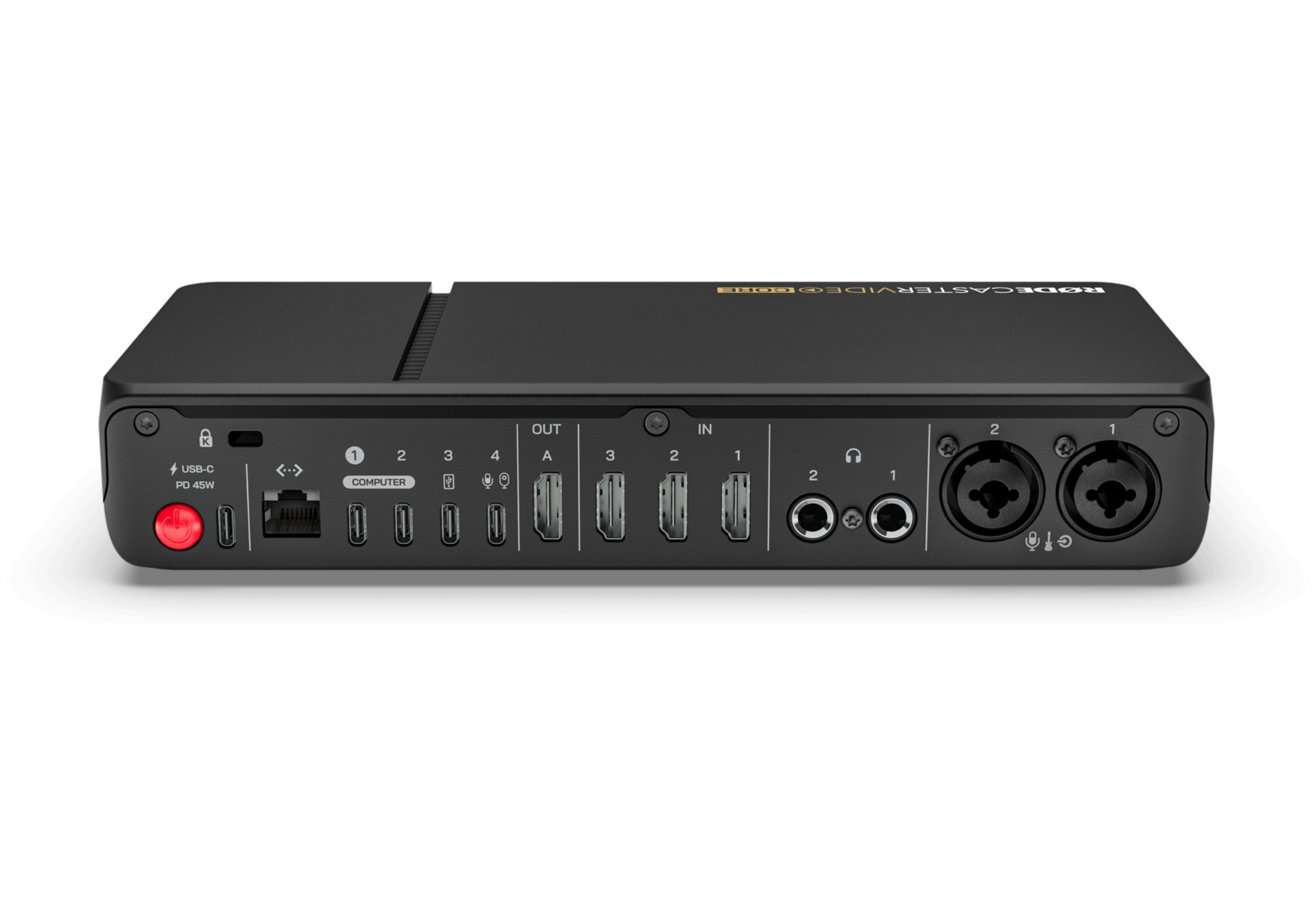
The console also works with Rode Capture to turn an iPhone into a dedicated production camera
The device supports up to four simultaneous video feeds and includes tools for scene building, transitions, graphics overlays, and automated switching based on active speakers. Video can be streamed directly to platforms such as YouTube and Twitch or recorded locally for later editing.
Two studio-grade combo inputs support microphones or instruments. Built-in processing includes EQ, compression, noise gating, and other audio effects designed to polish recordings before they reach editing software.
Ports and connectivity
The console supports several wired and network connections designed for small studio environments.
- 1 x HDMI output for preview, program, or multiview monitoring
- 1 x USB-C input for USB cameras or capture devices
- 1 x Ethernet port for network cameras and livestreaming
- 1 x USB port for recording to external storage
- 2 x USB-C ports for computers, audio devices, or Rode hardware integration
- 2 x Neutrik combo inputs for XLR microphones or instruments
- 2 x headphone outputs for monitoring
- 3 x HDMI inputs for cameras or video sources
The RodeCaster Video Core can also connect with the RodeCaster Pro II or RodeCaster Duo through RodeCaster Sync. The system allows creators to combine multiple consoles into a larger production setup that shares audio and video control.
Designed for video podcasts and creator studios
Rode markets the RodeCaster Video Core primarily to video podcasters, livestreamers, and small studio productions. Built-in tools allow creators to switch camera angles, design custom layouts, add graphics, and manage audio during live broadcasts.
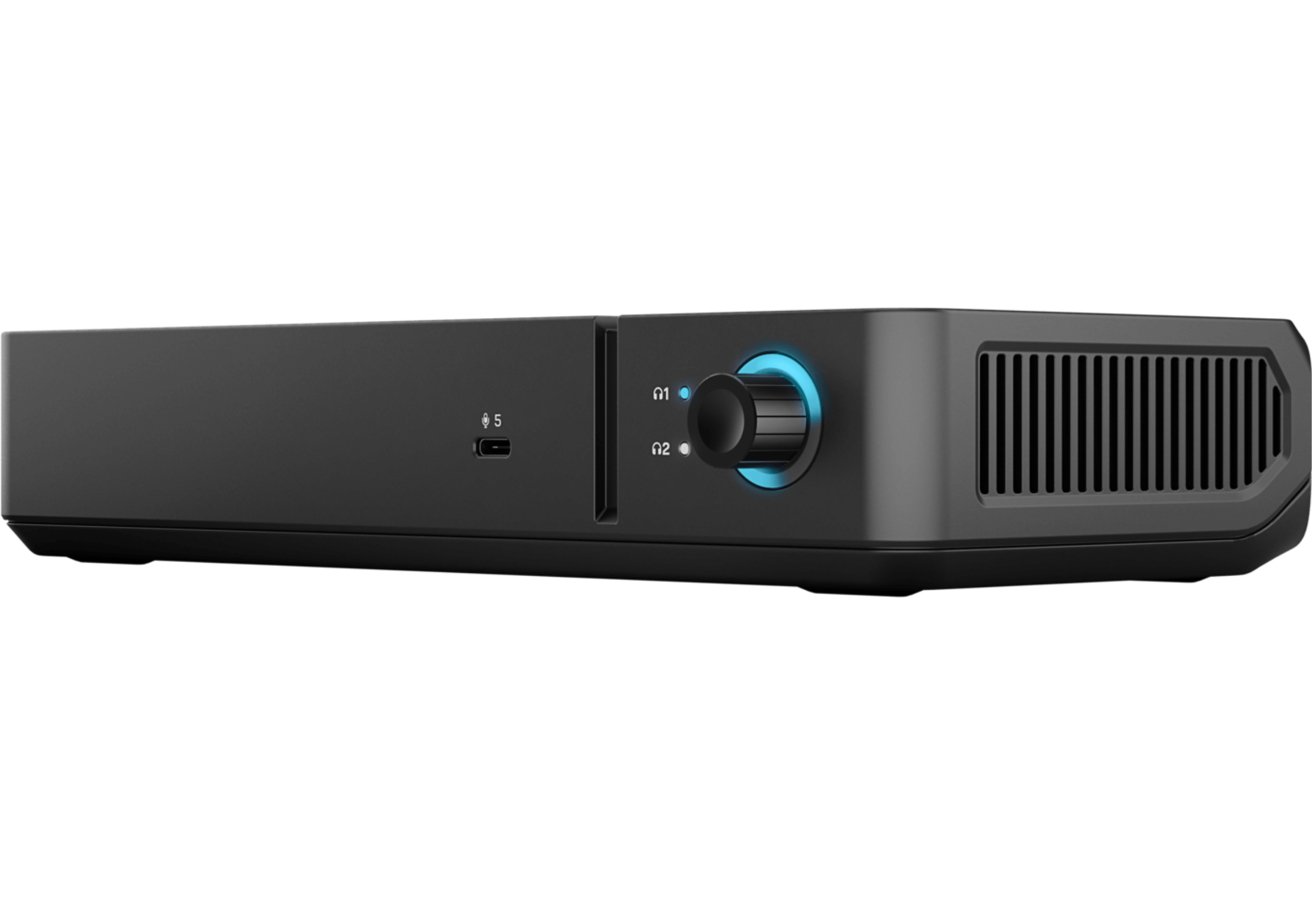
Rode markets the RodeCaster Video Core primarily to video podcasters
The console can also export timeline data for editing in DaVinci Resolve, helping creators move from recording to post-production without rebuilding a project from scratch.
Rode has priced the RodeCaster Video Core at $599 on its website and through B&H PhotoVideo for preorder. For Apple users who already use an iPhone camera and a Mac for editing, the console transforms their setup into a compact studio.