
After hitting the Mac earlier, Perplexity's Comet browser is now on iPhone and focuses on using AI to summarize and extract information instead of relying on tabs, surfing, and search results.
The release follows a short prelaunch period with App Store listings and a March window. It builds on earlier versions on Mac and other platforms that positioned Comet closer to an AI interface than a conventional browser.
On iPhone, the focus shifts toward working with the information contained instead of just rendering pages.
Comet is built around Perplexity's answer engine, which sits alongside webpages and analyzes their content. You can ask questions about what you're reading, summarize long pages, or pull specific details without leaving the site.
The browser goes beyond acting as a simple window into the web and instead helps summarize and extract information from pages. On iPhone, it matters more because smaller screens and tab switching make it harder to compare sources and keep context.
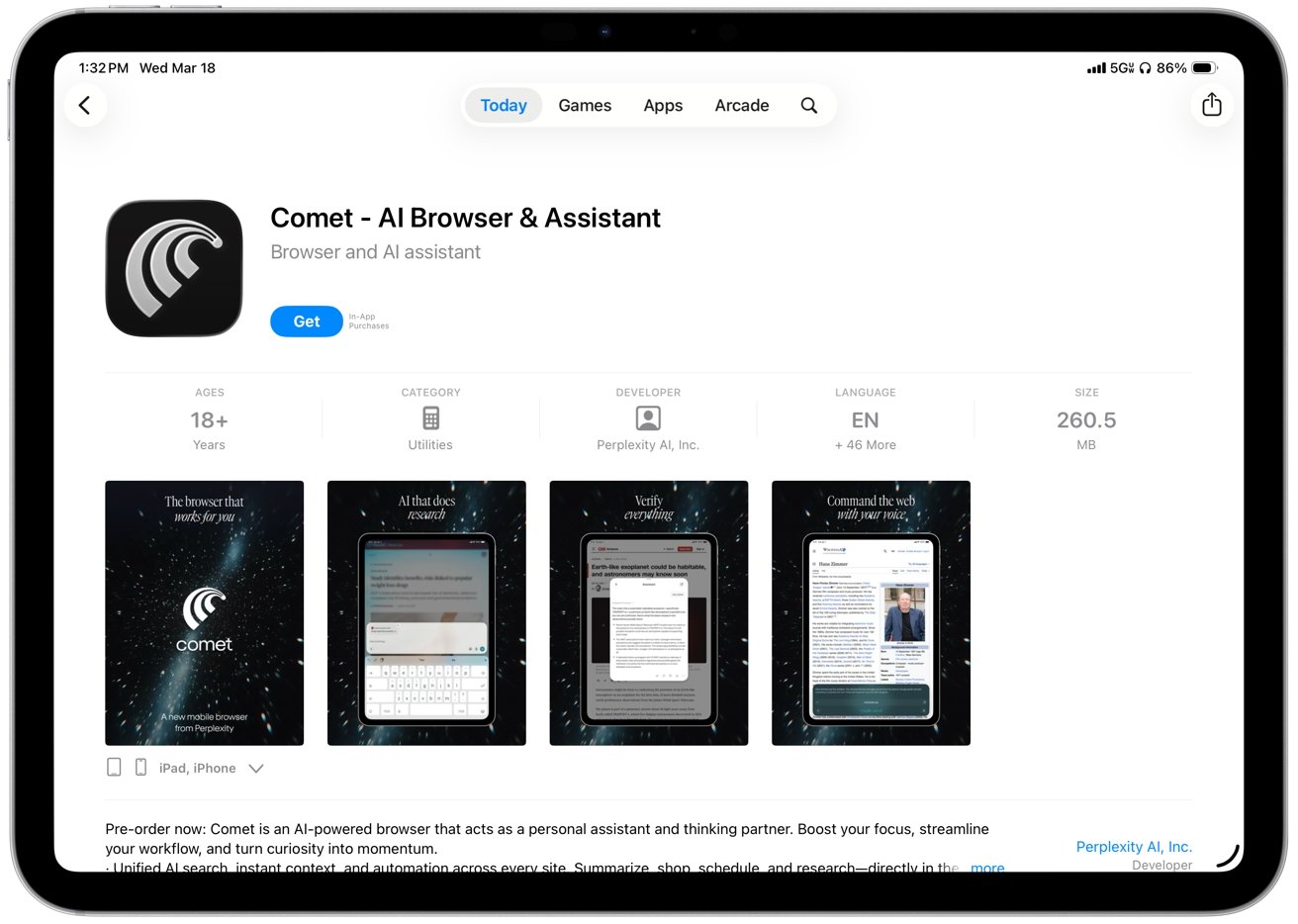
Comet is built around Perplexity's answer engine
Apple's platform rules mean every iOS browser must use WebKit, which limits how much Comet can stand out in performance or rendering. As a result, the product focuses on how information is presented and understood once a page loads.
For users, the benefit is speed and convenience, especially when working through dense pages that would otherwise require multiple searches. The tradeoff is relying on an AI layer to interpret the content, which raises questions about accuracy, bias, and how much context carries through.
Comet doesn't replace Safari but reframes what a browser does by focusing on how information is handled after it loads. Its success will depend less on page speed and more on whether users are comfortable with an assistant between them and their reading.