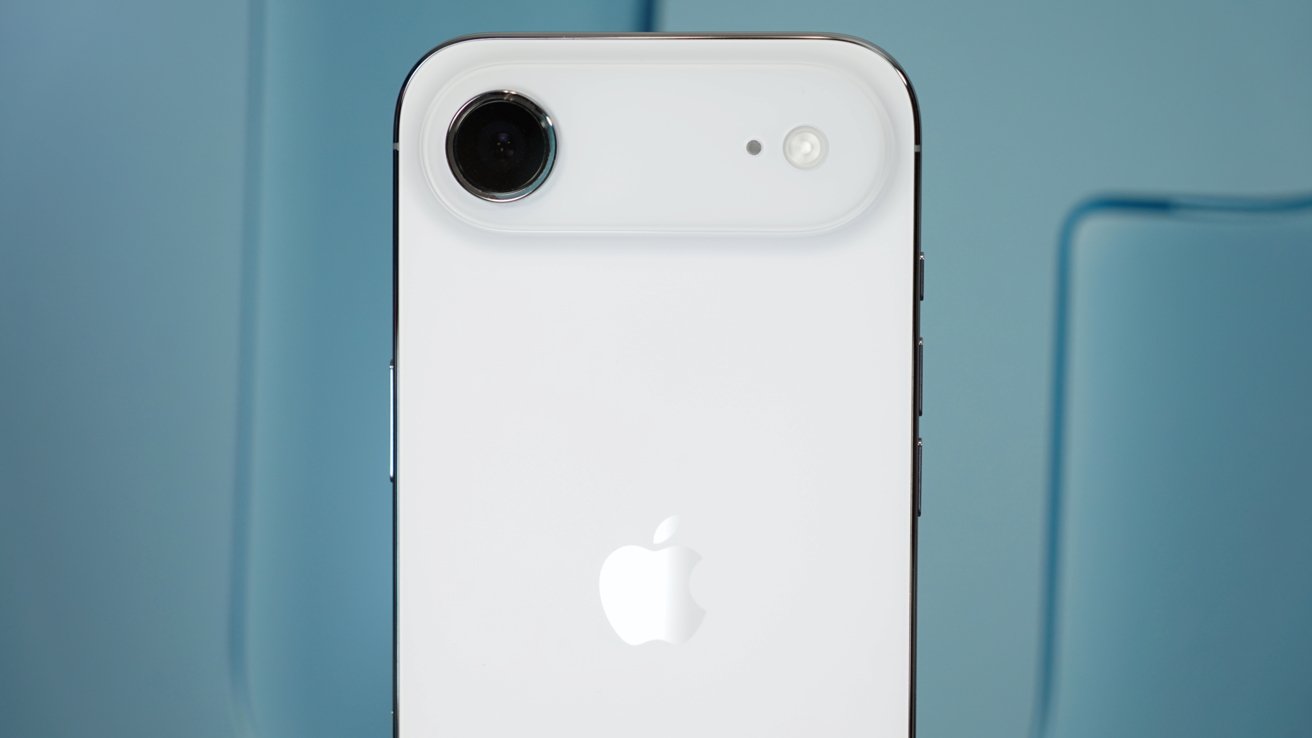
The iPhone Air has been a sales success for Apple according to cellular statistics, and has about more than doubled sales of the plus-sized ancestor.
After months of rumors surrounding the so-called failure of the iPhone Air, it is taking a larger role in Apple's lineup than the Plus models have for the last several years. Ookla data published March 22 shows it captures a much bigger share of active devices on the intervet when compared to the iPhone 16 Plus sold the year before.
Ookla's analysis of global Speedtest data from Q4 2025 places the iPhone 16 Plus at 2.9% of the iPhone 16 generation mix. The iPhone Air reaches 6.8% within the iPhone 17 lineup. The figures reflect active devices observed in real-world network testing.
Additionally, the data shows how the lineup is actually being used instead of how many units were shipped.
Those percentages carry more weight than they first appear because the iPhone 17 cycle has a larger overall sales volume than the iPhone 16 generation did. A higher share inside a bigger pool means a materially larger footprint for the iPhone Air.
iPhone Air strengthens Apple's mid-tier strategy
Apple's mid-tier iPhone has struggled to define its place between the base model and the Pro lineup, relying on screen size without a clear identity. The iPhone Air shifts that approach, offering a distinct position that resonates more clearly with buyers.
Ookla's data supports that shift, showing the mid-tier slot nearly doubling its share after the transition from the iPhone 16 Plus to the iPhone Air. Apple didn't just rename the category, it appears to have corrected a structural weakness that limited the role of the previous model.
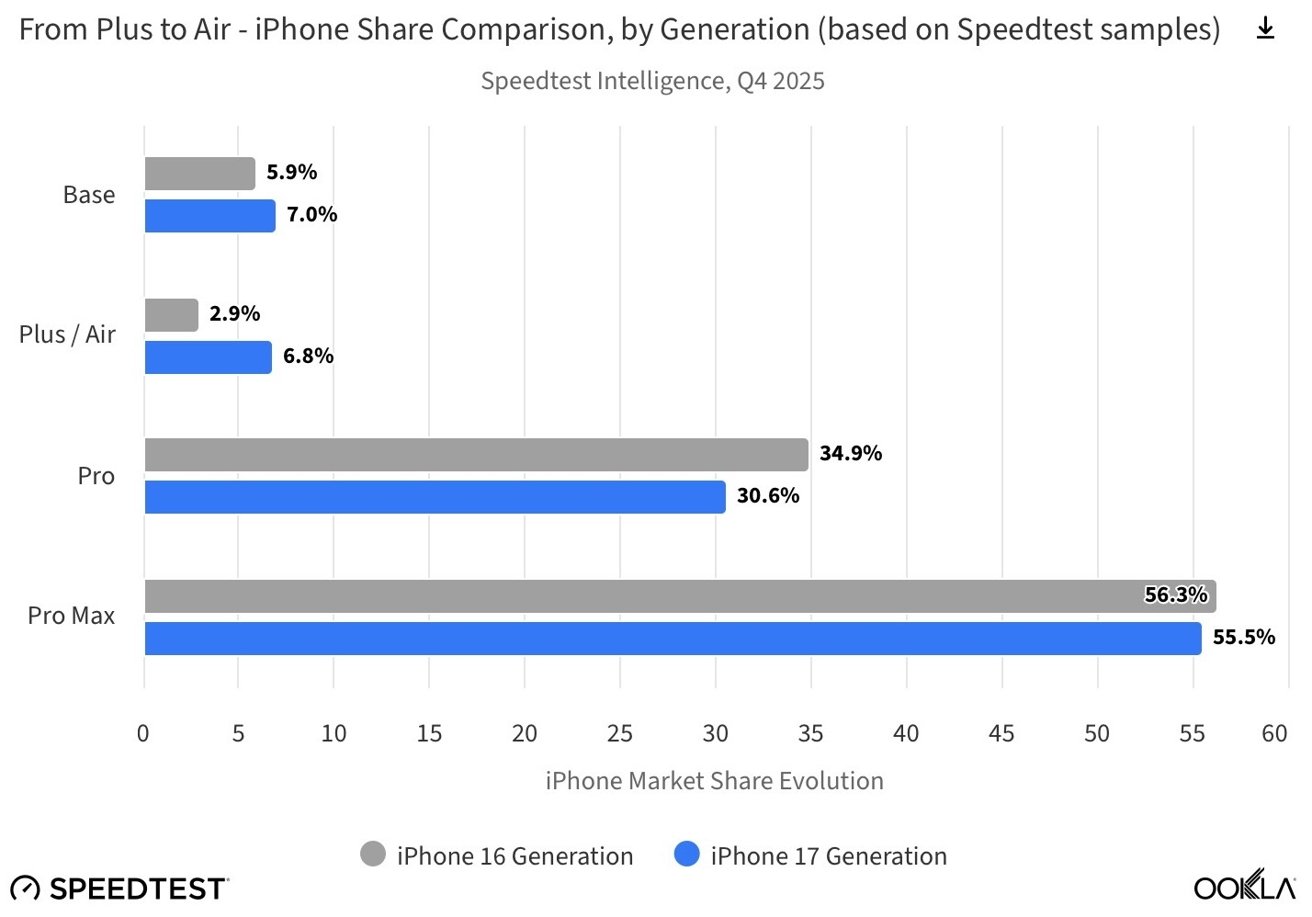
iPhone share comparison. Image credit: Ookla
The share movement in the data shows where the iPhone Air is pulling demand from, and it is not coming from Apple's most expensive devices. The iPhone 17 Pro Max holds essentially the same share as its predecessor, while the standard iPhone 17 Pro loses ground as the iPhone Air gains traction.
Buyers prefer the iPhone Air over the standard Pro model, sacrificing some high-end features for a clearer identity. Apple's lineup benefits from this strategy by preserving demand at the premium top models while strengthening the middle.
A more balanced iPhone lineup is emerging
Apple's base model gained share, rising from 5.9% to 7.0%, indicating a more navigable lineup without overlapping options. The structure now clearly defines an entry point, a mid-tier option, and a dominant premium range.
Regional trends show strong iPhone Air adoption in markets such as South Korea and Japan, where design and form factor tend to drive purchasing decisions. The U.S. shows a more distributed mix, which aligns with a wider range of preferences across Apple's lineup.
Ookla's dataset reflects usage rather than total sales, and regional differences can influence the overall mix, but the direction remains consistent. Apple replaced the iPhone 16 Plus with the iPhone Air, and was rewarded for its efforts.