
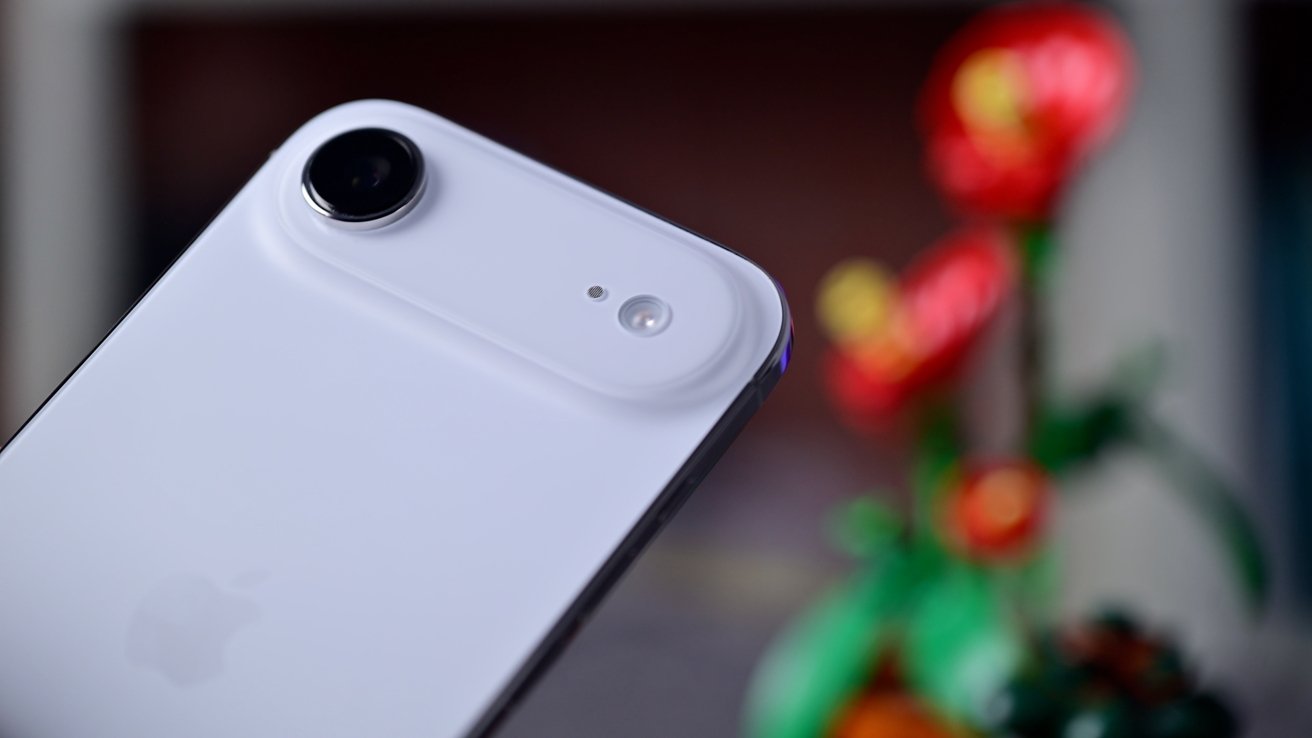
The iPhone Air with Apple's C1X modem delivers performance on par with Qualcomm's X80 chip while outperforming it in latency in the latest real world analysis.
Apple's custom C1X modem now matches Qualcomm in real-world performance, according to an Ookla report from March 22. The analysis, based on global Speedtest data from Q4 2025, shows Apple has closed the gap on download speeds.
It has also surpassed Qualcomm in latency, though it still trails in some upload scenarios. The progress of the C1X marks a significant step for Apple in the modem market.
The findings represent a turning point in Apple's effort to replace Qualcomm modems with its own silicon. After years of lagging behind, Apple is now competing at the top end of smartphone connectivity instead of just catching up.
Ookla's data shows the C1X modem delivers download speeds similar to Qualcomm's X80 in various real-world conditions. The data includes strong signal environments and more challenging scenarios with congested networks or weaker coverage.
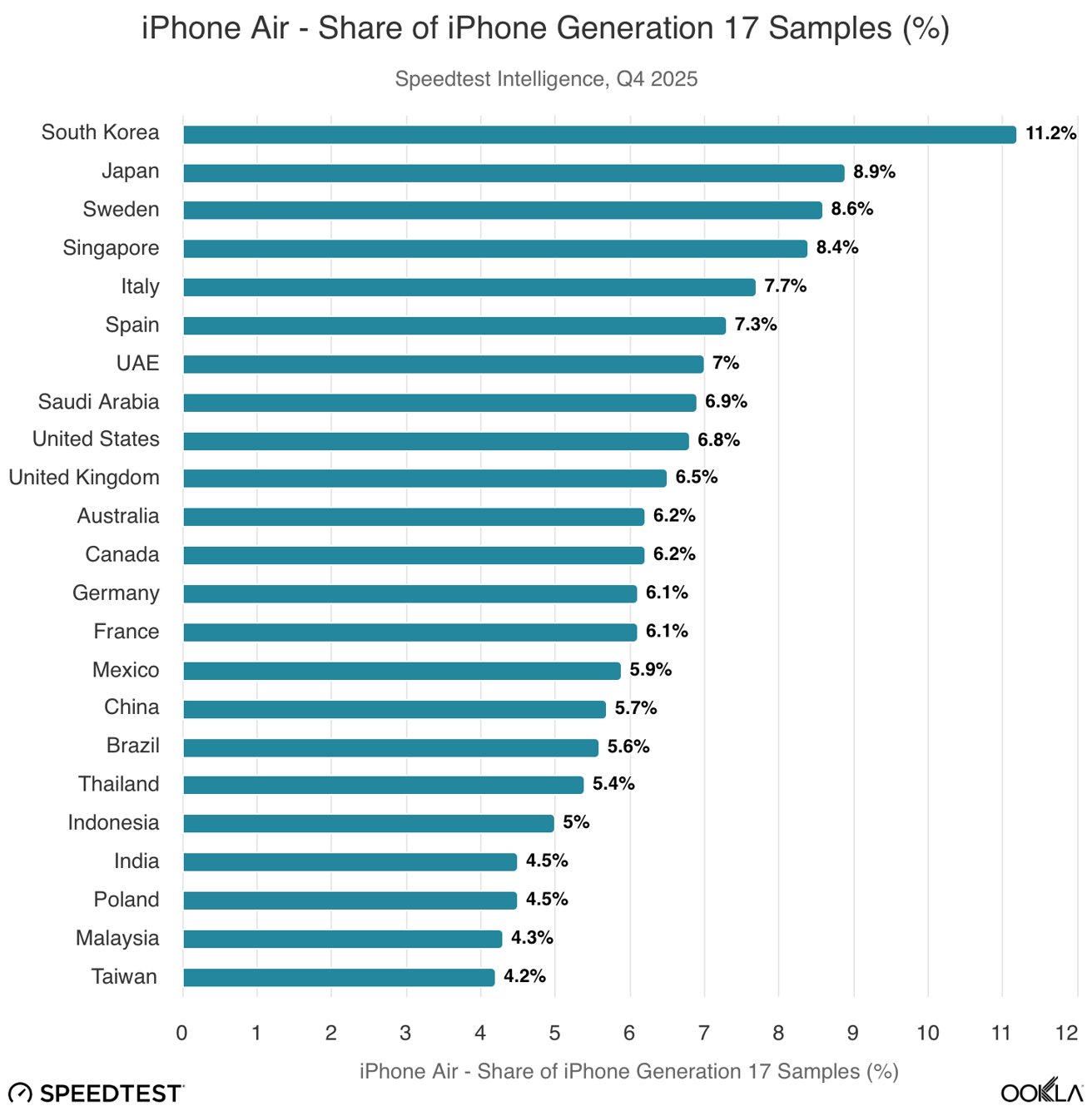
iPhone Air - Share of iPhone Generation 17 Samples. Image credit: Ookla
The C1X shines at peak speeds and performs consistently across median and lower-percentile results. These results better reflect how phones behave in everyday use rather than in ideal test conditions.
Apple's approach is shifting, and it's focusing on reliability and responsiveness instead of just headline speeds. These changes are more noticeable to users in their daily use.
Latency becomes Apple's real advantage
Apple's C1X modem really shines in latency, beating Qualcomm's X80 in 19 out of 22 markets, according to Ookla's data. Meaning, you'll get faster response times for apps, web browsing, and cloud-based tasks.
It's a clear advantage that Apple has over its competitors. Lower latency matters more than raw speed for many modern workloads.
Services that need real-time interaction, like cloud processing and AI features, benefit more from responsiveness than from higher download speeds. Apple's edge probably comes from its integration, as it designs both the modem and the surrounding chip architecture.
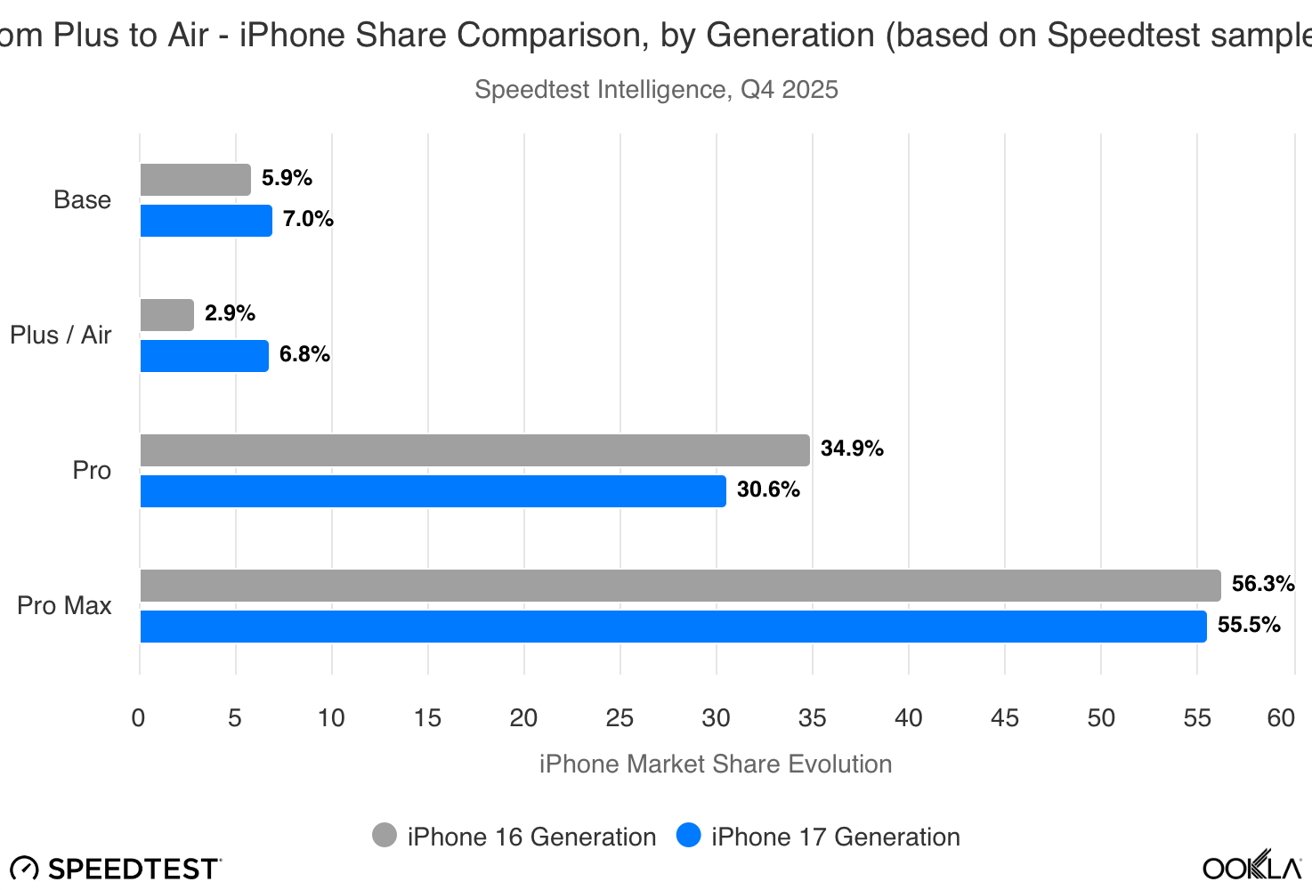
iPhone Market Share Evolution From Plus to Air - iPhone Share Comparison, by Generation. Image credit: Ookla
The C1X still trails Qualcomm in upload performance. Ookla's analysis shows the X80 can hold up to a 32% lead in upload speeds, largely due to more mature support for uplink carrier aggregation.
The gap still affects tasks like uploading video, backing up files, and sharing large media, and those use cases are becoming more common as phones take on more professional workloads.
Upload speeds remain a weak spot
Even so, the difference has narrowed across many markets. Most users won't notice it during everyday use.
Apple no longer depends on Qualcomm to deliver flagship-level cellular performance. The C1X shows Apple can match top-tier modems in the areas that matter most to users.
Apple also gains tighter control over power efficiency and overall system behavior. The shift fits Apple's broader silicon strategy as it keeps more key technologies in-house.
The company has already moved Mac to Apple Silicon and now extends that approach to connectivity. The implications reach beyond the iPhone as a competitive modem may open the door to cellular Macs and other always-connected devices.