You can smell a lot more than alcohol on someone's breath. Apple is researching how to get that analysis done in your own home with a series of iPhone health sensors that you breathe over.
Apple has a thing for breath. Previous patent applications have shown that the company wants to add breath detection to Apple Vision Pro, and to use how you breathe to help with sleep tracking.
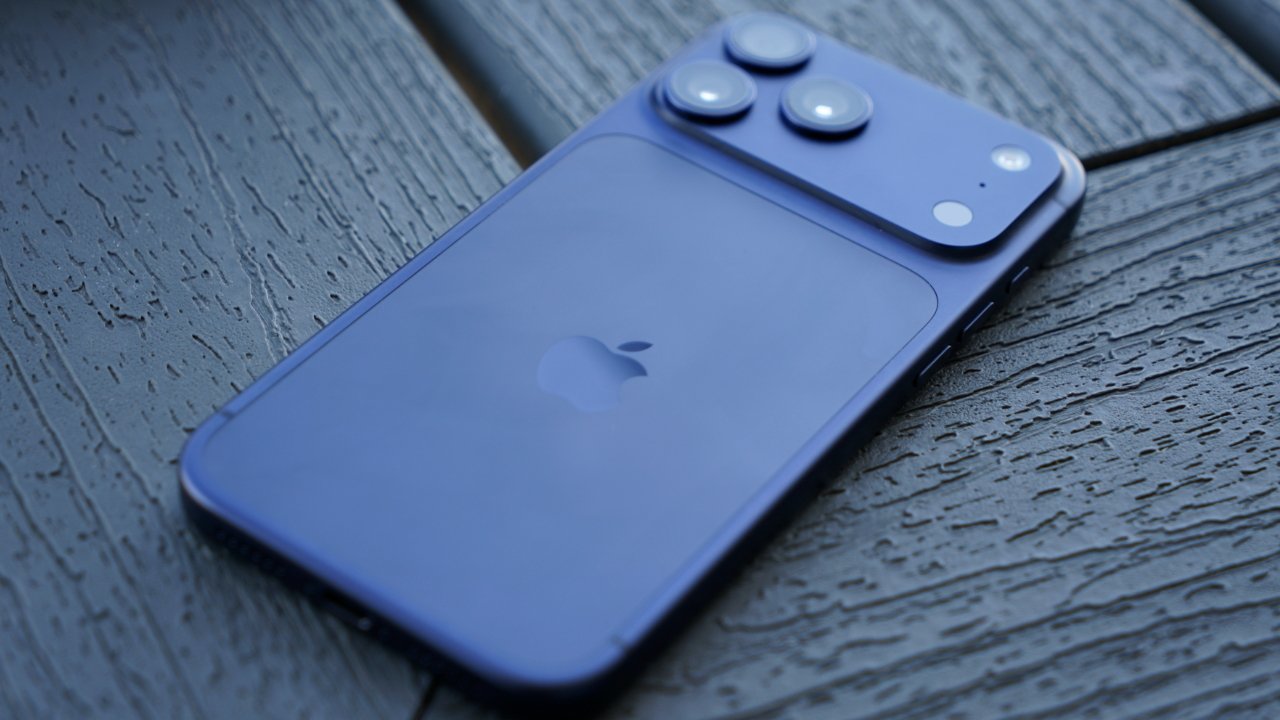
Now it's been granted a patent called "Electronic devices with breath sensing systems." It's technology for any number of different types of device, but the drawings imply an iPhone.
That makes sense, too, as even if you're one of those people who believe we all need to hear your speakerphone conversations, you are at least pointing your breath at the iPhone. But to be fair, Apple has gone to extremes with its typical patent-speak this time and listed every possibility from a phone and an Apple Watch, to a car or a kiosk.
What any or all of these would have is a breath sensor which "may be aligned with a sensor window in the [device's] housing." So while Apple keeps trying to remove all ports from iPhones, here it might be adding one.
Significantly, though, this breath sensor opening would be used to measure your breathing "without the use of a mouthpiece." Simply picking up the device and breathing normally for a moment, could give Apple enough data to spot health issues.
It would work by having an infrared light source, and that light may be detected again "after it passes through a volume of breath containing a target gas molecule that servers as a biomarker for a given health condition."
That sounds as if a user's breath will be examined for just one condition, but Apple suggests it could be used to spot "diabetes, high cholesterol, [and] other diseases."
In each case, what Apple proposes is that data from the user's breath is compared against a database. Presumably it would then notify the user of potential problems, just as the Apple Watch health sensors can now recommend seeing medical professionals.
Utilizing multiple sensors
Being able to detect health conditions through a user's breathing has obvious benefits. But doing it through a device like the iPhone means leveraging potentially many more sensors.
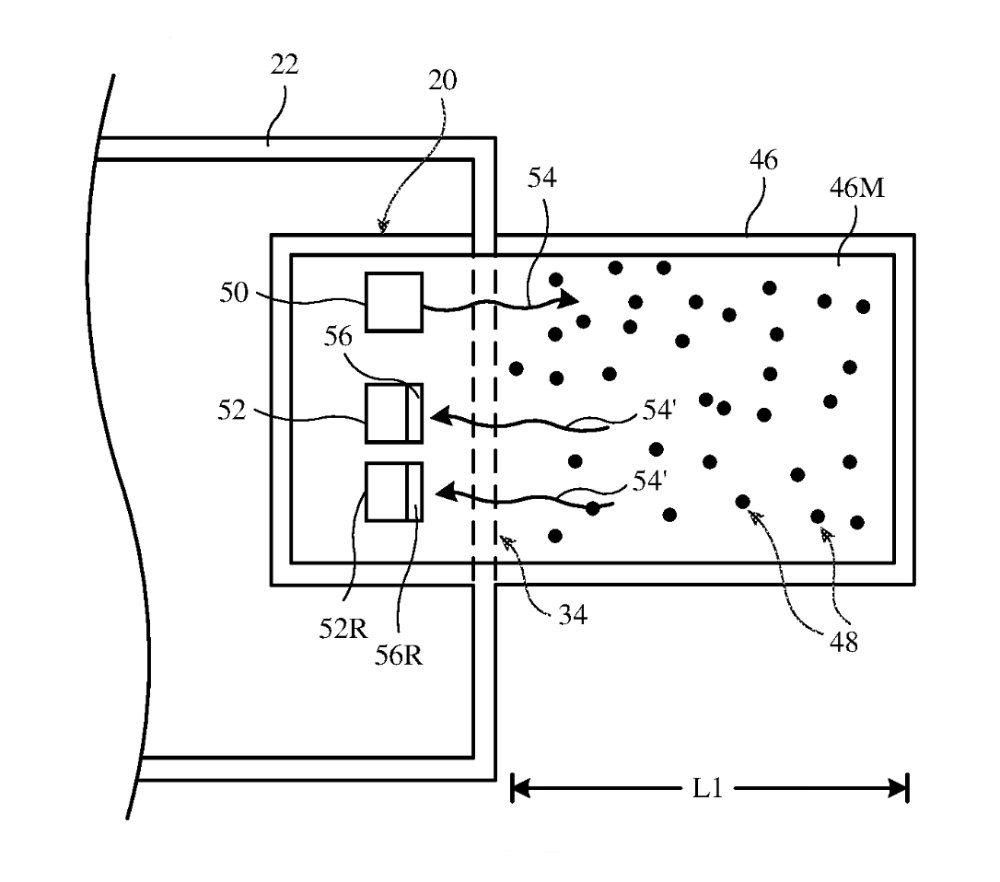
Detail from the patent showing breath molecules passing through a sensor — image credit: Apple
Apple specifies this in the newly-granted patent. It says, for instance, that "sensors such as a visible light camera and/or an infrared depth sensing camera may be used to capture images of the user's face."
This means the iPhone can measure how far a person's face is from the breath sensor, and presumably tell them to move closer. Or the device could "adjust a beam steerer in the breath sensor so that the infrared light beam is directed towards the appropriate location on the user's face."
That would be their mouth, then.
Back in 2019, Tim Cook said that ultimately Apple will be remembered for its health efforts. "[If] you zoom out into the future, and you look back, and you ask the question, 'What was Apple's greatest contribution to mankind,' it will be about health," he said.