Apple has been researching how to make a customizable Apple Vision Pro where the battery, the frame, and more can be changed by the user, as needs evolve.
If you can't make something lighter, make the user think they heavier option was their choice. A future Apple Vision Pro may not be dramatically lighter than the current model, but users could be able to choose to sacrifice some battery power for a reduced weight.
Plus conceivably, manufacturers will be able to make niche components for specialized use, such as sensors for science work, or better cameras. It's all described in the newly-granted patent, called "Head-mountable device with connectable accessories."
At heart, the patent describes an Apple Vision Pro where the main headset itself "need not include permanent components that provide every function that will later be desired by the user."
"Instead, the head-mountable device can have expanded and customizable capabilities by the use of one or more accessory devices," it continues. "Accessory devices and/or external devices can be easily connected to provide different components and functions at different times as desired."
It is possible that the 28-page patent with its 14 drawings is really a description of how the Developer Strap already works. But the descriptions also specifically describe choices users could make such as "high-resolution display and long battery life," or a "smaller form factor."
Plus the Developer Strap is device that uses high-bandwidth data. If this is about supporting that, the same bandwidth may work with the most demanding of accessories for use in ophthalmology, medicine, and manufacturing.
Specialized sensors would bring capabilities that are not commercially viable for Apple, yet would grow the Apple Vision Pro market. They would invariably put demands on the headset's battery, though, which may explain why the patent so stresses battery life.
An Apple Vision Pro accessory store
As described in the patent, this is necessarily about some kind of Apple Vision Pro build-to-order option. It appears to be for users to be able to make these choices whenever they want.
"Furthermore, a given user may desire different functions at different times," says the patent. "For example, a given user may desire high-resolution display at home and long battery life when outside the home."
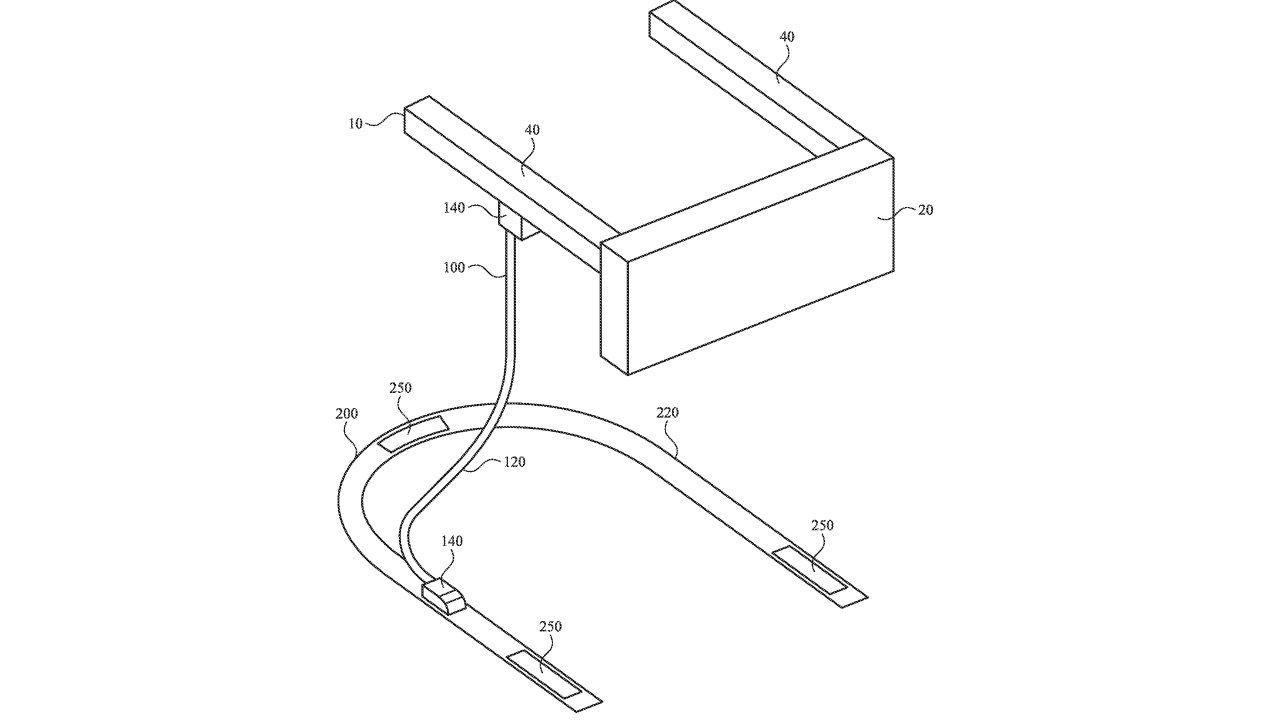
Much of the patent text is devoted to explaining what an Apple Vision Pro-like headset provides users, but its core section is about attaching and detaching components. The drawings resemble how the Developer Strap current connects, for instance, and Apple proposes "both mechanical engagement and operable communication between the connected devices."
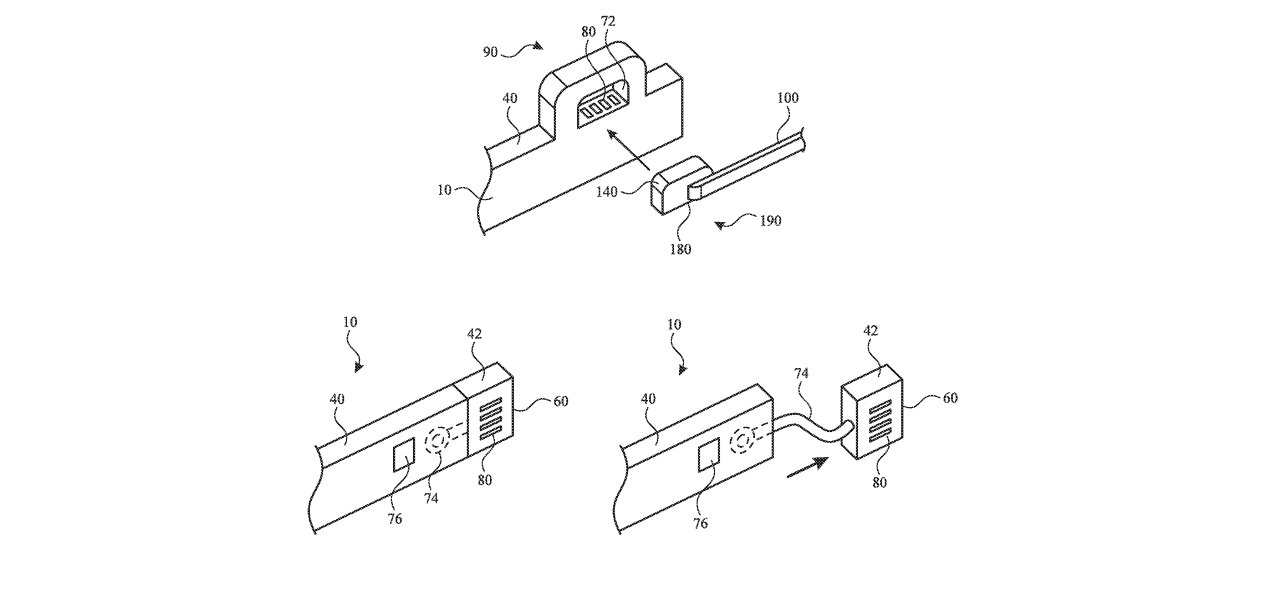
Detail from the patent showing various ways of connecting accessories to the Apple Vision Pro — image credit: Apple
Given Apple's examples, the company definitely wants to offer the ability to have a smaller battery, and a smaller form factor. But it wants the user to make that choice, so that it is not Apple making a smaller headset and forcing the wearer to recharge more often.
There is also the suggestion that the displays in the Apple Vision Pro could be swapped out for lower-resolution ones. If Apple really means for users to be able to swap components at will, then the only benefit of switching displays would again be to do with battery life.
It doesn't seem likely that Apple would just bundle a second, lower-resolution display in with the Apple Vision Pro in case the user might want it. So for all of the talk of being able to switch components, it's most likely that each part would be offered as a paid accessory.
At present, there is no equivalent of the Made for iPhone program for Apple Vision Pro where verifies third-party accessories and sanctions their use. If that remains the case, then Apple might stick to offering only its own range of Apple Vision Pro accessories, like they do for the smart connector on the iPad.
But if Apple does choose to open up the Apple Vision Pro to hardware developers, it could dramatically widen the potential market for the device.
Whether it's Apple-only or not, though, if everything is modular, it suggests that the future Apple Vision Pro would be a frame to which these different components can be connected. That fits with the drawings which show multiple ways of connecting devices to the main frame.
The patent is credited to six inventors, including Paul X. Wang whose name is on so many that he must surely work in the office that submits these things to the US Patent Office. The lead inventor is Darshan R. Kasar, whose previous work includes a related patent concerning removable support accessories for headsets like the Apple Vision Pro.