Despite advances in user repair and the improvements in the MacBook Neo, Apple just can't get away from being rated poorly for repairability.
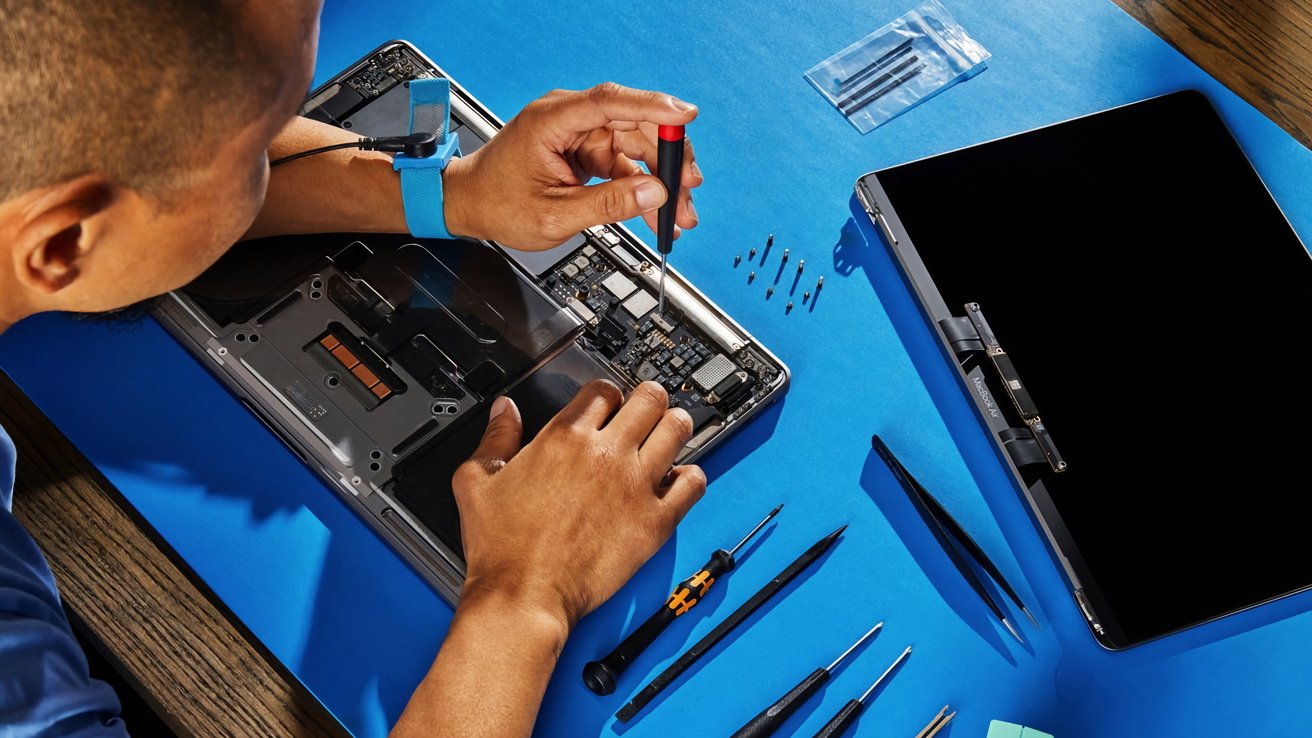
Repairability is a long-time problem for Apple, after being repeatedly shamed for having hard-to-repair products. In recent years, it has tried to make its products easier to fix, which should eventually improve its image.
That initiative was put to good use with the MacBook Neo, with the traditional teardown resulting in the notebook being called the most repairable MacBook since 2012.
While the MacBook Neo is being celebrated, it isn't enough to appease some commentators on repairability.
Poor scores for repairability
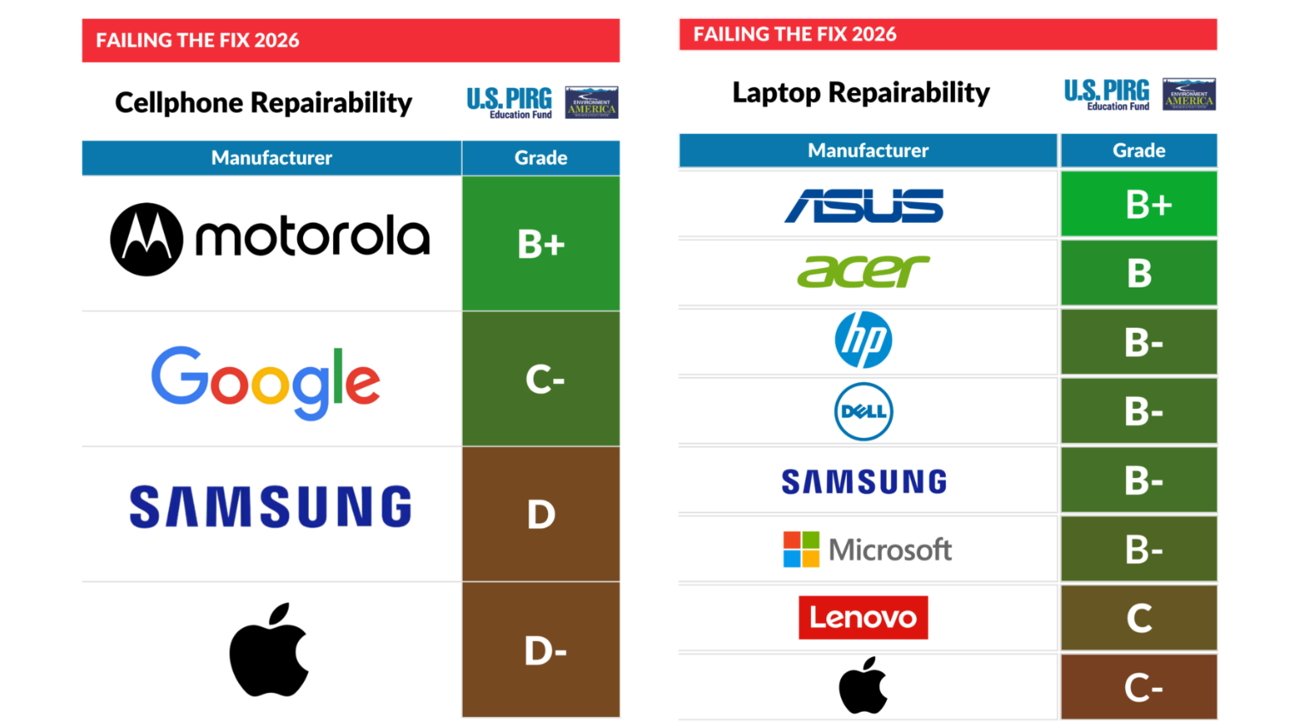
In its 2026 edition of the "Failing the Fix" repairability report, special interest group U.S. PIRG Education Fund has issued scores to major manufacturers of smartphones and notebooks. All with a view to forwarding the Right to Repair.
As you'd expect, Apple didn't do well.
"Failing the Fix 2026" scorecards - Image Credit: U.S. PIRG Education Fund
On the Cellphone Repairability list, Motorola is given first place with a B+ grade. Google is second with a C-, with Samsung in third with D.
Apple rounds out the phone list with a D-.
On the Laptop Repairability table, things aren't much better. Asus leads with a B+, Acer gets a B, and a B- is given to HP, Dell, Samsung, and Microsoft.
Lenovo is just in front of Apple with a C grade, with Apple at the bottom again with C-. Apple's score didn't change despite the release of the MacBook Neo in the period, while Acer and ASUS dropped one step from the 2025 results.
Parts pairing
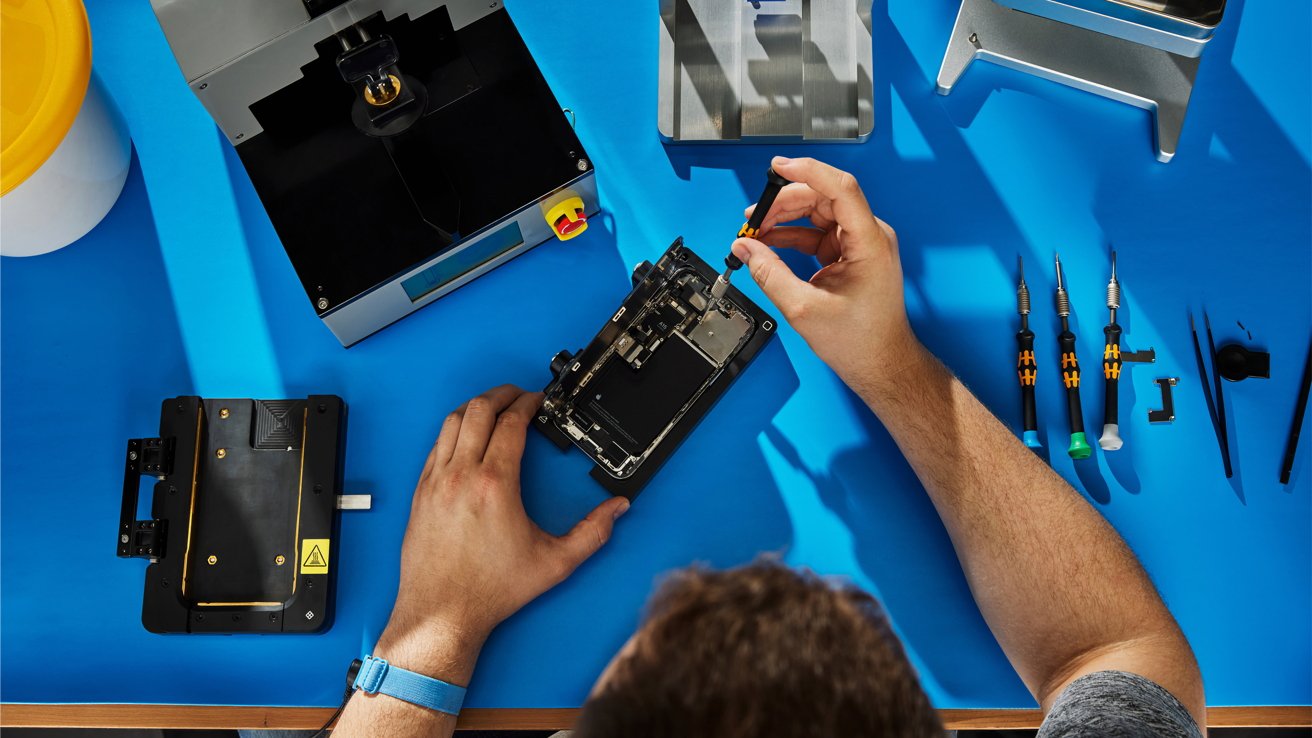
A large section of the report discusses the use of software to hinder repairability. Due to it being a major user of software-based parts-pairing in the past, Apple is singled out for attention here.
Acknowledging Apple has made "real progress" when it comes to parts pairing, including the Repair Assistant in iOS 18. This was a "meaningful shift" in policy that moved away from requiring Apple's authorization for simple repairs and parts replacement.
However, the report claims independent repair advocates want Apple to go further. Third-party aftermarket parts are still hindered by software limitations, while Face ID is still closely guarded by Apple's policies.
There is also concern of Activation Lock being extended to individual parts. This is viewed as a problem because it locks large quantities of functional components out of the repair ecosystem.
This argument does sidestep the small detail of those parts coming from disassembled lost or stolen devices.
PIRG does say Apple isn't alone, as other companies do have similar software restrictions in place, but Apple is held as the prime example of its use.
Death dates
Operating system updates are also an issue to PIRG, as support timelines are viewed as a way to limit the lifetime of a device. It is deemed that any product losing support from security updates has an effective "death date," which consumers should be aware of before they buy.
Apple's parts pairing reliance has lessened over time - Image Credit: Apple
In the case of Apple, this is actually quite clear. A product is deemed "vintage" if more than five years has passed since it was last on sale, and "obsolete" after seven years.
Even though a device is classed as vintage, Apple still provides servicing and parts for them, so long as parts are still available.
European data sourcing
When it comes to how the score is calculated, it seems that PIRG is not collecting the data itself, as you would expect from repair outfit iFixit. Instead, it relies on regulatory reports from Europe.
For the report, PIRG gets its data from the French government, which requires companies to provide detailed information about how their products can be repaired. This information is used to deal with notebook scoring.
For mobile phones, it is instead using data from the EU's European Product Registry for Energy Labelling.
The information from each report is then used to determine a score applicable to each company.
No other data sources are mentioned, nor when the data was sourced from the European reports. It's almost certain that the MacBook Neo's relatively repairable state wasn't included in the source reports.
The report does mention this usage, as part of urging for the creation of a similar U.S. Right to Repair score. This would give American consumers more knowledge about how repairable their purchases truly are, it declares.
Consumers should be able to access data on device longevity and repairability as soon as it goes on sale, PIRG insists. Repair scores give an indication of support from manufacturers when it comes to user repairs.
Doing so should help improve consumer finances, too. Citing and extrapolating from its own 2021 report into U.S. family electronics spending, it proposes a combined $49.6 billion could be saved if consumers were more able to repair their devices.
It should also cut down on e-waste. In 2022, the report says the U.S. generated over 7 million tons of e-waste, and it will only get worse over time.
PIRG may have a point in creating a similar report for the United States, complete with mandatory reporting from companies. Indeed, PIRG even says the U.S. version should be modelled on Europe's version.
Compliance wouldn't be a massive stretch for a company like Apple, especially if it's effectively providing the same report as it already hands over to France and the EU.
The real question is whether such a report will make an impact on consumers. That is, beyond the relatively small section of the population who want to repair their devices.
For that contingent, they already have a lot of information at their disposal.