
OpenAI is absolutely hemorrhaging cash. Despite that, the ChatGPT owner is talking to chipmakers to make an iPhone competitor, with AI centric to the design.
OpenAI is already in the process of working with former Apple design chief Jony Ive on an AI hardware project. However, OpenAI has the potential to take on the smartphone market and try to rival Apple with an AI-centric version.
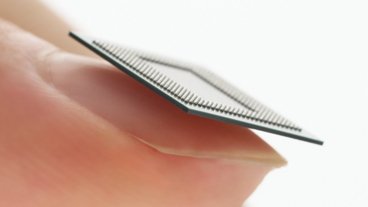
In an X post on Monday, TF Securities analyst Ming-Chi Kuo wrote that OpenAI is working with MediaTek and Qualcomm on a new generation of smartphone processors. The report frames this as OpenAI moving into the smartphone space.
OpenAI is also working with Luxshare, who is identified by Kuo as the exclusive system co-design and manufacturing partner.
As for when the device will arrive, Kuo says it should appear in 2028.
According to Kuo, and obviously, the intention is to come up with an AI agent-based smartphone. Since users apparently don't want a pile of apps and want to get tasks done, this opens an opportunity for OpenAI to change how people think about using smartphones.
Kuo has a very good record when it comes to Apple, thanks to years of quite reliable supply chain checks. He's also reasonably good at forecasting Apple's future product moves, though he does have the occasional misstep, just like anyone else trying to predict things years in advance.
An integration play
While OpenAI already has apps on smartphones, including the iPhone and some integration with iOS, the move to make its own is all about integration and control.
By fully controlling the operating system and the hardware, Kuo muses, OpenAI can provide a "comprehensive AI agent service."
The smartphone is also the only real way forward, he continues, since it is the only device that captures the user's "full real-time state." This is a necessity for real-time AI agent inference.
The device must continually understand the user's context, with on-device processing being a big feature. However, complex and compute-intensive tasks will still be handed off to cloud AI.
Kuo points out that the smartphone hardware market is already very mature, making OpenAI's entry into it reasonably stress-free. While OpenAI has the advantage in AI models, accumulated user data, and in branding, it can parlay it all into the proposed smartphone.
The ecosystem control will also open up opportunities for OpenAI to earn revenue, such as bundling hardware and software subscriptions. An AI agent ecosystem is also a possibility.
OpenAI is bleeding cash as it swells in size with no road to profitability in sight. Making its own smartphone doesn't seem out of the ordinary, given the circumstances.
Apple similarities
This sounds a lot like its taking pages from the Apple playbook, in making a device with a self-contained ecosystem that it can have a lot of control over. Even more so, a device that it has control over with little in the way of limitations imposed by suppliers.
There's also the mindshare at OpenAI that has experience working with Apple. Engineers have, over the years, left Apple to work at OpenAI and other companies in the AI space, taking their knowledge with them.
There's also the acquisition of IO Products, and therefore the hardware expertise of Jony Ive and the ex-Apple staff he has also hired.
Ive and OpenAI CEO Sam Altman have already admitted that there is a prototype for the first OpenAI device, which may be an AI pin. However, it's not hard to imagine Ive being roped into designing an OpenAI smartphone, especially if it can pull consumers away from Apple.
There is also the small possibility that the Qualcomm-MediaTek chip plan is for this mysterious prototype, not for a smartphone. Smartphone chips can be used in many different types of hardware, so there's every chance the chips end up in something that isn't specifically a smartphone.