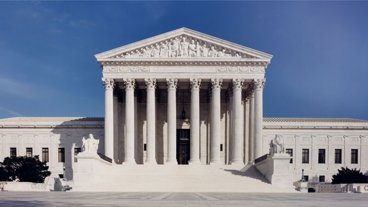
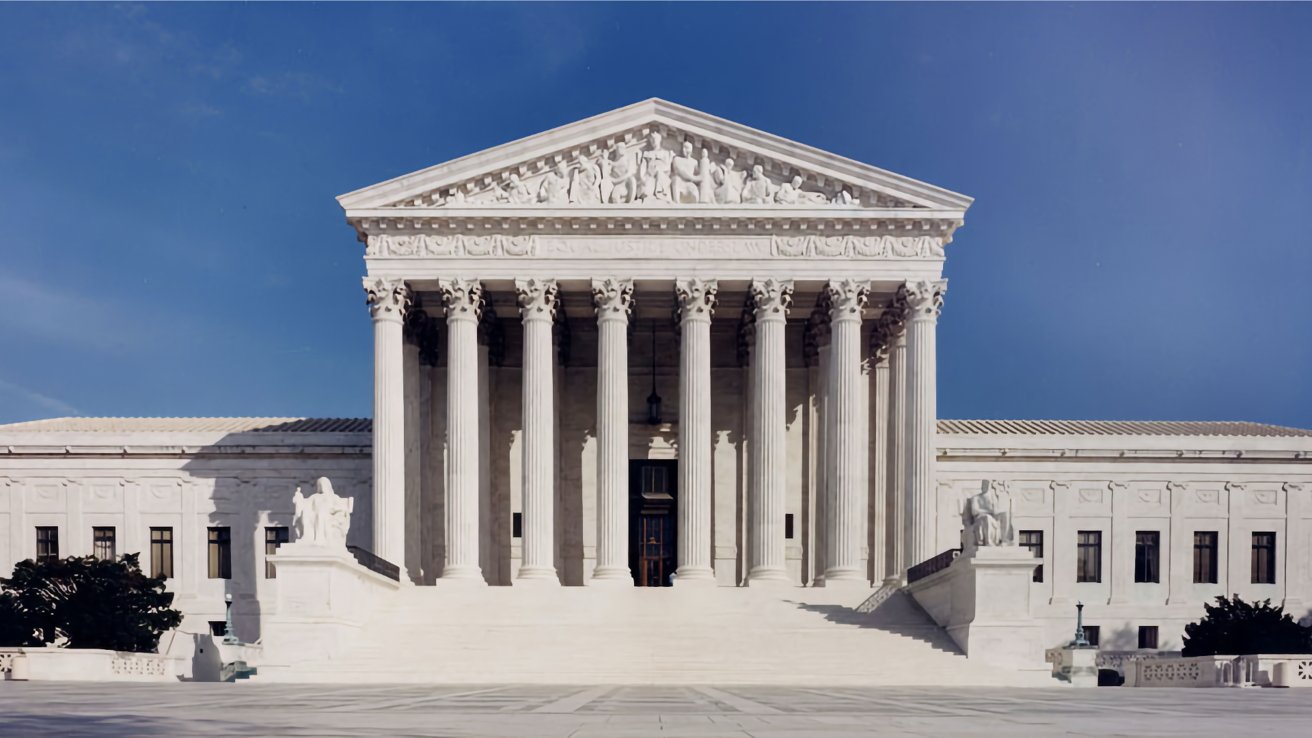
A new Supreme Court ruling will require police to have probable cause before using sweeping geofence warrants that rely on people's personal location data to find criminals.
Police subpoena Apple, Google, and other tech companies for precious user location data using so-called "geofence warrants," which can serve as a dragnet to catch a single criminal while implicating many others. The Supreme Court says this method is no longer an option without probable cause.
According to SCOTUSblog, breaking down the ruling, a geofence warrant meets the criteria of a "search" as defined by the Fourth Amendment. Simply put, this means that anyone included in a warrant must be there with a reason.
In short, dragnet-style searches with no suspects identified by other evidence will no longer be an option except in very specific circumstances.
That isn't to say user location data is off-limits for law enforcement. A subpoena to Apple or Google with an individual's identity that is reasonably suspected of a crime with evidence gathered from other sources remains legal and viable.
There's also the option of using geofence warrants when tracking a group of criminals or trying to find associates of a known criminal. Of course, warrants will need to be provided on a case-by-case basis.
Previously, law enforcement would simply ask for the location data of everyone that was within an area for a select period of time even when a suspect wasn't known. If you happened to be passing by, you could be implicated for no reason other than being there with a smartphone.
The Supreme Court has ruled 6-3 that this violates the Fourth Amendment.
Justice Elena Kagan wrote that "an individual has a reasonable expectation of privacy in records about his cell phone's location, and police intrude on that constitutionally protected interest when they demand the information — even though for only a limited time, and from a third-party tech company." In other words, suspects will have to be identified using other means.
According to Harvard Law Review, Google was served with more than 11,500 warrants across 2020 for sweeping geofence searches. With this ruling, that number will now be zero without cause for every individual affected by the search.
Robbing a bank with a smartphone
The reason the Supreme Court shared this ruling today is due to a case from 2019 involving a bank robbery. A man escaped with nearly $200,000 and the police had zero suspects. The "zero suspects" bit is key to the ruling.
A geofence warrant was sent to Google, and the company provided 19 accounts that were within 150 meters of the bank robbery spanning that hour. Law enforcement narrowed it down to 9 accounts and requested location information for 2 hours surrounding the robbery.
The results were narrowed to three individuals — one was a man named Okello Chatrie. The location data led police to a residence with nearly $100,000, a gun, and demand notes.
The individual was arrested and pled guilty. However, Chatrie still argued that his Fourth Amendment rights were violated. After two escalating appeals on opposite sides of the issue, the case was pushed up to the Supreme Court.
With Monday's ruling, Chatrie's case isn't over. It is being passed back down to the Circuit Court to determine if the police had reason to access the location data.
Regardless of that outcome, know that your location data is protected by a constitutional right. Police will need more than "wrong place, wrong time" tactics to find suspects in the future.